Tell us about the job
Takes about a minute. No obligation.
Gas-fired water heaters cycle their burners every time the tank drops below setpoint, and they do it around the clock, every day of the year. Utility gas heats more occupied homes in Greene County, Missouri than any other fuel, at 52.2% (2020-2024 ACS 5-year). That puts the burner orifice, thermocouple, and ignition assembly under steady wear in the majority of homes here. A contractor diagnosing a water heater in Greene County starts with those components, because they are what accumulates the hours. Sediment buildup in the tank follows closely, since hard cycling accelerates mineral deposit on the tank floor and around the lower element port.
Water heaters running in houses that have changed hands several times tend to outlast the supply chains built around them. Half the homes in Greene County, Missouri were built in 1982 or earlier (2020-2024 ACS 5-year). A contractor who opens an older unit here may find that the element, thermostat, or valve it needs has been superseded, discontinued, or rebranded into something that fits differently than the original did. That is what decides the repair scope: not the age of the house itself, but whether the part the unit actually takes is still being made and stocked.
The Parts of a Water Heater a Contractor Checks First
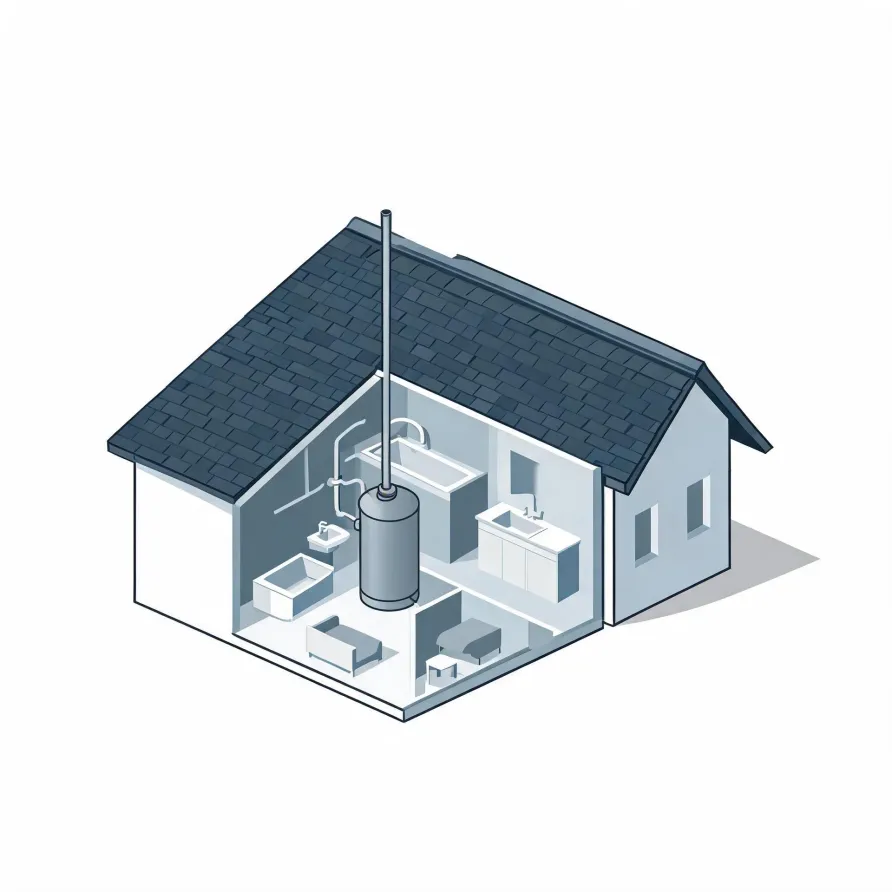
The tank is the piece a homeowner notices first, usually sitting in a utility room, basement, or garage closet. Inside it, a burner or heating element raises the water temperature, and a thermostat governs when that heating kicks on. When hot water runs out fast or arrives lukewarm, one of those three pieces is where a contractor starts.
The anode rod hangs inside the tank and slows corrosion from the inside out. The pressure relief valve mounts on the side or top of the tank and releases pressure if it climbs too high. The dip tube carries cold water down to the bottom of the tank, and a failing one lets cold water mix into the hot supply at the top.
The drawing shows the general layout of a water heater system, and a licensed contractor determines what applies to the specific unit and setup in your home.
Find a contractor in Greene CountyGreene County, Missouri, by the numbers
474 severe weather events were recorded in Greene County, Missouri between 2015 and 2024.
NOAA National Centers for Environmental Information, Storm Events Database, bulk CSV export, events 2015-01-01 through 2024-12-31.Half the homes in Greene County, Missouri were built in 1982 or earlier (2020-2024 ACS 5-year).
U.S. Census Bureau, 2020-2024 American Community Survey 5-Year EstimatesGreene County, Missouri holds 138,982 housing units (2020-2024 ACS 5-year).
U.S. Census Bureau, 2020-2024 American Community Survey 5-Year EstimatesOwners occupy 57.5% of the occupied homes in Greene County, Missouri (2020-2024 ACS 5-year).
U.S. Census Bureau, 2020-2024 American Community Survey 5-Year EstimatesSevere Weather Events in Greene County
Extreme weather puts real strain on water heaters, forcing the equipment to work harder and recover faster after every event. How much of that pressure your unit faces depends on what the local climate actually delivers.
474 severe weather events, 2015–2024. Source: NOAA National Centers for Environmental Information, Storm Events Database.