Tell us about the job
Takes about a minute. No obligation.
What fuel a home burns decides which water heater a contractor can legally install as a replacement. Electricity heats more occupied homes in Franklin County, Missouri than any other fuel, at 67.6% (2020-2024 ACS 5-year). A home wired for electric heat runs an electric water heater on the same service panel, and a contractor sizing a replacement works from what that panel can supply. Moving to a gas-fired unit would require venting, a gas line, and a permit path that an all-electric house does not already have. The elements and thermostat in an electric tank carry the full heating load, and the condition of those parts is what a contractor checks before quoting any like-for-like swap.
The electrical panel is where a water heater installation in Franklin County often stalls. Half the homes in Franklin County, Missouri were built in 1984 or earlier (2020-2024 ACS 5-year). Homes built in that era were wired for appliance loads that look nothing like what current water heaters pull, and a panel that was adequate then can sit right at its limit today. A contractor quoting the job has to read what the existing service actually shows before the unit itself enters the conversation.
What a New Water Heater Installs in Your Home

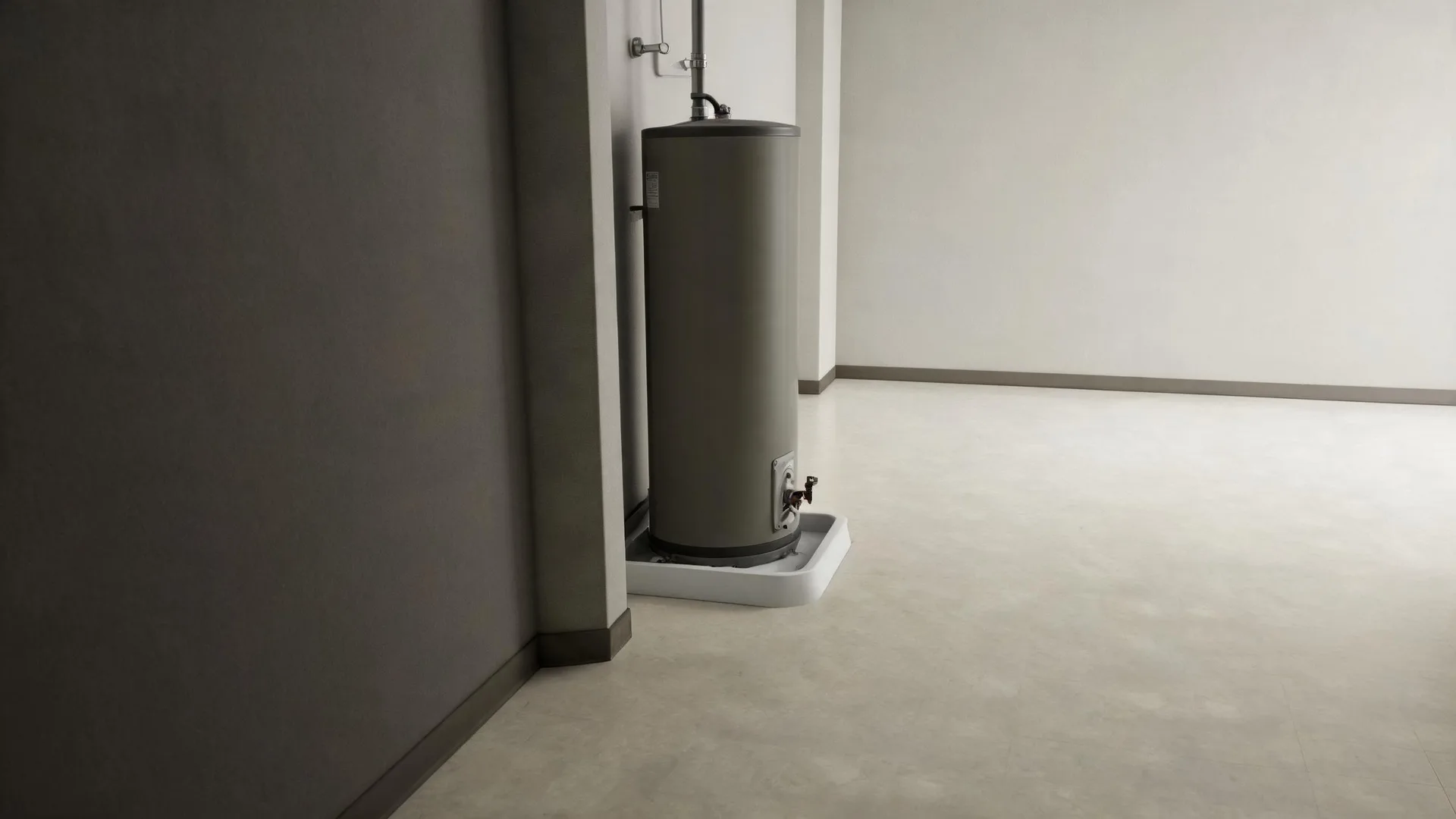
The tank is the piece a homeowner sees first. It sits in a utility room, basement, or closet and holds a supply of water that a contractor heats and keeps ready for use. Attached to the top of the tank are the hot and cold water connections that tie the unit into the house's supply lines.
The pressure relief valve mounts to the side of the tank and opens if pressure inside climbs too high. A dedicated supply line runs in from the main water supply, and a flue or vent pipe exits through the wall or ceiling to carry combustion gases outside, depending on the fuel type the unit uses.
The drawing shows a general layout of these components, and a licensed contractor determines exactly how each one fits the setup in your house.
Get matched in Franklin CountyFranklin County, by the numbers
129 severe weather events were recorded in Franklin County, Missouri between 2015 and 2024.
NOAA National Centers for Environmental Information, Storm Events Database, bulk CSV export, events 2015-01-01 through 2024-12-31.Half the homes in Franklin County, Missouri were built in 1984 or earlier (2020-2024 ACS 5-year).
U.S. Census Bureau, 2020-2024 American Community Survey 5-Year EstimatesFranklin County, Missouri holds 46,312 housing units (2020-2024 ACS 5-year).
U.S. Census Bureau, 2020-2024 American Community Survey 5-Year EstimatesOwners occupy 76.5% of the occupied homes in Franklin County, Missouri (2020-2024 ACS 5-year).
U.S. Census Bureau, 2020-2024 American Community Survey 5-Year EstimatesSevere Weather Events in Franklin County
Storms, temperature swings, and pressure shifts put real demand on water heating equipment. How hard a unit has to work is shaped by local conditions, and that makes the weather record in Franklin County a practical part of sizing and installing the right system.
129 severe weather events, 2015–2024. Source: NOAA National Centers for Environmental Information, Storm Events Database.