Tell us about the job
Takes about a minute. No obligation.
A contractor sizing a replacement water heater in Madison County starts at the service panel, not the closet where the old unit lives. Electricity heats more occupied homes in Madison County, Missouri than any other fuel, at 58.1% (2020-2024 ACS 5-year). That share puts electric storage and heat-pump water heaters at the center of nearly every replacement job here, which means the existing wiring, breaker size, and available amperage decide what a new unit can be. A heat-pump water heater draws from a dedicated circuit, and if the panel is already loaded, the install scope grows before the equipment is even ordered.
Older service panels are the constraint a water heater installation runs into most often in this county, before anything else on the job. Half the homes in Madison County, Missouri were built in 1977 or earlier (2020-2024 ACS 5-year). Ductwork is not the variable here, but the electrical is: a panel sized for the loads of an earlier era of appliances may not have the capacity a modern unit requires, and a contractor will check that before pricing the job. What gets done to the panel decides the scope.
What a New Water Heater Installation Covers
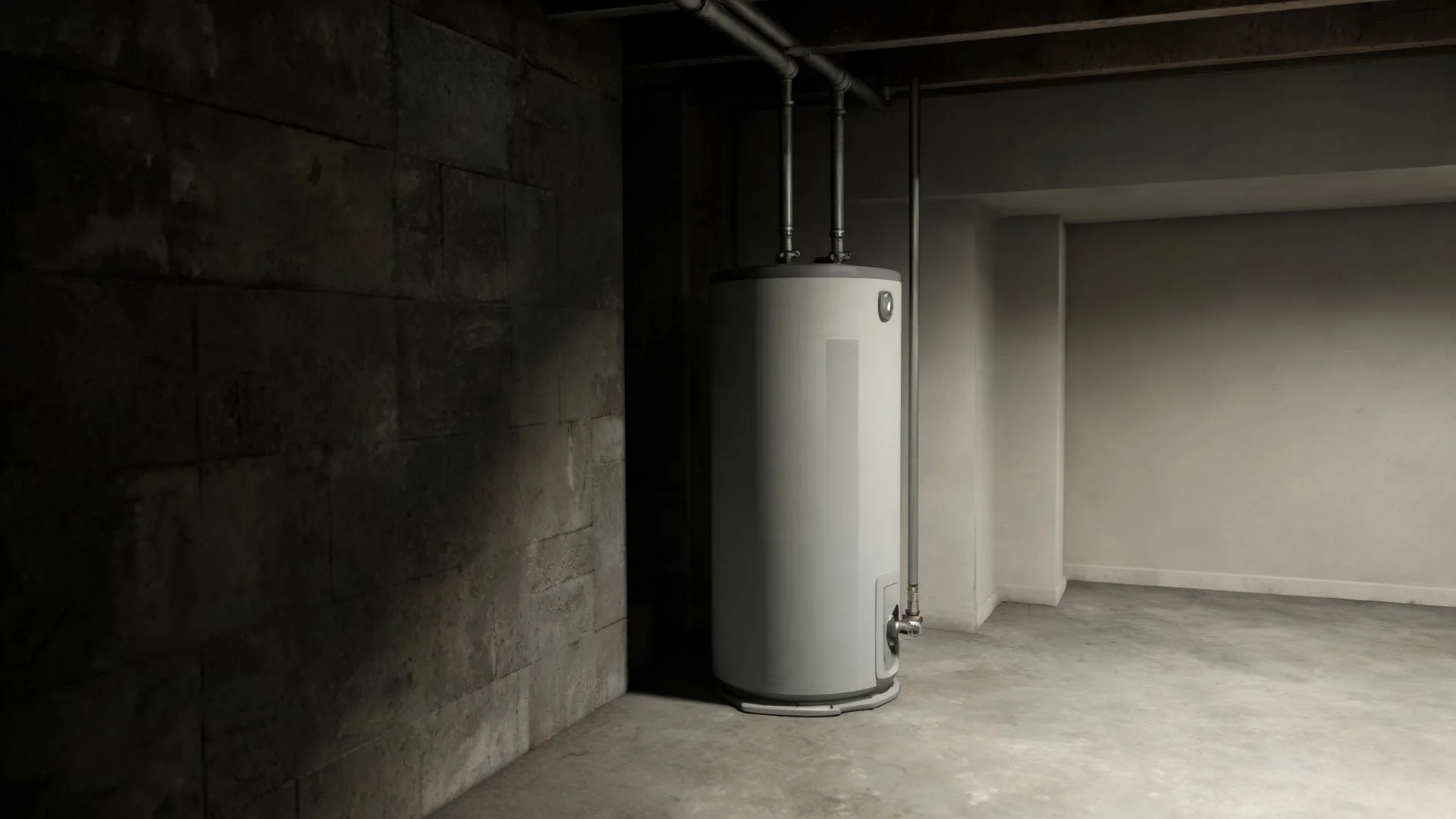
The tank or tankless unit is the centerpiece of the installation, sitting in a utility room, basement, or garage and holding or heating water on demand. Attached to it are the inlet and outlet connections that bring cold water in and send hot water to every fixture in the house.
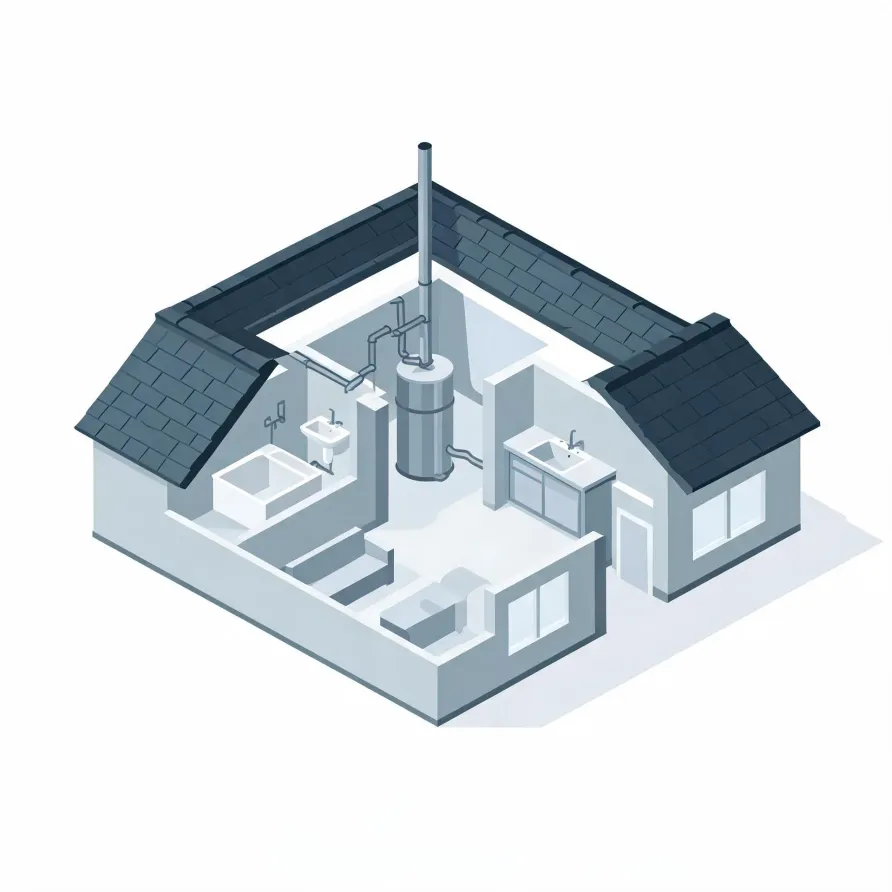
The pressure relief valve mounts directly on the unit and is a required safety component that releases pressure if it builds beyond a safe level. A dedicated supply line runs to the unit, and a discharge pipe from the relief valve routes safely away from living areas. Where local code requires it, a drip pan sits beneath the unit to catch any leaks.
The drawing shows a general layout of these components, and a licensed contractor determines exactly what applies to your house and how each piece gets positioned.
Get matched in Madison CountyMadison County, Missouri, by the numbers
43 severe weather events were recorded in Madison County, Missouri between 2015 and 2024.
NOAA National Centers for Environmental Information, Storm Events Database, bulk CSV export, events 2015-01-01 through 2024-12-31.Half the homes in Madison County, Missouri were built in 1977 or earlier (2020-2024 ACS 5-year).
U.S. Census Bureau, 2020-2024 American Community Survey 5-Year EstimatesMadison County, Missouri holds 5,866 housing units (2020-2024 ACS 5-year).
U.S. Census Bureau, 2020-2024 American Community Survey 5-Year EstimatesOwners occupy 73.7% of the occupied homes in Madison County, Missouri (2020-2024 ACS 5-year).
U.S. Census Bureau, 2020-2024 American Community Survey 5-Year EstimatesSevere Weather Events in Madison County
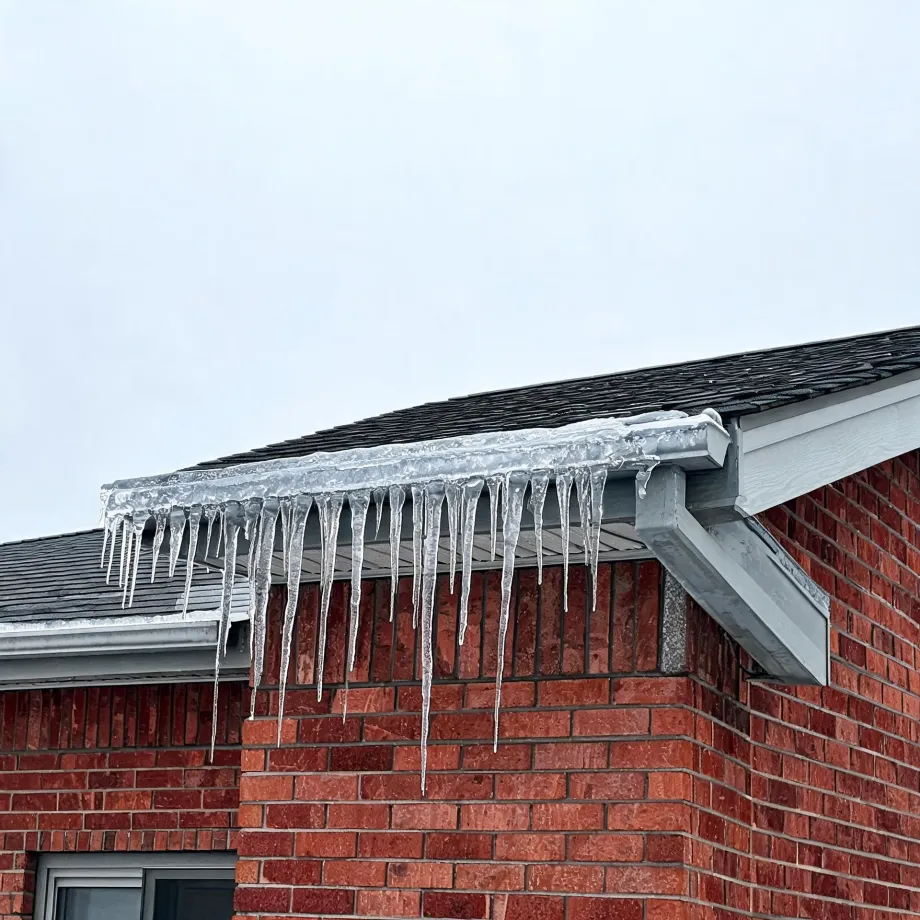
Extreme weather puts real strain on water heating equipment, forcing it to work harder and recover faster than it would under mild conditions. How much of that stress a system faces depends on where it sits, which makes local weather history relevant to any installation decision in Madison County.
43 severe weather events, 2015–2024. Source: NOAA National Centers for Environmental Information, Storm Events Database.