When to replace a water heater in Liberty, MO

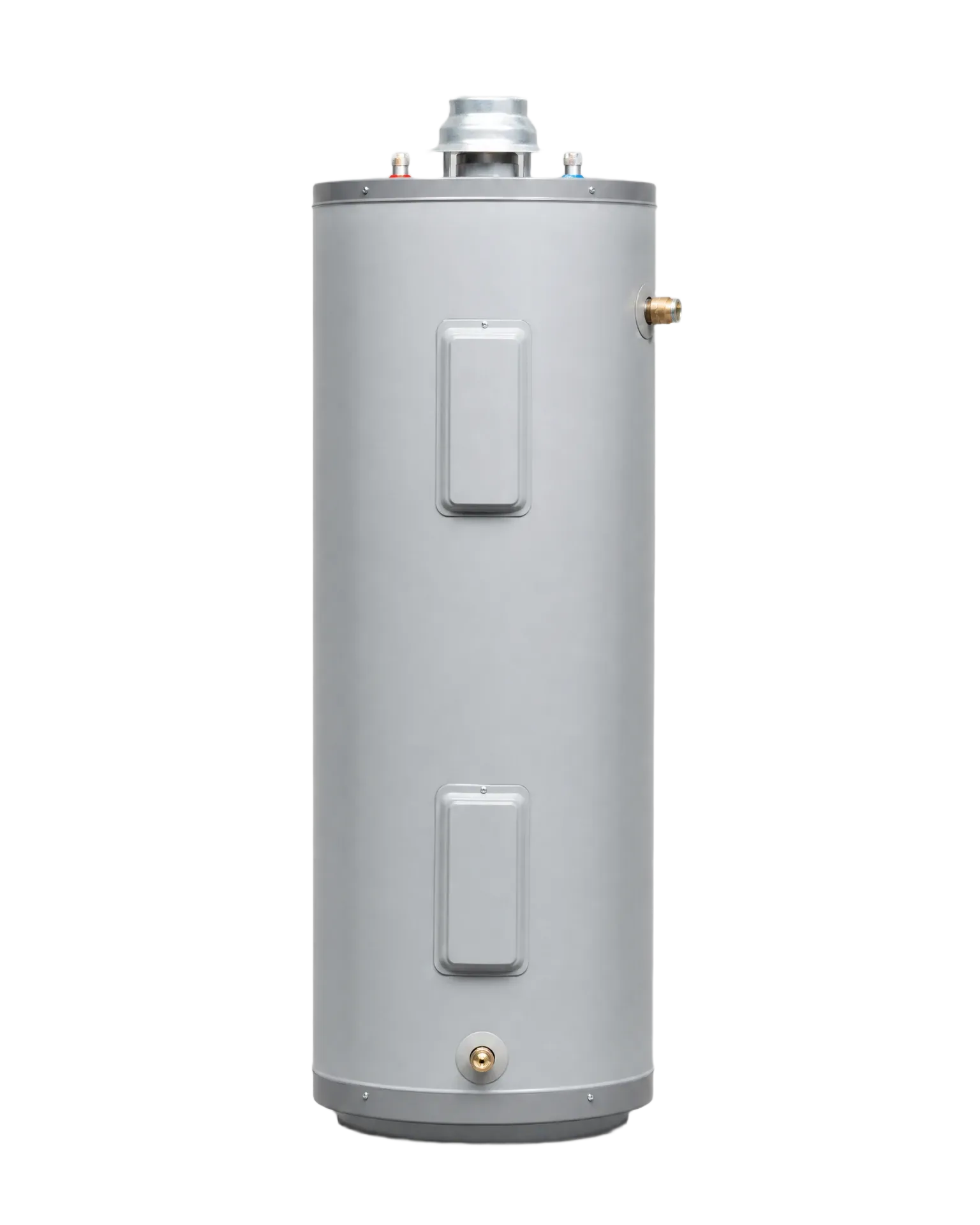
A gray cylindrical water heater with two rectangular access panels, a brass side fitting, a bottom drain valve, and a metal flue collar on top, photographed against a plain light gray background.
Let a pro reach out

How do I know when to replace my water heater?

Your water heater is getting older, or it's started acting up, and you're trying to figure out if it's worth fixing or if it's time for a new one. Maybe it's leaking, or the water isn't as hot as it used to be, or it's just making noises it never made before. Most homeowners in Liberty don't think about their water heater until something goes wrong with it.

Replace it once it's leaking, it's past 10 to 12 years old, or it can't keep up with your hot water use

A water heater tank doesn't fail all at once. It rusts from the inside until the metal gives out, and once you see water pooling at the base, that tank is done and needs to be replaced, not repaired. Short of a leak, age is the next best sign. Most tank water heaters last 10 to 12 years, and once you're past that mark, a repair is a bet on a unit that's already near the end. If yours is running out of hot water faster than it used to, or taking longer to heat, that's the tank losing capacity, not something a part swap fixes. Gas is the common fuel for water heaters around Liberty, and a gas unit that age is worth replacing rather than patching.

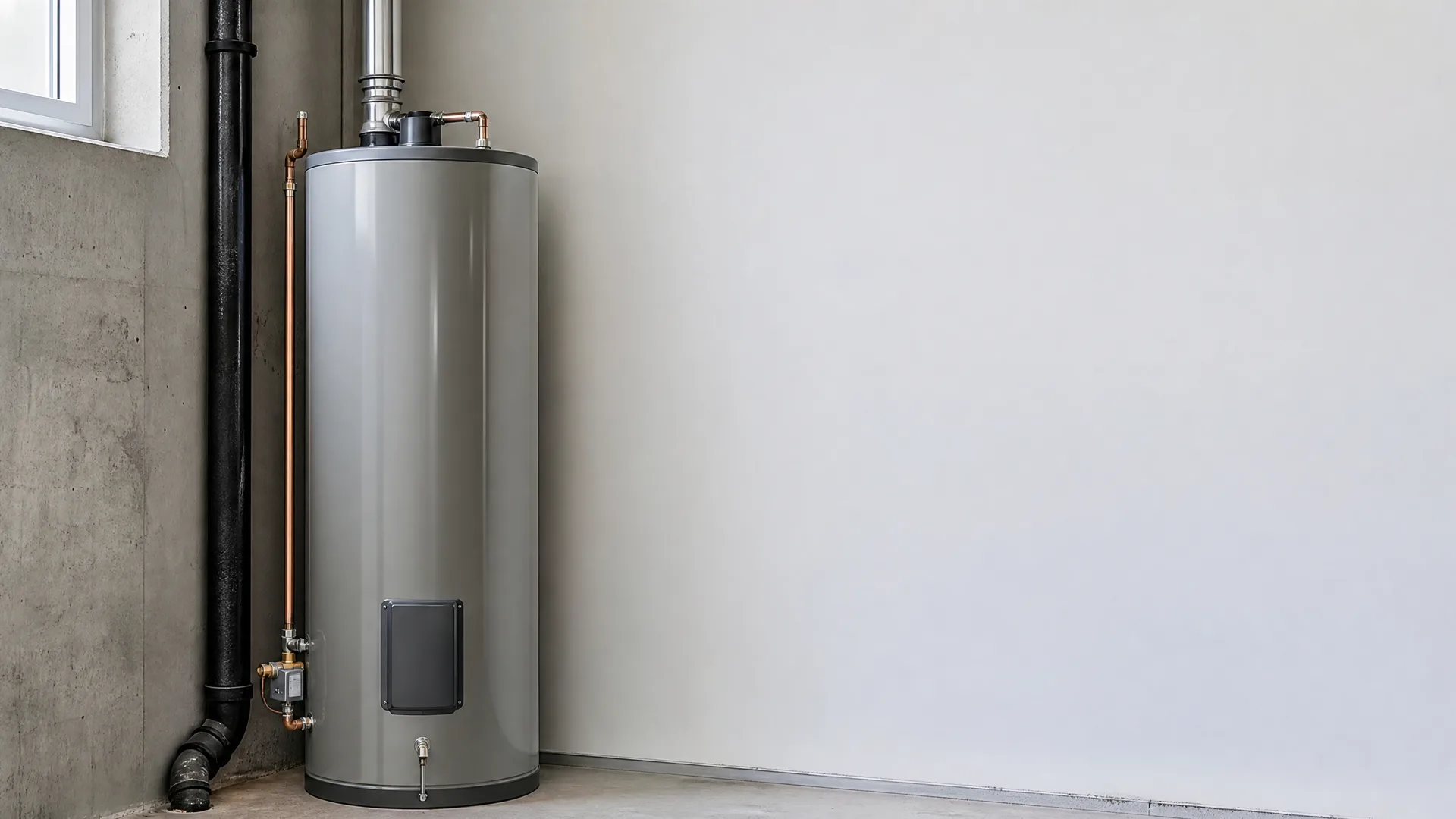
A gray cylindrical water heater with copper piping and a black vent pipe stands in the corner of a room with concrete and white walls.

What the tank's age tells you

Most tank water heaters last about 8 to 12 years. If yours came with the house or you've lost track of when it was installed, check the label on the tank for the manufacture date. Once a unit passes that range, the inside of the tank has likely started to corrode, and corrosion isn't something a contractor can repair. A water heater in that age range that's also showing rust in the water or pooling at the base is past the point of fixing.

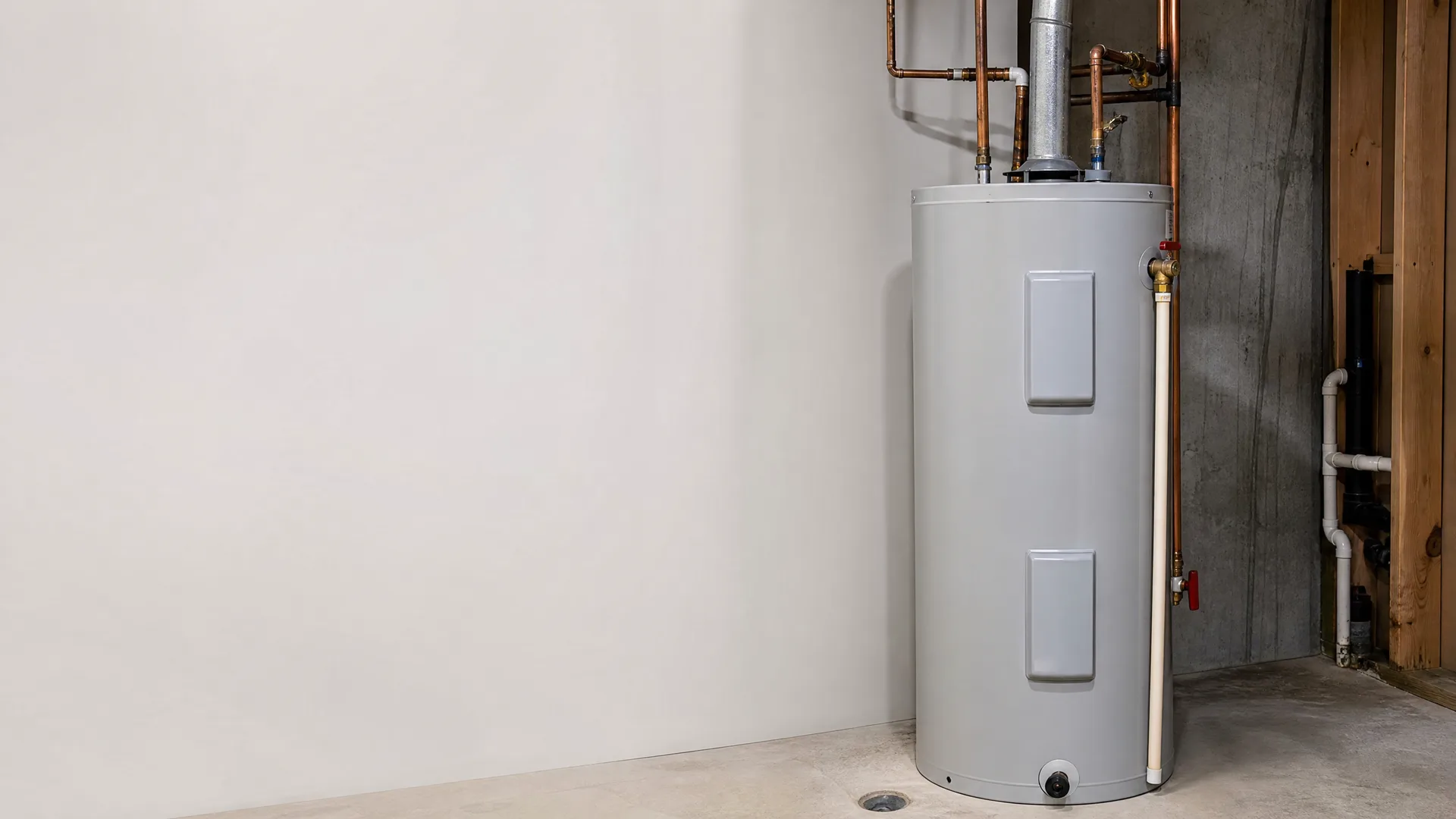
A gray cylindrical electric water heater stands in a basement corner against a white wall, with copper pipes and a vent duct above it and a concrete wall and PVC piping to the right.

Why rusty water matters

Rust-colored water from the hot tap, not the cold one, usually means the tank itself is corroding from the inside. Anode rods are built into tanks to slow this, but once they're used up, the steel tank starts to rust on its own. A sediment flush won't reverse that. If the cold tap runs clear and only hot water comes out discolored, that's the tank, not your home's pipes.

What does your household actually need from a water heater?

  • 2.5 people per household on average

    Most households in Clay County run 2.5 people, which is enough demand that a failing water heater gets noticed fast, through shorter hot showers or a tank that can't keep up.

  • Half the homes here were built by 1987

    Half the homes here were built in 1987 or earlier. If yours is one of them, the original water heater is long gone, but the pipes and shutoff valve may be original too.

  • 66.5% of homes heat with gas

    Gas heats 66.5% of homes in Clay County, more than any other fuel. If yours is gas, replacement means matching the vent and gas line, not just swapping a tank.

ACS 2020-2024

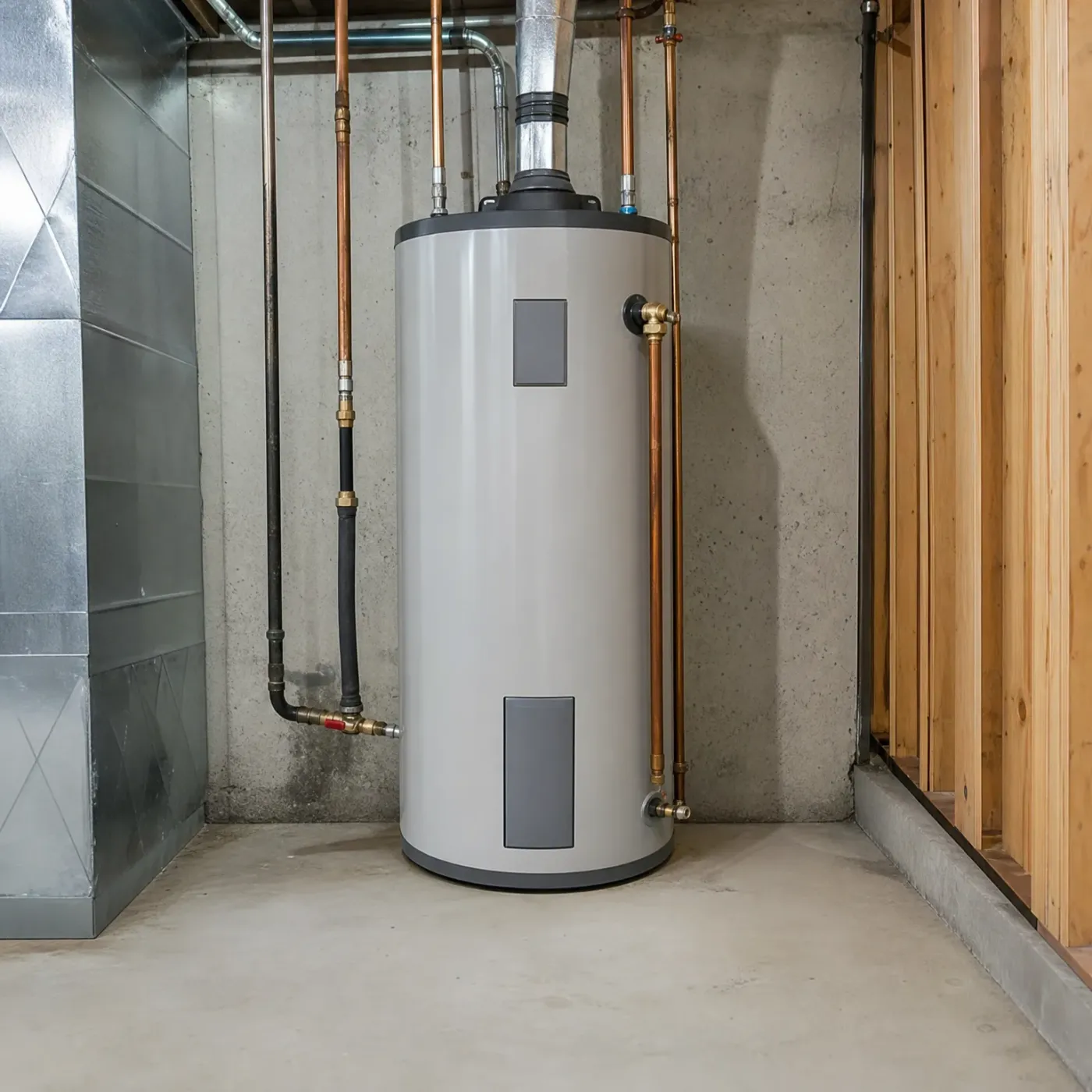
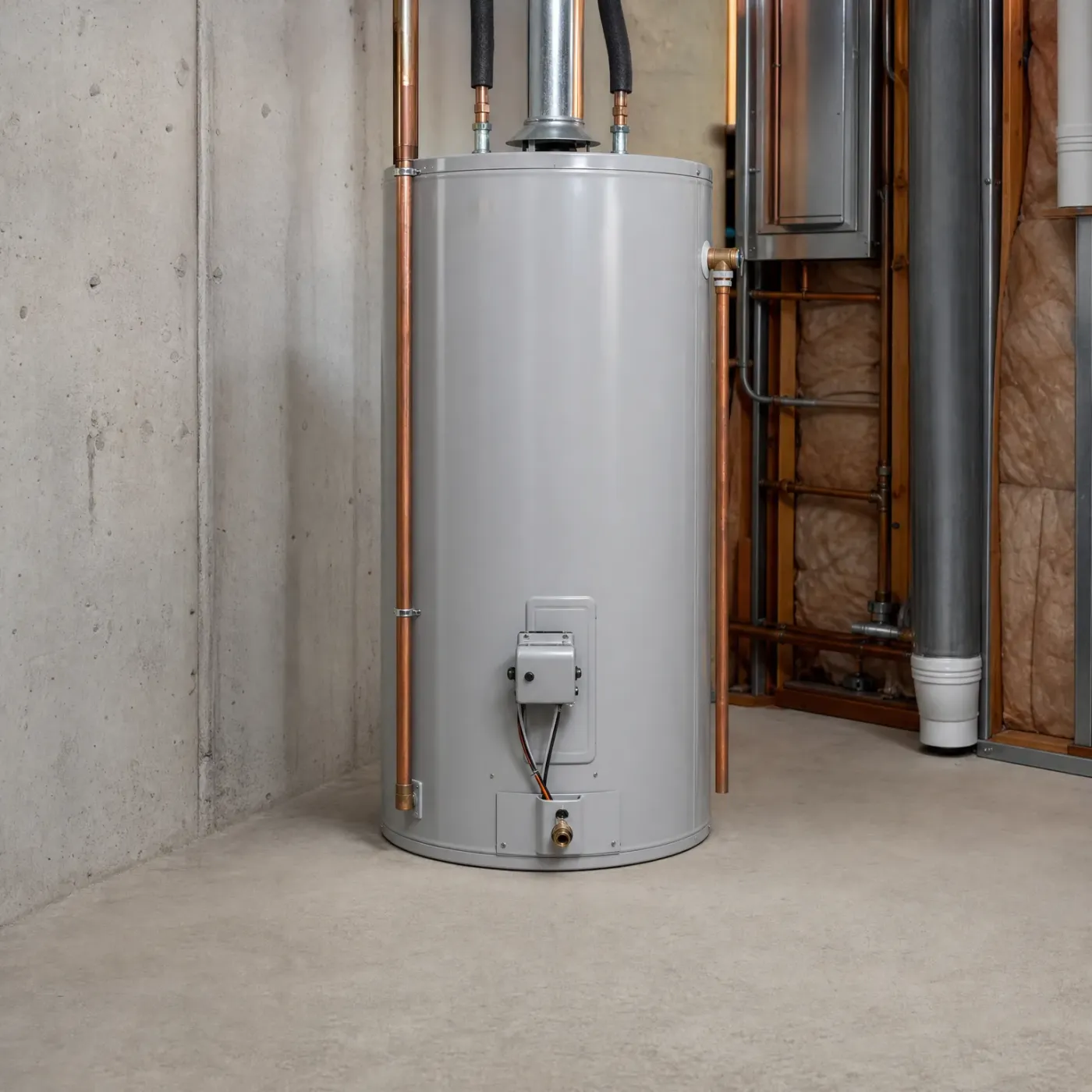
A gray cylindrical water heater stands in a basement corner against a concrete wall, with copper pipes, insulated flex lines, a metal flue, and insulated wall framing with ductwork to the right.

Still doing its job

If your water heater fires up fast, holds a steady temperature, and the area around it stays dry, it's still earning its keep. Copper lines and the flue should show no corrosion. A unit in this shape is worth repairing if something minor goes wrong.
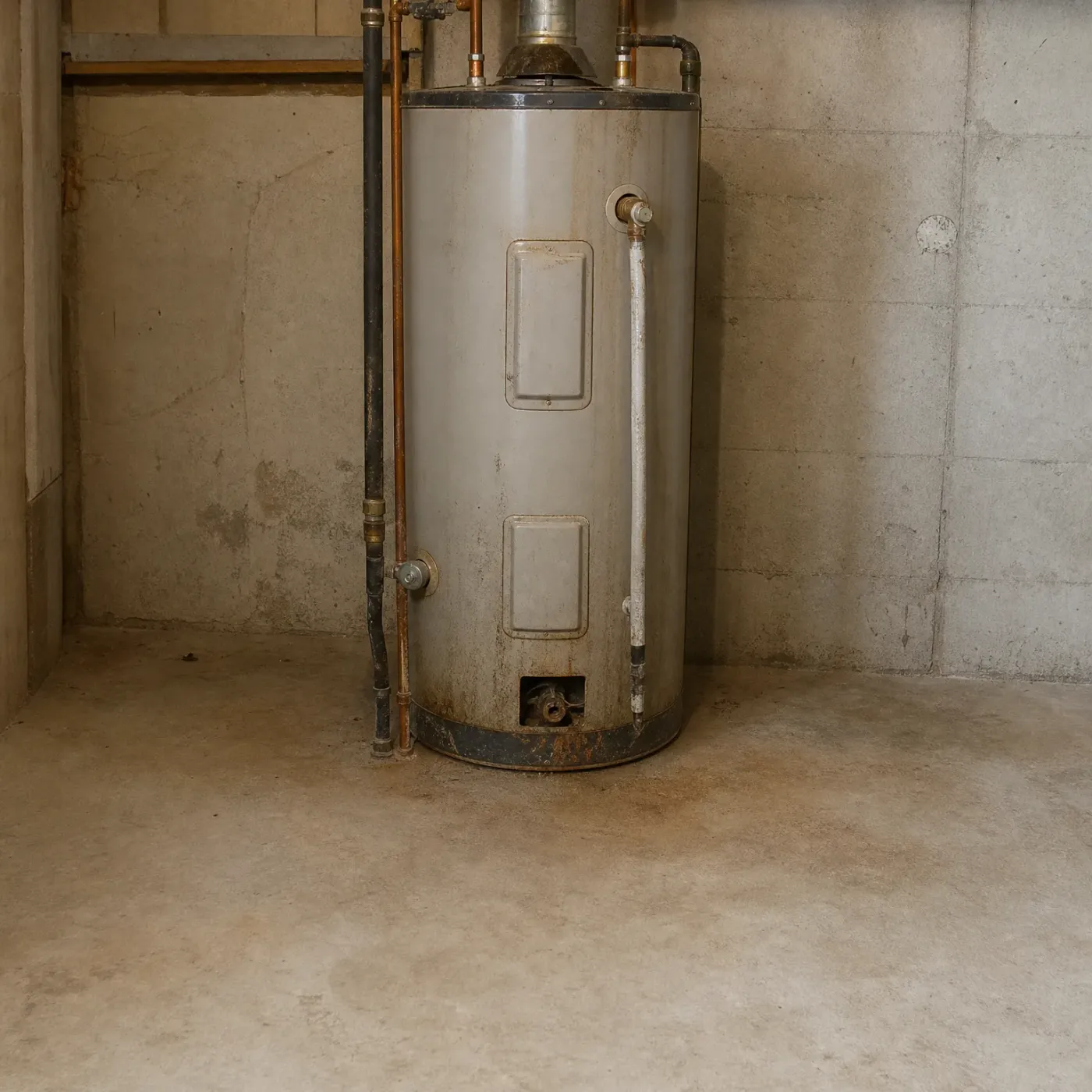

A rusting gas water heater with copper and steel pipes stands against a concrete block wall on a bare concrete floor.

Past the point of fixing

Rust creeping up the tank or pooling at the base means the inside is failing, and no repair stops that. Add a popping or rumbling sound, or water that never quite gets hot, and you're looking at a unit near the end of its life, not one with a fixable problem.

What's your water heater been telling you lately?

You might notice the hot water runs out faster than it used to, or the tank makes a low rumbling sound when it heats up, that's sediment hardening on the bottom. Water coming out with a rusty tint, or a metallic smell, points to the tank itself breaking down inside. Check the floor around the base. Any dampness, even a little, means a seam or fitting is failing somewhere. Left alone, a slow leak can soak the subfloor or the drywall nearby, and that turns a water heater repair into a bigger repair on top of it. If the pilot or igniter struggles to stay lit, that's worth a look too.

A man in a gray sweater reclines in a brown leather armchair with his eyes closed, beside a wooden side table holding a mug, a folded newspaper and a potted plant, with a bookshelf and sunlit window behind him.
A man with greying hair and a dark sweater leans back on an armchair with his eyes closed and a slight smile, in a living room with a bookshelf, plant, folded newspaper and mug on a wooden table.
A man in a gray fleece jacket sits reclined in a leather chair with his eyes closed, in a room with bookshelves, a table lamp, a window, and a desk holding a folded newspaper and a dark mug.
A bearded man in a gray fleece pullover sits with eyes closed in a brown leather armchair in a living room, with a floor lamp, bookshelf, potted plants, a side table holding newspapers and a dark mug, and a bright window behind him.

Finding a pro stops being your job

A licensed installer who works in Clay County gets your project.

Asking costs nothing, and the choice to hire stays yours.

Repair makes sense when the tank is still young, the fix is small, like a thermostat or a heating element, and everything else about the unit checks out sound.

Replacement makes sense once the tank itself is leaking, since a leaking tank can't be patched, or once it's past 8 to 12 years old and still giving trouble.

An older man with gray hair and a navy knit sweater sits in an armchair with his eyes closed, near a bright window with potted green plants.
A woman in a cream knit sweater sits in an armchair indoors, eyes closed and smiling, beside a window showing yellow and orange autumn foliage, with a mug on a wooden side table and shelves holding vases behind her.

8 to 12 years old

A unit in this range has earned some suspicion. If a repair bill shows up now, that age should weigh heavily on the side of replacing it instead.

I'm done searching

Under 8 years old

Most problems at this age are a single part worth fixing. The tank itself is still sound, so a repair should hold for years to come.

I'm done searching

Power here costs 13.35 cents per kilowatt-hour

Electric water heaters are cheap to run here at that rate, so if yours is electric, cost alone won't tell you much about when to replace it. Go by the tank's age and condition instead.

EIA-861 2025

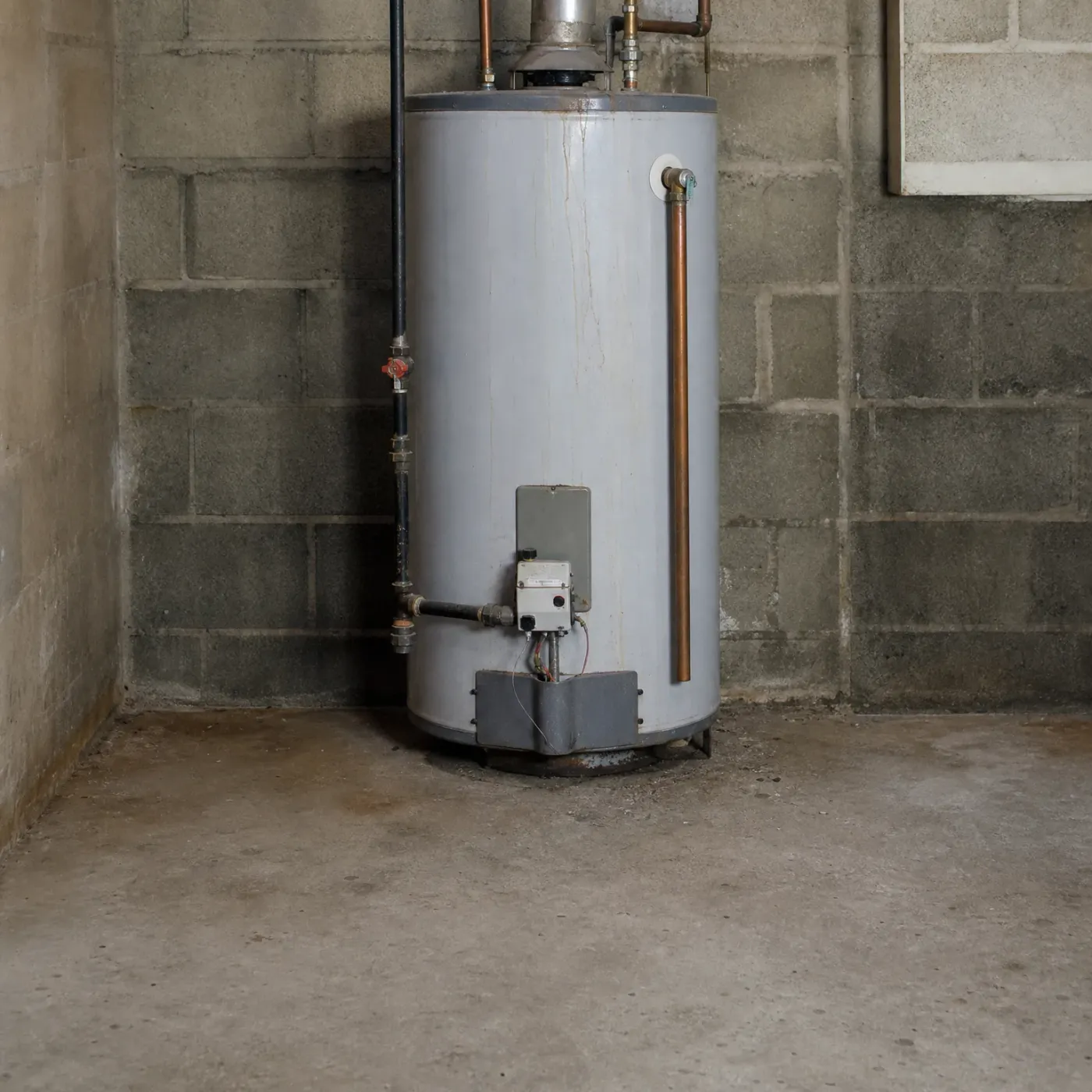
A gray cylindrical gas water heater with copper and black pipes stands in the corner of a basement with concrete block walls and a bare concrete floor.
Before you get your water heater installation
A gray cylindrical water heater standing in a basement corner against a concrete wall, with copper and black pipes, a metal flue, and ductwork nearby, next to wood framing on the right.
After you get your water heater installation
  1. A plumber drains the tank and shuts off the gas or power.

  2. The old unit gets disconnected from the water and gas lines.

  3. The new tank goes in and gets leveled in place.

  4. Water, gas, and the vent or exhaust line get reconnected.

Repair or Replace the Tank

Keep it

  • A tank under 8 years old with a bad thermostat or heating element is usually worth fixing, since those parts fail on their own without the tank going bad.
  • If the tank is dry underneath and the fittings show no corrosion, a single repair now doesn't mean another one is coming soon.
  • Gas is the common fuel in Clay County, and a gas unit with a working thermocouple and clean burner can keep running fine after one repair.
  • A repair bill that's a small fraction of what a new installation would run is the clearer call, especially if the unit is still inside its expected lifespan.
  • If the water runs hot and steady and the only complaint is one odd noise or a pilot light that won't stay lit, that points to a part, not the tank.

Replace it

  • A tank that's leaking from the body itself can't be patched, since the steel has already corroded through from the inside.
  • Once a unit passes 8 to 12 years, the tank's interior lining has likely broken down enough that another repair just delays the next failure.
  • Rusty water or a persistent metallic smell points to corrosion inside the tank, not something a new part fixes.
  • If a repair would cost close to what a new unit costs installed, replacing it gets you a fresh warranty instead of a patched-up old tank.
  • A tank that rumbles loudly from hardened sediment and still can't hold temperature has worn past what a repair can restore.
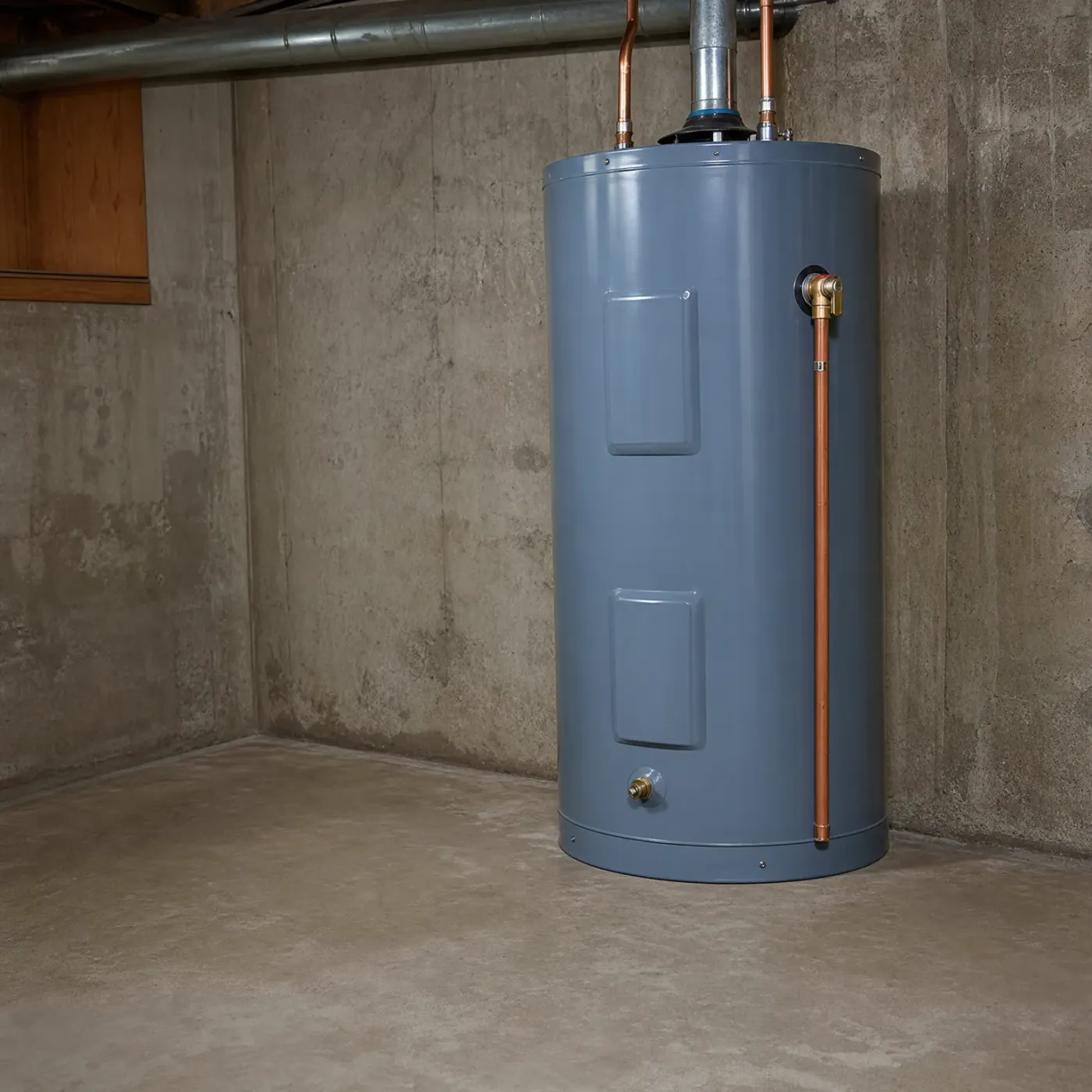
A gray cylindrical water heater standing on a concrete floor in a basement corner, with copper pipes and a metal duct running overhead along bare concrete walls.

No rust, no leaks, no trouble

A water heater like this one is doing what it's supposed to. The fittings are dry, the vent pipe is intact, and there's no sign of corrosion where the copper lines meet the tank. Nothing here points to replacing it.

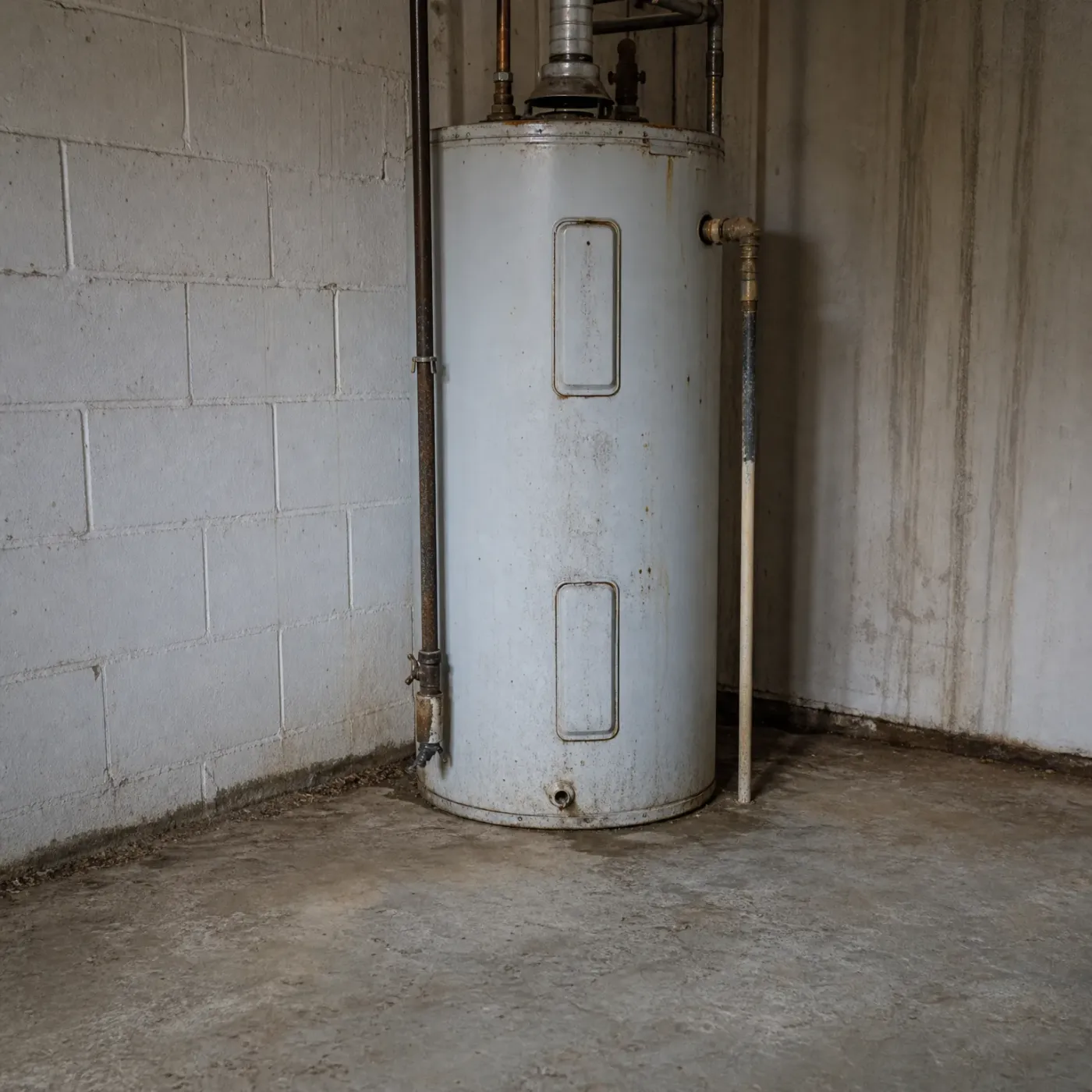
A white cylindrical water heater with rust stains and two access panels stands in a basement corner between a painted concrete block wall and a bare concrete wall, with metal pipes running up and alongside it on a concrete floor.

Rust like this doesn't stop

Once a tank corrodes like this, it's eating through metal from the inside, and nothing patches that. The rust around the fittings and the age it shows mean the tank is close to failing outright, not just due for a repair.

The age on the tank's label and what's happening underneath it tell you almost everything. A unit past 8 to 12 years with a leak at the tank seam needs to come out. A younger tank with a bad element or thermostat is worth fixing and moving on. If you've read through this and you're still not sure which side yours falls on, a plumber who works on these tanks all over Clay County every week can look at it in person and settle it in a few minutes, the kind of thing that's hard to judge from a sound or a stain alone. You'll get matched with one licensed plumber local to Liberty, not a handful of companies competing for your call, someone who's pulled enough corroded tanks out of enough basements around here to know what a sediment rumble means versus what a failing heating element sounds like. Whatever you decide, you'll be deciding from a clear picture of where your water heater actually stands, not a guess.

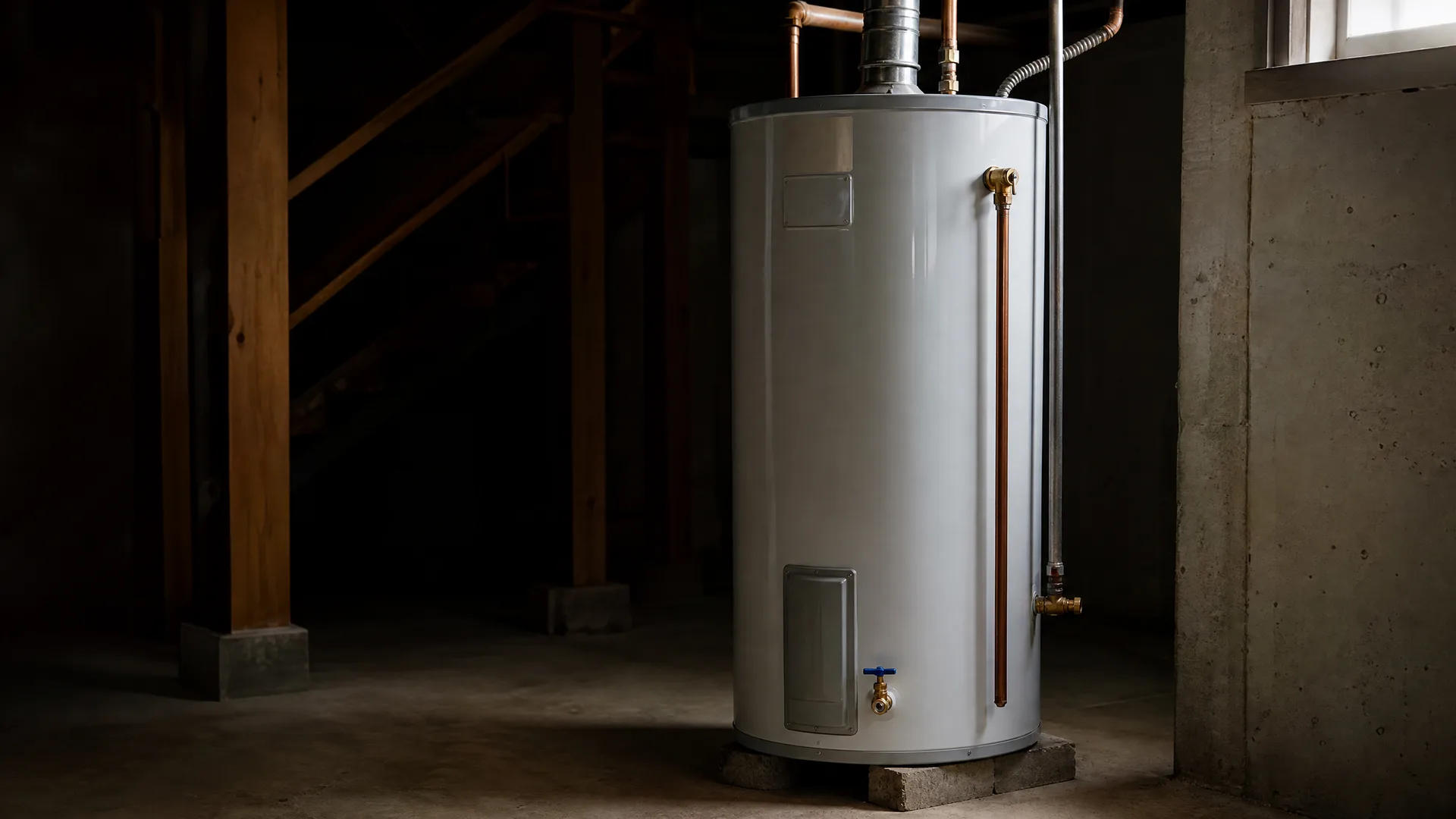
A white cylindrical water heater with copper piping and a drain valve stands on concrete blocks in a dim basement near a wooden post and staircase.

One request and it's handed off

Step 1 of 3: Equipment