Still doing its job
Copper lines, brass fittings, no rust on the floor around it. A tank like this one is still heating the way it should. If yours looks like this and the water runs clear and hot, there's no reason to touch it yet.

Most water heaters last 8 to 12 years, and in St. Louis County's hard water that wears on the tank faster than you'd expect. Once it passes 10 years, start paying attention. Rust-colored water from the hot tap, a tank that's noisy or rumbling, water pooling around the base, or a pilot or heating element that keeps failing all point to a tank near the end. A gas water heater that won't hold a pilot light or keeps tripping its thermocouple is usually not worth repairing at that age. If yours is under 8 years and the problem is a part like a thermostat or heating element, replacing that part often makes more sense than replacing the whole unit. Past 10 to 12 years, with cold Missouri winters putting real demand on your hot water, a failing tank tends to fail at the worst time, so it's worth planning the replacement before it leaks.
2.36 people per household on average
With 2.36 people in the average St. Louis County household, most homes here run on a standard 40 to 50 gallon tank. A bigger household or a soaking tub changes that math.
Half the homes here were built by 1969
Half the homes in St. Louis County went up in 1969 or earlier. If yours is one of them, check whether the water heater is original to a later remodel or still the builder's model.
74.6% of homes heat with gas
Gas heats 74.6% of homes in St. Louis County, more than any other fuel. If yours is one of them, replacement means matching the vent and gas line the old unit used, not just the tank.
ACS 2020-2024
A water heater doesn't fail all at once. It fails from the inside, over years, and the tap is usually the last place you'd notice. Sediment is the start of it. St. Louis County's hard water carries more dissolved minerals than soft water does, and those minerals settle out as sediment at the bottom of the tank. Once that layer builds up, it sits between the heat source and the water above it, so the burner or element has to work through it to heat anything, and recovery after a shower or a load of laundry takes longer than it used to.
Underneath that, every tank has a glass lining meant to keep the steel itself away from water. It holds for years, then it cracks, usually from the heat cycling the tank goes through thousands of times over its life. Once that happens, water reaches bare steel and rust starts from that exact spot, spreading outward along the tank wall.
There's also an anode rod inside, a rod of metal that's built to corrode before the tank does. It's doing its job as long as it's there. Once it's used up, the steel tank is what corrodes next.
By the time you see a leak at the bottom, the tank itself has failed. That's not a fitting or a valve you can replace. At that point the tank is done, and the only question is how soon.




A repair makes sense if the tank is under 8 years old and the problem is a single part: a thermocouple, a heating element, a thermostat. Those are cheap compared to a new tank, and a licensed plumber can usually turn the job around in one visit. If the water heater is still under warranty, repair is often the only sensible call anyway, since a warranty may cover the part outright. Ask whoever looks at it whether the tank itself shows any sign of rust or pitting. If the tank is sound and only a part failed, fixing it buys you real years, not just weeks.
Past 10 years, repair stops making sense even when the fix looks simple, because the tank itself is the part that's aging and no repair touches that. A water heater that's leaking from the tank body, not a fitting or valve, is done. So is one where the rust has reached the water, not just stained a fitting. A local plumber who installs these every week in St. Louis County's hard water knows which tanks are worth patching and which ones are on borrowed time, and can tell you that in one visit instead of guessing room by room.
At 13.20 cents per kilowatt-hour, an electric water heater here doesn't cost much to run day to day, but an aging tank still wastes it. A failing heating element or a thick layer of sediment makes the unit cycle longer to get the same hot shower, and that shows up on your bill before the tank itself gives out.
EIA-861 2025
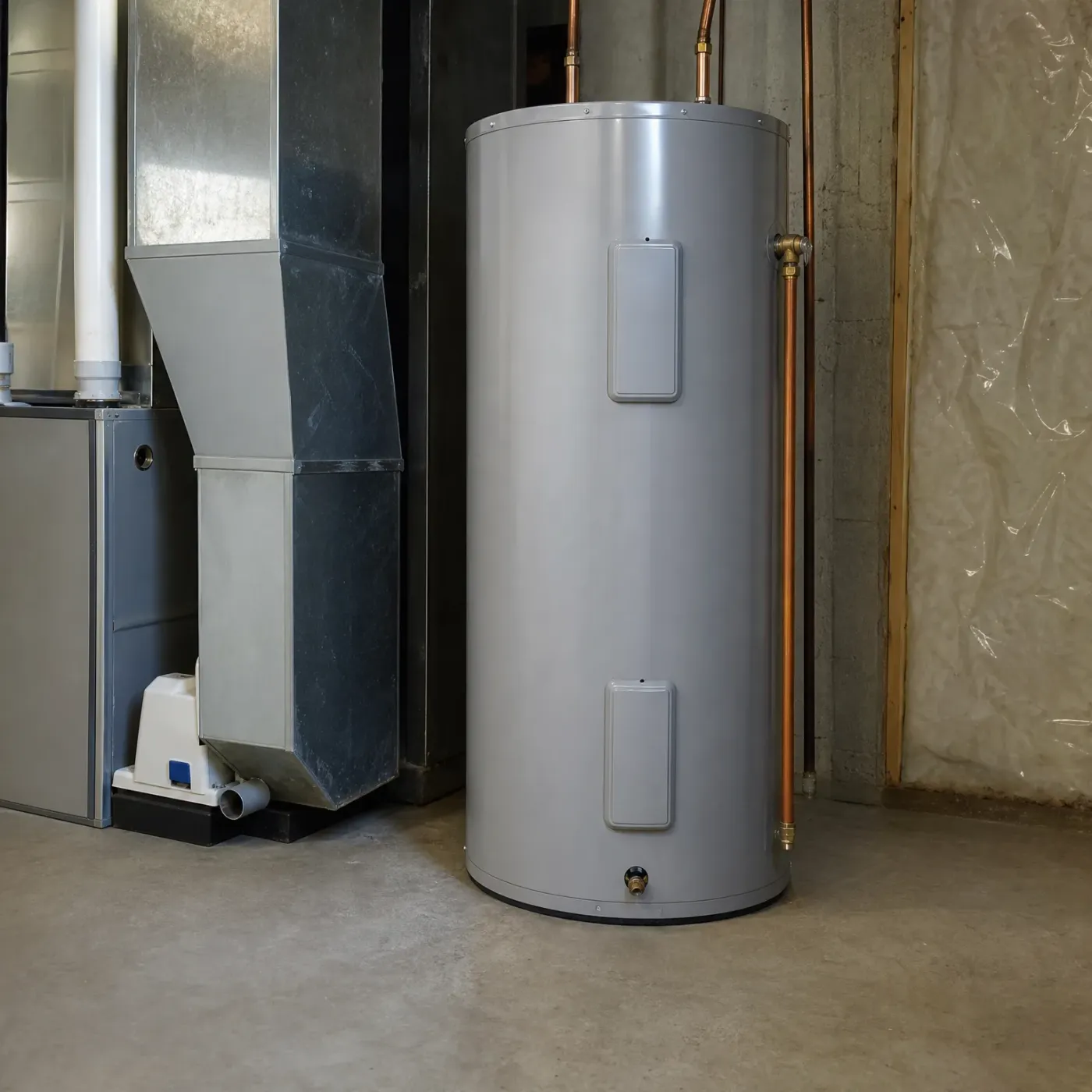
Copper lines, brass fittings, no rust on the floor around it. A tank like this one is still heating the way it should. If yours looks like this and the water runs clear and hot, there's no reason to touch it yet.
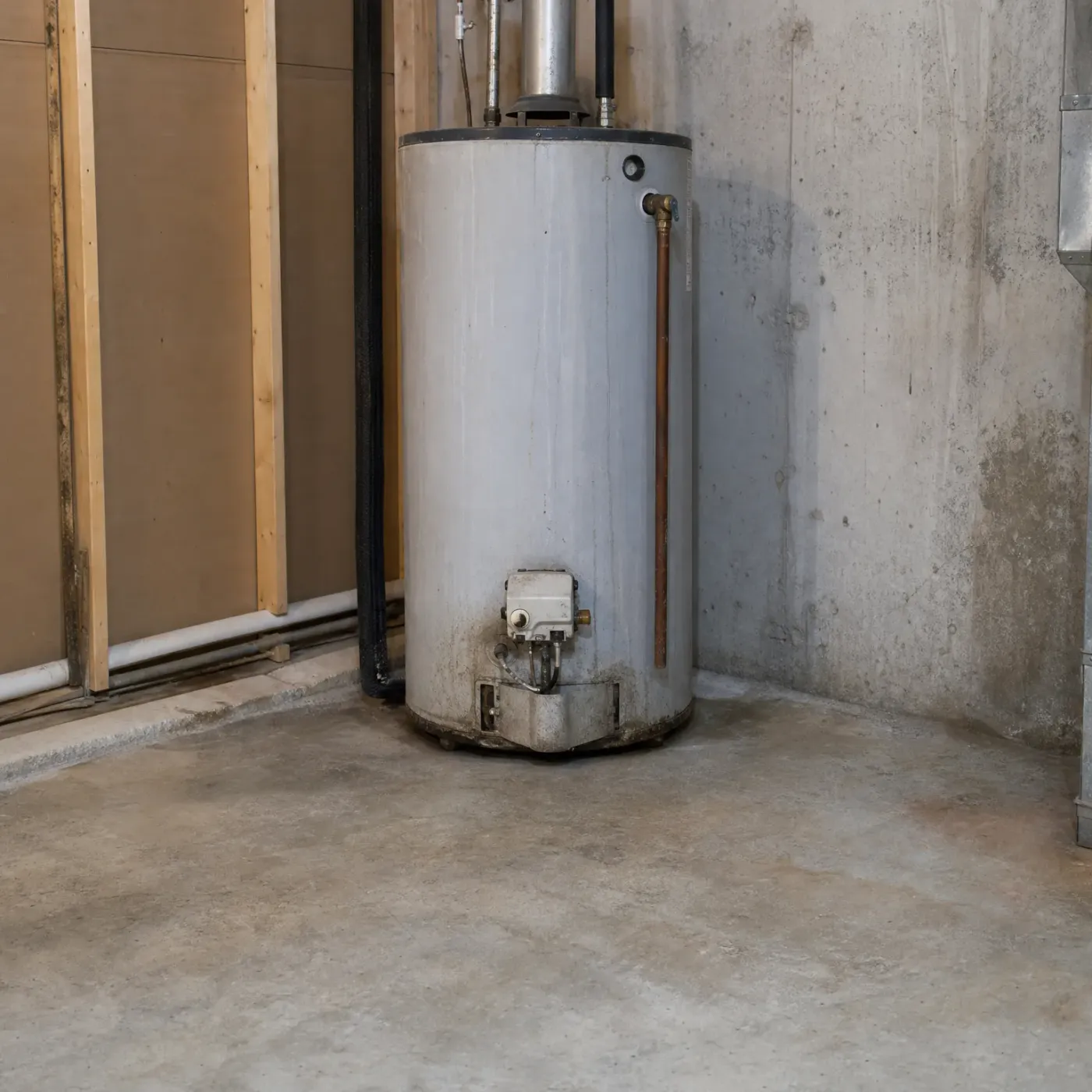
Rust and grime around the base and burner mean the tank is corroding from the inside. Once you see that at the bottom, the steel has already given way somewhere you can't see. That's a tank to replace, not patch.
Go look at it. Water on the floor around the base, even a little, means the tank is leaking from the inside and that doesn't stop on its own. Hot water that runs out fast, or never gets hot at all, points to a heating element or a tank that can't keep up anymore. Listen to it too. A popping or rumbling sound means sediment has built up on the bottom and the tank is working harder to heat around it. Check the color of the hot water. If it's rusty or has a metallic smell, the tank itself is starting to corrode. Left alone, a corroding tank eventually splits, and that means a flooded utility closet or basement, not just a cold shower.


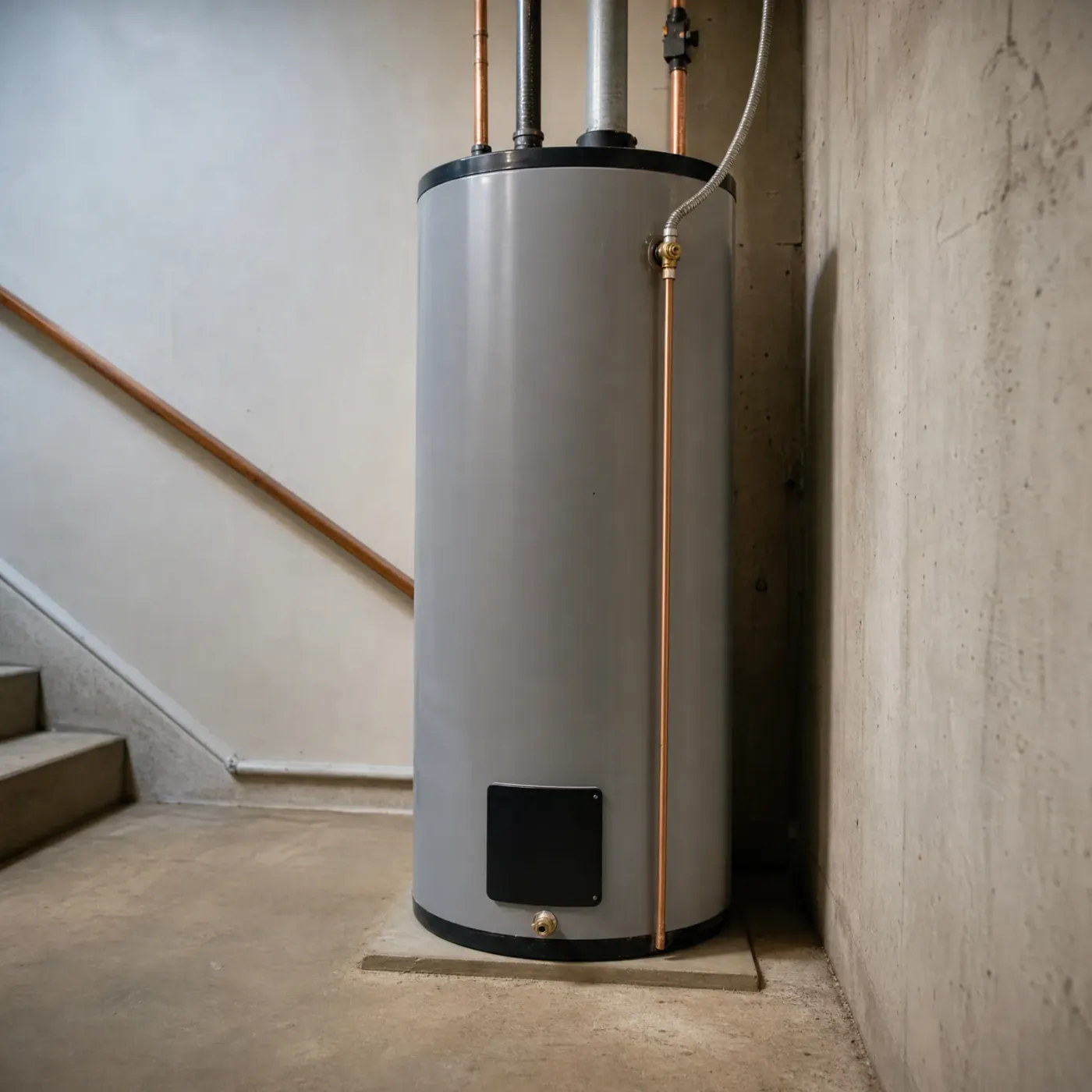
A licensed installer who works in St. Louis County gets your project.
Get matched with a pro who works on water heaters in St. Louis County.
Sending the form costs nothing.
Sediment builds up on the tank bottom and hardens into a layer.
That layer forces the burner or element to run longer each cycle.
The longer run time stresses the tank until a weld or seam gives way.
Water starts leaking from the tank, usually at the base first.
You've spotted water pooling under the tank and you want to know what's actually happening inside it before you decide whether this is a quick fix or the end of the line for the unit.
A leak from the bottom almost always means the tank has rusted through from the inside, and that's not something a plumber can patch. The glass lining inside a tank wears thin over years of heating cycles, and once bare steel is exposed to water, it rusts. St. Louis County's hard water speeds that along, since the minerals in it react with the metal faster than soft water would. Sediment collecting at the bottom makes it worse, trapping moisture against the tank floor. Once you see water on the floor, the seam or weld at the bottom has already given way. The fix at that point is a new water heater, not a repair, since the tank itself is what failed.
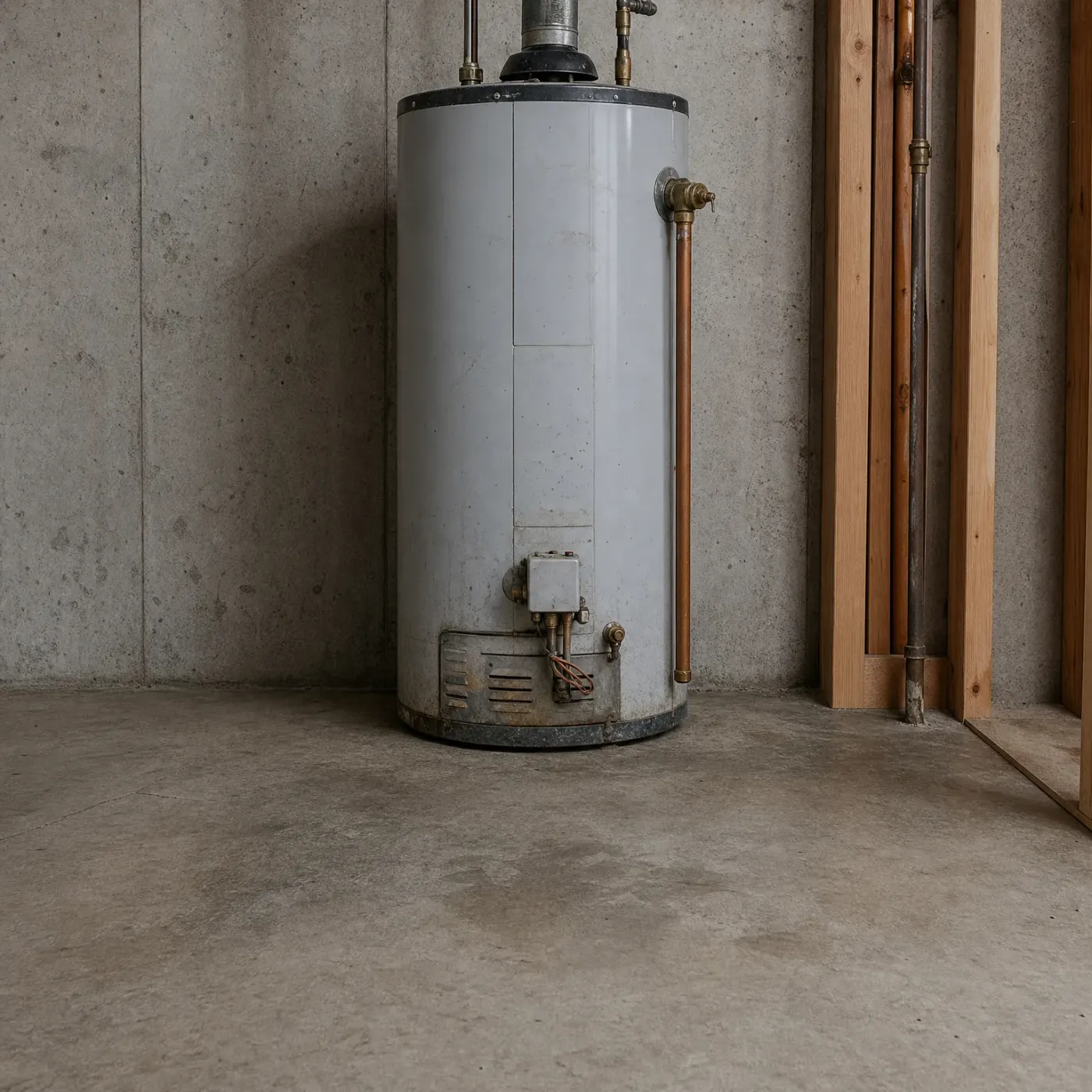
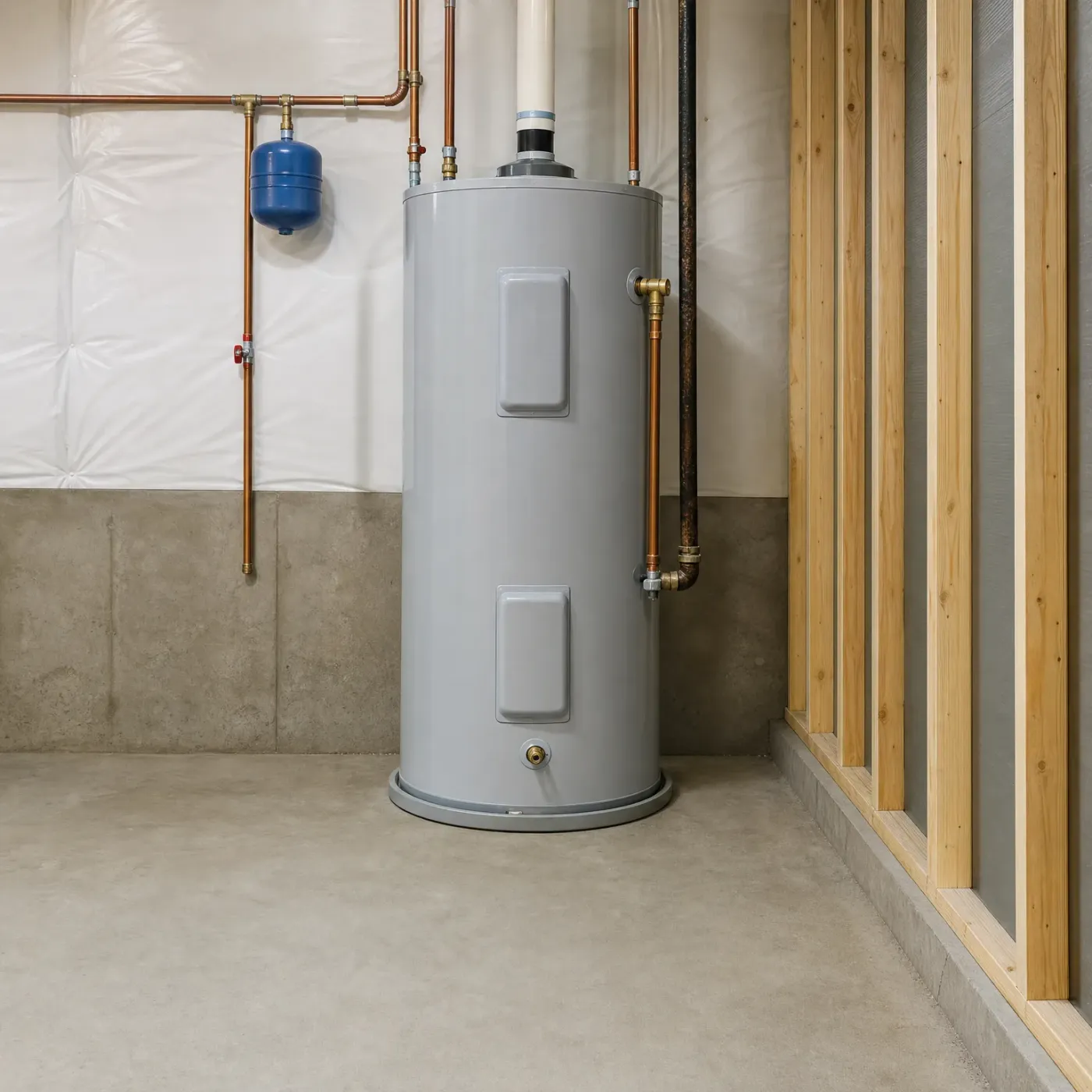
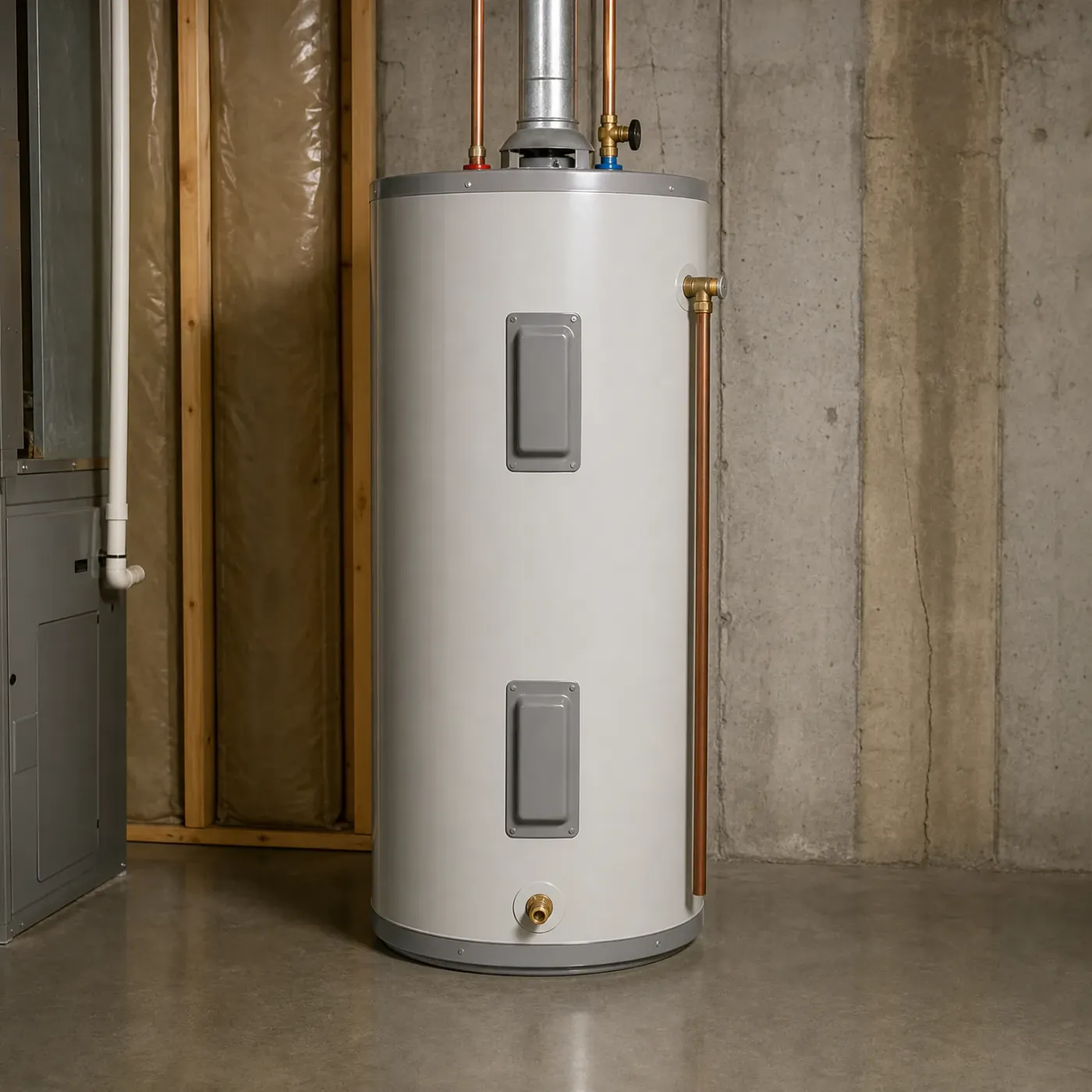
Copper lines run clean into the top, the flue vent sits straight, and the panels are free of rust. A tank like this is heating on schedule without a fight. If yours still looks this way, there's nothing to replace yet.
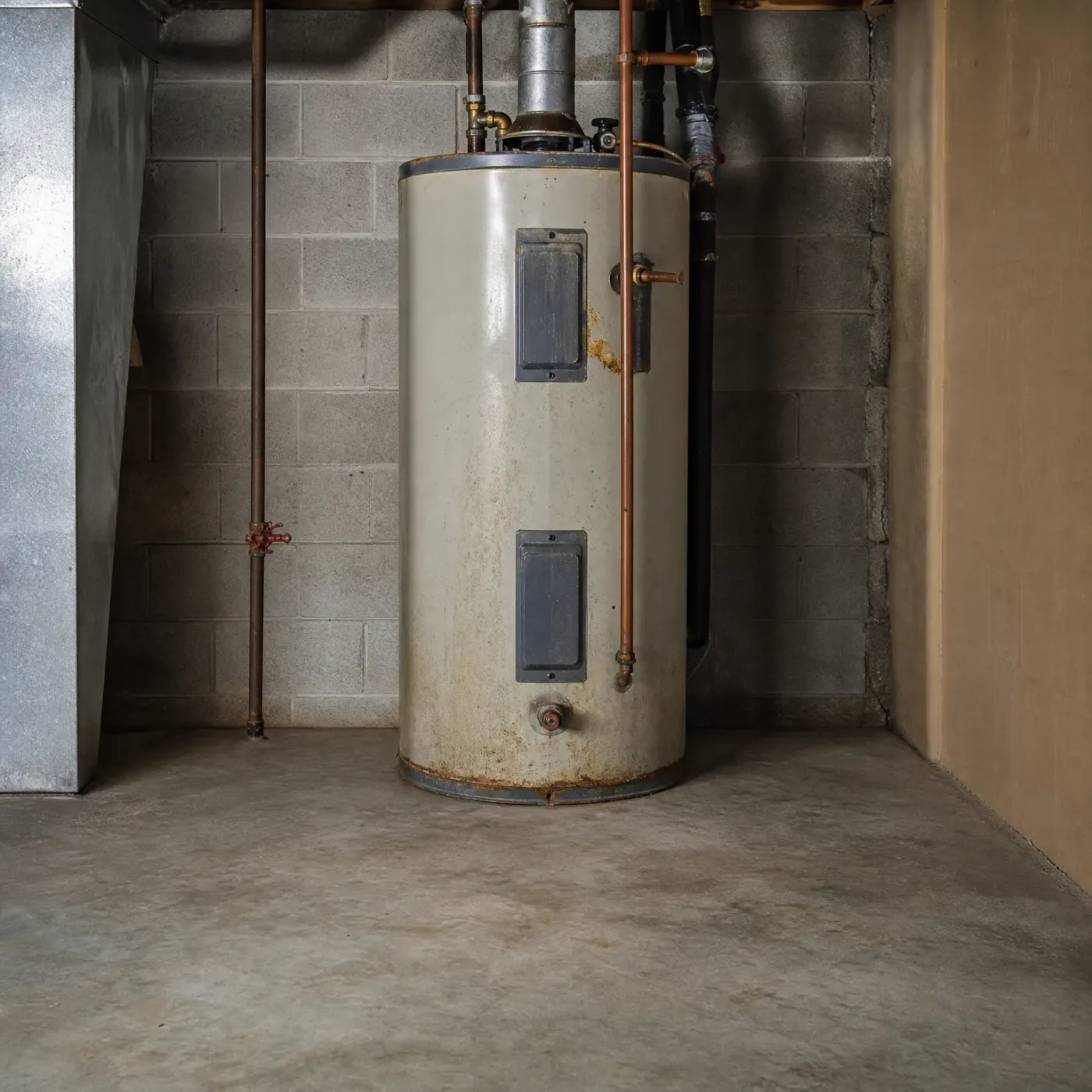
Rust has spread across the jacket and down toward the base, and that kind of corrosion doesn't stay on the surface. Once a tank looks like this, a leak is a matter of when, not if, and replacement is the honest answer.

A water heater past 10 years with rust-colored water, a rumbling tank, or water on the floor is done. One under 8 years with a bad thermostat or heating element is usually worth fixing. Everything between those two calls for a straight look at the tank, not a guess.
If you've gone through the signs above and you're still not sure which side of that line you're on, a local plumber can tell you in a few minutes what you'd otherwise find out the hard way. Submit your information once and it goes to one licensed plumber working in Florissant, someone who sees St. Louis County's hard water do this to tanks every week and knows which signs mean replace and which mean repair. That plumber will reach out directly, so you're dealing with one call, not several.






One installer gets your project, so there's no bidding war over it.
You're not committing to anything by asking.