

What temperature to set a water heater in Missouri

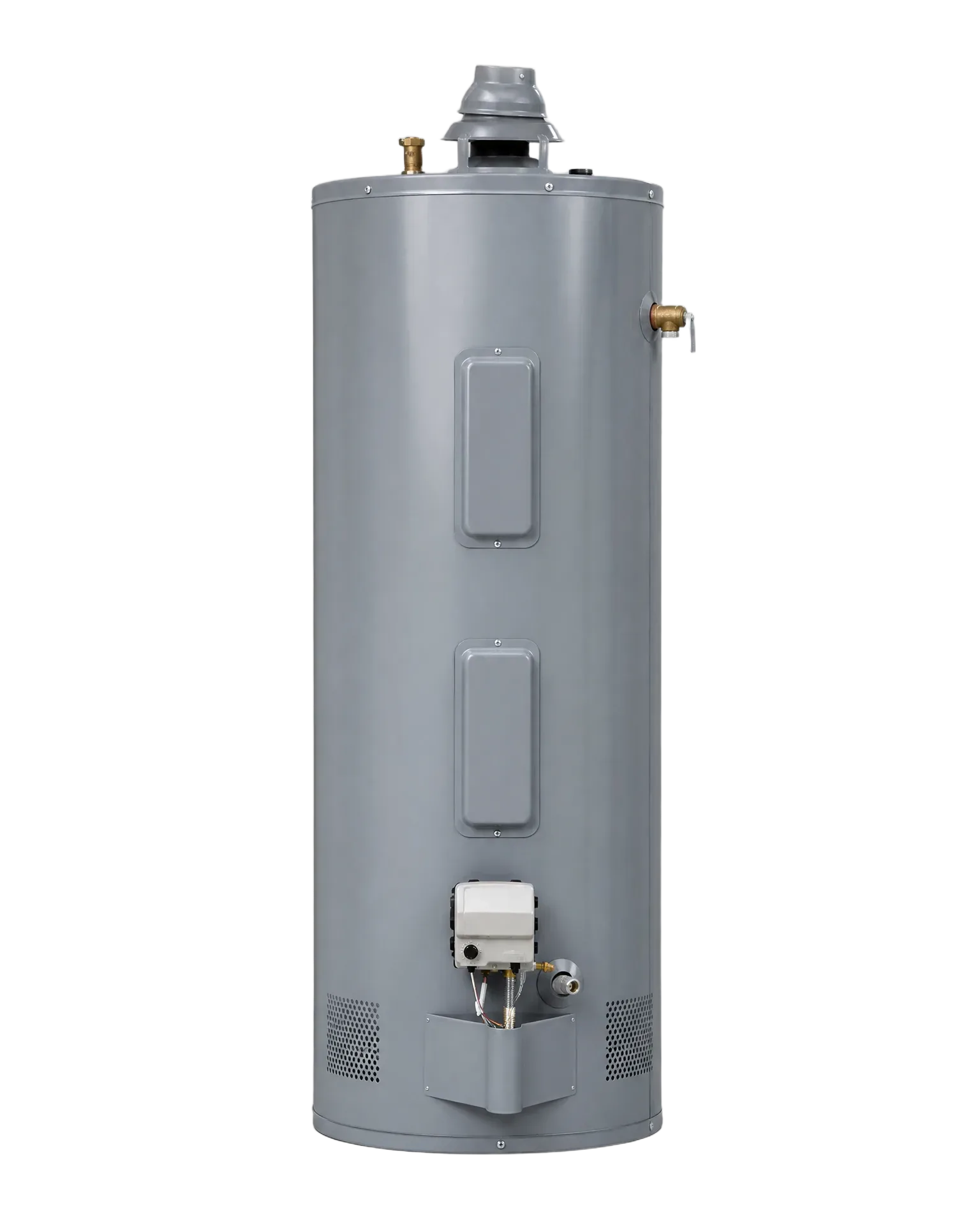
A gray cylindrical gas water heater with a top flue hood, brass fittings, two access panels, a control valve and burner cover, photographed against a plain gray background.
Skip the calls

120 degrees is the setting most plumbers recommend for a water heater in Missouri, and it's the default most tanks ship with. At that temperature, water is hot enough for showers and dishes without being able to scald someone in seconds, which happens fast at 140 or above. Most homes here run on gas, and a gas water heater holds its set temperature closely once it's dialed in, so you're not losing much by keeping it at 120 rather than higher. Power is cheap in Missouri, so the usual argument for turning it down further to save money matters less here than in other states. The one reason to go higher is if you've got a dishwasher without its own heating element, or you keep running out of hot water with several people showering back to back. Short of that, 120 is the number to set and leave alone.

A smiling bearded man in a navy crewneck sweater sits at a dinner table with a glass of red wine, plates and glasses in the foreground, in a dimly lit room with a lamp and framed picture behind him.
A woman in a dark gray sweater reclines on a light sofa with eyes closed and a slight smile, under a textured gray blanket with an open book resting on her lap, with a lit table lamp and plant in the background.

Why 120 is the line

Water at 140 degrees can burn skin in about five seconds. Drop to 120 and that jumps to several minutes, long enough for someone to notice and pull back before real damage is done. That gap matters most for kids and older adults, whose skin burns faster and who may not react as quickly to hot water. A plumber setting a tank to 120 is working from that margin, not a guess. It is the point where the tank still delivers water hot enough to get dishes and showers done without turning the tap into a hazard for anyone in the house.


What a higher setting buys

Some households push the tank past 120, usually because hot water runs out before everyone's done with it, or because a dishwasher without its own heating element needs water hotter than the tap delivers. A higher setting also keeps bacteria from building up in a tank that sits unused for stretches. The tradeoff is real: every degree above 120 adds to the risk of scalding at the faucet, especially for anyone bathing a toddler or helping an older relative in and out of a tub. That's a call worth making with a plumber who knows the tank.

A smiling woman with dark shoulder-length hair in a cream V-neck sweater sits at a marble counter with a glass of red wine, with a kitchen and softly lit living room behind her.
A woman in a dark green sweater laughs while seated at a marble kitchen island with a glass of red wine, with open shelving, cabinets and a living room visible behind her.
A woman with long dark hair in a cream knit sweater laughs while looking off to the side, seated at a counter with a glass of red wine, in a dimly lit living room with a sofa, lamp, framed pictures and houseplant behind her.
A smiling woman with long dark hair in a beige sweater sits at a marble kitchen counter with a glass of red wine, with a dimly lit living room behind her.
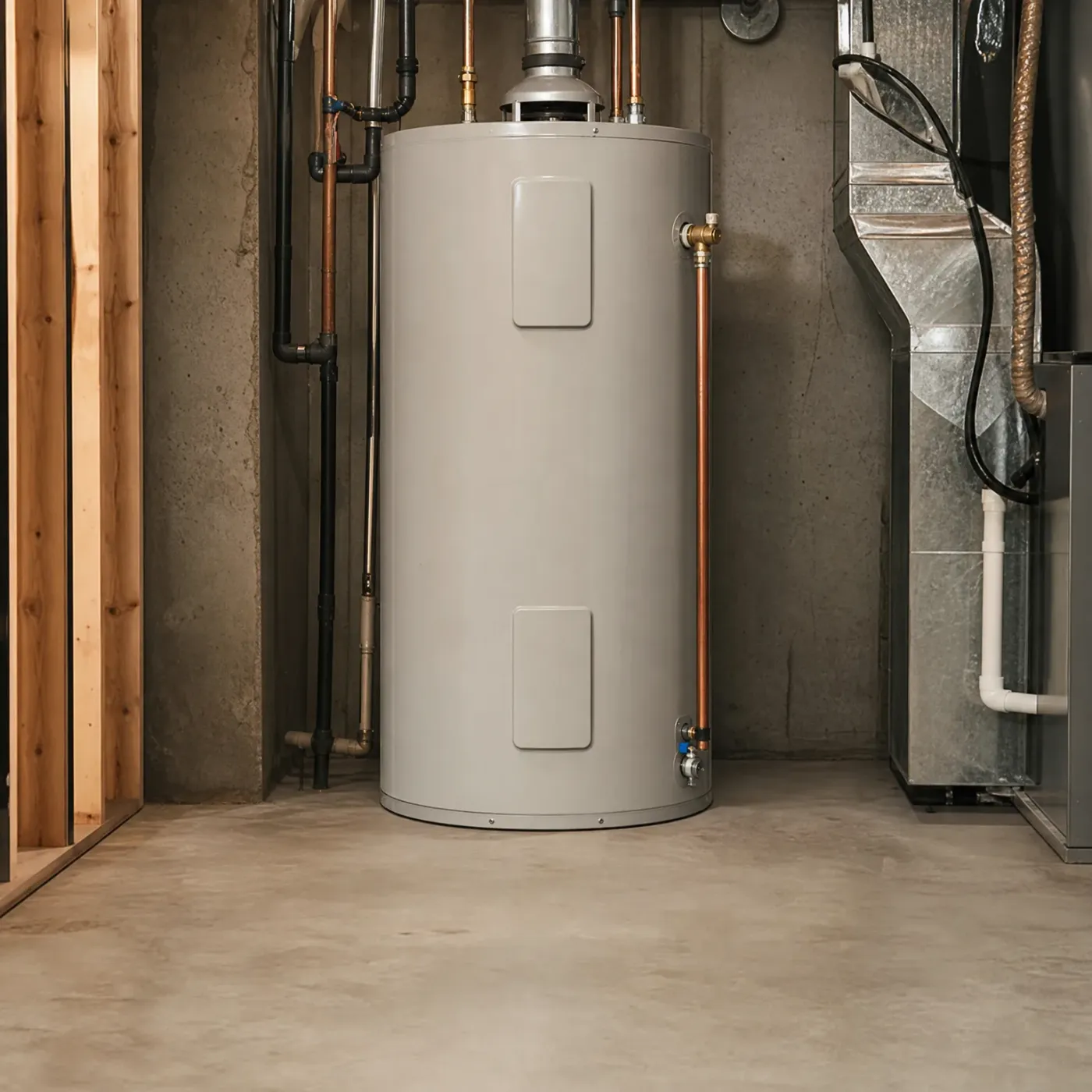
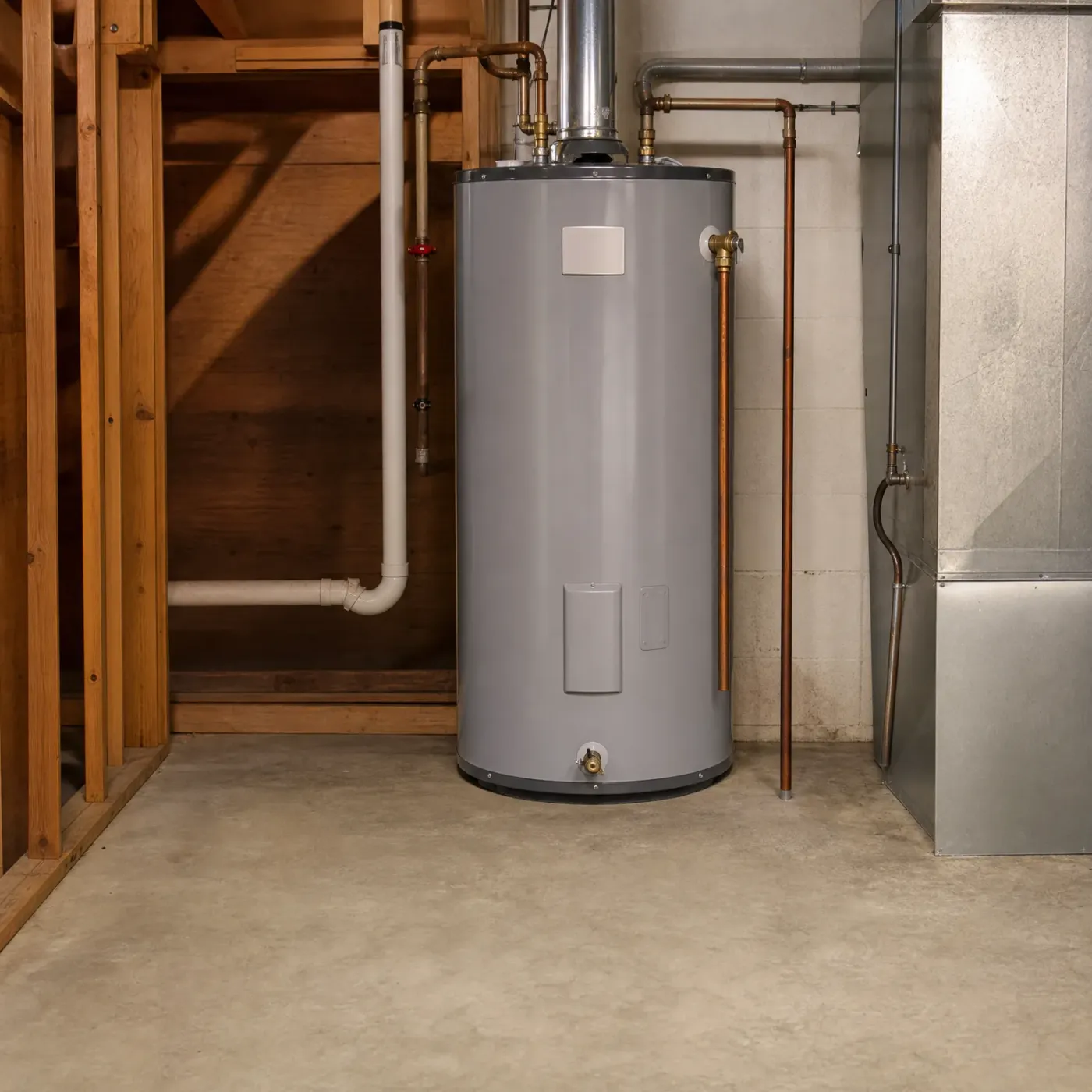
A gray cylindrical water heater with copper piping and access panels stands against a concrete basement wall beside ductwork and vertical pipes.

Set right and maintained

This is what 120 degrees looks like done right. The tank, valve and fittings are sound, and the furnace nearby has nothing to do with the tank's temperature setting. A unit kept up like this holds its setting and gives you years before anything needs attention.

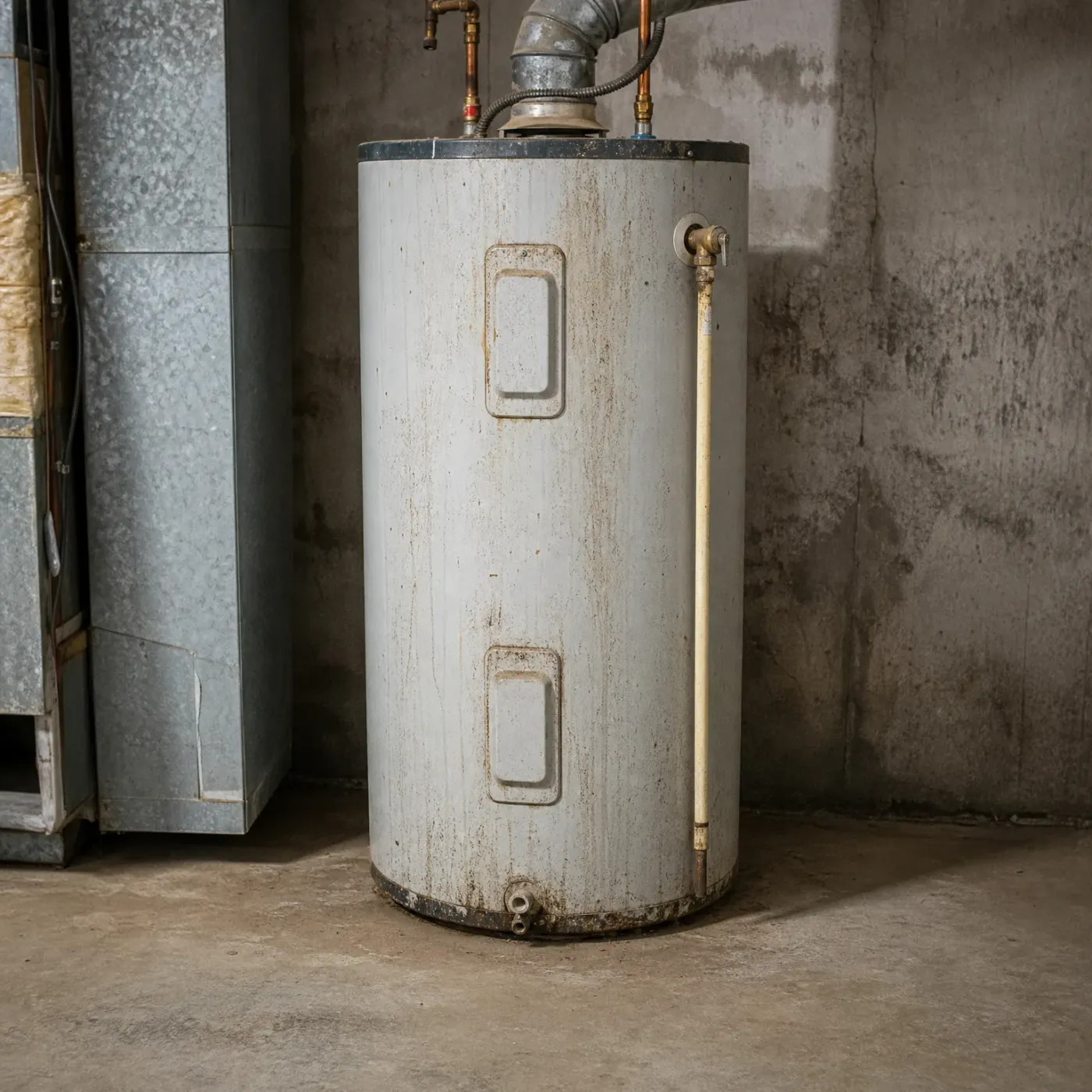
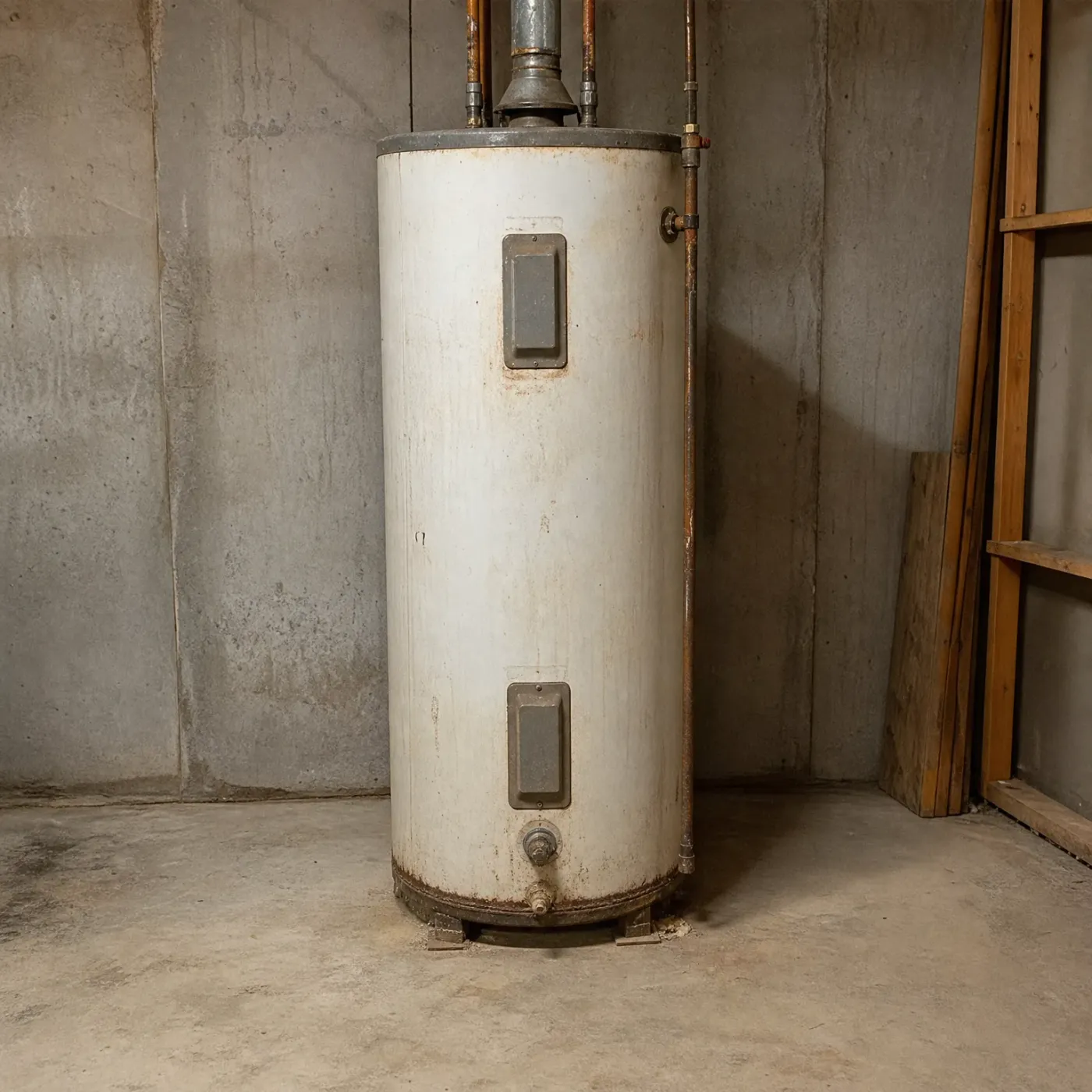
An old rust-streaked cylindrical water heater with two access panels, copper pipes and a flue at the top, and a discharge pipe along its side, standing on a concrete floor beside galvanized ductwork against a bare concrete wall.

Old tank, ignored setting

Rust like this on the tank and its fittings often comes with a setting nobody's checked in years, sometimes still at the factory default or bumped up and forgotten. A tank in this shape is also more likely to fail at the relief valve or the tank itself, whatever it's set to.

A closed laptop and a cream mug of coffee on a coaster sit on a dark wooden table, with a potted plant at left and a kitchen counter, tiled backsplash and shelf of ceramics in the background.

What 120 degrees means in your house

Walk over to your tank and check the dial. If it's sitting higher than 120, maybe at the old "hot" mark or wherever it shipped from the factory, you're paying gas to heat water hotter than you need, every single day. With gas as cheap as it is here, that waste is easy to ignore, but it adds up over a year of showers and laundry loads. Turning it down doesn't cost you comfort. It just means the shower runs the same and the gas bill doesn't carry the extra.

The setting only tells part of the story. A dial can read 120 and still deliver water that's hotter or colder, if the thermostat underneath has drifted or the tank has sediment built up on the bottom. That's not something you catch by looking. Instead of tracking down a plumber, explaining the dial, the sediment, and the age of the tank all over again until someone can come out, a local contractor who services water heaters all over Missouri can check the actual temperature at the tap, not just the dial, and tell you whether the tank underneath is doing its job.

A living room corner with a beige upholstered armchair holding navy and striped cushions, a small round wooden side table with a carved bowl and a potted green plant, a framed landscape picture on a pale wall, built-in shelving, and a curtained window.
  1. Gas burner or element heats water to the dial's setting

  2. Thermostat probe reads tank temperature near the setpoint

  3. Burner or element shuts off once 120 degrees is reached

  4. Tank holds that heat until a tap draws water out

49.3% of homes statewide heat with gas

Gas heats about half the homes in Missouri, more than any other fuel, and yours is likely one of them. A gas water heater answers to the same dial as an electric one. Where the thermostat sits decides what you pay to keep that tank at 120 every day.

ACS 2020-2024 5-year B25040

A rusted white cylindrical water heater with two access panels stands in a concrete-walled basement corner, with pipes rising from its top and wooden boards leaning against the wall at right.
Before you get your water heater maintenance
A gray cylindrical water heater stands on a concrete basement floor between an unfinished wood stud wall and a metal furnace duct, with copper and PVC pipes running along the concrete block wall.
After you get your water heater maintenance

Skip calling around

You've seen what 120 degrees should look like and what your dial is probably telling you right now. Checking the setting is the easy part. What's harder to see from the outside is the sediment sitting at the bottom of the tank, a thermostat probe that's drifted off, or a pressure relief valve that's never once been tested since the tank went in. Those are the things that make a water heater run hotter than it should, cost more than it should, or fail without warning. Finding someone to look at that usually means calling around, explaining the same thing two or three times, and guessing which quote to trust. A contractor working on tanks in Missouri homes all year already knows what tends to go wrong first in this kind of heat and humidity, and what's worth checking before it does. Get that matched up once, and you're done asking around.

120 degrees, checked and held

  • 120 degrees is the setting to leave your water heater at, hot enough for showers and dishes, safe enough to stand behind.
  • If your dial still sits higher, turning it down is the one change that keeps paying you back every month.
  • A tank that holds 120 steady, with clean burner parts and no sediment dragging down the thermostat, is doing its job right.
  • A Missouri plumber who checks tanks like yours all year knows which valve or element tends to drift first.
  • You'll hear from one local contractor, not a handful of companies working your number at once.
  • Where you stand now is simple: check the dial, and let someone who knows this equipment handle the rest.

120 degrees is where your water heater should sit. That number has come up a few times on this page because it's the whole answer: hot enough to get through dishes and showers, cool enough that nobody gets burned reaching for the tap. If your dial is still higher than that, turning it down is the simplest fix available to you, and it keeps working for you every month after.

Getting the setting right is something you can do by looking at the dial. Keeping it right is a different job. Sediment builds up at the bottom of a tank over time and makes the thermostat work harder to read the water accurately. A burner or element that's coated in buildup doesn't heat the same way it did when the tank was new. Those are things a plumber checks by hand, not things you can see from across the room.

A plumber working in Missouri sees these tanks all year, in houses with the same gas lines and the same water running through them as yours. That's who ends up knowing which part on a given model tends to drift first, and what a tank at your tank's age usually needs. When you ask for help through this page, that request goes to one contractor, local to you, not out to a handful of companies competing for your callback. You check the dial. The rest, the sediment, the thermostat, the parts that wear without showing it, is work for someone who handles this equipment for a living.

A single-story stucco house at dusk with a lit paver walkway lined by low path lights, desert plants and boulders in front, and distant mountains under an orange and blue sky.

Water Heater Maintenance

Describe it once

Step 1 of 3: Equipment
  • A dimly lit living room corner with a beige upholstered sofa holding a dark green cushion and a chunky knit throw, beside a wooden sideboard with a lit ceramic table lamp, a small potted plant, and a wooden bowl, with a framed artwork on the wall and a mug on a book in the foreground.
    • A local pro who services water heaters gets in touch about the tune-up.
    • Describe your water heater job, and a local pro who handles it gets in touch.
  • A round wooden coffee table holding a round stone vase of green foliage, a lit candle in a glass container, and a small dark bowl, with a beige sofa, cushions and knit throw behind and a window at left.
    • Send the form, and lining up the water heater tune-up stops being yours to chase.
    • After this form, you can stop searching for a water heater pro.
  • Sunlit living room with a wooden coffee table holding a ceramic vase of leafy branches and a carved wooden tray with two stacked books, in front of a beige sofa with tan and green cushions and a potted plant near a window.
    • Skip searching for a water heater pro and answer a few questions instead.
    • One form replaces the calls you'd make to find a water heater pro.
  • Interior corner with a lit ceramic table lamp and wooden bowl on a wood sideboard, a framed picture and branch-filled vase behind, a knit throw over an upholstered chair, and a lit candle in a glass holder, stoneware mug and round planter of green foliage on a wooden table in the foreground.
    • Your request stays with one local pro.
    • Your request goes to one pro, not a list of companies.