Tell us about the job
Takes about a minute. No obligation.
Electricity heats more occupied homes in Macon County, Missouri than any other fuel, at 38.1% (2020-2024 ACS 5-year). An electric water heater puts all of its work through two heating elements and the thermostats that switch them. In a county where electric resistance heat is the dominant choice, contractors pulling a failed unit find those elements corroded, scaled, or burned out from years of cycling rather than a venting fault or combustion problem. There is no burner to inspect, no flue to check for backdraft, and no gas valve to test. The repair scope narrows to the electrical side: elements, thermostats, the anode rod, and the condition of the tank itself.
Water heaters get replaced; the infrastructure behind them does not always follow. Half the homes in Macon County, Missouri were built in 1972 or earlier (2020-2024 ACS 5-year). In housing of that age, the supply lines, venting runs, and connections a contractor finds once the unit is pulled are frequently original or close to it, layered with repairs made at different times by different hands. What the heater costs to fix and what the surrounding work costs can be two very different figures, and a quote that prices only the unit is missing part of the job.
The Parts of a Water Heater a Contractor Checks First
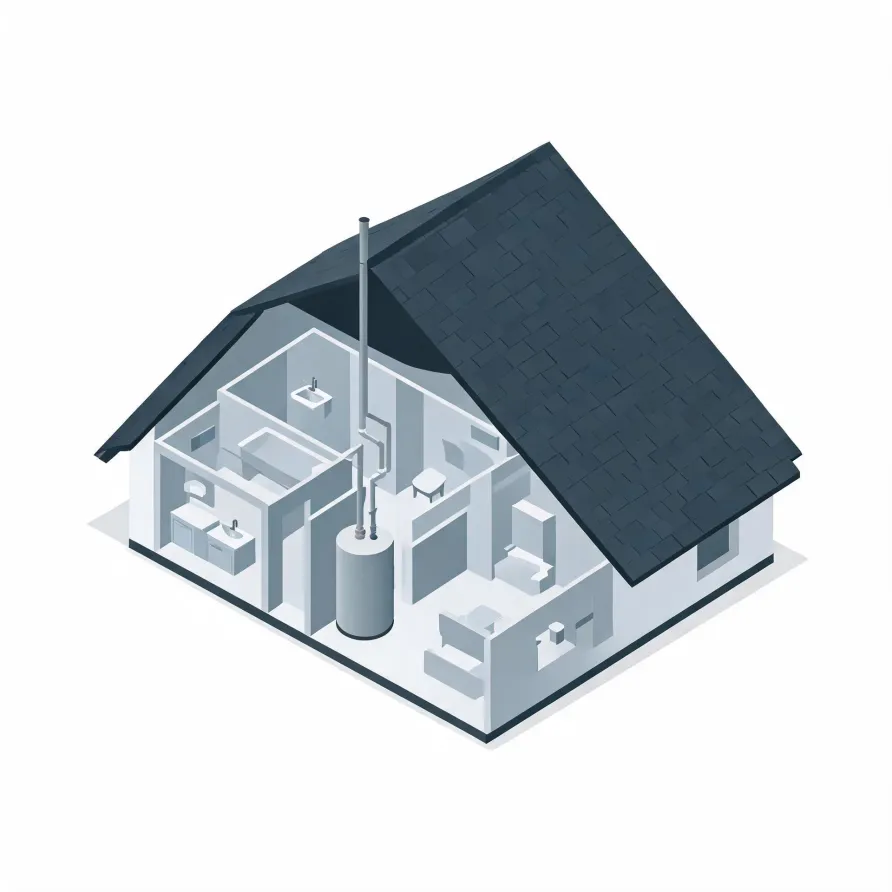
The tank is the centerpiece of the system, sitting in a utility room, basement, or closet, and its job is to hold and heat a supply of water ready for use. The heating element or burner assembly sits inside or beneath the tank and is where most faults show up: a failed element, a burned-out igniter, or a burner that won't stay lit all trace back here.
The thermostat controls the target temperature and tells the heating source when to fire and when to stop. The anode rod runs through the tank interior and slows corrosion, while the pressure relief valve sits on the tank's side and opens if pressure builds beyond a safe point. Supply and discharge pipes connect at the top, and a contractor checks fittings and valves there for leaks or corrosion that may be driving the problem.
The drawing shows a general layout of these parts, and a licensed contractor determines what applies to the specific unit and setup in your home.
Find a contractor in Macon CountyMacon County, by the numbers
57 severe weather events were recorded in Macon County, Missouri between 2015 and 2024.
NOAA National Centers for Environmental Information, Storm Events Database, bulk CSV export, events 2015-01-01 through 2024-12-31.Half the homes in Macon County, Missouri were built in 1972 or earlier (2020-2024 ACS 5-year).
U.S. Census Bureau, 2020-2024 American Community Survey 5-Year EstimatesMacon County, Missouri holds 7,419 housing units (2020-2024 ACS 5-year).
U.S. Census Bureau, 2020-2024 American Community Survey 5-Year EstimatesOwners occupy 76.8% of the occupied homes in Macon County, Missouri (2020-2024 ACS 5-year).
U.S. Census Bureau, 2020-2024 American Community Survey 5-Year EstimatesSevere Weather Events in Macon County
Extreme weather puts water heaters under stress, accelerating wear on tanks, heating elements, and connections. How hard that pressure hits depends on what the local climate actually does, and that varies by county.
57 severe weather events, 2015–2024. Source: NOAA National Centers for Environmental Information, Storm Events Database.