Water heater pilot light out in Parkville, MO

One request and the search for a pro is handled.

Hand off my repair

A pilot light that won't stay lit usually comes down to one of a few things: a weak thermocouple that shuts the gas off as a safety measure, a draft reaching the pilot, or dirt clogging the small opening it burns through. Cold snaps make it worse, since a cold snap in Platte County can mean a cold gas line or extra drafts finding their way into the closet or basement where the heater sits. If the pilot won't catch at all, the thermocouple has likely failed and needs replacing. If it lights but goes out once you let go of the knob, that points to the same part. Either way, this isn't something to keep relighting over and over. A water heater that won't hold its pilot means no hot water until it's fixed, and with gas being the common fuel for water heaters around Parkville, a licensed contractor who works on these year-round can usually tell what's wrong within minutes of looking at it.

A smiling bearded man in a dark blue henley shirt sits leaning back on a light grey sofa in a living room, with a bowl of popcorn on a wooden coffee table and a large window behind him.
A bearded man in a dark quarter-zip sweater sits smiling on a brown sofa in a dimly lit living room, with a bowl of popcorn and a mug on a table in the foreground and a potted plant near a window behind him.
A smiling man with graying dark hair and a beard, wearing an olive sweater, sits on a sofa in a living room beside a bowl of popcorn on a wooden table.
A smiling man in a dark green henley shirt sits on a gray sofa in a living room with a lit table lamp, wooden shelving unit, and a bowl of popcorn in the foreground.

Why is my water heater's pilot light out again?

You go down to the basement or the utility closet and the pilot is dark. Maybe the water ran cold during a shower, or the burner never kicks on when you turn the tap. You relight it and it holds for a day, then goes out again. Some flames burn yellow or flicker instead of a steady blue, and that's worth noting too if you catch it. A pilot that won't stay lit means no hot water for the house, and if it keeps happening, the thermocouple is likely wearing out rather than failing once. Left alone, you're stuck relighting it over and over until a contractor finds the actual cause.

  1. Gas to the pilot shuts off once the thermocouple cools down

  2. Holding the gas control knob in lets gas reach the pilot again

  3. The pilot flame has to heat the thermocouple for about a minute

  4. Releasing the knob lets the thermocouple hold the gas valve open

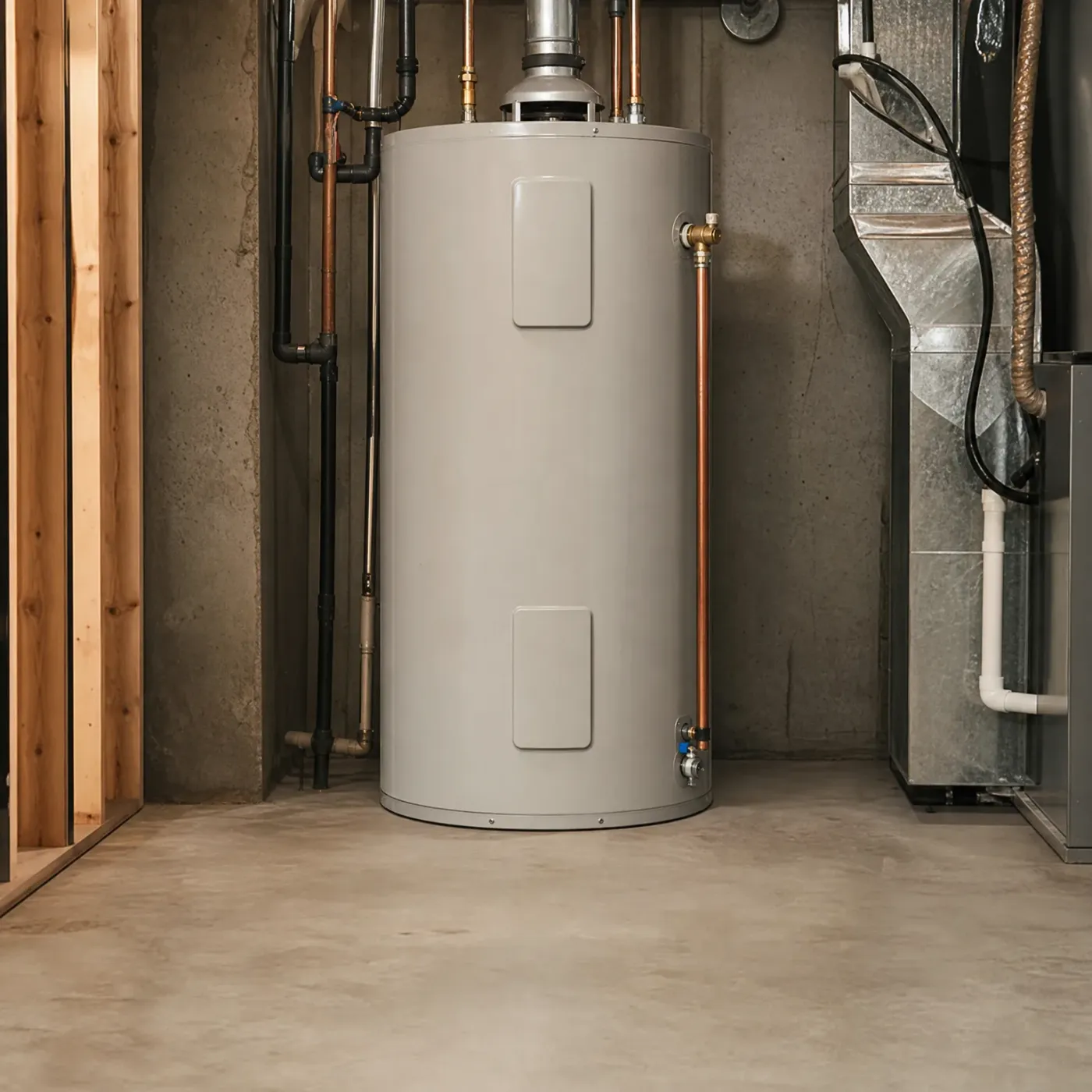
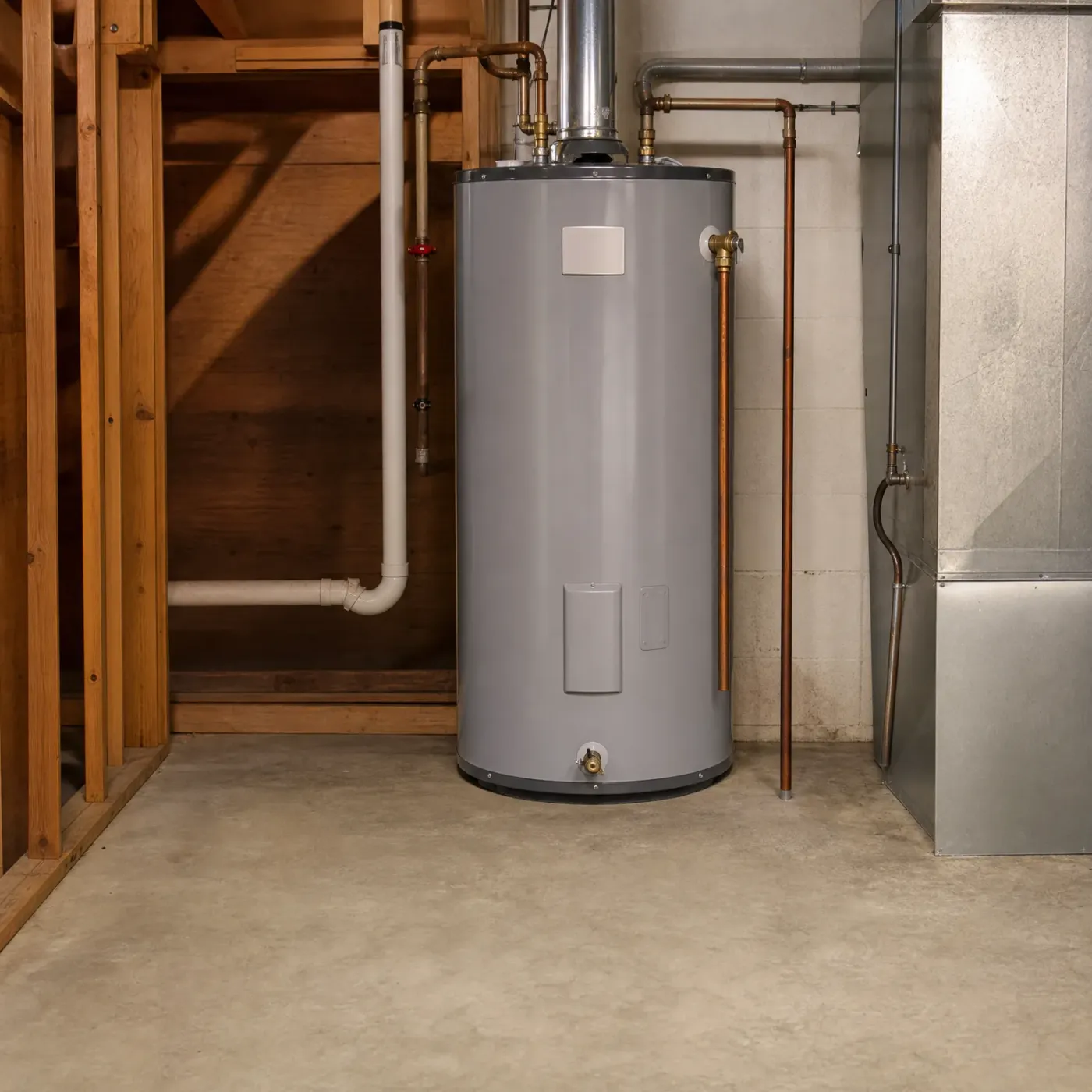
A gray cylindrical water heater with copper piping and access panels stands against a concrete basement wall beside ductwork and vertical pipes.
A water heater working right holds a steady pilot, with clean fittings and no rust creeping up from the base.
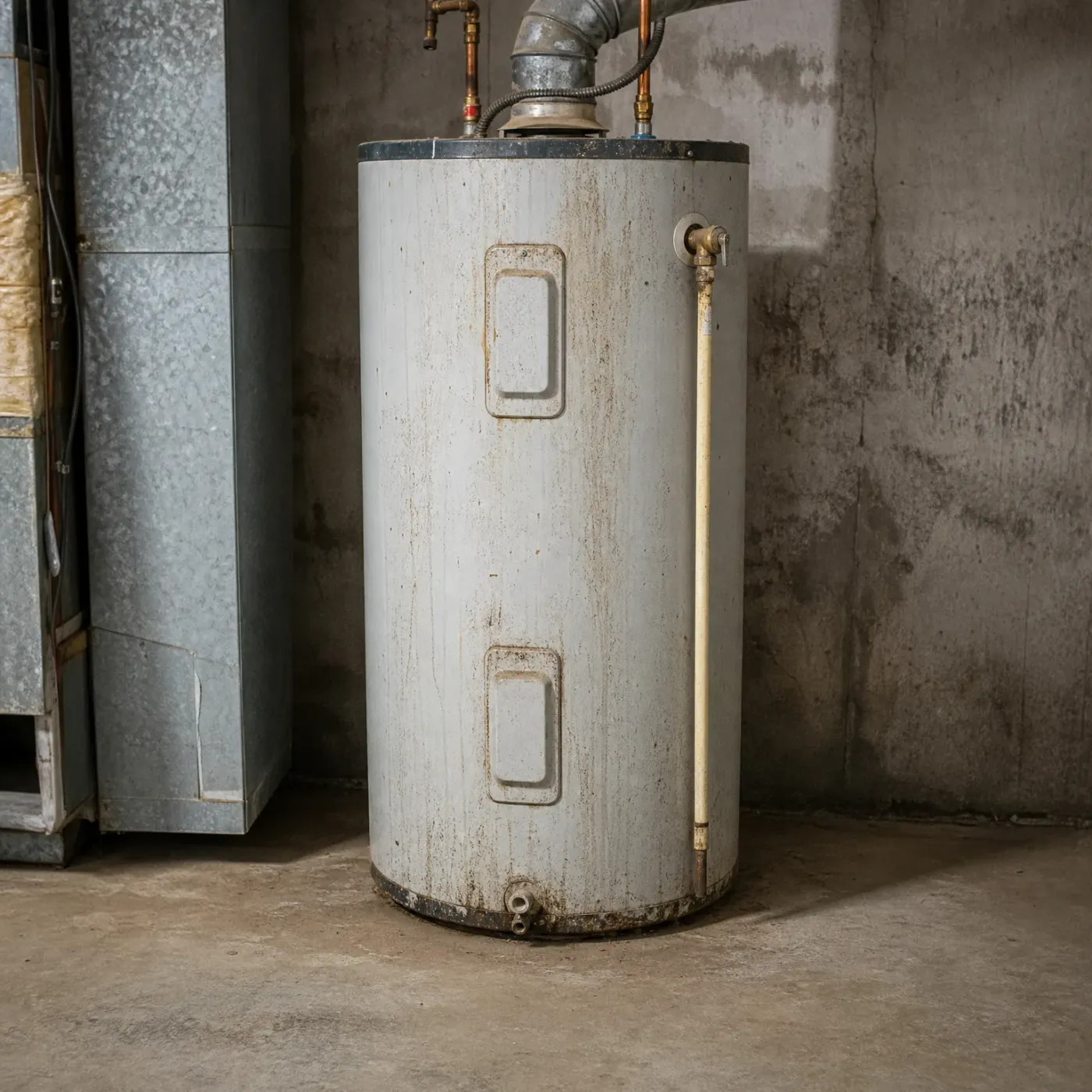
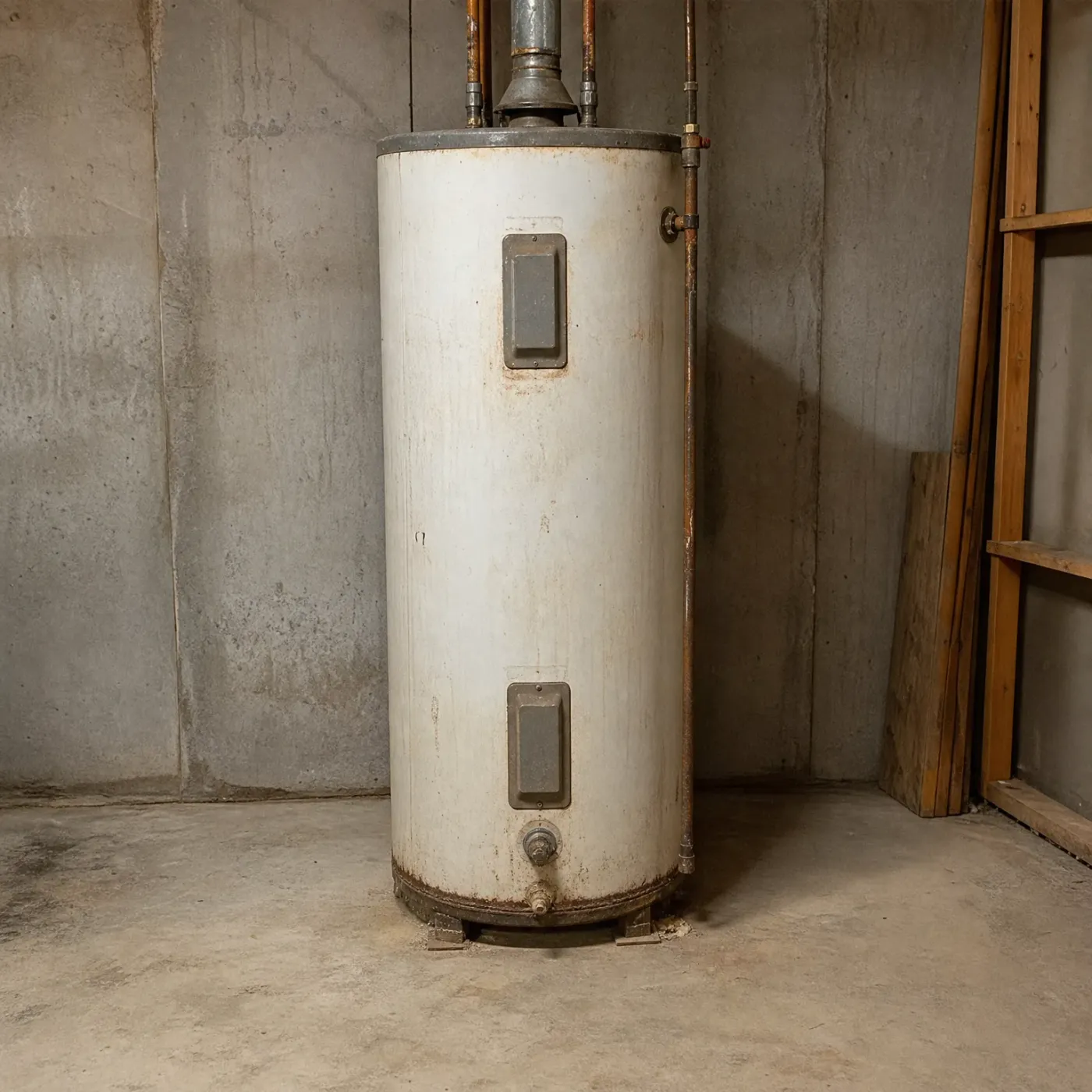
An old rust-streaked cylindrical water heater with two access panels, copper pipes and a flue at the top, and a discharge pipe along its side, standing on a concrete floor beside galvanized ductwork against a bare concrete wall.
Rust climbing the tank and corroded fittings mean the pilot trouble may be the tank telling you it's near the end.

Why does my pilot light go out every time it gets cold?

You keep relighting the pilot and it holds fine for a while, then a cold night comes through and it's out again by morning. It feels like the weather itself is snuffing it out, and in a way it is. You want to know what the cold is actually doing to the water heater, not just that it's a coincidence.

Cold air pulls harder on the flame and on a thermocouple that's already weak

A draft does more damage to a pilot on a cold night than it does in July. Basements and utility closets lose heat fast when it's near freezing outside, and the air moving through the flue or around the burner can push the flame off the thermocouple just enough to cool it. A thermocouple in good shape shrugs that off. One that's already worn or coated in soot reacts faster, and the gas valve cuts off the moment it senses the flame isn't making contact anymore. That's why the problem shows up on the coldest nights first. It isn't new damage from the cold, it's the cold finding the weak point that was already there.

A dimly lit bathroom with a glass-enclosed corner shower with gray tile, a recessed niche holding bottles, a window with green foliage outside, and a dark towel on a wall bar.

Monday morning, upstairs bathroom, and you turn the shower on and step back to let it warm up. No steam this time. You wait another minute, hand under the water, and it's still cold. The towel's already on the rail, your clothes laid out, and now you're standing there in the cold bathroom doing the math on how late this makes you. You go down to check the pilot and sure enough, it's out again, same as last week. This time you don't bother relighting it yourself. You fill out the form instead, and for the first time all morning, that's one less thing you have to deal with before work.


Hand off the water heater problem

A licensed pro who repairs water heaters in Platte County gets your request.

No charge to send it. You decide if you hire them.

A gray cylindrical water heater stands on a concrete basement floor between an unfinished wood stud wall and a metal furnace duct, with copper and PVC pipes running along the concrete block wall.

Holding a steady pilot

This tank sits clean on the floor, copper and PVC running tight along the ceiling. No rust at the base, no scorch marks near the burner door. A pilot that relights and holds in a setup like this is usually just a dirty orifice or a thermocouple due for replacement.

A rusted white cylindrical water heater with two access panels stands in a concrete-walled basement corner, with pipes rising from its top and wooden boards leaning against the wall at right.

Rust talking before the pilot does

This tank has rusted up the sides, down to the drain valve. A pilot that won't hold on a tank like this may not be a thermocouple problem at all. Rust around the burner chamber can throw off the flame enough to stop it from ever heating the thermocouple right.

Power here costs 13.02 cents per kilowatt-hour

Most water heaters here run on gas, so this rate mainly touches the igniter or control board, not the burner itself. At 13.02 cents a kilowatt-hour, running a space heater while yours is down costs little, so a repair call is the bigger expense to plan for, not the power.

EIA-861 2025

A thermocouple is a straight rod sitting right in the pilot flame, and it only has to read about a quarter inch of that flame to tell the gas valve it's safe to stay open.

Let the flame drift off that rod, from a draft or a clogged orifice starving it down, and the reading drops within seconds, the valve closes, and the pilot goes dark again.

How many homes nearby share your water heater's age?

  • 2.49 people per household on average

    With 2.49 people in the average Platte County household, most mornings someone's already used hot water before the pilot trouble shows up, so a cold shower gets noticed fast.

  • Half the homes here were built by 1992

    Half the homes in Platte County were built in 1992 or earlier, Census figures show, so a water heater original to the house is well past the age pilot trouble usually starts showing up.

  • 58.1% of homes heat with gas

    Gas heats 58.1% of homes in Platte County, more than any other fuel, so a pilot that won't hold is the most common water heater call a local contractor sees.

ACS 2020-2024

Where This Leaves You

  • A pilot that won't hold almost always traces back to a weak thermocouple, a draft, or a clogged orifice.
  • Cold snaps don't cause the problem, they just expose a thermocouple that was already marginal.
  • A steady pilot with clean fittings and no rust means the fix is likely small, not a tank replacement.
  • Rust climbing the tank or corrosion at the base points to the water heater nearing the end of its life.
  • Holding the gas control knob in for about a minute lets the thermocouple heat up enough to keep gas flowing on its own.
  • A local contractor who sees this fault every winter in Platte County can usually narrow it down fast.

A pilot that keeps going out isn't random. It's the thermocouple, a draft finding its way to the flame, or an orifice clogged enough to starve it, and most often it's the thermocouple giving out after holding on marginally for a while. Cold weather doesn't break anything new. It just finishes off a part that was already failing, which is why the trouble tends to show up on the first hard freeze of the year rather than in July. Look at the tank itself before you decide what kind of job this is. Clean fittings, a dry base, no rust working its way up from the floor, and you're likely looking at a part swap, not a replacement. Rust climbing the tank or corrosion where the water line meets the top is a different conversation, and no amount of relighting the pilot changes that. In the meantime, holding the gas control knob in for about a minute after lighting gives the thermocouple time to heat up and hold the valve open on its own. If it won't hold past that, the part isn't reading the flame right, and relighting it again won't fix that. Someone who works on these tanks through a Platte County winter has usually seen the exact version of this failure before, on a tank not unlike yours, and knows within a few questions whether you're replacing a four dollar part or planning for a new water heater.

A woman with dark hair in a bun reclines on a gray sofa with her eyes closed and a slight smile, wrapped in a cream knit sweater and blanket, with an open book resting in the foreground and a lit lamp in the dim room behind.
A smiling bearded man in a dark crewneck sweater sits at a dinner table with a lit candle, glasses of wine and water, and plates of food in the foreground, with a lamp, framed art and a potted plant behind him.

Water Heater Repair

Finding a pro stops being your job

Your request goes to one pro, not a list of companies.

A smartphone with a blank green screen stands upright against a plain light gray background.
Step 1 of 3: Equipment