Your request goes to a St. Charles County pro who takes water heater jobs.
Water pooling around the tank, or dripping from a fitting, means something inside has already failed. It doesn't fix itself and it doesn't wait for a convenient time.
A puddle at the base often means the tank itself has rusted through. That's not a part you replace. A leak higher up, near the top, is more likely a fitting, a valve, or the line going in or out, and those can often be repaired.
Either way, the water has to stop first. If you can get to the shutoff valve on the cold line feeding the tank, turn it. If the leak is bad enough, or you're not sure where it's coming from, shutting off the power or gas to the unit matters too, especially with gas units where a wet floor and a pilot light are not a good combination.
Houses around O'Fallon and the rest of St. Charles County mostly run gas water heaters, and the plumbing and gas work involved in a repair or a swap needs someone licensed for both. Not every plumber handles gas lines, and not every HVAC contractor handles tanks. It matters who shows up.
That's the part this page helps with. Once you send the details of what's happening, the search for the right contractor stops being something you have to do. A contractor who works on water heaters in this area gets your information and reaches out to you directly. You're not left calling around St. Charles County trying to find someone free today, or sorting through reviews trying to guess who actually does gas work.
Tell it what you're seeing: where the water is, whether the unit is gas or electric, how old it is if you know. That's what lets the right person get back to you instead of a dispatcher taking a generic message.
The leak is the emergency. Finding who fixes it doesn't have to be.
A leaking water heater usually means one of a few things. Water at the top, near the pipes, often comes from a loose fitting or a bad inlet or outlet connection, and that can be tightened or replaced. Water from the pressure relief valve on the side means the tank is building up too much pressure or the valve itself has failed. Water pooling underneath, with nothing dripping from above, almost always means the tank has rusted through from the inside, and that tank is done. Cold weather can make a slow leak worse, since the tank works harder all winter to keep up, and a seam that was barely holding can finally give out. A gas water heater leaking near the bottom is worth shutting down right away, since water near the burner and gas line isn't safe to leave alone. Either way, the longer it runs, the more it can damage the floor, the wall, or whatever's stored nearby.
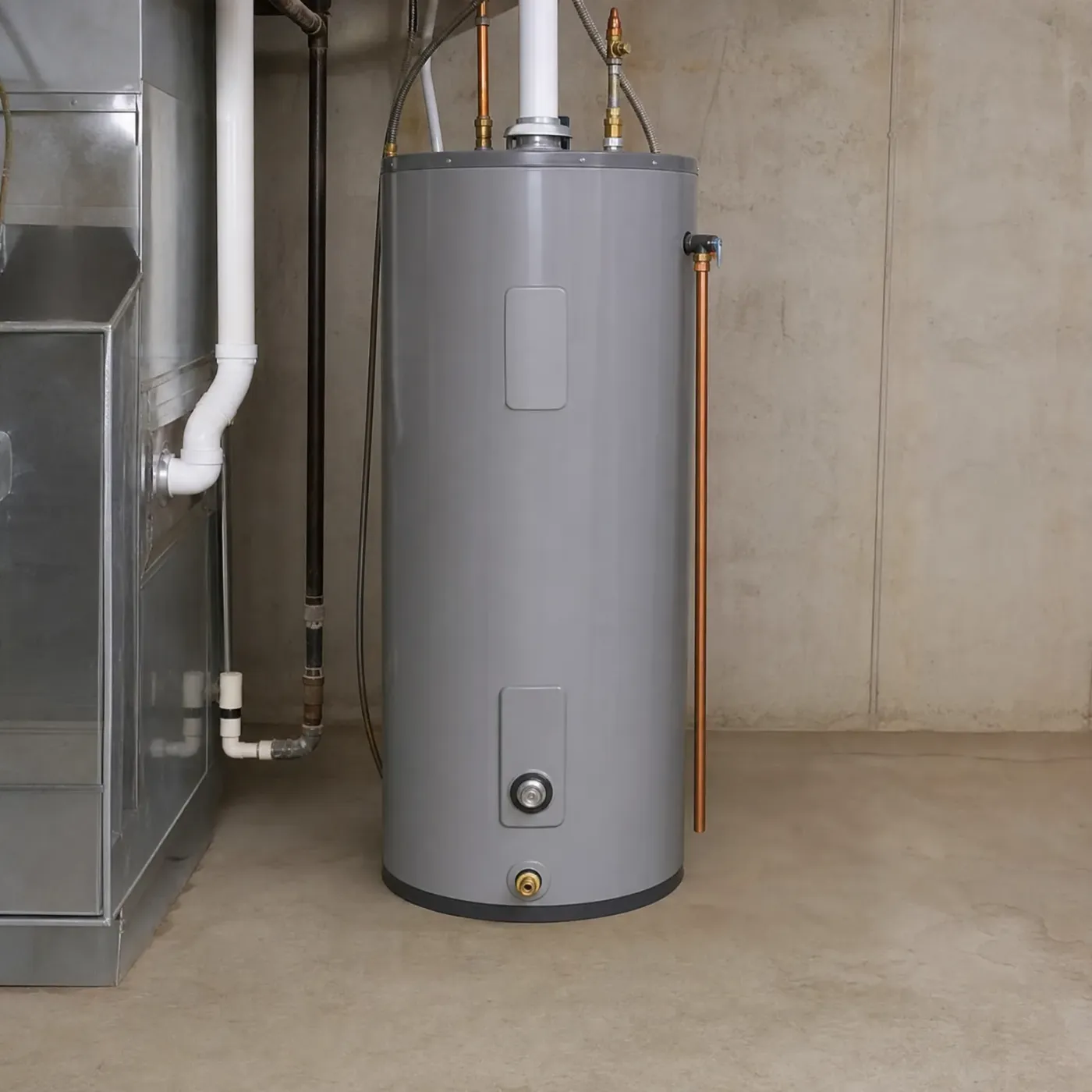
A dry tank with tight fittings and a clear floor around the base means the leak is caught before it starts.
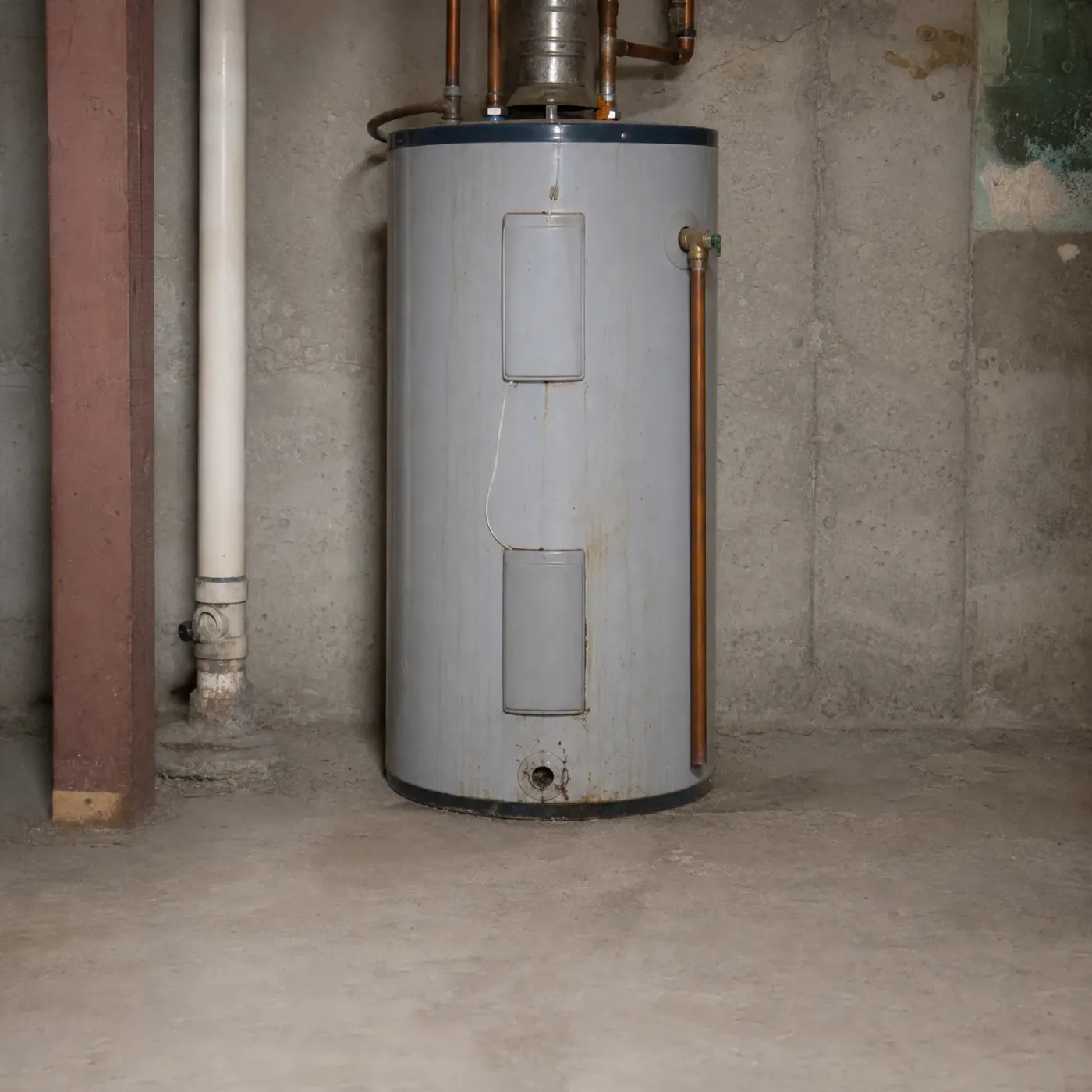
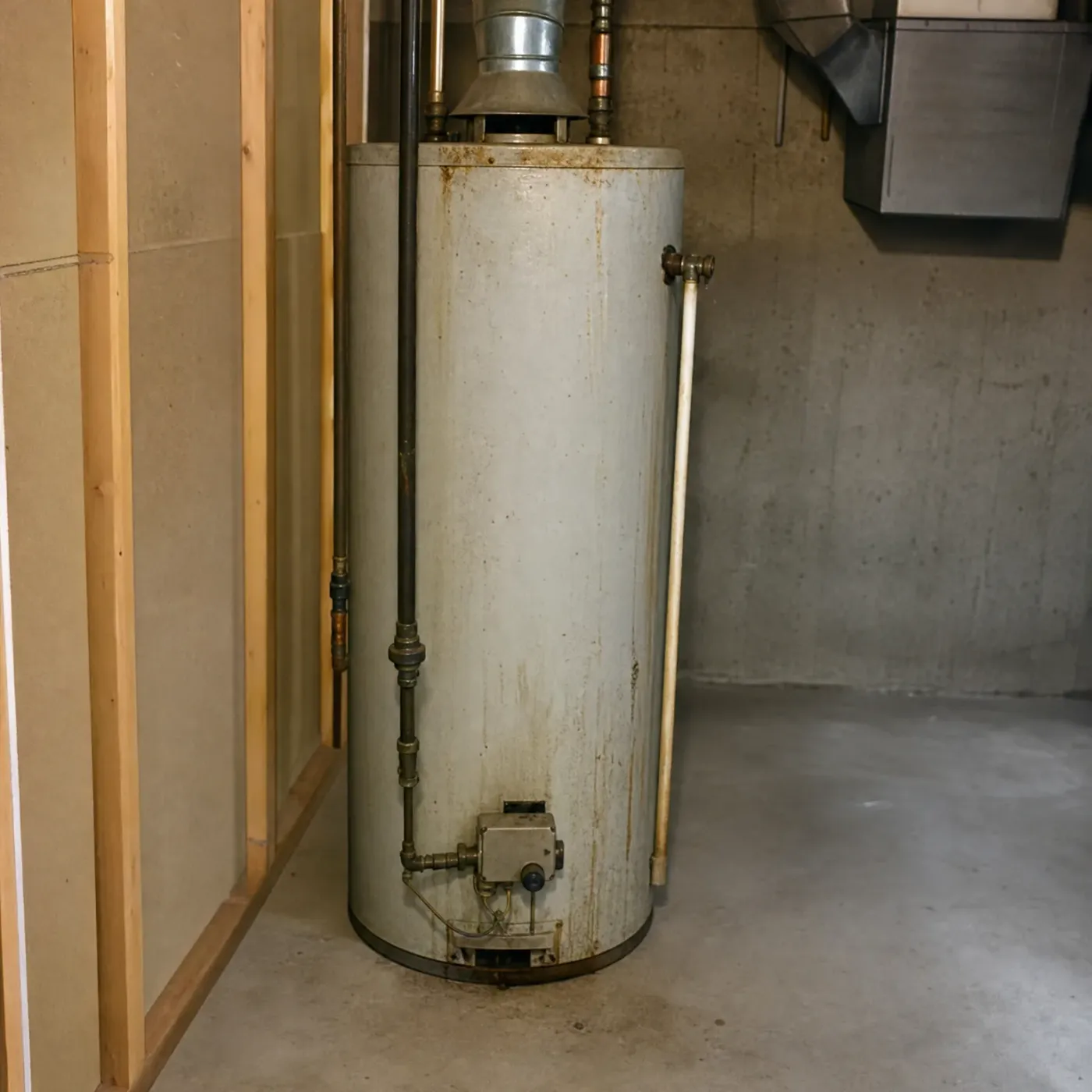
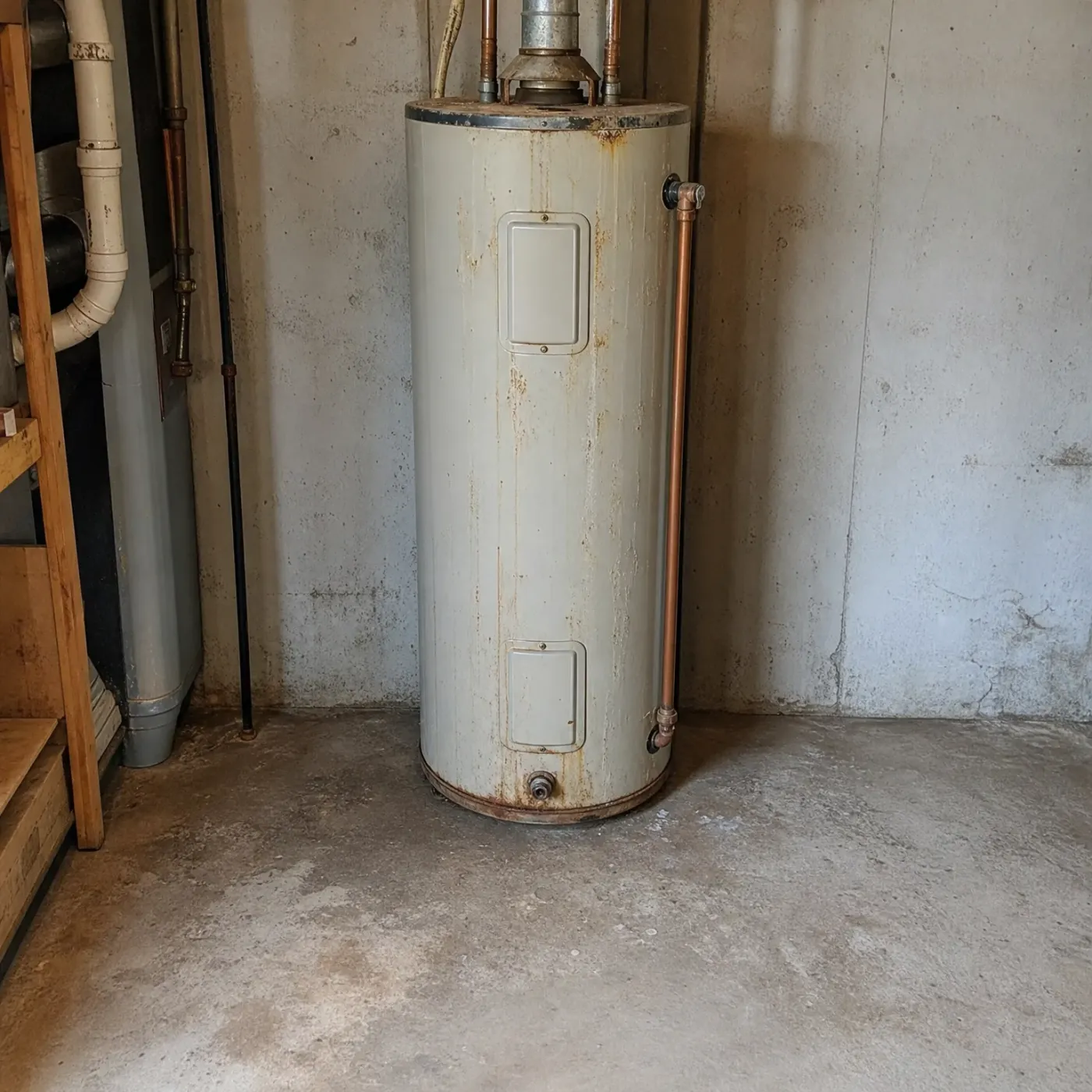
Rust creeping up from the bottom seam like this usually means the tank is failing, not just a loose fitting.
Where the Water Is Actually Coming From
A thermal expansion tank mounted near the water heater can crack and leak if it was never installed or failed years ago.
The drain valve at the bottom of the tank is plastic on most models and can seep if it was never fully closed after service.
Sediment that settles at the bottom of the tank traps heat against the steel and speeds up corrosion at the floor.
A leak that only shows up when hot water is running points to a fitting or valve, not the tank itself.
The anode rod inside the tank attracts corrosion so the steel doesn't have to, and once it's used up the tank rusts from the inside.
Gas and electric water heaters leak for the same reasons at the tank and fittings, but a gas unit adds the flue and burner area as places to check.
Finding the source matters more than finding the puddle. Start at the top of the tank, where the cold inlet and hot outlet connect. If there's a thermal expansion tank tied into that line, check it too, since a cracked bladder inside one of those will drip steadily and get blamed on the water heater itself. Work down to the drain valve near the bottom. Most are plastic, and a quarter turn left open after a flush or a repair is enough to keep it weeping for weeks. Sediment is a quieter problem. It settles on the tank floor, sits between the water and the steel, and holds heat there longer than it should. Over months that speeds up rust at the seam, and once the floor is rusted through, no amount of tightening changes anything. Run the water and watch what happens. A leak that only appears while hot water is flowing is almost always a fitting or valve under pressure, not a hole in the tank. The anode rod explains a lot of this from the inside. It's there to corrode first so the tank doesn't have to, and once it's spent, the steel takes the damage directly. Gas and electric units fail at the same points, tank and fittings, but a gas water heater adds the burner chamber and flue as places where water can show up and get mistaken for condensation.
How many people are counting on your water heater?
2.53 people per household on average
St. Charles County households run 2.53 people on average, so a leak that cuts off hot water usually hits more than one person's morning shower or dishes.
Half the homes here were built by 1994
Half the homes in St. Charles County were built in 1994 or earlier, which means half the water heaters in them have had thirty years of fittings and valves to work loose or corrode.
65.9% of homes heat with gas
65.9% of homes here heat with gas, and a gas water heater leaking near the burner or venting is worth having looked at instead of waiting it out.
ACS 2020-2024
You reach in to start the water Monday morning and it's cold before it's warm, then it never gets warm at all. Downstairs, the water heater has a wet ring spreading across the floor. No steam fogs the bathroom mirror. The towel is still on the rail where you left it last night, dry, waiting for a shower that isn't going to happen before work. Outside, St. Charles County is just waking up, gray and cold. You turn the shower off and stand there a second, figuring out who else in the house still needs to get ready, and who you're going to call about the puddle downstairs.
Send the request today and let a water heater pro reach out to you.
It costs nothing to send, and you don't have to hire anyone.
Why the tank itself fails
A tank water heater holds its water inside a glass lining bonded to the steel shell. That lining is what keeps the steel from rusting out year after year. Once it cracks or wears thin, the steel underneath is exposed, and steel sitting in water corrodes. There's no patch for that. A tank leaking from a seam or from the bottom isn't a loose part working its way free, it's the shell itself giving out. Gas or electric, the tank works the same way, and the same wear applies to both. That's why a leak from the body of the tank, instead of a fitting or valve, almost always means replacement rather than repair.
What a full tank weighs
A 40 or 50 gallon tank, the common sizes in most homes here, holds 330 to 420 pounds of water on top of the weight of the tank and the steel itself. That load sits on whatever is underneath it, a basement floor, a slab, or a floor built with joists. A failing tank doesn't fail cleanly. Water finds the lowest seam or the thinnest spot in the steel and comes out slowly at first, then faster as the breach widens. Left alone, that weight and that water keep finding a way out, which is why a tank that's leaking from the shell is worth shutting off and addressing rather than watching.
Before you get your water heater repairAfter you get your water heater repair
Repair the tank you have
If the tank itself is sound and the leak is coming from a fitting, the relief valve, or the drain valve, repair makes sense. A plumber can replace a connection, swap a valve, or add an expansion tank if one was never installed. The steel tank and its glass lining stay in place, and so does the rest of the plumbing tied into it. This works when the tank is still holding water without seeping through the shell itself. It's the faster path back to hot water when the problem is a part, not the tank.
Replace a tank that's failing
Rust working up from the bottom seam, or water seeping from the tank body itself, means the glass lining has worn through and the steel underneath is corroding. No fitting or valve swap stops that once it starts. A plumber will tell you plainly if the leak is coming from the tank rather than a connection, because at that point repair just delays the same failure. Replacement means a new tank, sized for your household, installed in place of the one that's failing.
A tank that's still doing its job
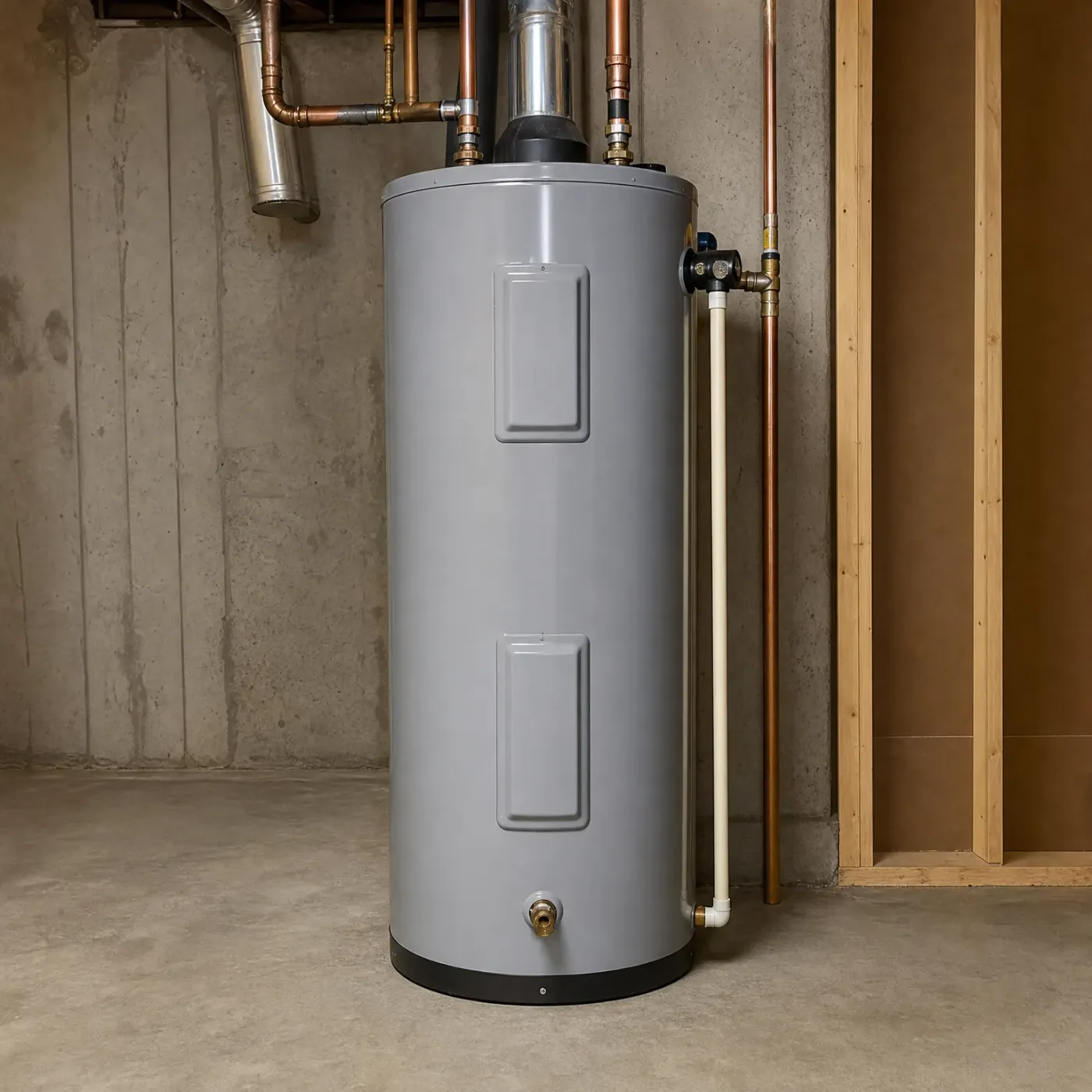
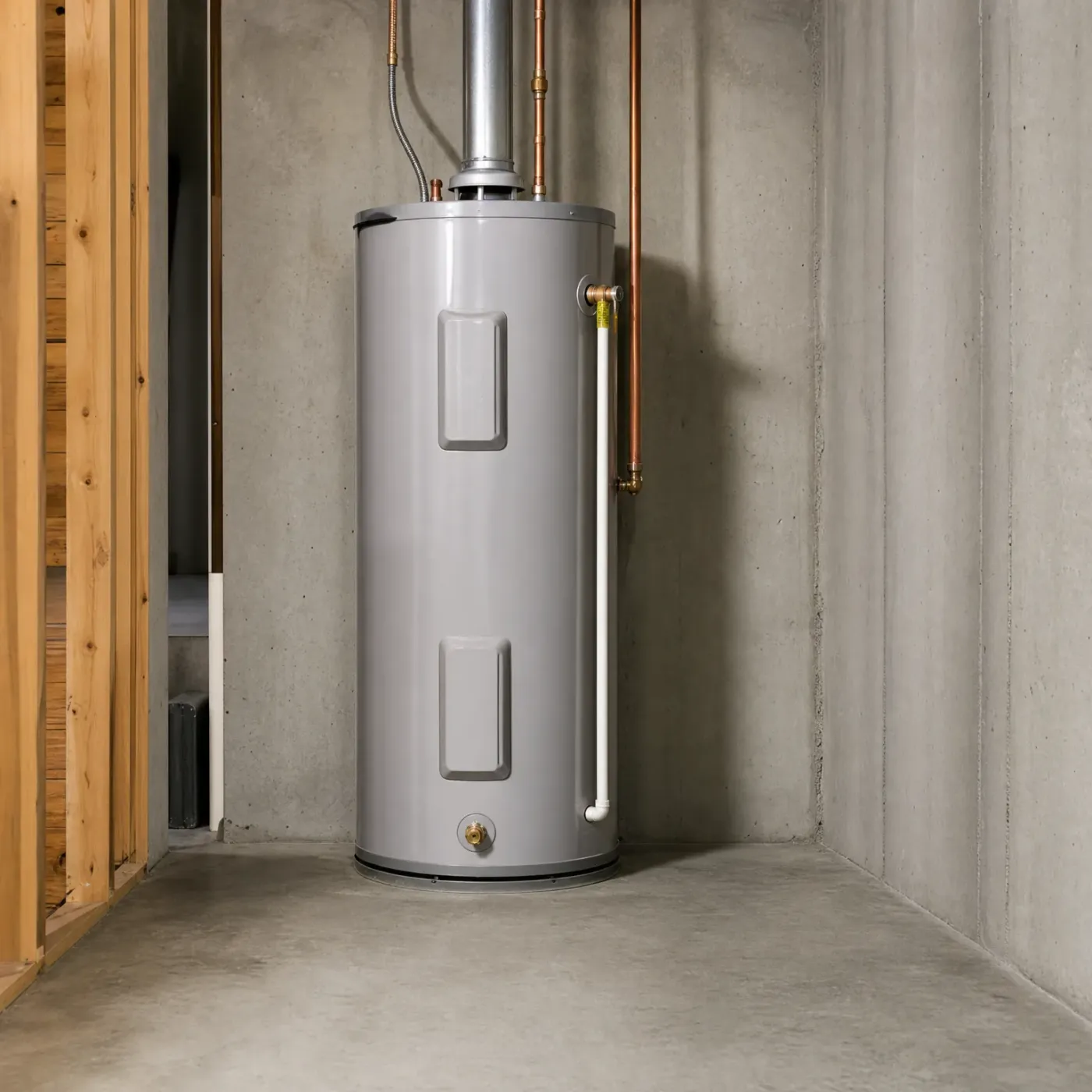
No rust on the shell, no water at the base, no drip at any fitting. The flue vent and the relief valve discharge pipe run clean to the floor. This is what a water heater looks like before anything has gone wrong.
A tank that's rusting from the outside in
Rust like this across the shell usually means moisture has been sitting against the metal for a long time, not just overnight. Once the steel corrodes through, no fitting or valve replacement stops it. The tank itself is what's failing.
Power here costs 12.83 cents per kilowatt-hour
At 12.83 cents a kilowatt-hour, running an electric water heater here costs less than in most places. That's not the problem. A leak doesn't care what power costs, it just keeps spreading, and a tank that's failing won't get cheaper to ignore the longer the floor stays wet.
EIA-861 2025
1
A plumber shuts off the water and power or gas to the tank
2
They check the fittings, valves and tank shell to find the source
3
A bad fitting or valve gets tightened, replaced, or swapped out
4
A failed tank gets drained and disconnected for replacement
A leaking water heater has a cause, and a fix
Water at a fitting gets tightened or replaced. A failed relief valve or a cracked expansion tank gets swapped out. A tank rusted through at the seam gets disconnected and replaced. Whichever one it is in your house, a plumber can look at the shell, the valves and the fittings and tell you within a few minutes which kind of leak you have and what it takes to stop it.
You don't have to figure out which of those it is before you ask for help. Send the form and a contractor who works on water heaters in O'Fallon will reach out to you directly, already knowing the kind of job this is. You won't be the one tracking down who's available or explaining the problem twice. That part is off your plate the moment you send it.
Water Heater Repair
A water heater pro near you
Get the water heater repair search off your mind today.