


Keep repairing it
A tank that's leaking from a fitting or valve can often be fixed in place. You get more use out of the same water heater without replacing it.
Get matched with a pro who fixes water heaters in Boone County.
Get a local proA puddle under the tank or water dripping down the side usually means something specific is wrong, not just old age catching up. Before you shut off the water and call someone, it helps to know where to look and whether this is a small fix or a sign the tank itself is failing. Where the water is coming from changes what happens next.
Water pooling at the base usually comes from one of three places. A loose fitting or union where a pipe connects to the tank can weep slowly and is a simple fix. The pressure relief valve on the side or top can let water out if pressure inside the tank builds too high, and that valve is replaceable on its own. If the water is coming from underneath the tank itself, the steel has rusted through from the inside, and that tank is done. It won't seal back up or stop on its own. Checking the fittings first, then the valve, then the tank itself tells you which problem you actually have.
Water pools at the bottom of the tank from a slow internal leak.
The leak tracks down the outside of the tank to the floor.
A loose fitting or valve drips at a single connection point.
The pressure relief valve releases water when pressure builds too high.
2.33 people per household on average
Households in Boone County average 2.33 people, so most water heaters here run through showers, laundry and dishes back to back, not one at a time.
Half the homes here were built by 1991
Half the homes in Boone County were built in 1991 or earlier. If yours is one of them, the tank or the connections feeding it may be original to a system you've never had looked at.
48.2% of homes heat with gas
Gas heats 48.2% of homes in Boone County, more than any other fuel. A gas water heater leak can mean the tank itself, not just a loose supply line.
ACS 2020-2024
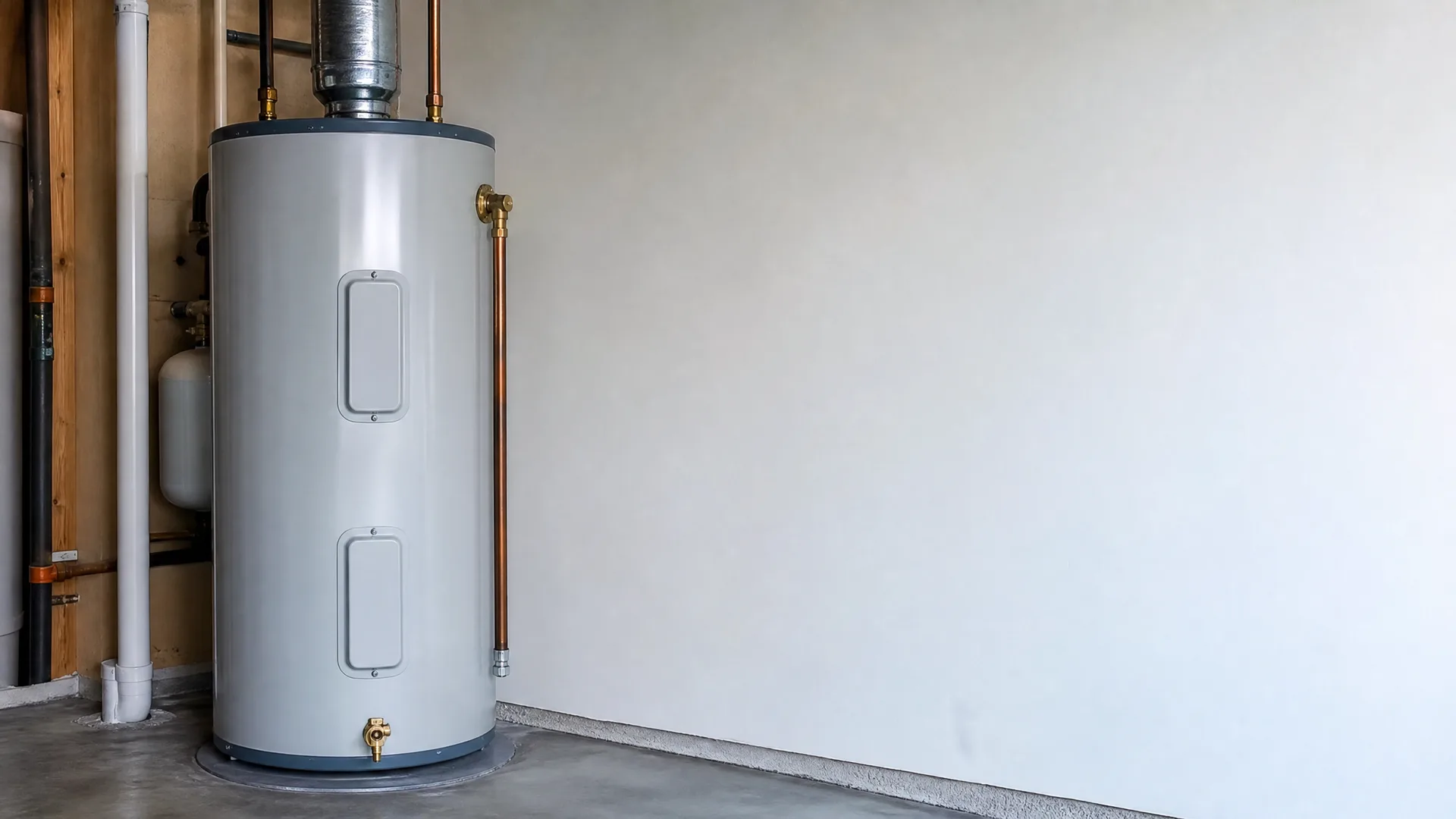
A slow drip from a loose fitting or valve is worth watching but not an emergency. You can set a bucket under it, shut off the water at the valve on top of the tank, and get through the day without flooding anything. The tank itself may be fine. This is the kind of leak where calling around for a few days doesn't cost you much, as long as you keep checking the bucket and the floor around it stays dry.
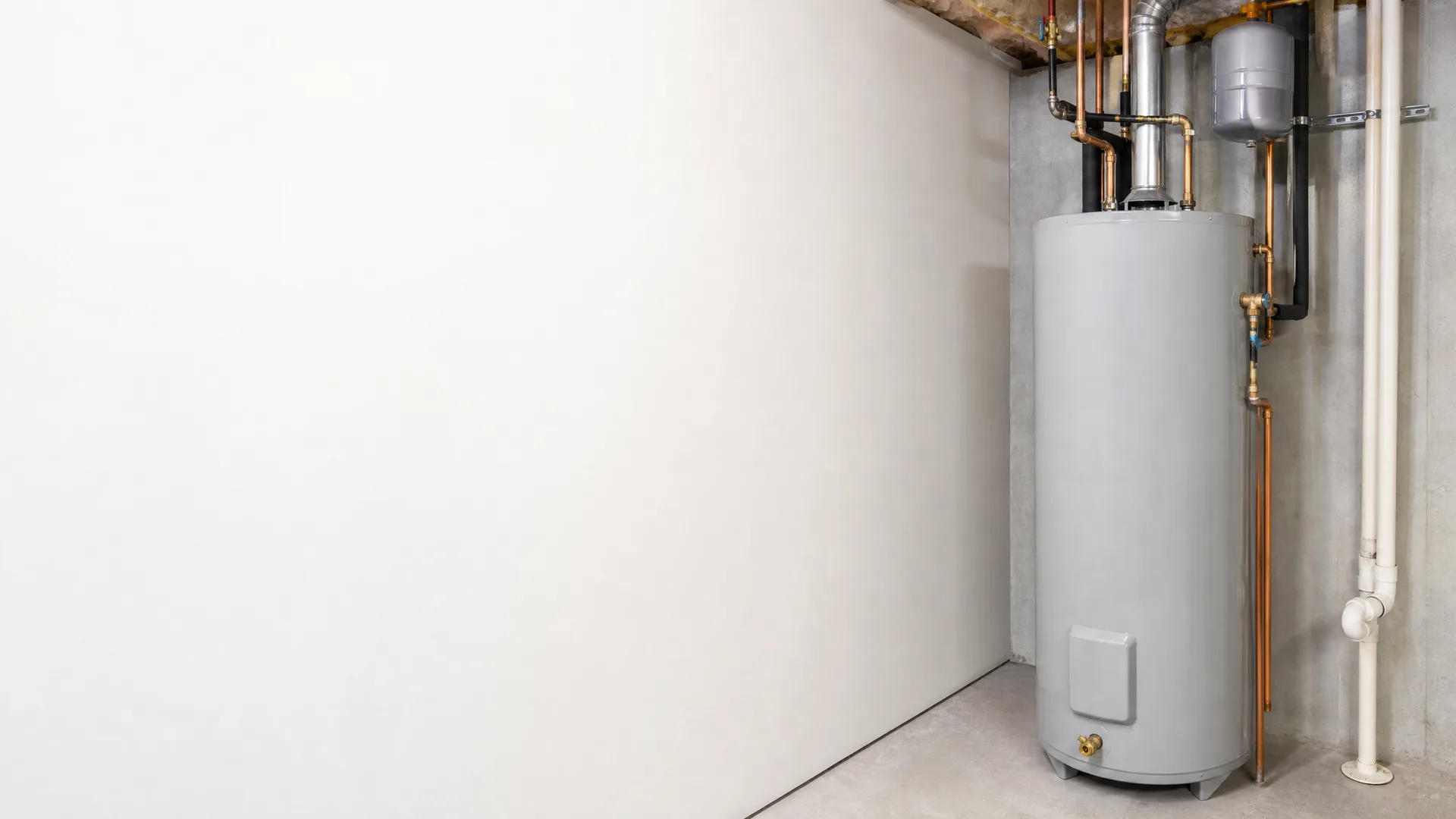
Water pooling under the tank from a crack or a failure inside means the tank is done. It will keep leaking until it's replaced, and the water can warp flooring or soak into drywall the longer it sits. Shut off both the water and the power or gas to the tank right away. This is the leak that turns a small problem into a bigger repair bill for the house itself if it sits through the weekend.
At 14.92 cents per kilowatt-hour, an electric water heater here isn't expensive to run under normal conditions. But a leaking tank often means the heating element or thermostat is failing too, and a unit working harder to keep up can push your bill higher before the leak ever gets fixed.
EIA-861 2025
Once a tank starts leaking from the bottom, that's usually the inner tank itself, rusted through, and there's no patching that. Replacement is the only fix at that point. Where the water goes matters as much as where it's coming from. A heater in a closet or utility room sitting over a finished floor can leave a stain or buckle the flooring long before anyone catches the drip. If the unit is in a basement or above a crawlspace, water can soak into the insulation and framing below without showing itself right away. That kind of damage adds up quietly while a loose fitting just keeps dripping, unnoticed, until it isn't a drip anymore. Fittings and valves do loosen further under constant moisture, so a leak that seems manageable today can turn into a steady stream by next week. There's also the matter of what's near the leak. Gas water heaters have a burner at the bottom, and electric units have wiring and heating elements that aren't meant to sit in water. Standing water close to either one isn't just a cleanup problem, it's a shock or fire risk. None of this means every leak is an emergency, but it does mean the clock is running the moment you spot one, whether that's on the drywall, the subfloor, or the tank itself.
A tank that's leaking from a fitting or valve can often be fixed in place. You get more use out of the same water heater without replacing it.
Once the inner tank has rusted through, repair won't hold. A new water heater stops the leak for good and ends the guesswork.




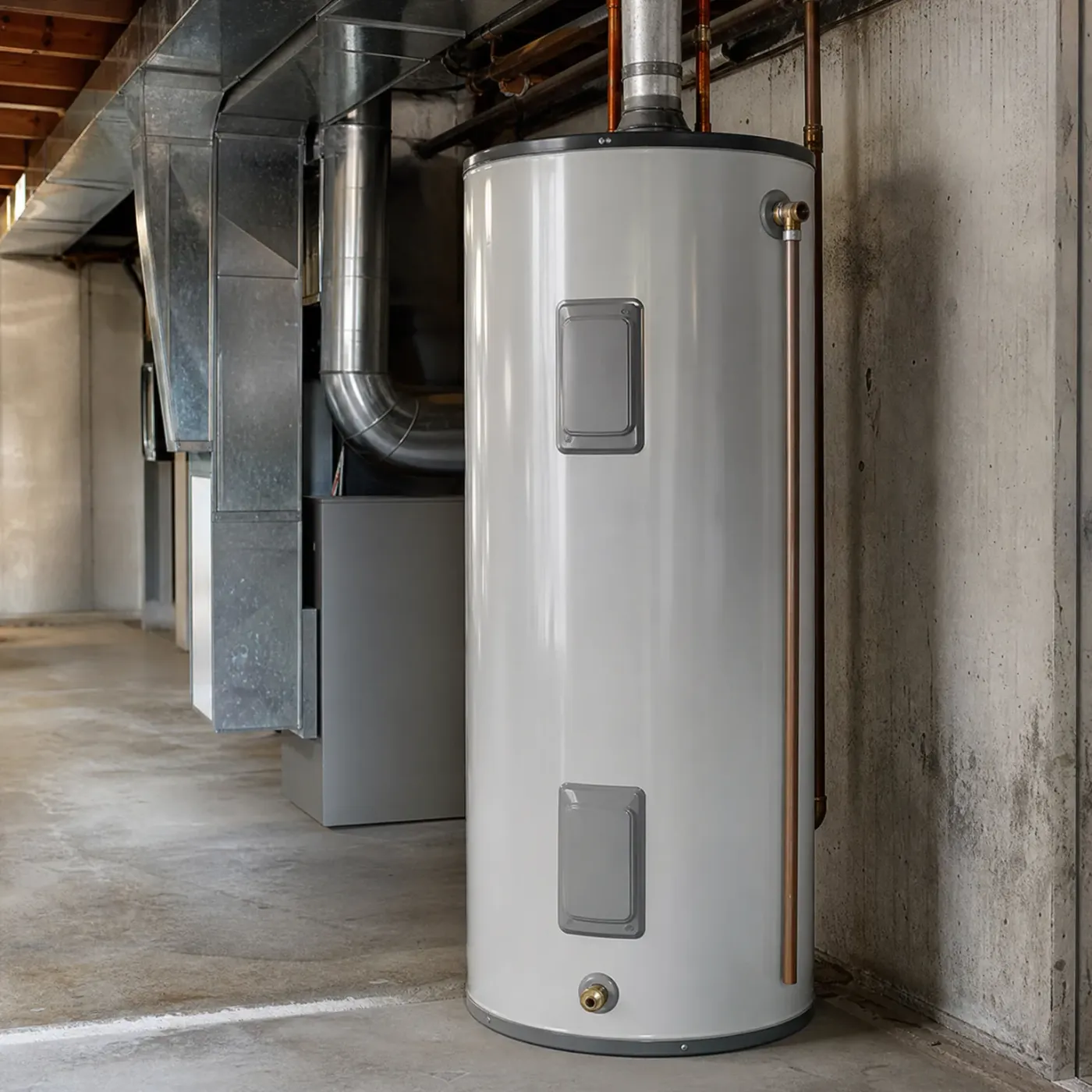
Get the water heater repair search off your mind today.
Say what's going on with your water heater, and a pro who works on them reaches out.
No charge to send it. You decide if you hire them.
You might have found a damp patch on the carpet near the closet, a trickle down the baseboard, or a puddle that keeps coming back no matter how many times you mop it up. Sometimes it's just a few drops a day around a fitting. Sometimes the bottom of the tank is wet and the floor around it has started to warp or discolor. If the water heater sits in a closet, utility room, or on a wood subfloor, that moisture doesn't stay put. Left alone, it soaks into flooring, drywall, or framing nearby, and by the time you see staining or soft spots, the damage is already done underneath.
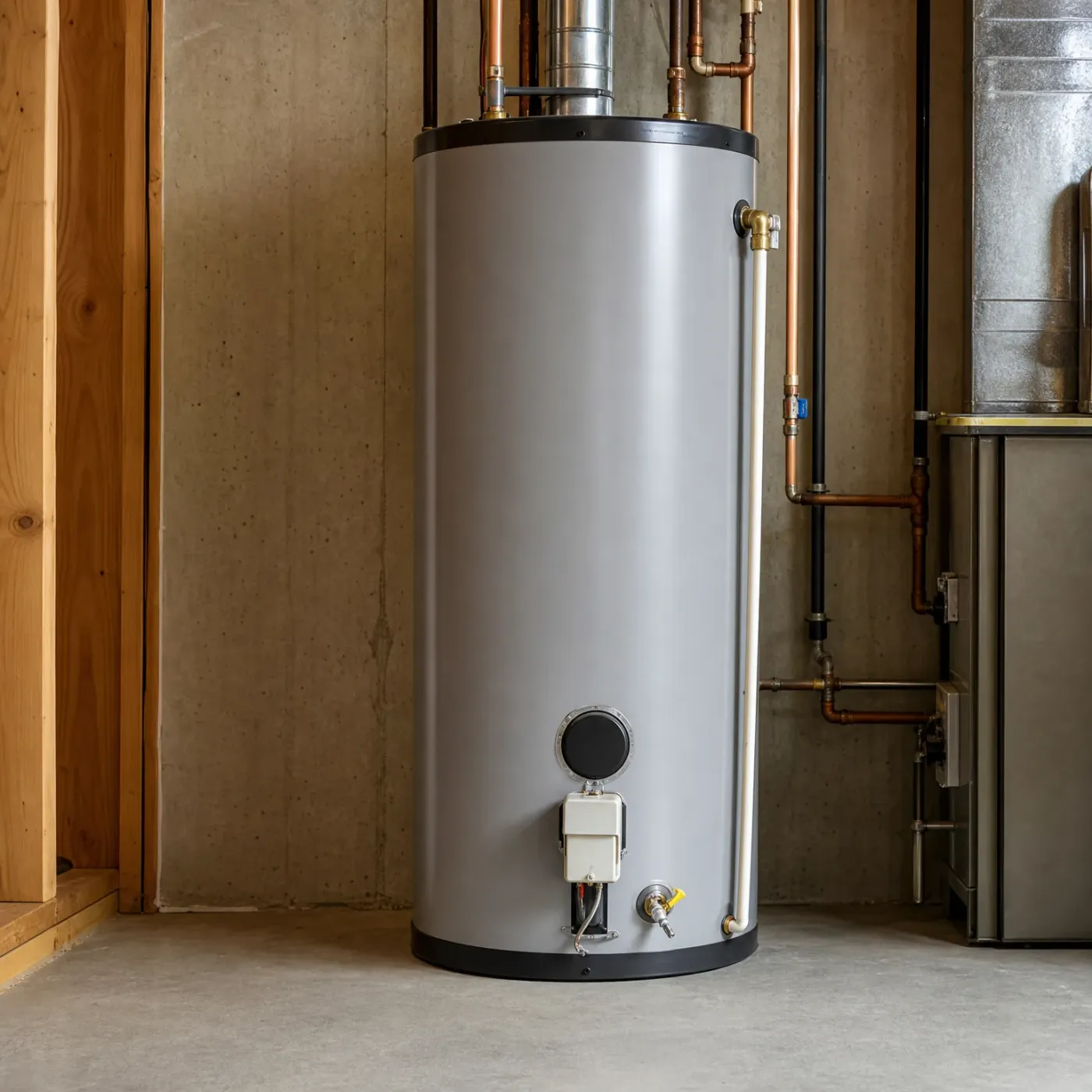
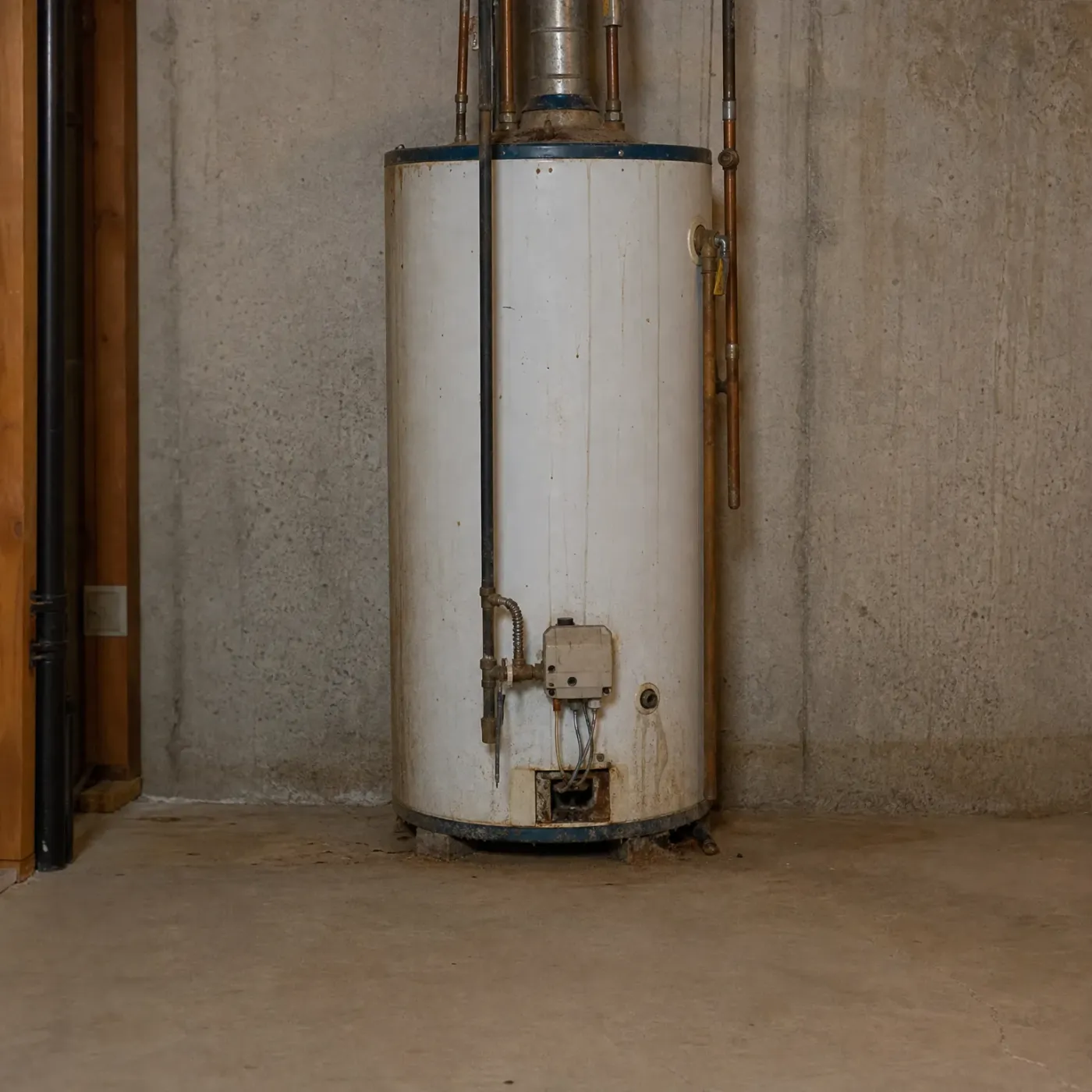
Most leaks trace back to one of a few spots, and the spot tells you what's wrong. A thermocouple or flame sensor cutting the gas to a pilot light is doing its job, not leaking, so don't mistake a dead pilot for water damage. Inside the tank, the anode rod is meant to corrode so the steel tank doesn't have to. Once that rod is used up, rust starts eating the tank itself, and no amount of tightening fittings will fix that. A dripping pressure relief valve is a warning, not the fault. It's telling you pressure or temperature inside has climbed too high. In a humid room, condensation can form on a cold tank and look just like a leak, especially on gas units that pull in room air to burn. The drain valve sits at the bottom of every tank, and when water shows up there, it's usually the valve itself, not a failing tank. But if the water running out carries rust, the tank has already thinned past the point repair can reach.


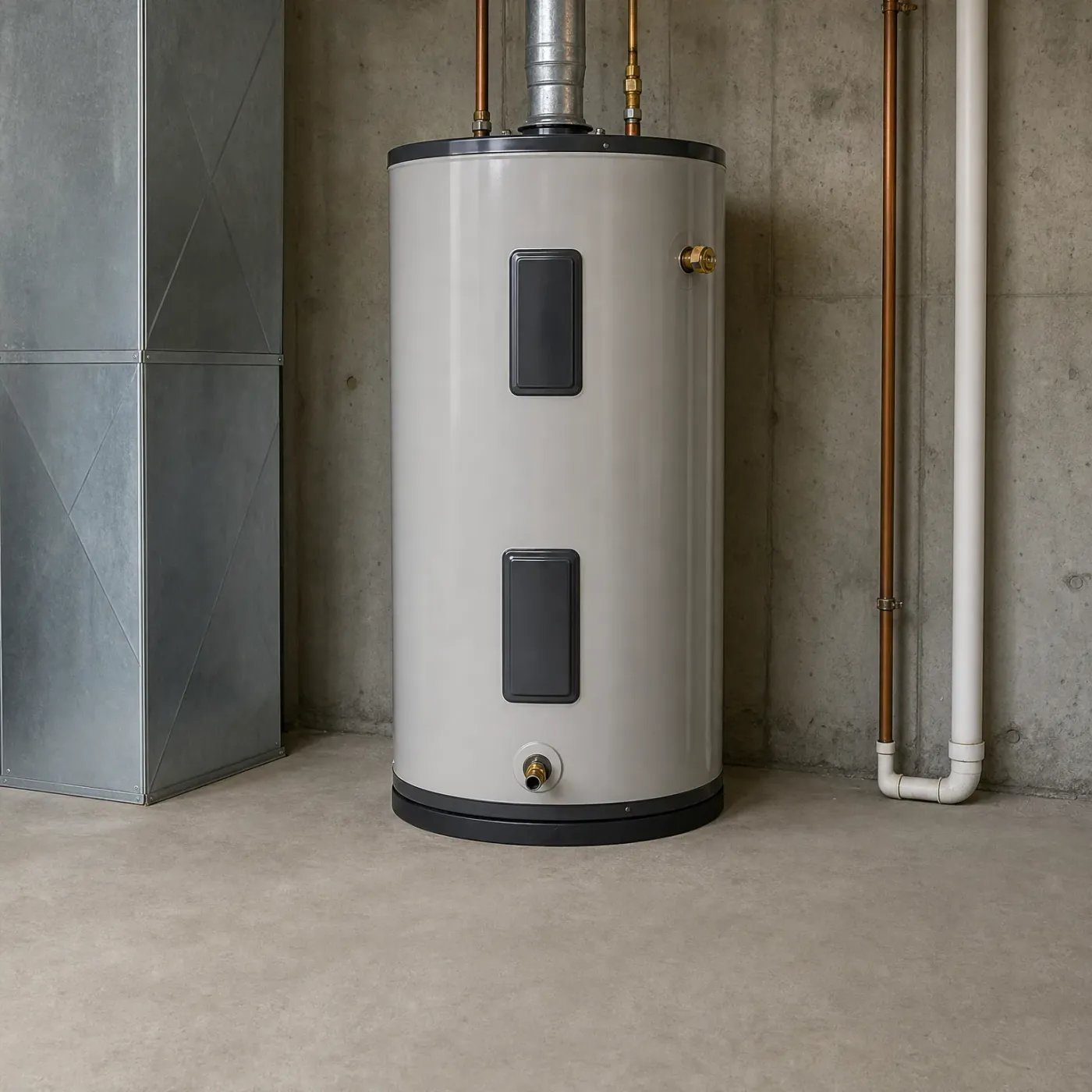
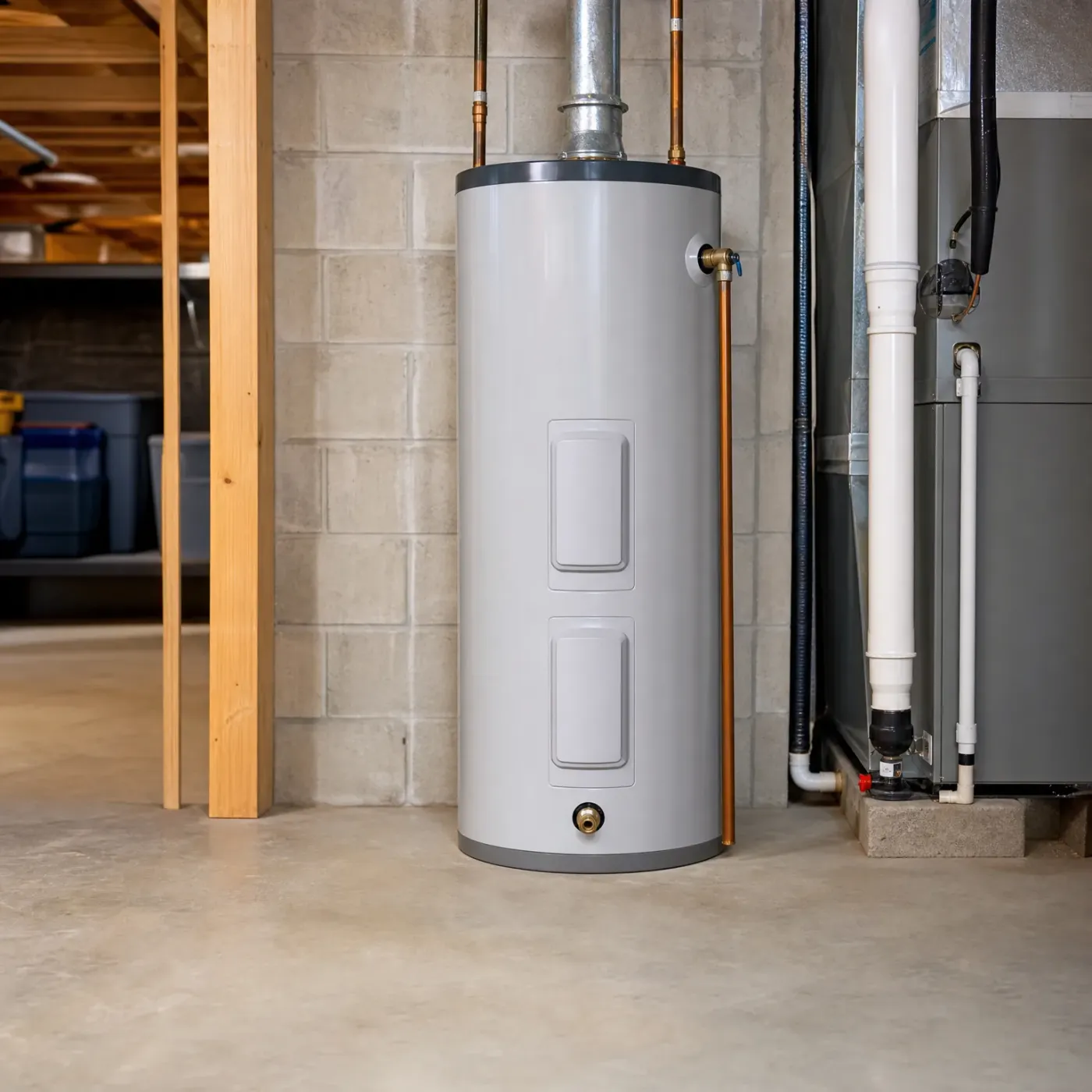
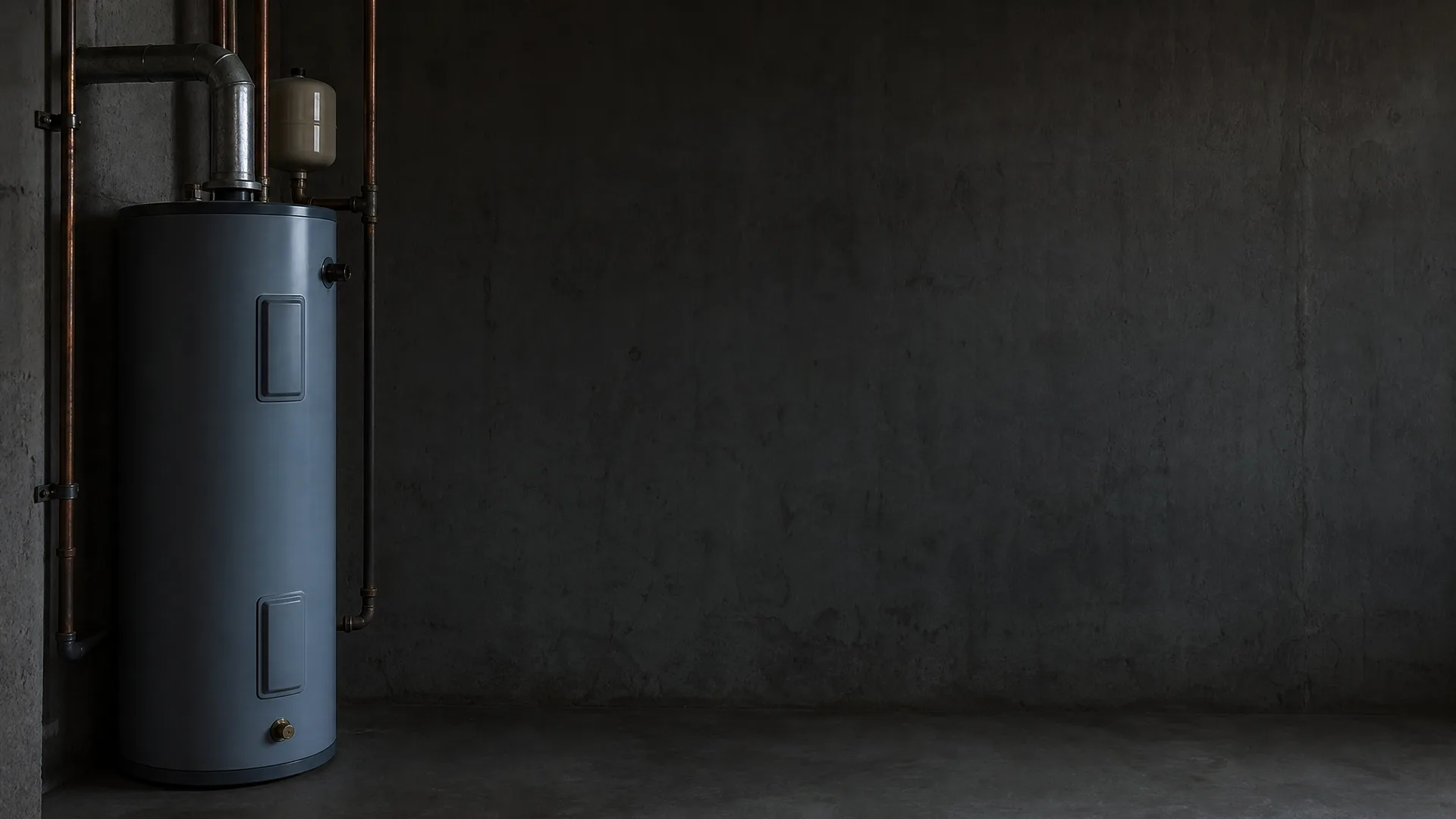
A water heater like this one sits upright with no rust on the tank and no water on the floor around the base. The pipes running up the wall are dry where they meet the fittings. The drain valve at the bottom is closed and clean, not weeping.
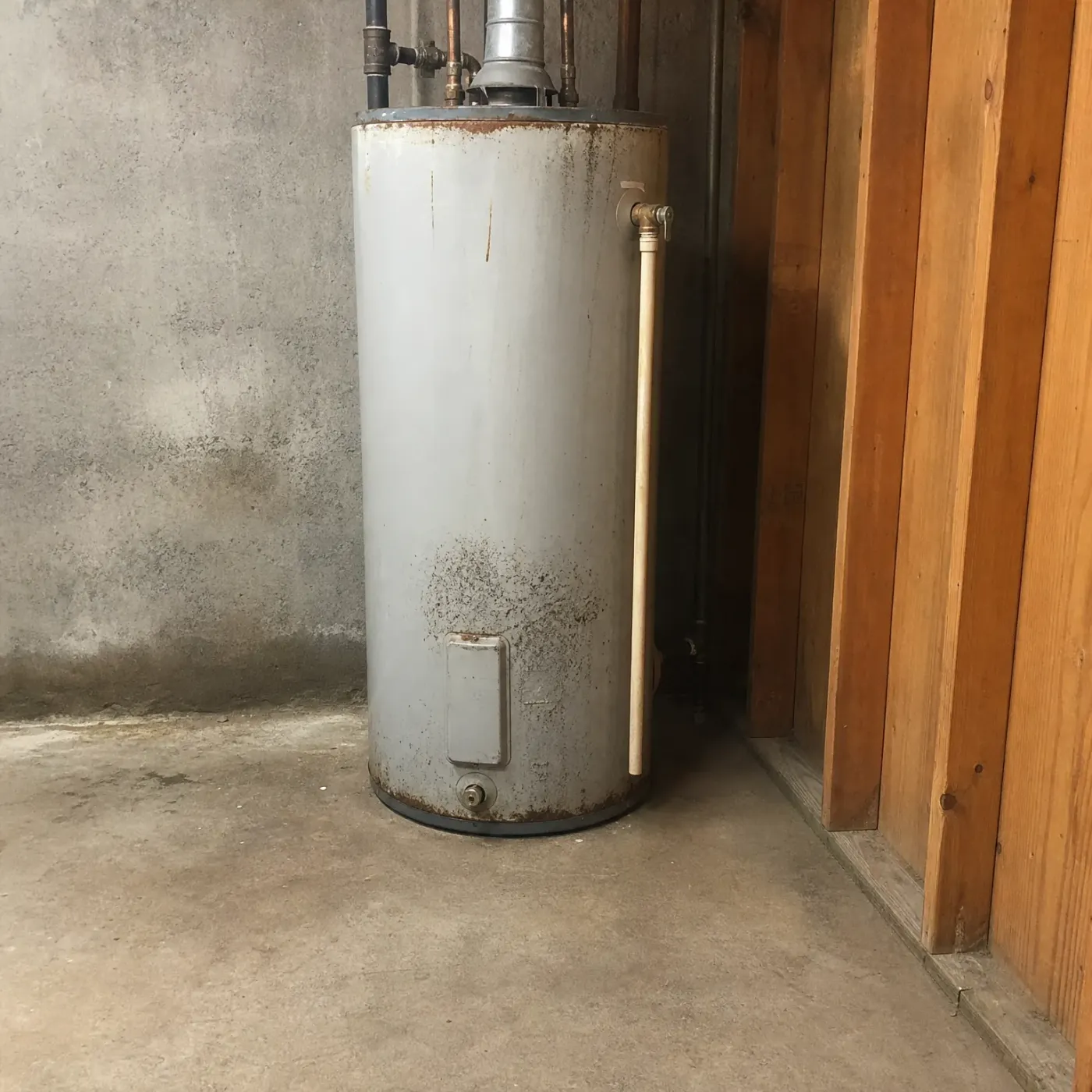
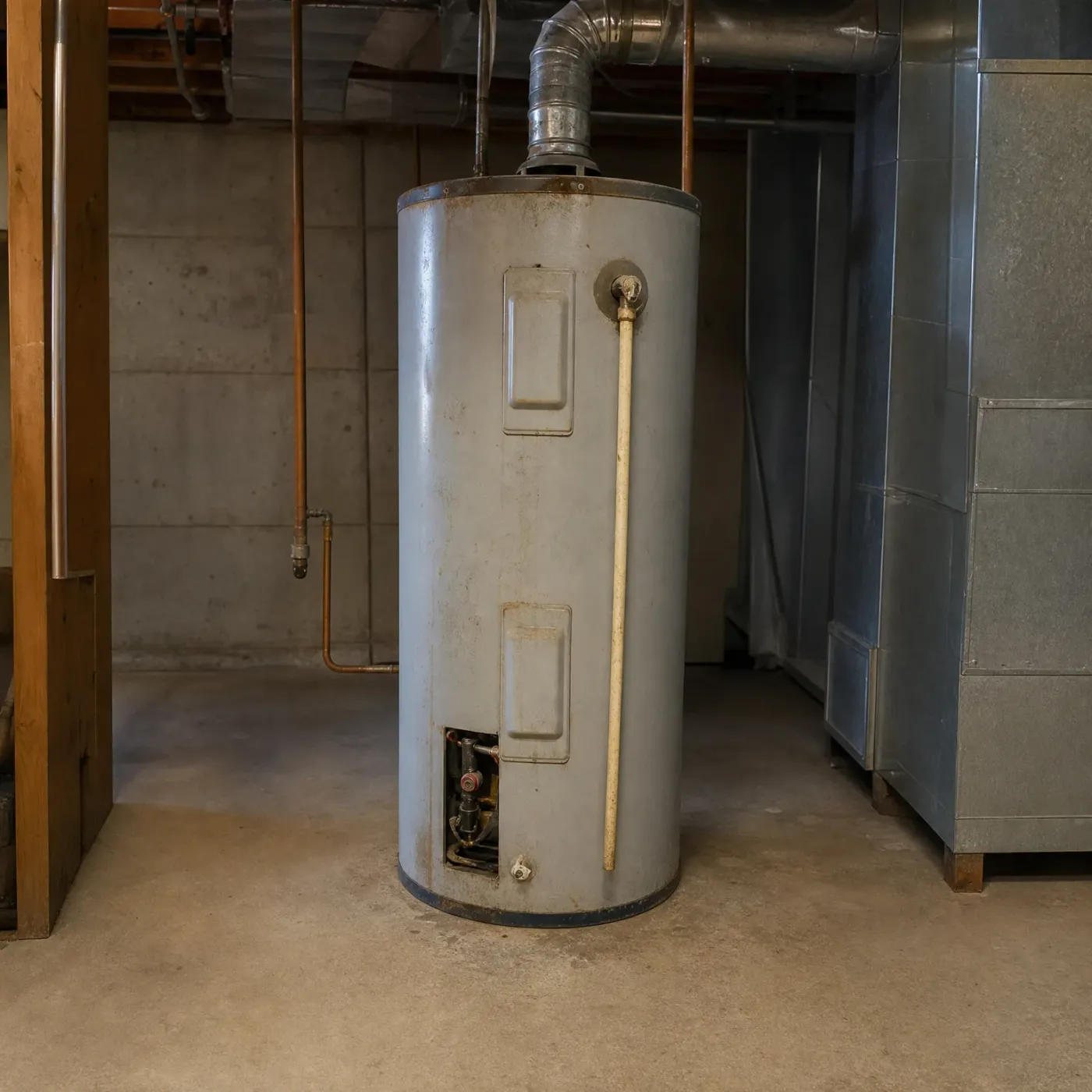
Rust has spread across the tank and left soot staining near the bottom, a sign the steel is corroding through rather than just the paint wearing off. The relief valve and discharge pipe on the side are where to check first, since that corrosion usually means the tank itself, not a fitting.
A leak from a fitting or valve can usually be fixed. A leak from the bottom of the tank means the tank itself is done. That difference decides whether you're paying for a repair or a replacement, and it's worth knowing before anyone shows up. Either way, the water on your floor isn't going to fix itself, and the longer it sits against a wall or a subfloor, the more it damages beyond the water heater. Once you send in the form, you don't have to track down who's available or who works on your type of unit. That part gets handled, and a contractor who covers Columbia and the rest of Boone County will reach out to look at what's actually happening with your tank. You don't need to diagnose it precisely before that call. You just need to know enough to shut off the water if it's bad, and to stop guessing about whether it can wait.
Once you send the form, finding a pro is off your list.