Tell us about the job
Takes about a minute. No obligation.
Gas venting, combustion air, and the condition of the existing supply line are what a contractor prices before anything else on a water heater job here. Utility gas heats more occupied homes in Linn County, Missouri than any other fuel, at 48.1% (2020-2024 ACS 5-year). That share of the housing stock means a replacement unit almost always has to match an existing gas infrastructure, and the venting path already in the wall decides which appliances are even eligible. A contractor who skips that check and quotes on the unit alone will miss the part of the job that drives the real cost.
Older electrical service panels were sized for the loads of the equipment that came with the house, and a water heater installed today draws more than what many of those panels were built to carry. Half the homes in Linn County, Missouri were built in 1964 or earlier (2020-2024 ACS 5-year). A contractor quoting a water heater here has to open the panel and read what is actually there before the equipment choice is settled, because undersized service means the panel work gets priced into the job, not discovered after.
What a New Water Heater Installation Covers
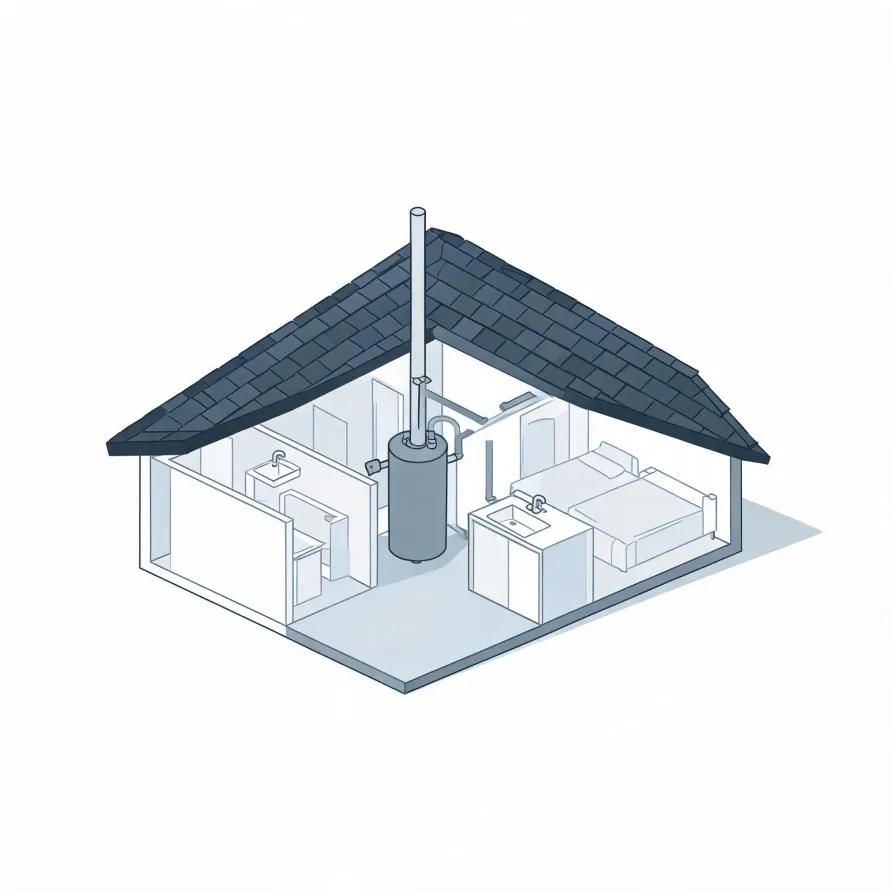
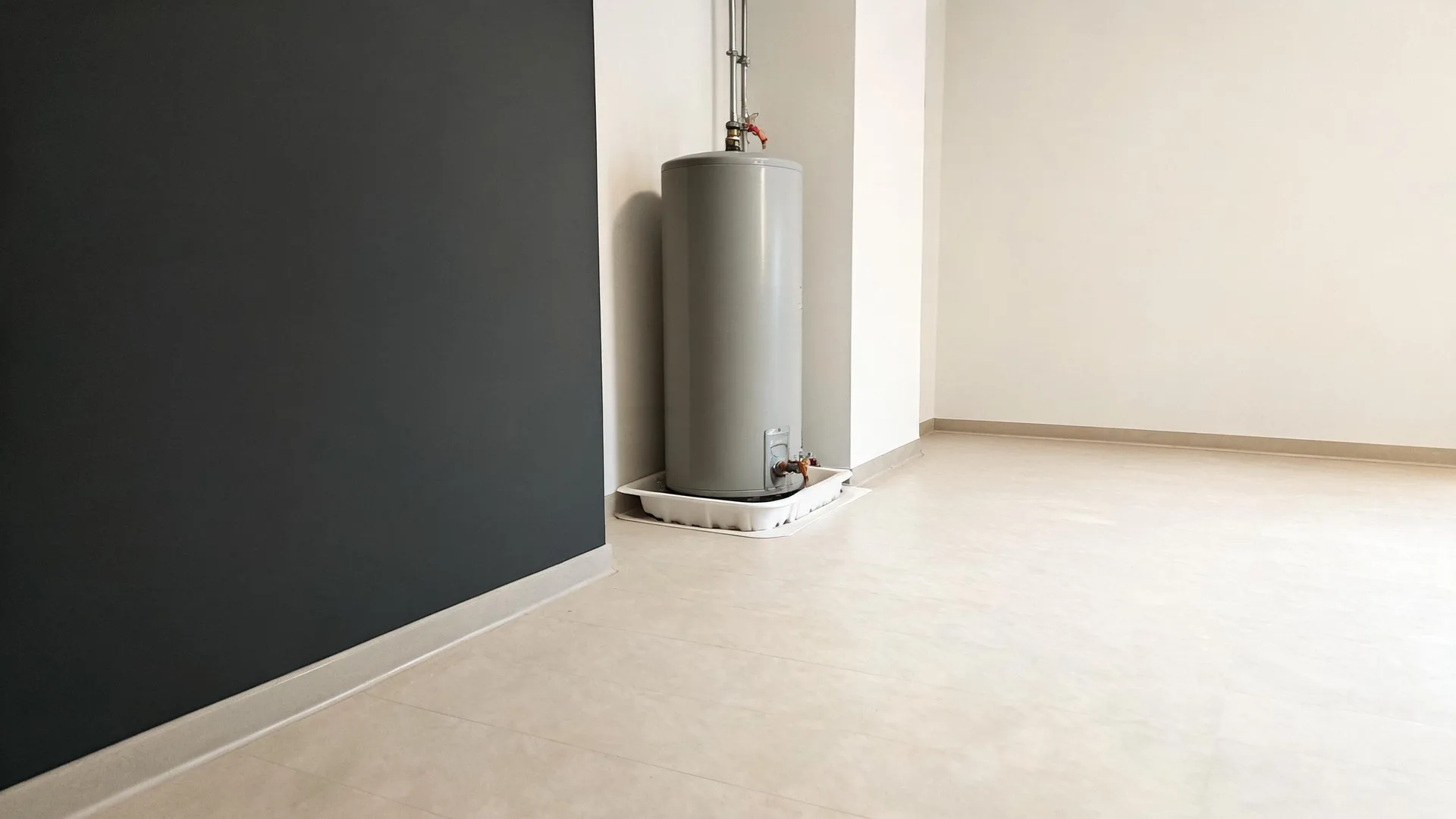
The tank is the piece most homeowners recognize. It sits in a utility room, basement, or closet and holds a supply of water that a burner or heating element keeps at temperature. The pressure relief valve mounts directly on the tank and releases pressure if it builds beyond a safe point.
The cold water inlet and hot water outlet pipes connect at the top of the tank, feeding the rest of the house. A drain valve sits near the base. The flue or exhaust vent runs from the top of a gas unit up and out of the building, carrying combustion gases away from the living space.
The drawing shows a typical layout, and a licensed contractor determines what the installation requires in your specific home.
Get matched in Linn CountyLinn County, by the numbers
63 severe weather events were recorded in Linn County, Missouri between 2015 and 2024.
NOAA National Centers for Environmental Information, Storm Events Database, bulk CSV export, events 2015-01-01 through 2024-12-31.Half the homes in Linn County, Missouri were built in 1964 or earlier (2020-2024 ACS 5-year).
U.S. Census Bureau, 2020-2024 American Community Survey 5-Year EstimatesLinn County, Missouri holds 5,988 housing units (2020-2024 ACS 5-year).
U.S. Census Bureau, 2020-2024 American Community Survey 5-Year EstimatesOwners occupy 78.5% of the occupied homes in Linn County, Missouri (2020-2024 ACS 5-year).
U.S. Census Bureau, 2020-2024 American Community Survey 5-Year EstimatesSevere Weather Events in Linn County
Weather in this part of Missouri puts real demands on water heating equipment. How hard a system works, and how long it lasts, depends partly on local conditions, which is why that picture matters for any installation decision here.
63 severe weather events, 2015–2024. Source: NOAA National Centers for Environmental Information, Storm Events Database.