Repair
Buys time if the tank is still inside the 8 to 12 year range and the problem is one part, like a thermocouple or a heating element.
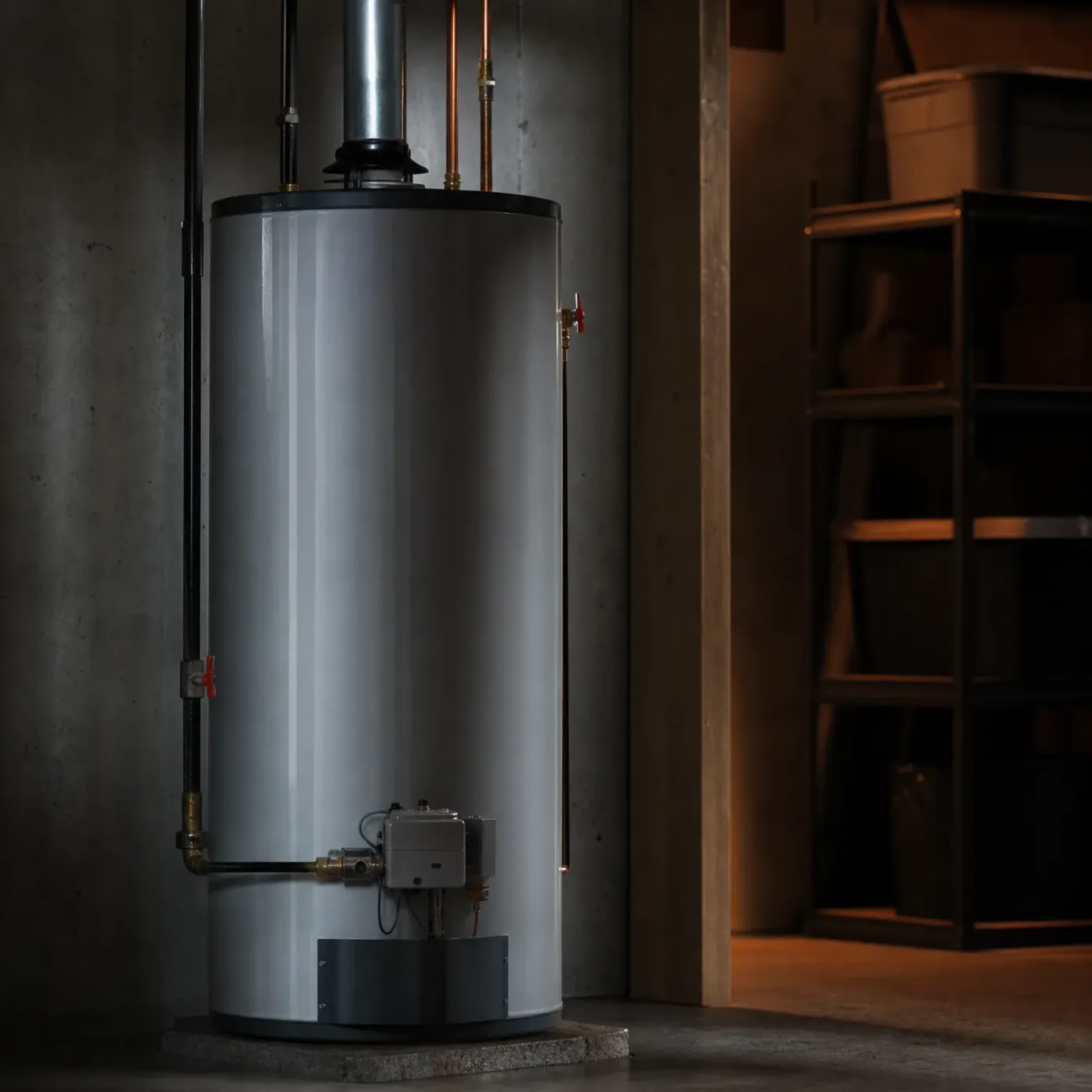
A local pro for your water heater installation
Water heaters don't fail all at once, usually. Rusty water, a tank that leaks at the bottom, a pilot light that won't stay lit, popping sounds when it heats, these are signs worth knowing about before you're stuck with a cold shower. This page covers what to check and when replacing it makes more sense than another repair, plus a way to skip the search for a Missouri contractor and get matched with one who'll reach out to you directly.
Get a water heater proA water heater that needs replacing usually tells you with age first and symptoms second. Most tanks last 8 to 12 years, and once a tank passes that range, a repair just delays the next failure. Rusty water from the hot tap, especially if cold water runs clear, means the tank itself is corroding from the inside, not the pipes. A puddle at the base or rust around the bottom seams means the tank has already started to fail, and tanks don't get patched, they get replaced. A pilot that won't stay lit or a popping, rumbling sound as it heats both point to sediment and a heating element working harder than it should, which shortens what time the tank has left. In Missouri most water heaters run on gas, so a yellow flame instead of blue is also worth noting, since it can mean the burner isn't working the way it should. Any one of these on a tank that's already past 8 years is a sign to plan for replacement, not another repair.




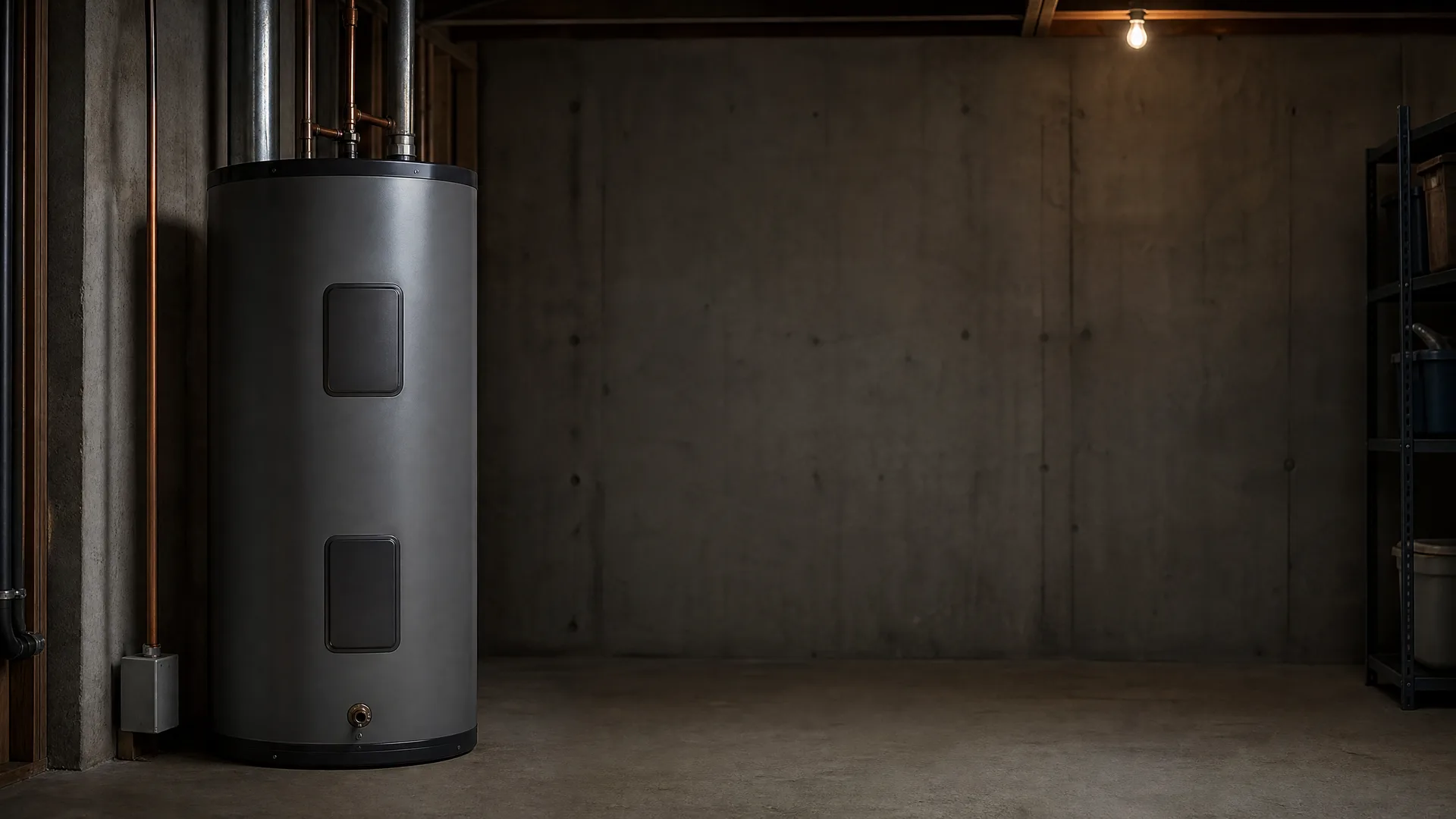
A gas water heater fails from the inside, and the process starts long before you see water on the floor. The anode rod is there to corrode instead of the steel tank, and once it's spent, the tank itself starts rusting. That rust doesn't show up right away. Meanwhile, sediment settles on the bottom of the tank, where the burner heats it directly. It hardens over time, and that's the popping or rumbling you might hear during a heating cycle. That same sediment layer is why a unit might take longer to heat water than it used to, or run out faster. The flame is working harder to get through the buildup. If you see water under the tank, check first whether a fitting is loose, since those can be tightened. If the tank itself is cracked, there's no fix for that. And if the pilot keeps going out or the burner cycles strangely, the thermocouple or gas control valve may be failing, and those parts get harder to source the older the unit gets.
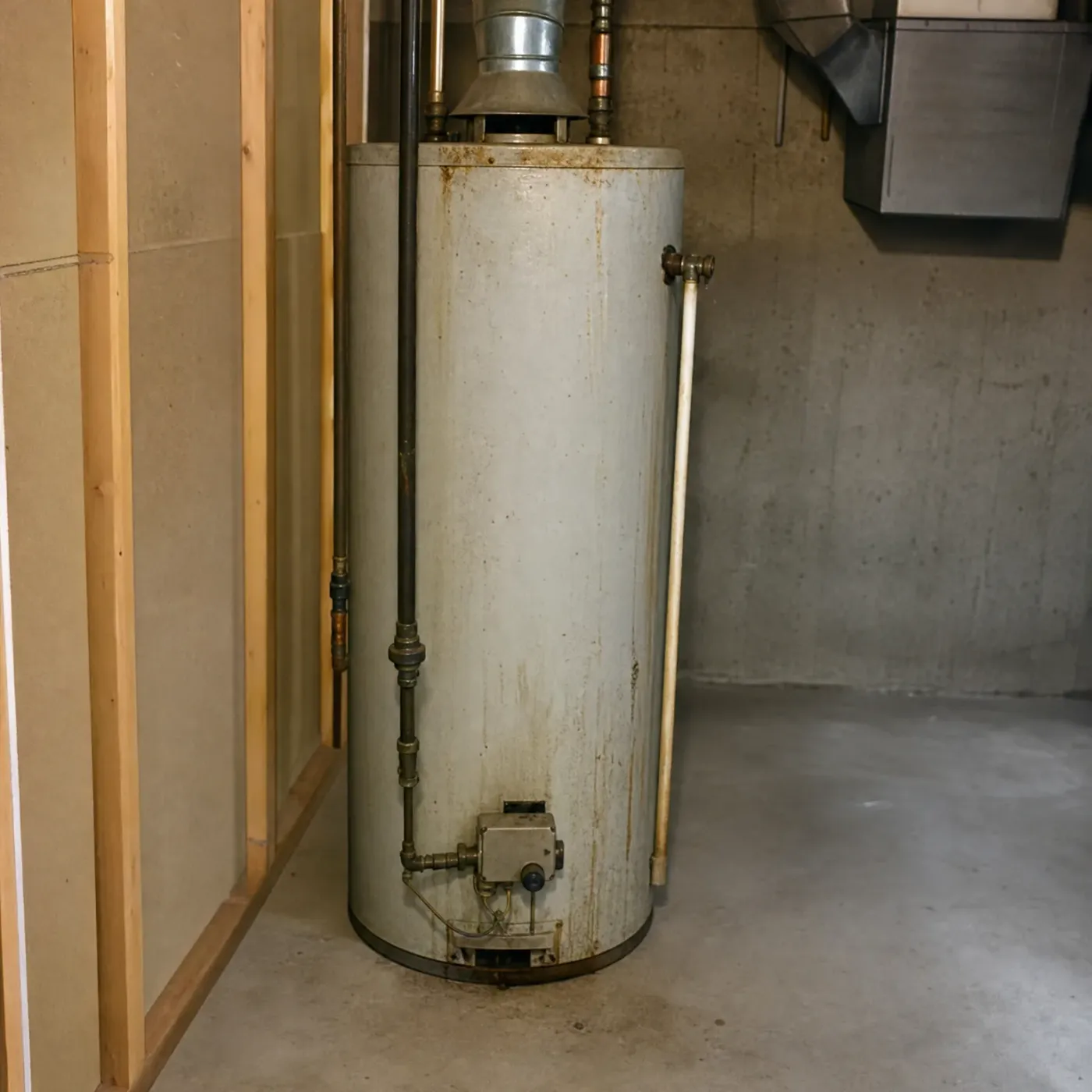
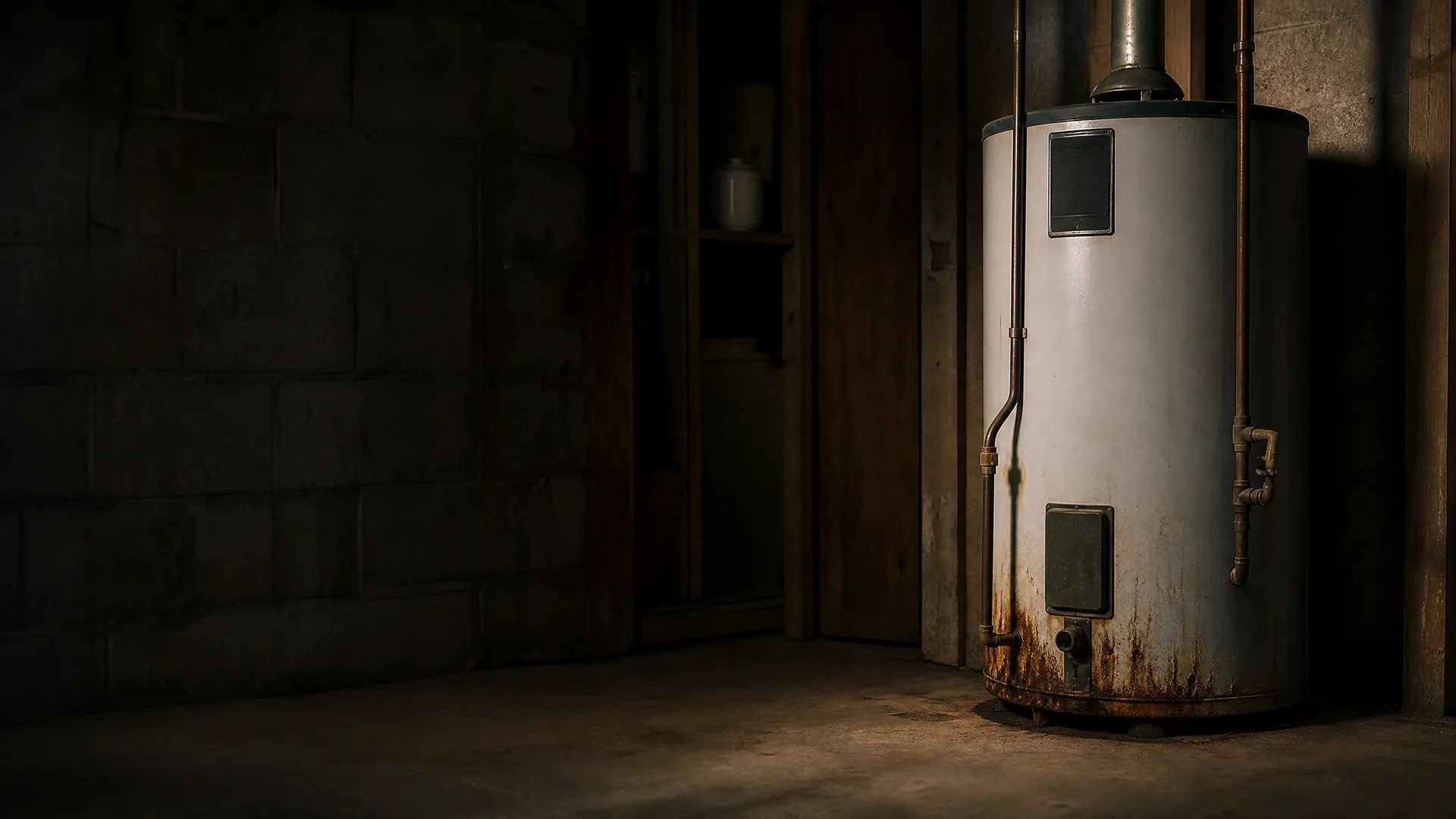
You go down to check the water heater before bed, the way you've started doing since it got noisy. The utility room is cold, the furnace quiet behind it. The bulb overhead shows rust streaks running down the side of the tank, pooling faint and orange on the concrete at its base. You press a finger near the bottom seam and it comes away wet. Outside it's already dark, a weeknight in late fall, nothing dramatic happening, just this. You stand there a minute working out whether it'll last the week. Then you take a picture of the rust line for whoever you end up calling, and go back upstairs to look up who's around to come take a look.
A water heater on its way out does not wait for a convenient week. It fails on a Saturday morning or right before someone's shower, and then you're the one calling around Missouri for anyone who can come out, explaining the rust and the popping sounds over and over to whoever picks up, trying to tell a fair quote from a rushed one while the water's still off. If your tank is already past 8 to 12 years old, or you've seen the rust or heard the popping, that work is coming whether you plan for it or not. Handing the search off now means you're not doing it later with no hot water and no time to compare anyone. You still decide what happens next. You just stop being the one tracking down who's available and who isn't while the tank keeps rusting from the inside.
The popping comes from water trapped under a layer of sediment at the bottom of the tank. Gas and electric heaters both build up this layer over years, mineral settling out of the water every time the tank heats and cools. When the burner fires, pockets of water under that layer flash to steam and the bubbles push up through the sediment, which is the popping or rumbling you hear. A tank that's been doing this for a while has a thicker layer than one just starting out, and the sediment insulates the steel from the water above it, so the burner works harder to heat the same amount of water.
Most tanks ship with a magnesium or aluminum rod that corrodes on purpose so the steel tank doesn't have to. It's a sacrificial part, meant to wear down over the years the tank is in service. Once the rod is used up, there's nothing left to attract the corrosion, and the tank itself starts rusting from the inside. A plumber can pull the rod and look at it, but on an older tank that's already shown rust in the water or at the base, replacing the rod won't undo damage that's already started in the steel.


Buys time if the tank is still inside the 8 to 12 year range and the problem is one part, like a thermocouple or a heating element.
Makes sense once the tank itself is rusting or past 12 years. A new install also means you're not gambling on a cold winter morning.
Close to half of Missouri homes run on gas, so there's a decent chance yours heats water with a gas burner and pilot rather than an electric element. Gas tanks fail the same way electric ones do, with age and rust, but a pilot that won't stay lit is its own early warning worth watching.
ACS 2020-2024 5-year B25040
Age tells you most of what you need to know. A tank under 8 years with one failed part is a repair. A tank past 12, especially with rust showing in the water or around the fittings, is not something a new thermocouple fixes. The steel itself is going, and that only moves one direction.
The signs rarely show up one at a time. Rust in the water, popping from the tank as it heats, a pilot that won't hold, these tend to arrive together as a tank gets old, and together they mean more than any one of them does alone. A single symptom on a tank that's still young is worth watching. The same symptom on a tank past 12 years is worth acting on.
What usually decides it is the anode rod. It's the part that corrodes so the tank doesn't have to, and once it's used up, the steel starts rusting from the inside. Nothing stops that once it's underway. It's a matter of when the tank leaks, not if.
Most people don't deal with any of this until the tank actually fails, which in Missouri tends to happen without warning and without regard for timing. At that point it's not just replacing a water heater, it's finding someone who can come out quickly, describing the rust and the noise to more than one contractor, and sorting through quotes while the household is already short on hot water. Knowing where your tank stands now means that call happens on your schedule instead.
Describe your water heater job once, to one pro.