



Is a tankless water heater worth it in Liberty, MO

Send the form and the search for an installer is over.

Let a pro reach out

Is a tankless water heater worth it in Liberty, MO?

You want hot water that doesn't run out, and you've heard tankless units deliver that, but you're also wondering if the cost makes sense for a house in Liberty. With gas common here and winters that push your water heater harder, you want to know if switching actually pays off where you live, not just in general.

Yes, if you run on gas and use enough hot water to notice the difference

A tankless unit heats water as you use it instead of storing a tank of it hot all day. That matters more in Clay County than in places with mild winters, because your incoming water is colder from November through March, and a tank has to work harder to keep up with that while also losing heat just sitting there between uses. Gas is the common fuel here, and gas tankless units can keep pace with that colder water better than electric ones can. If your house runs on gas already, the install is simpler and the payoff is more likely to show up on your bill. If you're on electric, the math is closer and worth checking against your own usage.

A man in a navy sweater reclines with closed eyes in a beige armchair in a living room, with a lamp, wooden cabinet, bookshelf, potted plant, and a side table holding a newspaper and mug nearby.
A man in a blue henley shirt reclines on a leather chair with his eyes closed, beside a window, a houseplant, a side table with a newspaper and a dark mug.
A man in a gray sweatshirt reclines with his eyes closed in a dark leather chair, with a bookshelf behind him and a side table holding folded newspapers, a mug, and a potted plant by a window.
A man in a blue sweater leans back on a brown leather chair with his eyes closed and a slight smile, in a room with bookshelves, framed pictures, a potted plant by a window, a folded newspaper and a dark mug on a table.

Tankless vs. Tank in Liberty

Tankless

  • A tankless unit heats water only when a tap is open, so there's no standby loss from a tank sitting full of hot water all day.
  • Winters here push groundwater temperatures down, which means the unit works harder to hit your set temperature than it would in a milder climate.
  • Gas is common in Liberty, and a gas tankless unit can keep up with a shower and a dishwasher running at once better than an electric one can.
  • Installation often means upsizing the gas line or adding venting suited to the unit, since tankless units draw more gas at once than a tank does.
  • A tankless unit takes up a fraction of the space a tank does, which matters if yours sits in a closet or a tight utility space.
  • These units are built to last longer than a tank, so the upfront work can pay off over more years of service.

Tank

  • A storage tank keeps a set amount of hot water ready, so a big draw like a full bathtub doesn't test its limits the way it would a tankless unit.
  • Installation is usually a straight swap if your gas line and venting already match what's there, with no upsizing to plan around.
  • A tank works fine on its own if your house doesn't already have the larger gas line or venting a tankless unit needs.
  • Standby loss means the tank is reheating water you're not using yet, which runs up the gas bill over a cold Clay County winter.
  • Once the tank runs out during heavy use, like back-to-back showers, you wait for it to recover before the next one is comfortable.
  • A tank's lifespan tends to run shorter than a tankless unit's, so you're likely replacing it again sooner.
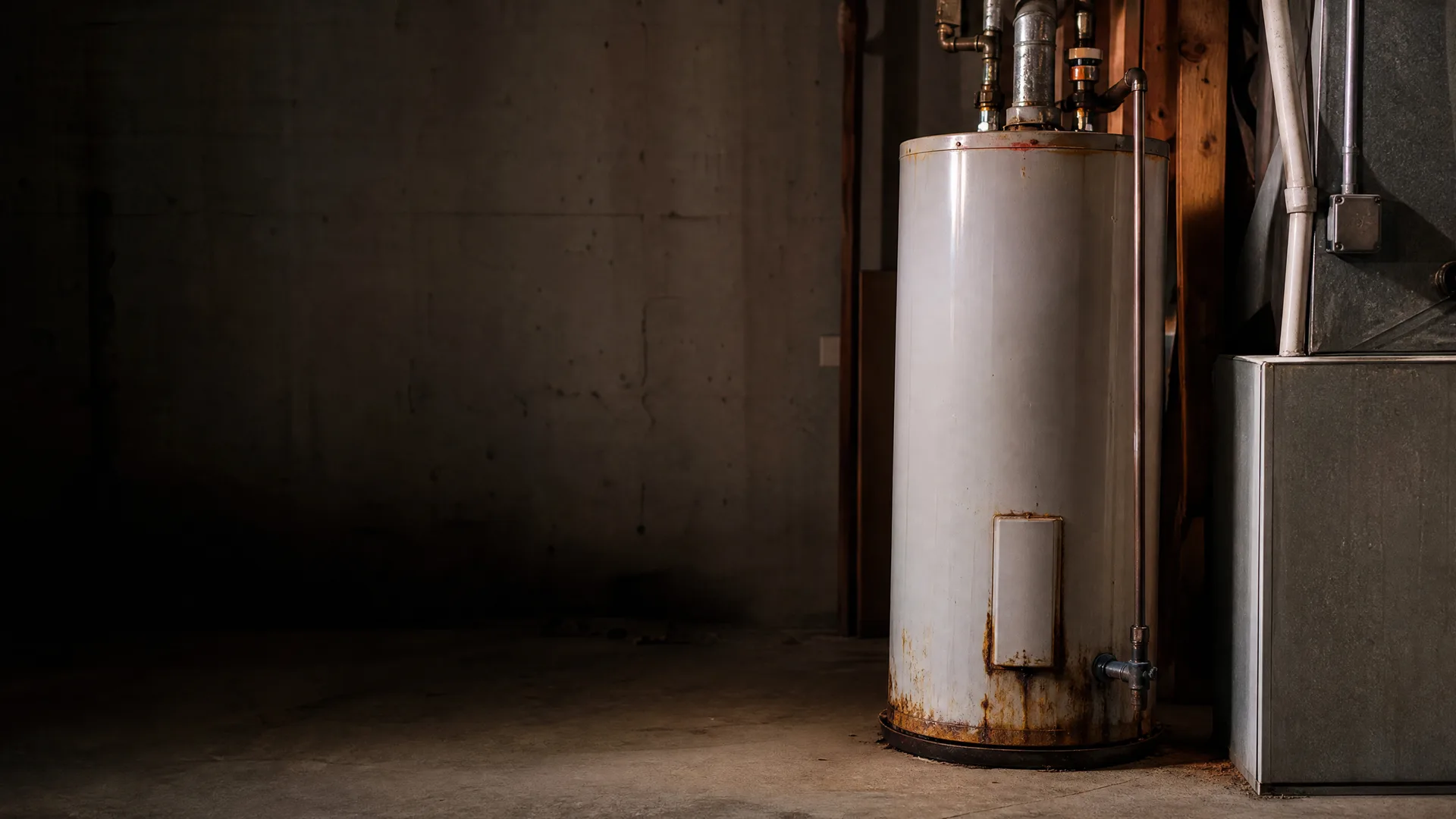
An older rusting cylindrical water heater with overhead pipes stands against a concrete basement wall beside a metal furnace and ductwork.

You go down to the utility room after dinner to grab something from the freezer, and the floor is damp near the water heater. It's dark outside already, that early dark that settles in by six once Clay County gets into winter. The tank is old enough that you stopped counting the years, and now there's a rust stain running down the side from under the fitting at the top, pooling at the base where the metal meets the concrete. You crouch down and touch the puddle. It's warm. The unit is still running, still trying to keep up, rust and all.

What does your household actually need from a water heater?

  • 2.5 people per household on average

    Clay County households average 2.50 people. A tankless unit sized for that keeps up fine, but it has to be sized right, not just swapped in for the tank.

  • Half the homes here were built by 1987

    Half the homes in Clay County were built in 1987 or earlier. If yours is one of them, the gas line and venting may need work to carry a tankless unit.

  • 66.5% of homes heat with gas

    Gas heats 66.5% of homes here, more than any other fuel. That's the one thing that makes a gas tankless unit a straightforward swap instead of a bigger project.

ACS 2020-2024

Why the cold groundwater matters

A tankless unit raises the water's temperature by a fixed number of degrees as it passes through, and that number depends on how cold the water is coming in. Clay County groundwater runs cold enough in January that the unit has to work harder to hit your set temperature than it does in July. That can mean a lower flow rate at the tap during the coldest stretch of winter if two showers run at once. Sizing for winter groundwater, not summer, is what keeps the unit keeping up when it matters most.
What a tank still does well

A tank keeps a set volume of hot water ready, so recovery time depends on the burner and the tank size rather than on how many fixtures are running right now. That makes it simpler to predict how it behaves when a lot of hot water gets used in a short stretch, like back to back showers before school. The tradeoff is the standby loss, since a full tank sits hot all day whether anyone uses it or not, and in a gas furnace home that's gas spent keeping water warm nobody's using yet.

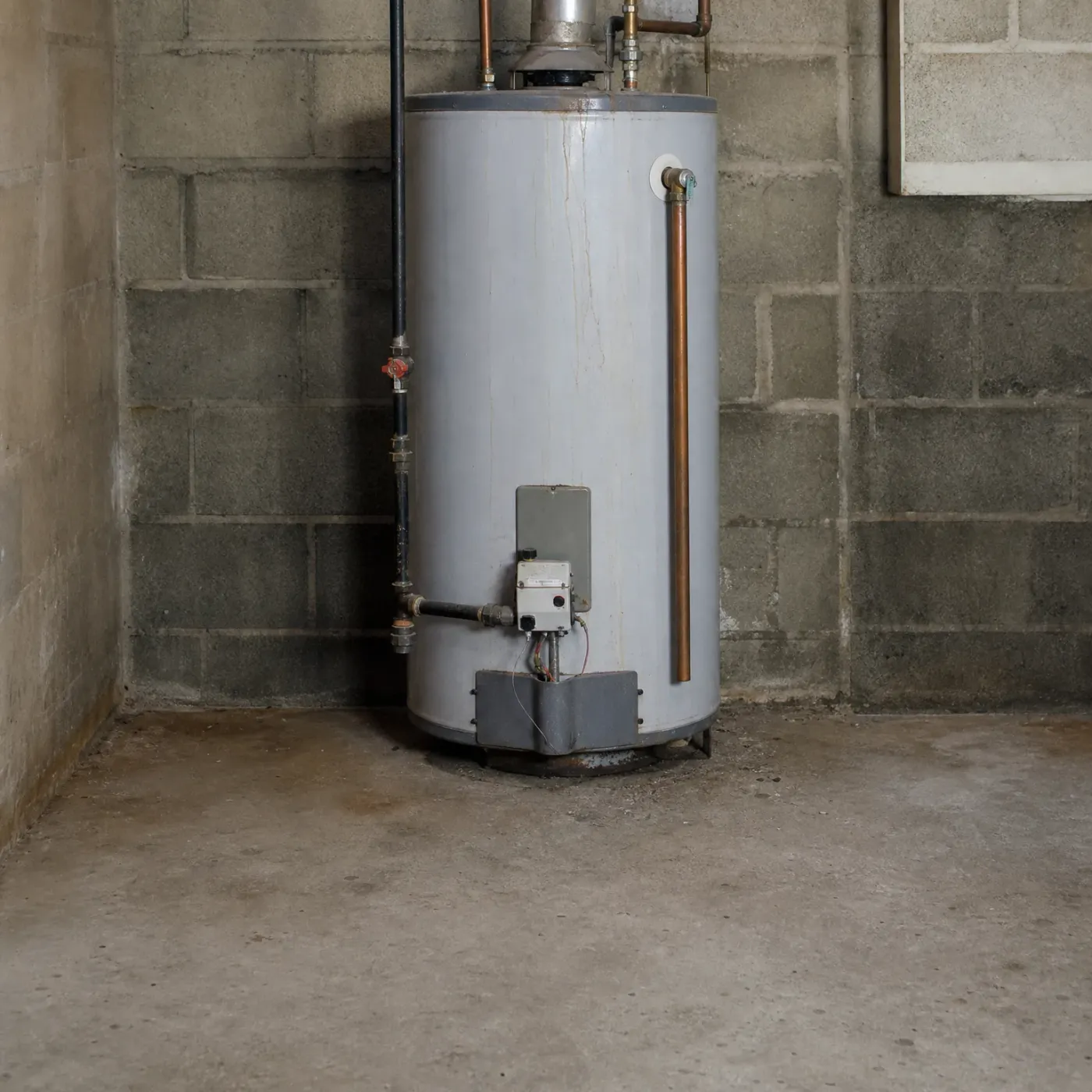
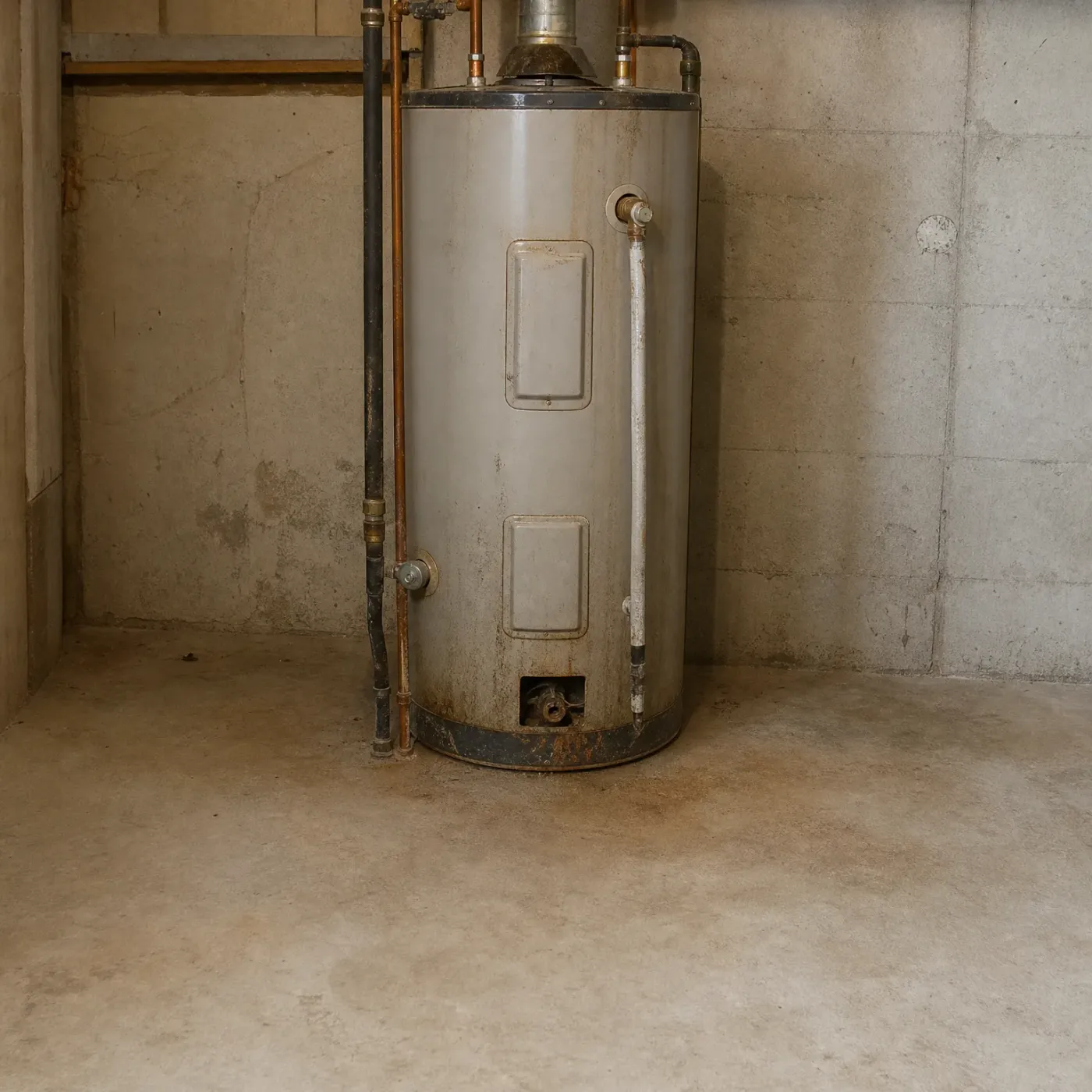
A rusting gas water heater with copper and steel pipes stands against a concrete block wall on a bare concrete floor.
Before you get your water heater installation
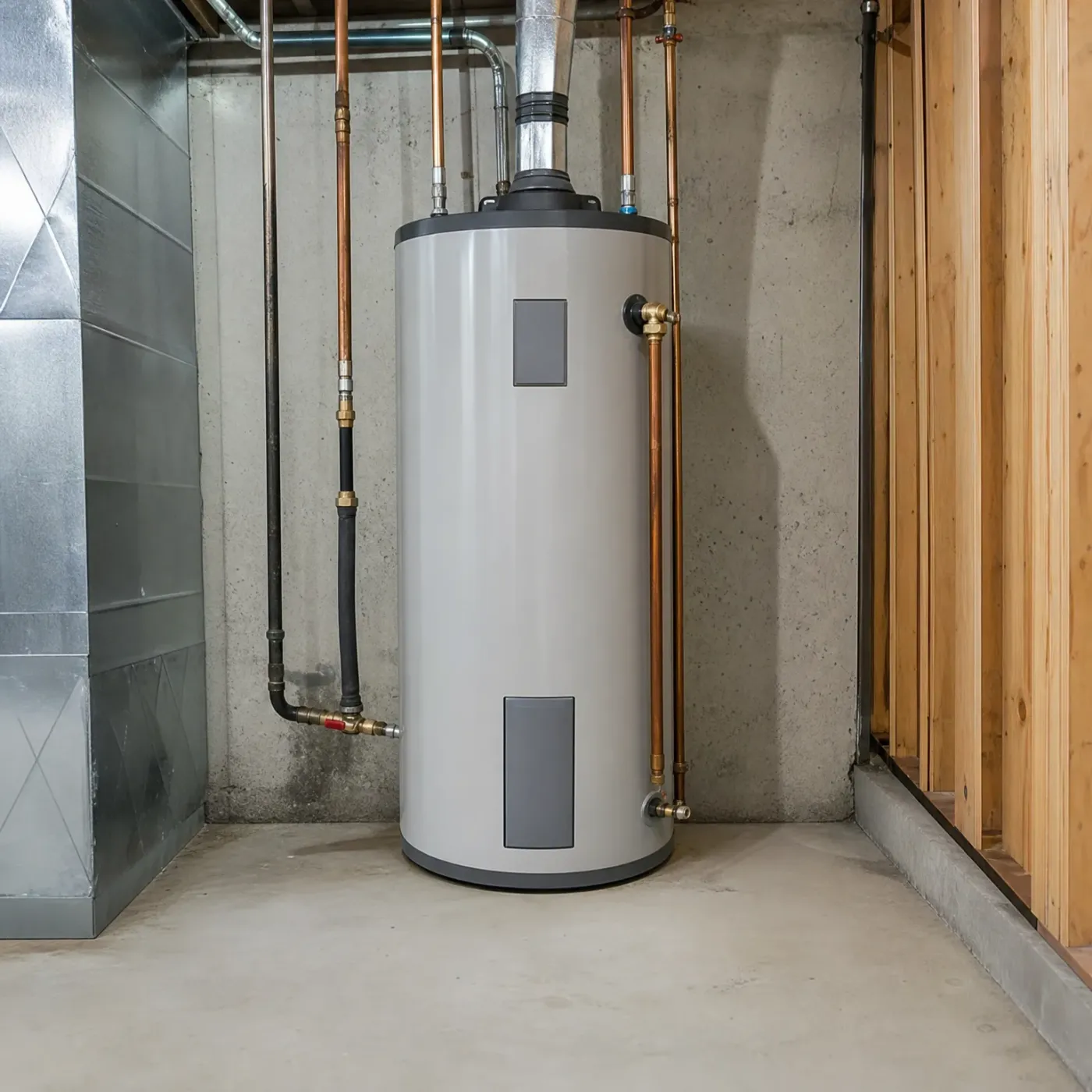
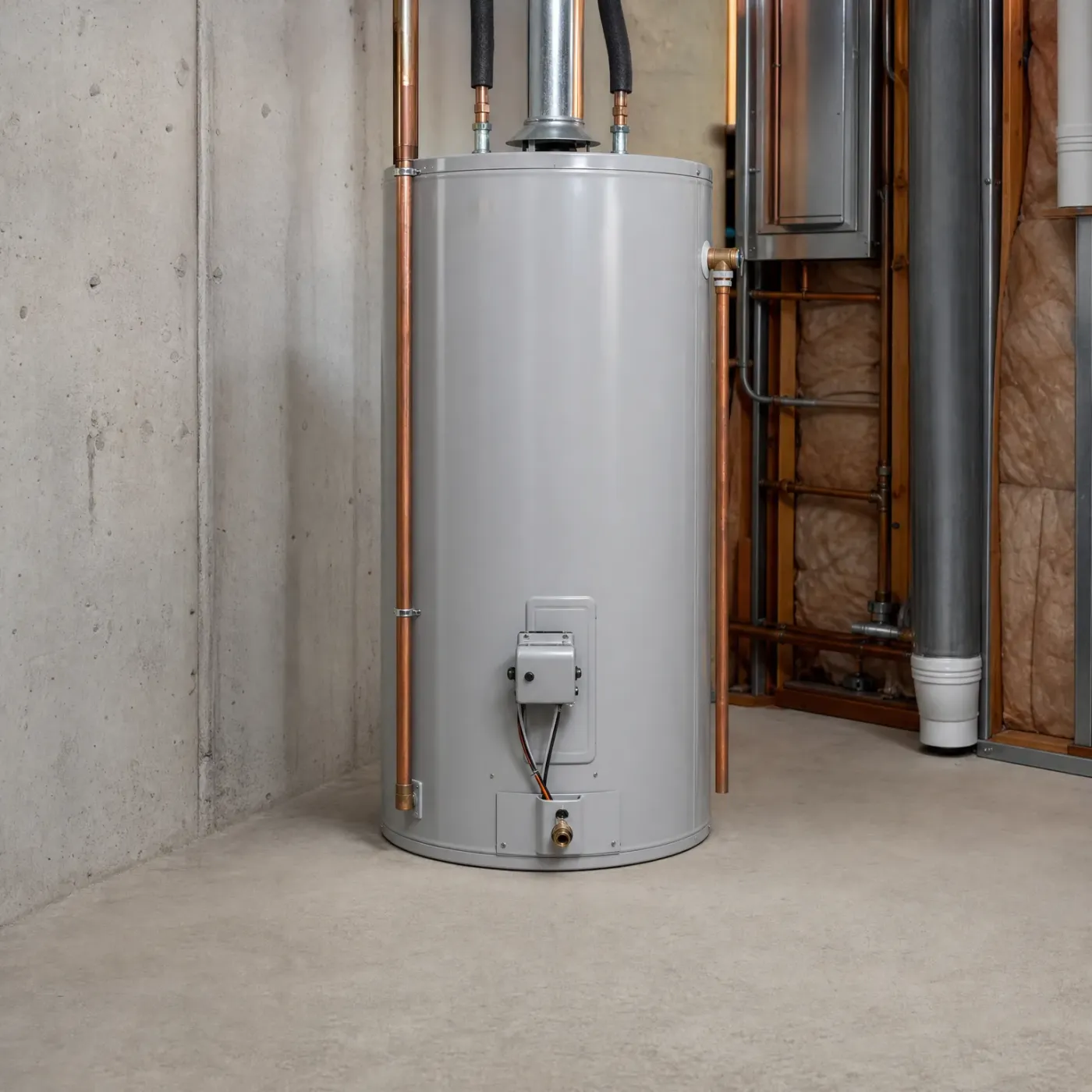
A gray cylindrical water heater stands in a basement corner against a concrete wall, with copper pipes, insulated flex lines, a metal flue, and insulated wall framing with ductwork to the right.
After you get your water heater installation
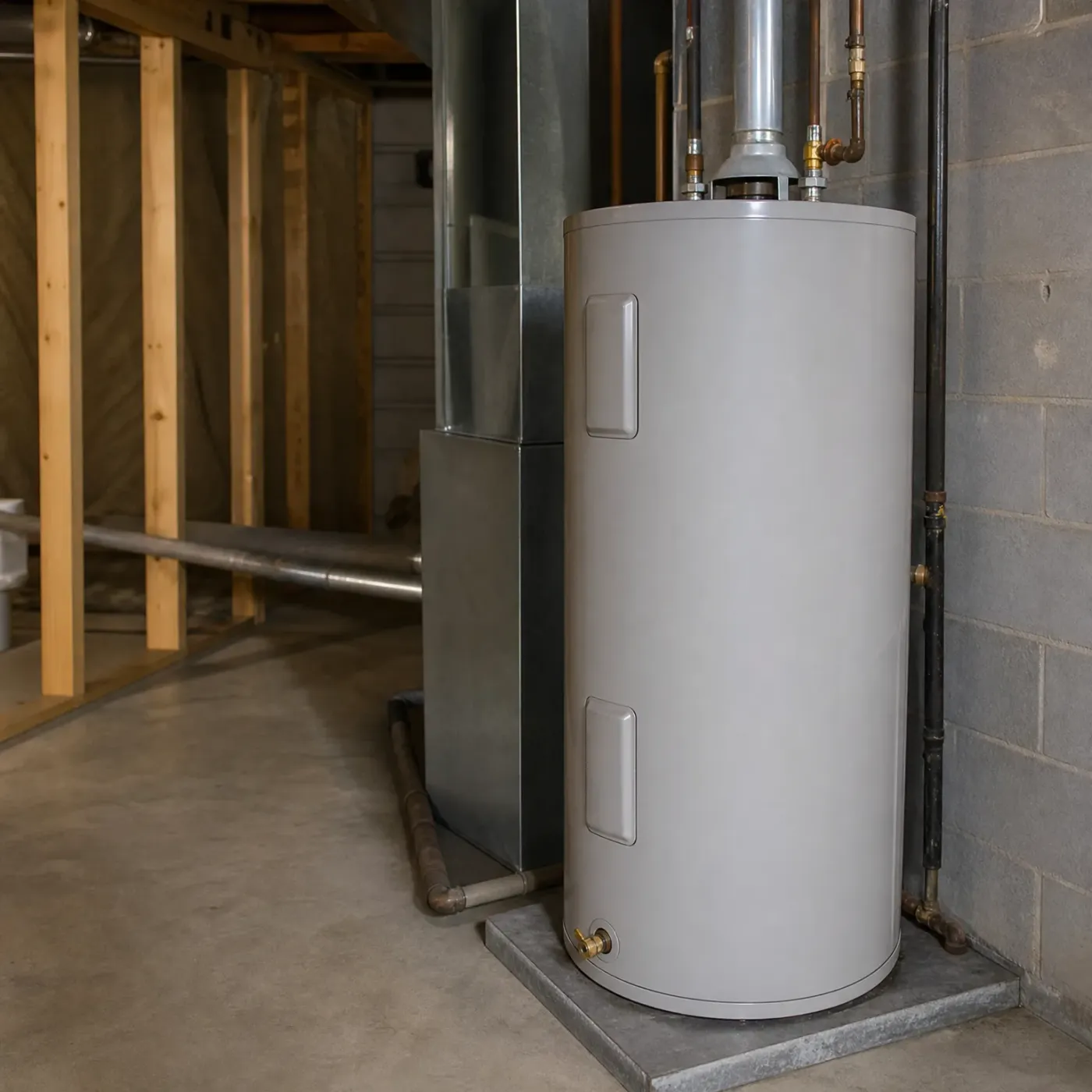
A cylindrical light-gray water heater on a concrete pad in a basement, with copper and metal pipes above it, a metal furnace and ductwork behind, a concrete block wall at right and wood stud framing at left.

Stop chasing a water heater pro

Skip the round of in-home estimates for a new water heater.

Send the form and stop researching installers for the new water heater.

I'm done searching

You're not committing to anything by asking.

A gray cylindrical water heater standing in a basement corner against a concrete wall, with copper and black pipes, a metal flue, and ductwork nearby, next to wood framing on the right.
A tank quietly doing its job, holding water hot and ready, costs you nothing in thought until the day it doesn't.
A gray cylindrical gas water heater with copper and black pipes stands in the corner of a basement with concrete block walls and a bare concrete floor.
A corroded valve and iron pipe on an old tank mean the next cold morning might be the one with no hot water at all.

A gas tankless unit lights its burner the moment a flow sensor in the inlet pipe detects water moving, usually around three quarters of a gallon per minute. The burner fires, a heat exchanger warms the water as it passes through, and the unit modulates gas flow to hold the output at whatever temperature the control panel is set to. Open two taps at once and the flow rate climbs past what the unit can heat to full temperature, so the water coming out gets cooler, not hotter and then cold. That's the flow rate problem installers size around, not a mystery fault. The exchanger itself is copper or stainless, and it scales from the inside the same way a kettle does, slower where water is softer, faster where it's hard. A tank heater has none of this logic. It just keeps forty or fifty gallons at temperature around the clock, so there's no sensor, no modulation, and no limit on simultaneous use until the tank runs dry.

Power here costs 13.35 cents per kilowatt-hour

At 13.35 cents per kilowatt-hour, a gas tankless unit still costs you little to run even though its fan, igniter and control board all draw power. A gas water heater's real cost shows up on the gas side, not the electric bill, so this rate matters less here than the fuel it burns.

EIA-861 2025

A wooden table with a closed laptop, a ceramic mug of dark coffee, and a glass vase of eucalyptus stems beside a window, with a dark green kitchen cabinet, wooden counter, potted herb, cutting boards and bowl blurred in the background.

What switching actually changes at your house

If your household runs back to back showers before school or work, you know the moment the tank runs out. A tankless unit ends that specific problem. It won't make the water hotter or the pressure stronger. What it does is keep delivering as long as a tap stays open, which matters most in a house where more than one person needs hot water inside the same hour.

What it puts at risk is less obvious. A tankless unit needs the right gas line size and venting for your house, and that's not something to guess at or have a second contractor redo after the first one gets it wrong. Rather than calling around Clay County, explaining your setup to one installer after another, and sorting through quotes that aren't priced the same way, you can send one form and let the right contractor come to you.

Interior corner of a room with a dark upholstered sofa and textured cushion, a potted plant, sheer curtains at a multi-pane window showing blurred green and yellow trees, and a dark table holding a wooden tray with stacked coasters and a small ceramic vase.
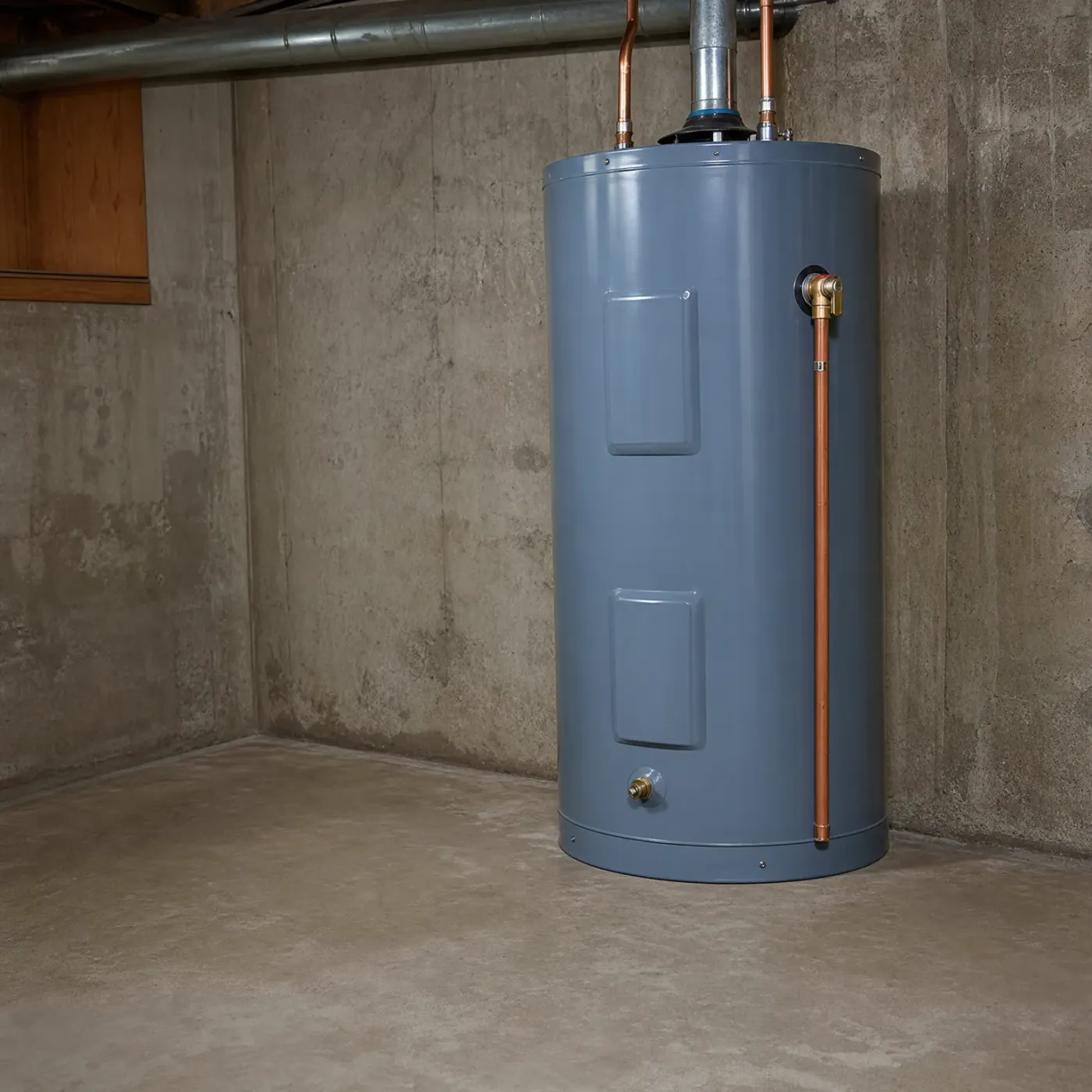
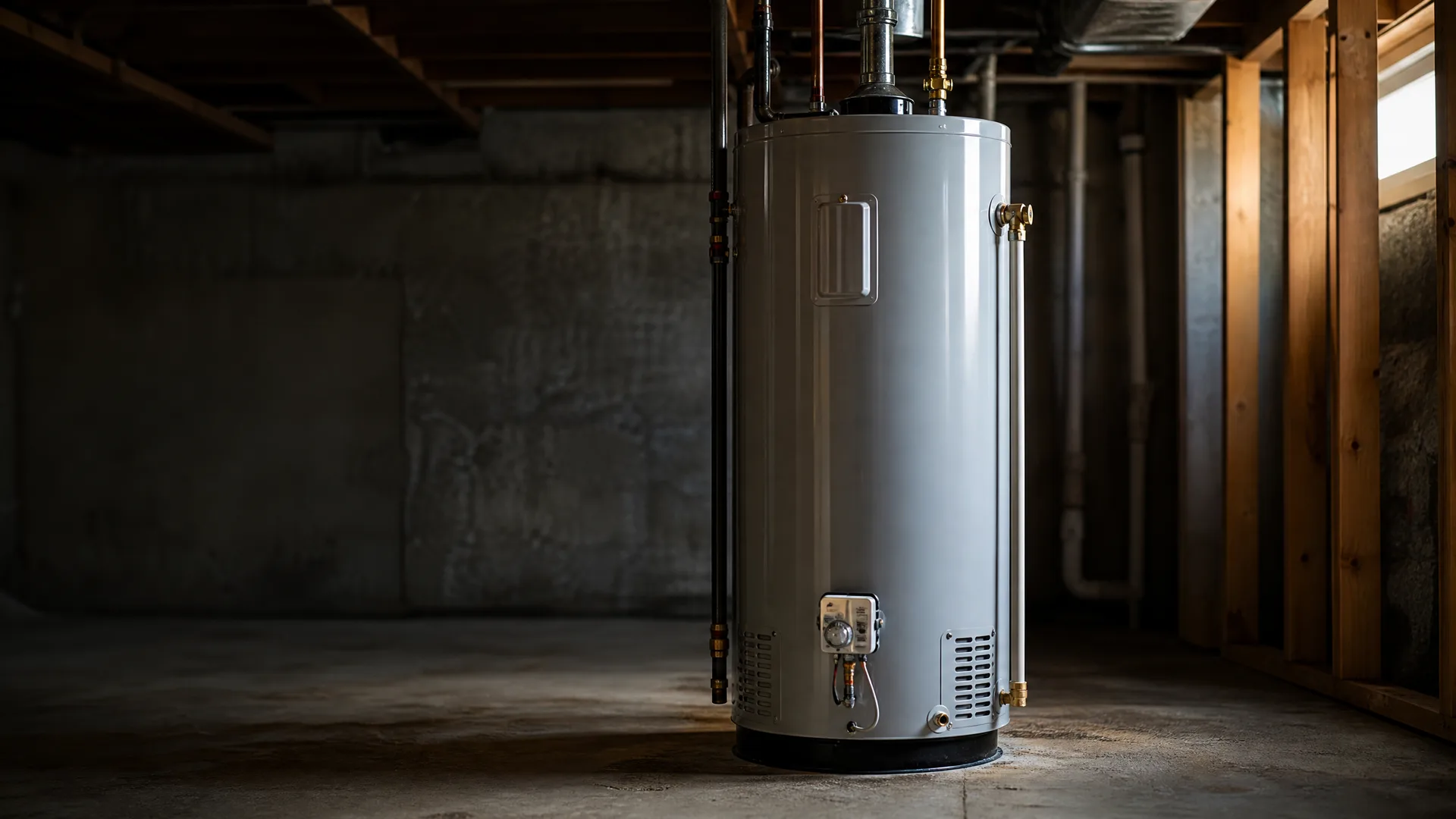
A gray cylindrical water heater standing on a concrete floor in a basement corner, with copper pipes and a metal duct running overhead along bare concrete walls.

A tank doing its job

This one sits against the concrete wall with its copper lines and vent pipe intact, holding water hot and ready. Nothing about it demands attention, and that's exactly the point of a water heater working the way it should.

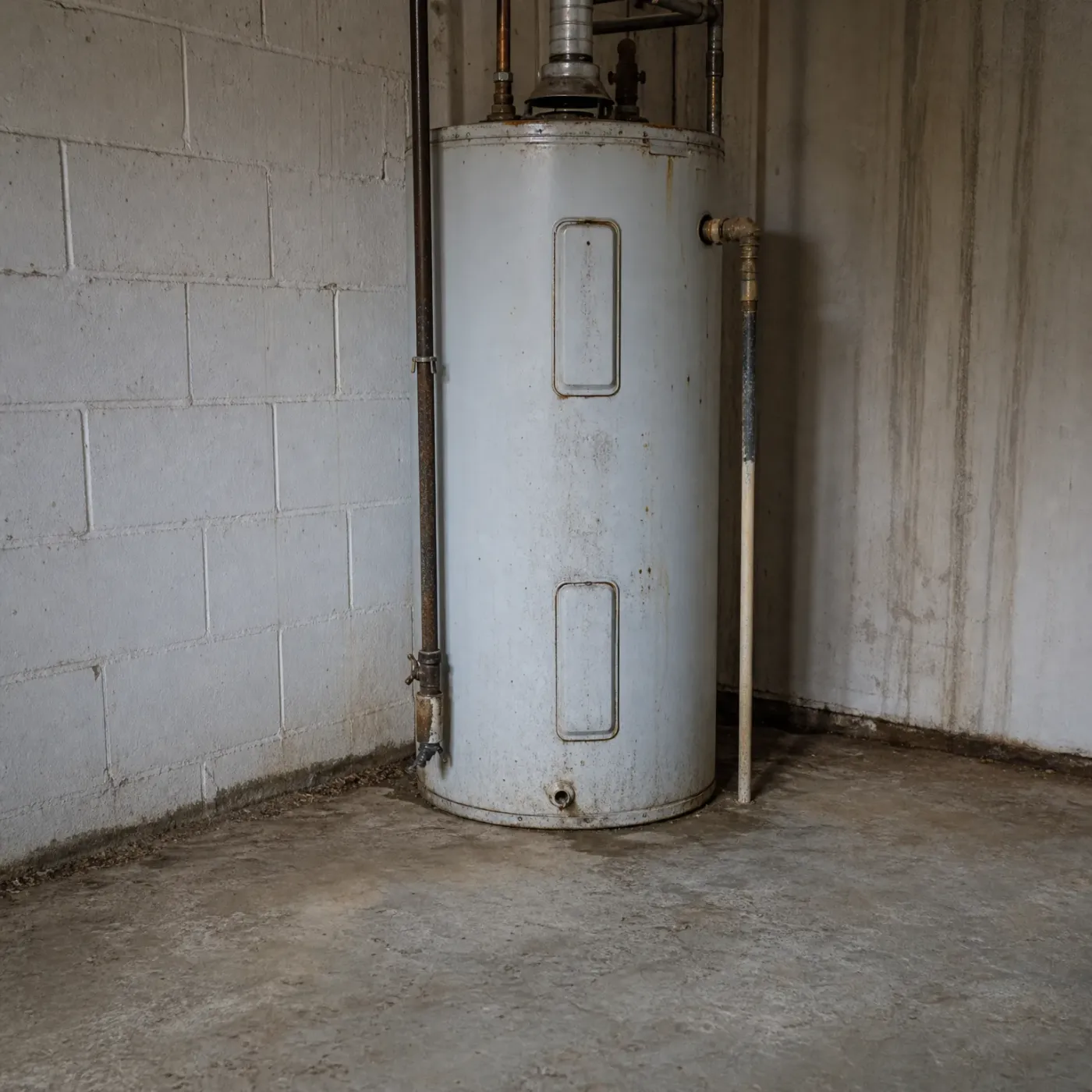
A white cylindrical water heater with rust stains and two access panels stands in a basement corner between a painted concrete block wall and a bare concrete wall, with metal pipes running up and alongside it on a concrete floor.

A tank past its years

Rust has worked across the whole jacket here, and that kind of corrosion doesn't stay on the outside. Once a tank looks like this, the question isn't if it fails, it's whether you get a warning first or just cold water one morning.

A gray-haired man in a blue sweater over a checked collared shirt sits in an armchair with his eyes closed and head tilted back near a bright window, with a houseplant and lamp nearby.
A woman in a cream knit sweater sits with closed eyes in an armchair beside a window showing orange autumn foliage, with a framed picture, plants, and a white mug on a wooden table nearby.

Where this leaves you

  • A tankless unit makes sense in Liberty if your household needs more hot water than your tank keeps up with and you plan to size it for Clay County's cold groundwater.
  • Gas is common here, which matters since a gas tankless unit depends on steady gas supply and proper venting to hit its rated output.
  • Cheap power locally means running a gas unit's fan, igniter and control board costs little, so the real savings or cost shows up on the gas side.
  • An old tank nearing the end of its life forces the decision sooner than a working one does, since a leak or failure won't wait for a convenient month.
  • Sizing has to account for both your household's draw and how cold the water runs in winter, not just a one-to-one swap for the tank you have now.
  • Once you know what you need, the work left is finding a licensed installer, which is where most of the remaining effort in this decision sits.

A tankless water heater is worth it in Liberty if you need more hot water than your tank gives you, and you size the new unit for Clay County's cold winter groundwater rather than just matching the old tank's gallons. Gas is common here, and a gas tankless unit needs steady gas supply and correct venting to hit its rated output, so the install matters as much as the unit itself. Power here is cheap enough that running the fan, igniter and control board costs little, which means whatever you save or spend shows up on the gas side of the bill, not the electric one. If your tank is old and starting to show it, that pushes the timeline. A leak doesn't wait for a month that suits you, and a tank near the end of its life can make the decision for you on its own schedule. None of this changes by reading more about it. What changes it is sizing the unit correctly for your household and for the water coming into your house in January, then getting it installed by someone who does this work regularly. That's the part left once you know where you stand, and it's also the part that otherwise means finding a contractor yourself, calling around, explaining the situation more than once, and sorting through quotes to figure out who actually knows gas tankless units in this area.

A white cylindrical gas water heater with copper and brass pipe connections stands on a concrete floor in a basement with exposed wooden joists and a concrete wall.

Send one request and you're done looking

Step 1 of 3: Equipment