
Is a heat pump water heater worth it in Missouri

Send the request and finding a pro stops being your problem.

Hand it off

Is a heat pump water heater worth it in Missouri?

Your water heater is on its way out and you've seen heat pump models come up as an option. They pull heat from the air instead of burning gas or running pure electric resistance, so the pitch is lower running costs. But power here is cheap and most homes in Missouri already heat water with gas, so it's worth knowing whether the switch actually pays off before you commit to one over a standard replacement.

Usually, if your water heater sits somewhere with room for one and enough warmth to work with.

A heat pump water heater moves heat out of the surrounding air instead of generating it, so it uses a fraction of the electricity a standard electric water heater does. That gap matters less here than in states with expensive power, since Missouri electric rates run low already. But it still beats a standard electric tank on running cost, and for a home on electric water heating now, swapping to a heat pump unit is usually worth it. For a home on gas, the math is closer, since gas here is already the cheaper fuel to heat water with. The unit also needs a space with some volume of air around it, a basement or utility room works, a small closet usually doesn't.

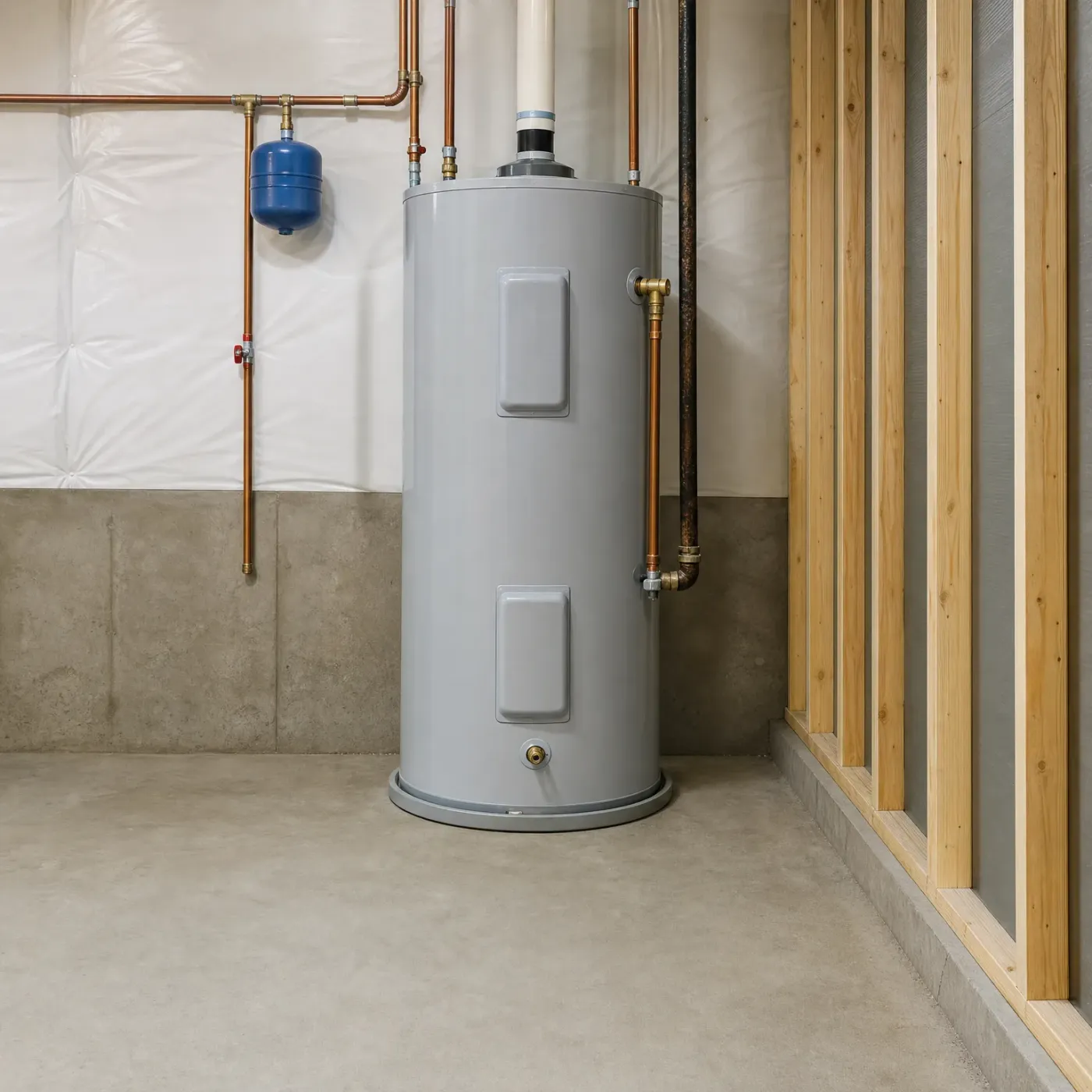
A gray cylindrical water heater stands on a concrete basement floor against a plastic-sheeted insulated wall, with copper supply pipes, a blue expansion tank, a black vertical pipe, and exposed wood wall framing at right.

Running clean and efficient

A heat pump water heater working right looks like this: steady operation, no rust, no leaks at the fittings. It draws heat out of the air around it, so the space it sits in runs a few degrees cooler and a little damp. Give it room to breathe and it does its job quietly for years.
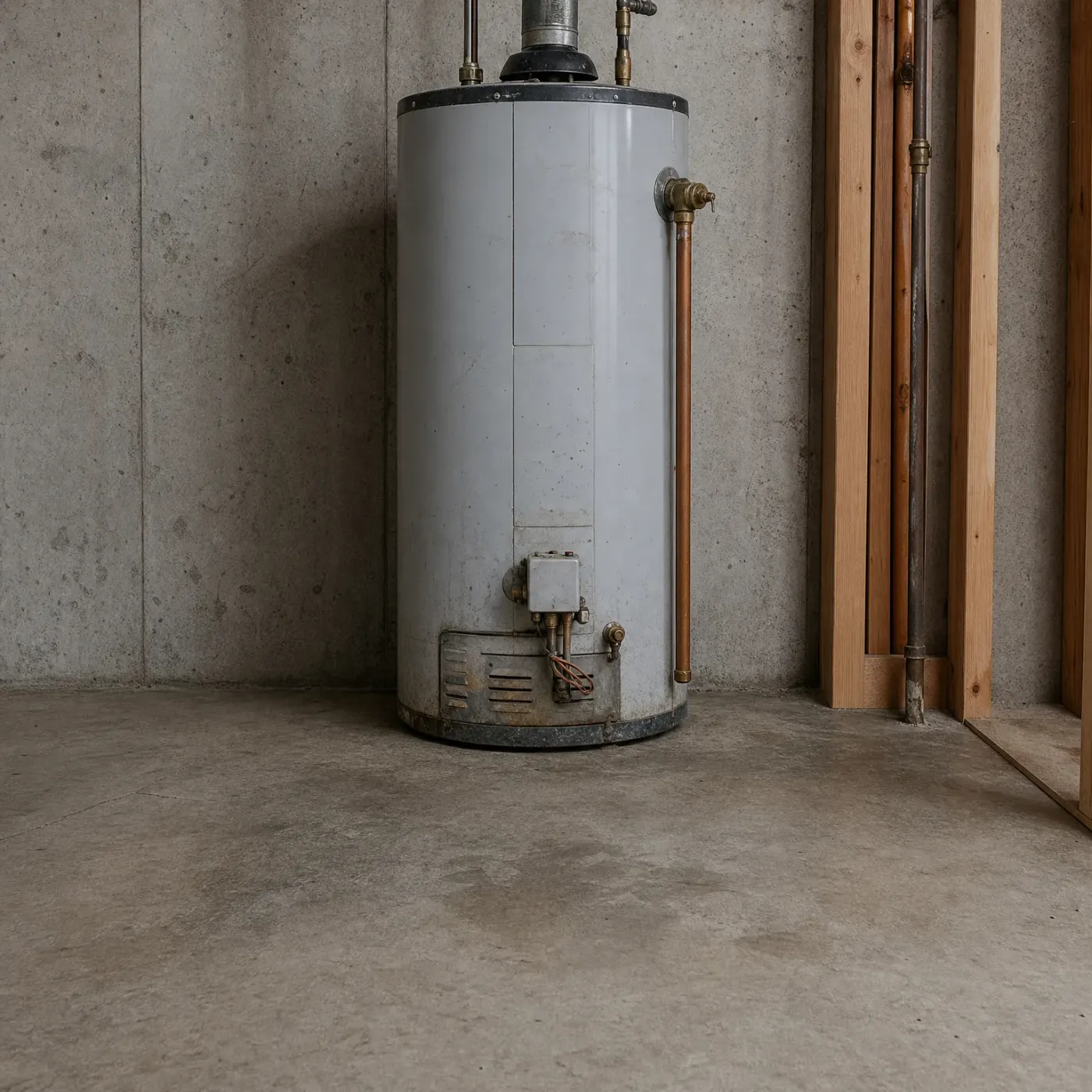

An older gray gas water heater with copper and brass piping stands on a concrete floor against a concrete wall, beside exposed wooden wall framing and vertical pipes.

Old gas tank, worn out

This is what you're replacing. Rust at the burner, grime built up underneath, a tank that's been heating water the same way for years without you thinking about it. Once it fails, you're choosing its replacement anyway. That's the moment to weigh a heat pump model against another gas tank.

Where would it even go in your house

If your water heater is gas, switching to a heat pump model means it no longer needs that gas line at all, and the power to run it costs less here than in most states. But check where the tank would go. A heat pump water heater needs room, several hundred cubic feet of air around it to pull heat from, so a cramped closet is the wrong spot. It also runs quieter than a furnace but not silent, more like a window AC unit, and it cools and dries the air right around it as it works. If it sits in a basement you use, that dip in temperature and the drop in humidity are things you'll actually feel, not just a number on a spec sheet.

  1. It pulls warm air from the room over its coil.

  2. A compressor concentrates that heat and sends it to the tank.

  3. Hot refrigerant transfers heat into the water through a wrapped coil.

  4. The cooled, drier air blows back out into the room.

Heat pump or standard tank

Heat pump

  • Pulls most of its energy from the air around it, so it costs less to run month to month than a gas or electric resistance tank.
  • Needs a space with some room to breathe, a basement or utility room works better than a small closet.
  • Cools and dries the air nearby while it runs, which can be a plus next to a furnace or a laundry area.
  • Drops a gas line entirely if your current tank is gas, since there's nothing to vent and nothing to connect to the meter.
  • Costs more upfront than a standard tank, and that gap is the main thing to weigh against what you'd save on power.
  • Runs quieter than you'd expect but not silent, there's a compressor hum while it's heating.

Gas or standard electric

  • Heats water faster when demand is high, so recovery time after a full tub or a long shower is shorter.
  • Fits almost anywhere a water heater already sits, no extra clearance or airflow needed.
  • Costs less to buy and install than a heat pump model, with no backup element to size or wire.
  • Keeps the gas line and venting you already have if it's a gas tank, nothing new to run or cap off.
  • Runs on power that's cheap here either way, so a standard electric tank isn't the expense it is in other states.
  • Doesn't change the temperature or humidity of the room it's in, since it isn't pulling heat out of the air to work.
A smiling bearded man in a dark green hooded jacket and blue t-shirt sits on a couch in a living room with shelves, a potted plant, and a bowl of popcorn on a wooden table.
A smiling man in a green long-sleeved shirt sits on a beige sofa in a living room, with a bowl of popcorn in the foreground, a large potted plant and shelving behind him.
A smiling man in a dark blue T-shirt sits on a couch in a dimly lit living room with a bowl of popcorn and a remote on a wooden table, a lit floor lamp and bookshelves behind him, and windows showing greenery.
A smiling bearded man in a dark green long-sleeved shirt sits on a leather couch in a living room, with a bowl of popcorn and a remote control on a wooden table in the foreground.

49.3% of homes statewide heat with gas

Close to half of Missouri homes run on gas, and yours is probably one of them. That means a heat pump water heater would be a new kind of equipment in your house, not a straightforward swap, and your gas line would have no other job left once it's gone.

ACS 2020-2024 5-year B25040

A woman in a dark gray sweater reclines on a couch with her eyes closed and a knit blanket over her lap, an open book resting face-down in front of her, with a lit table lamp and shelving blurred in the background.
A bearded man in a dark navy sweater over a collared shirt smiles and looks off to the side while seated at a dinner table with a glass of red wine, a lit candle, and a plate of food in the foreground of a dimly lit room.

Done looking for a water heater pro

Describe the project once instead of to every installer.

There's no charge for the request.

What the tank actually pulls from

A heat pump water heater needs about 1,000 cubic feet of air around it to draw from, which is why installers ask about basement or utility room size before anything else. Pull that much heat out of the air and the room gives up a few degrees along with it. In a Missouri basement that sits cool most of the year anyway, that drop is barely noticeable. In a tight closet with a louvered door, the unit runs longer to find enough air to work with, and it shows up as a smaller gap between your old gas bill and your new electric one than you were expecting.

Why the compressor changes the math

A gas water heater turns fuel into heat directly, so every therm you burn shows up as heat in the tank. A heat pump water heater moves heat instead of making it, and a compressor can move two or three units of heat for every unit of electricity it uses. That's the whole case for switching: cheap power here combined with a machine that multiplies it instead of just converting it. The backup electric element inside still works the old way, burning watts straight into heat, so how often that element kicks in instead of the compressor is what decides whether the lower rate on your power bill actually shows up as lower spending.

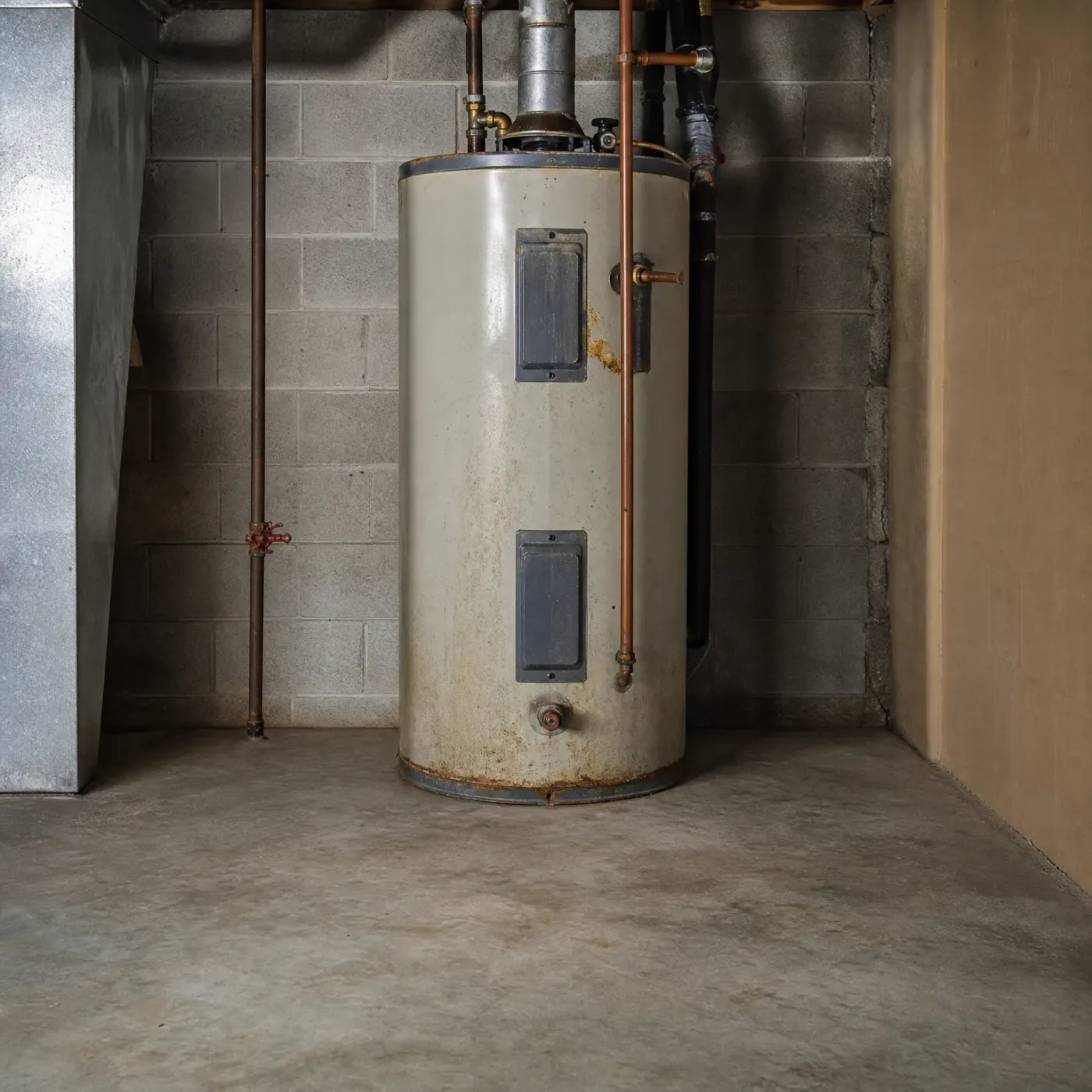
An aging cream-colored water heater with rust streaks and two access panels stands on a concrete floor against a concrete block basement wall, with copper and black pipes running up to the ceiling and a metal duct at left.
Before you get your water heater installation
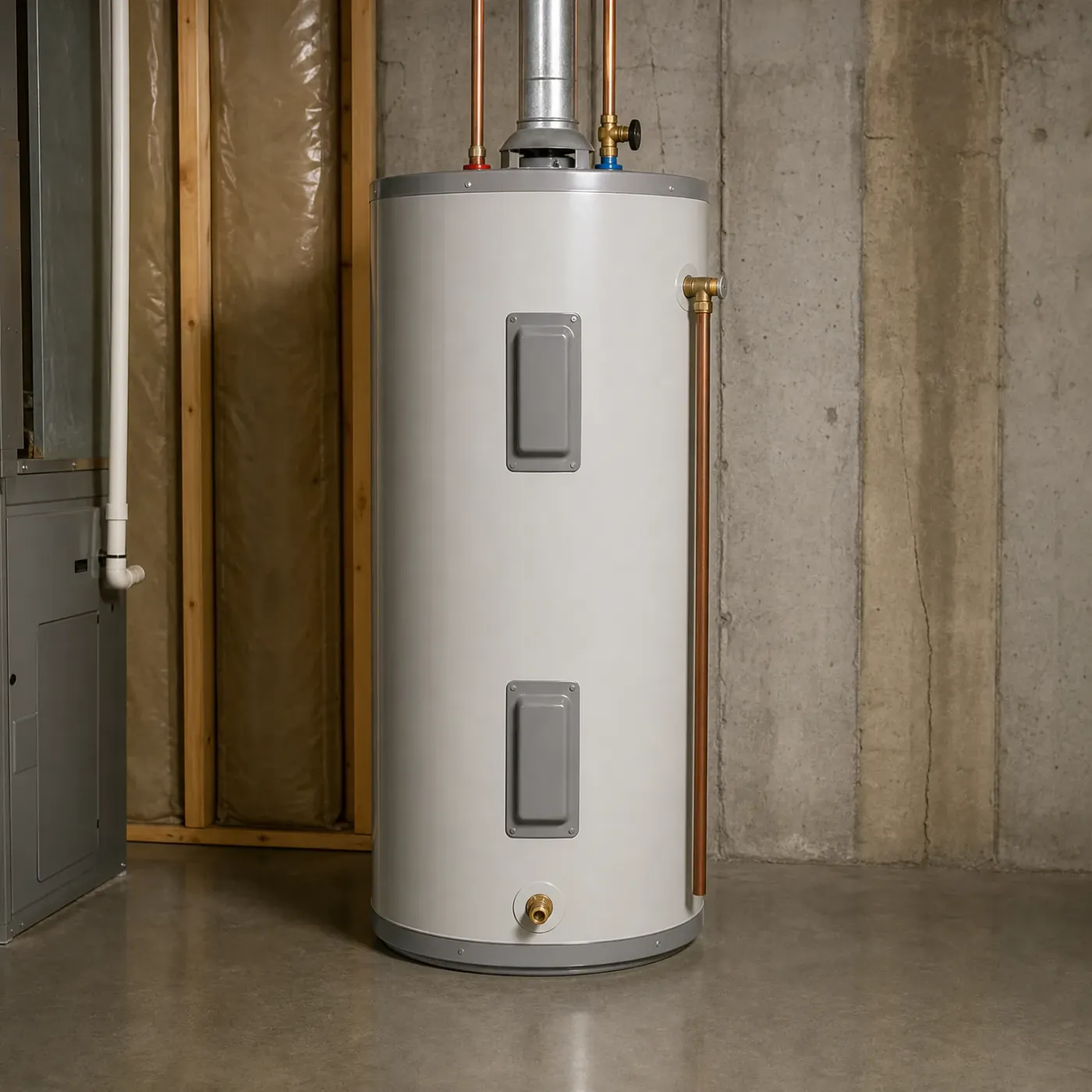
A white cylindrical water heater with two access panels, copper supply pipes and a metal flue, standing on a concrete floor against a concrete wall beside insulated wood framing and a gray electrical panel.
After you get your water heater installation
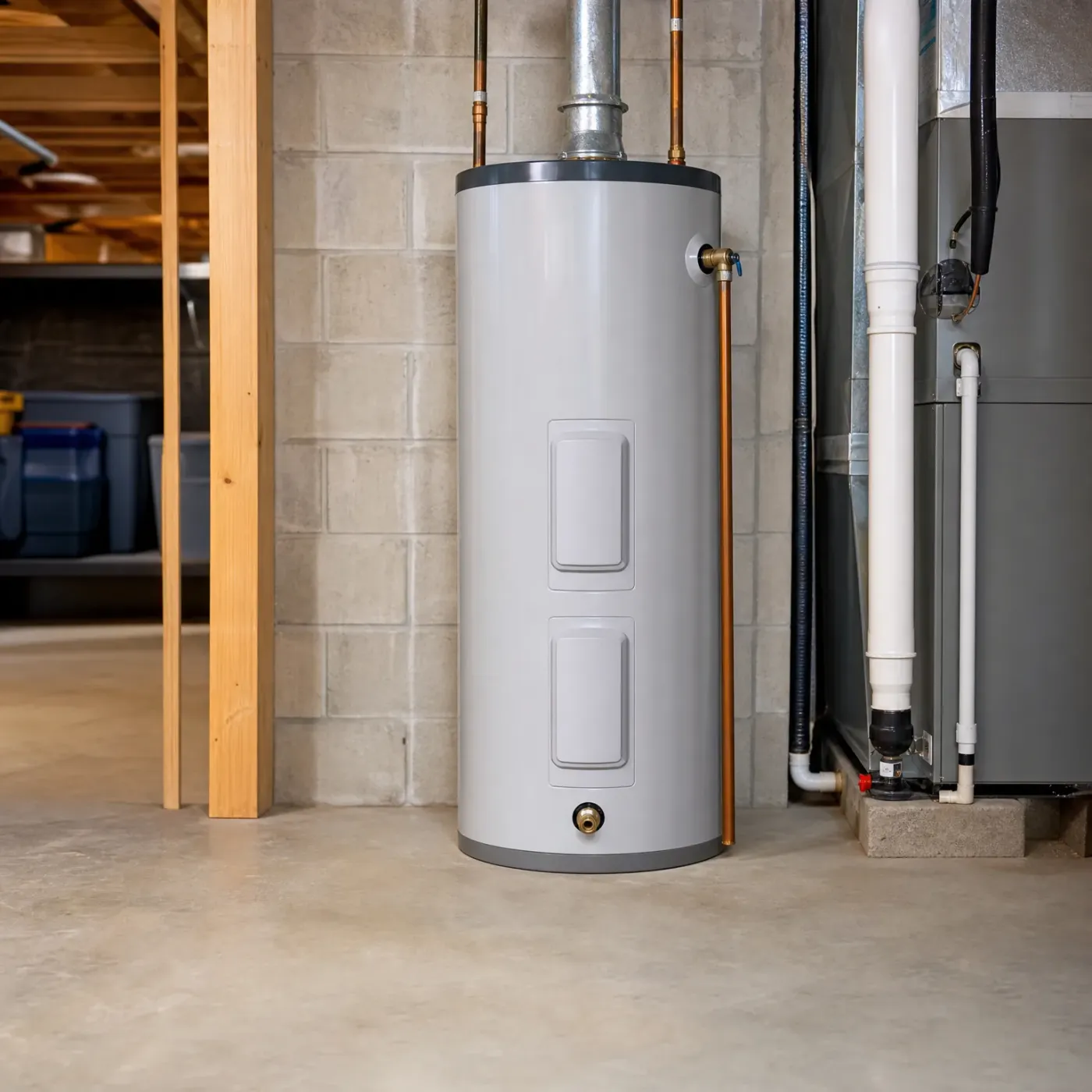
A gray cylindrical water heater with copper pipes stands against a concrete block wall in a basement, next to white PVC piping and a gray furnace, with wood framing and storage bins at left.

Working the way it should

This tank sits against the wall with clean copper lines and a clear flue, no rust on the panels, no damp spots on the floor. A heat pump unit set up like this runs quietly in the background, pulling heat from the basement air and leaving the room a little cooler.

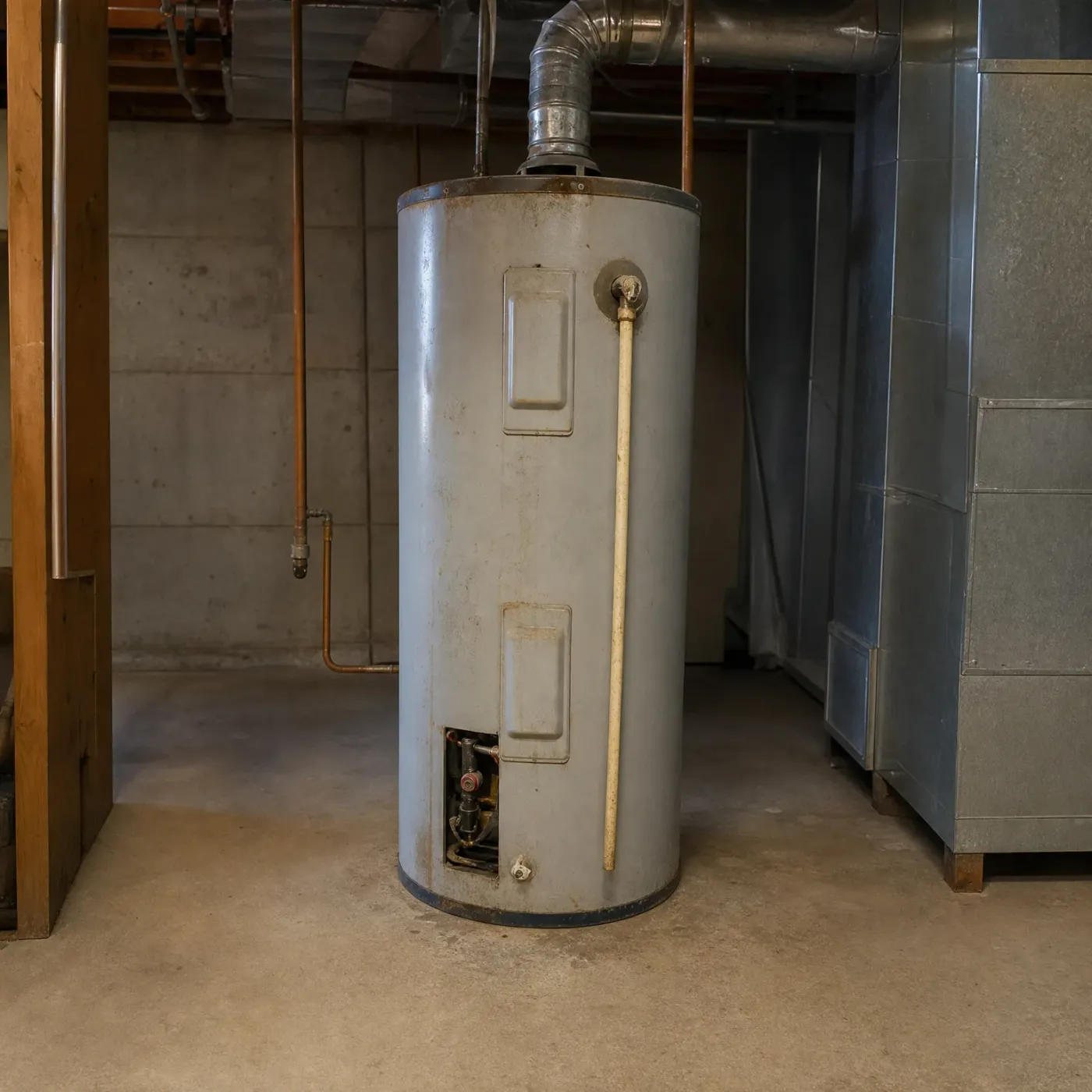
An older gray gas water heater with a metal flue pipe stands on a concrete basement floor beside ductwork and exposed copper piping.

What failure looks like

Rust spreads across the tank, the relief valve pipe shows signs of past discharge, and the fittings along the wood framing are due for a look. A gas tank in this shape is close to a leak, and nobody wants to find that out on a Monday morning.

A heat pump water heater makes sense in Missouri if you have the space for it and you want the lower running cost enough to deal with a different kind of installation than a straight tank swap. Power here is cheap already, which narrows the gap, but it doesn't close it, and a basement or utility room with enough air around the tank is what decides whether this works in your house at all. That's the honest answer, not yes or no on its own. What it takes to get there is someone who can look at your actual space, your gas line, and your panel, and tell you what the job involves for your house specifically. Finding that person usually means searching around, calling a few places, explaining the same thing more than once, and sitting with quotes that are hard to compare because no two contractors spec the job the same way. Send the form and that part is off your plate. You'll know where you stand on your own water heater without doing that legwork yourself.

A modern two-story house with dark siding and stone base at dusk, with lit soffit lights, a path of large rectangular pavers set in dark gravel, planting beds, a lawn, and an orange and blue sunset sky above distant trees and water.

Water Heater Installation

It's off your list after this

Step 1 of 3: Equipment
  • A living room corner with a beige upholstered armchair holding a green pillow and knitted throw, a ceramic table lamp on a side table, white built-in bookshelves, a framed landscape print, a curtained window, and a round wooden table with a lit candle and bowl in the foreground.
    • A local installer who puts in water heaters gets your project.
    • Get in touch with a local installer about a new water heater.
  • A lit table lamp with a tapered beige fabric shade and a speckled rounded ceramic base sits on a wooden surface beside a potted plant, with curtains and a window in the background.
    • Send it once and finding someone is no longer on you.
    • Send the form and stop researching installers for the new water heater.
  • A cream upholstered armchair with a gray pillow and knit throw sits beside a wooden table with a eucalyptus-filled vase, in front of a lit stone fireplace with stacked firewood.
    • One form replaces the calls you'd make to find a water heater pro.
    • Skip the round of in-home estimates for a new water heater.
  • A gray outdoor air conditioner condenser unit on a concrete pad beside a wood-sided wall, with a horizontal wood slat fence, a cushioned patio chair, a wooden table, and a potted green plant nearby.
    • One installer gets your project, so there's no bidding war over it.
    • The pro who reaches out is licensed in Missouri.