A local pro who services water heaters gets in touch about the tune-up.
Missouri water is hard enough in most places that a water heater tank collects sediment faster than you'd think. That grit settles at the bottom, and it sits there between flushes, working against the tank with every heating cycle.
Most gas water heaters in Missouri homes need a flush once a year. If your water comes from a well, or you're on a softener-free system, you may need it more often than that. The sediment layer doesn't just sit still. It hardens, it insulates the bottom of the tank from the burner, and it makes the heater work harder to get the same hot water you're used to.
Skip it for a few years and you'll likely notice it before you see it: a rumbling or popping sound from the tank, hot water that runs out faster, a utility bill that creeps up even though power here is cheap and nothing else changed. Summers get sticky in Missouri, and that's when a water heater running inefficiently is easiest to ignore, since nobody's thinking about hot water in July.
Finding someone to actually do this isn't always simple. You could spend an afternoon calling plumbers, explaining the same thing to each one, waiting on callbacks, and then trying to compare quotes that aren't quite apples to apples. That's the part that gets handled here, not the flush itself. Answer a few questions about your water heater and your home, and a contractor who works in your area and handles this kind of maintenance will reach out to you directly.
You still get to ask your own questions when they call. How often your specific tank needs it, what your water is doing to it, whether the sediment's already built up past the point where a flush alone fixes it. That conversation is easier to have once someone's already on the line, rather than during round three of calling around for quotes.
Once a year is the rule for most Missouri homes, and with water this hard, that schedule isn't optional if you want the tank to last. Sediment builds on the bottom of the tank, and once it's there, the burner underneath has to heat through it to reach the water above. That makes the tank work harder than it should, and over years it wears at the steel. A flush clears that layer out before it hardens into a crust that a simple flush can't touch anymore. If your water heater came with the house and nobody's flushed it yet, there's likely more sediment down there than one flush expects to find, and that's worth knowing going in. Gas water heaters are the most common type here, and sediment affects them the same way it affects any tank: the burner keeps firing, the sediment keeps insulating, and the water takes longer to heat. A yearly flush keeps that cycle from starting.
Before you get your water heater maintenanceAfter you get your water heater maintenance
Matched to your water heater job
Skip calling around to set up a water heater tune-up.
Describe your water heater job, and a local pro who handles it gets in touch.
Asking costs nothing, and the choice to hire stays yours.
Flush It Yourself or Call In Help
Flush it yourself
You need a garden hose, a bucket, and a way to shut off the gas or power to the unit before you start.
Sediment that's packed hard at the bottom can clog the drain valve, and a plastic valve can crack if you force it.
You're working near the gas line and the TPR valve, and getting either wrong on a gas unit is a real risk.
If the tank hasn't been flushed in a few years, the water that comes out can run gritty or rust colored for a while.
You're on your own if the valve won't close back up tight once you're done.
Have a contractor do it
A contractor checks the anode rod and the TPR valve while the tank is already drained, not just the sediment.
You skip calling around and explaining your water heater's age and symptoms more than once.
A stuck or corroded drain valve gets dealt with on the spot instead of becoming a bigger job later.
You get matched with a contractor who handles Missouri's hard water buildup on a schedule, and they reach out to you.
Comparing quotes and sorting through who's available drops off your list of things to do.
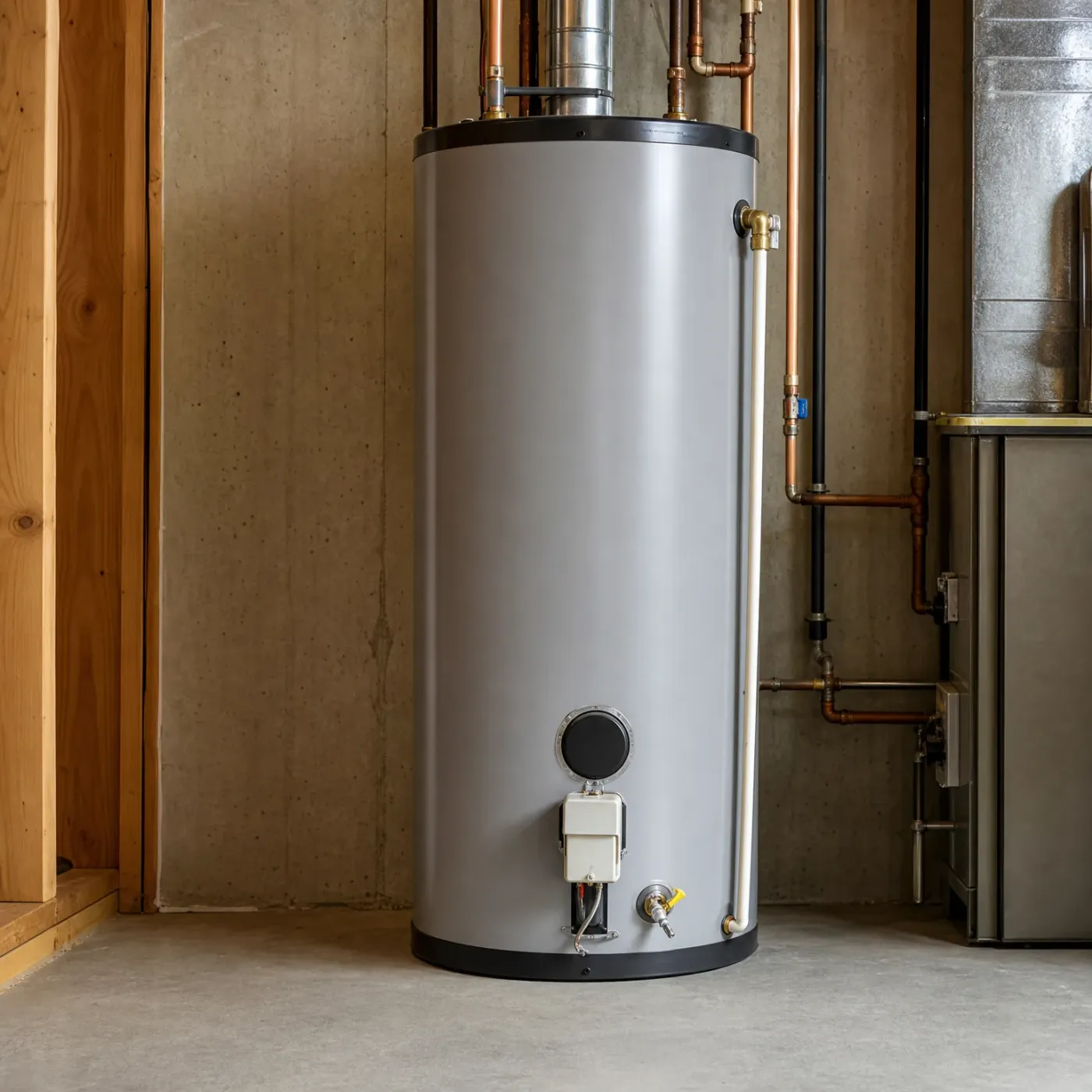
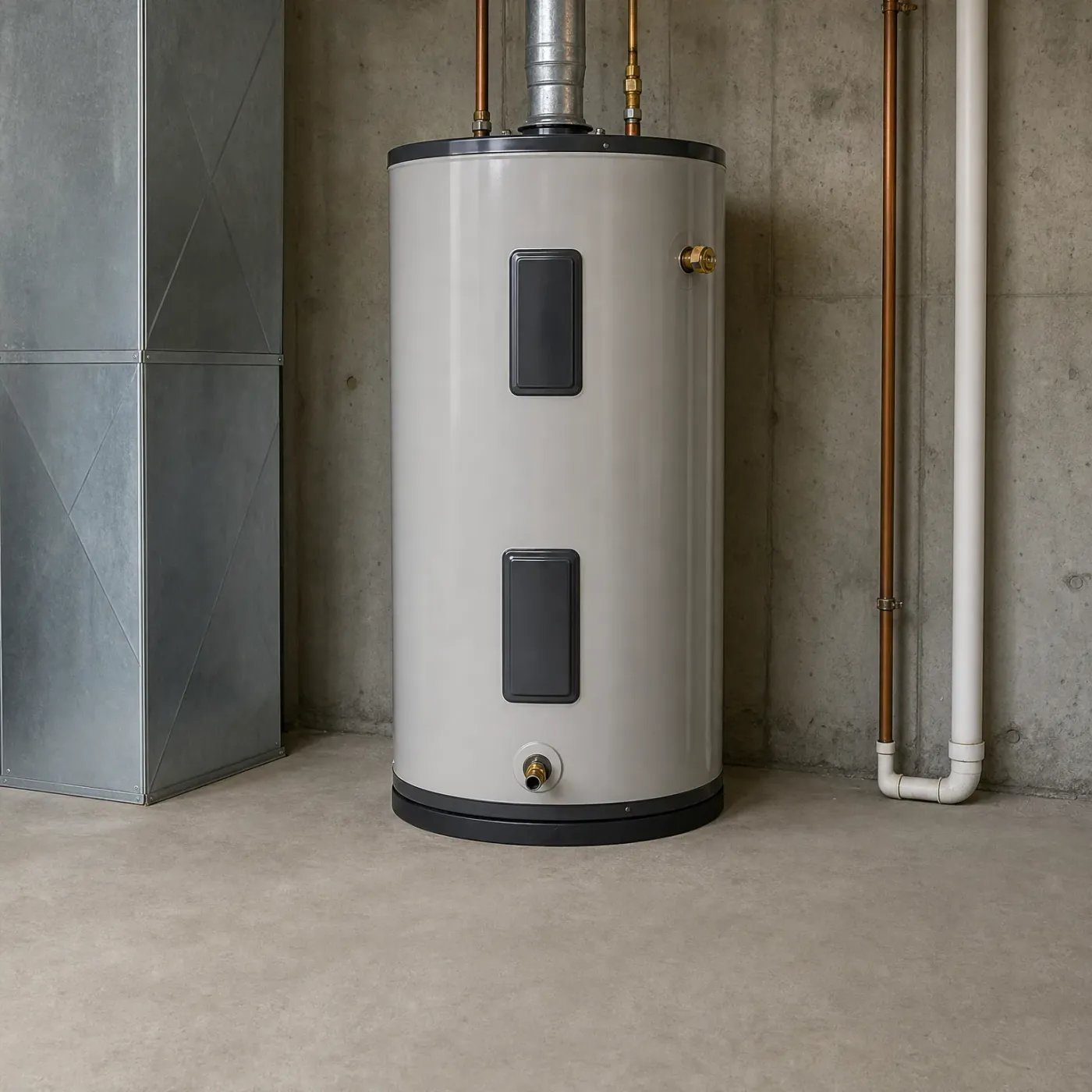
A tank that's been flushed on schedule
This is what a tank looks like when sediment hasn't had the chance to build up underneath it. The drain valve stays clear, the thermostats read the water correctly, and the burner heats water instead of a layer of grit first.
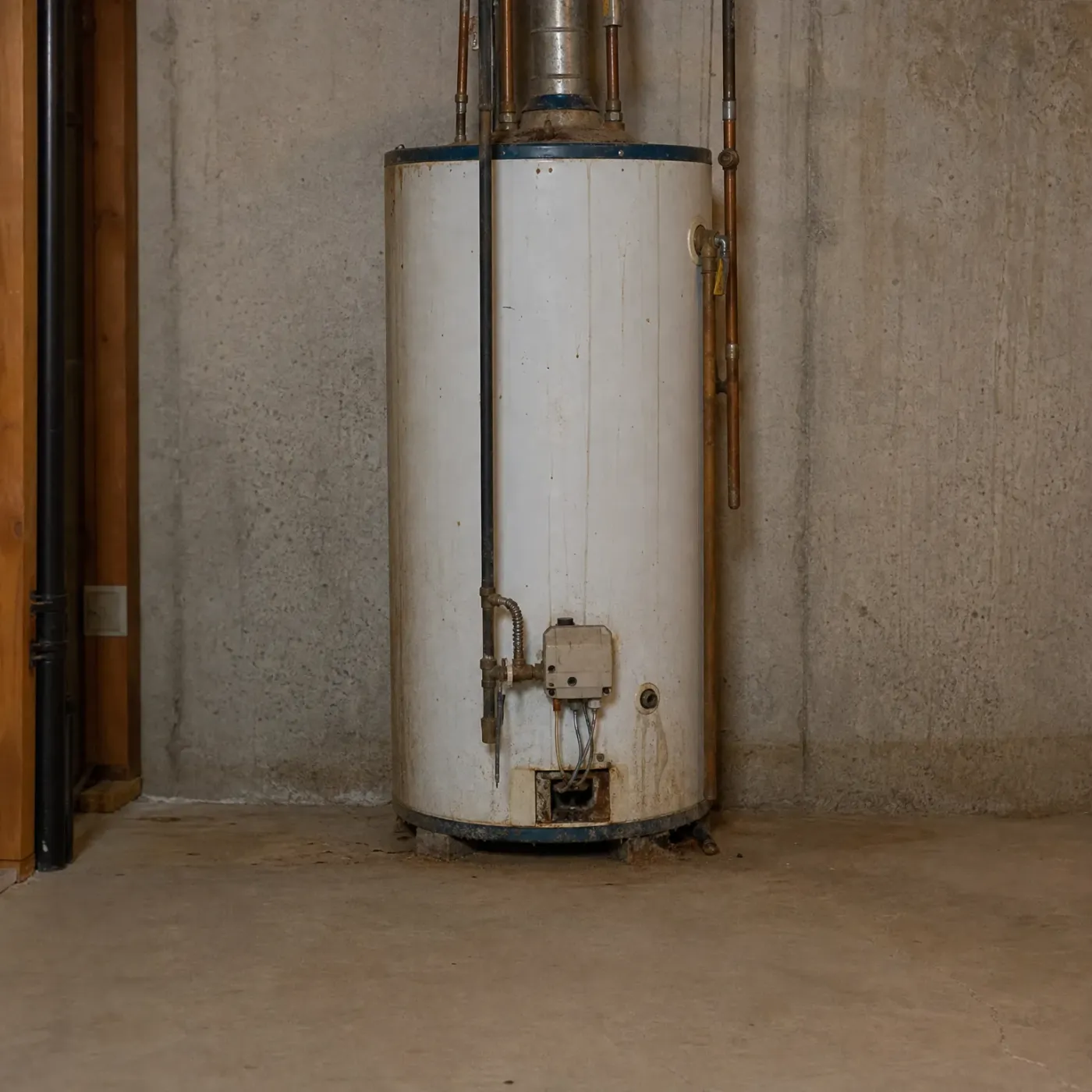
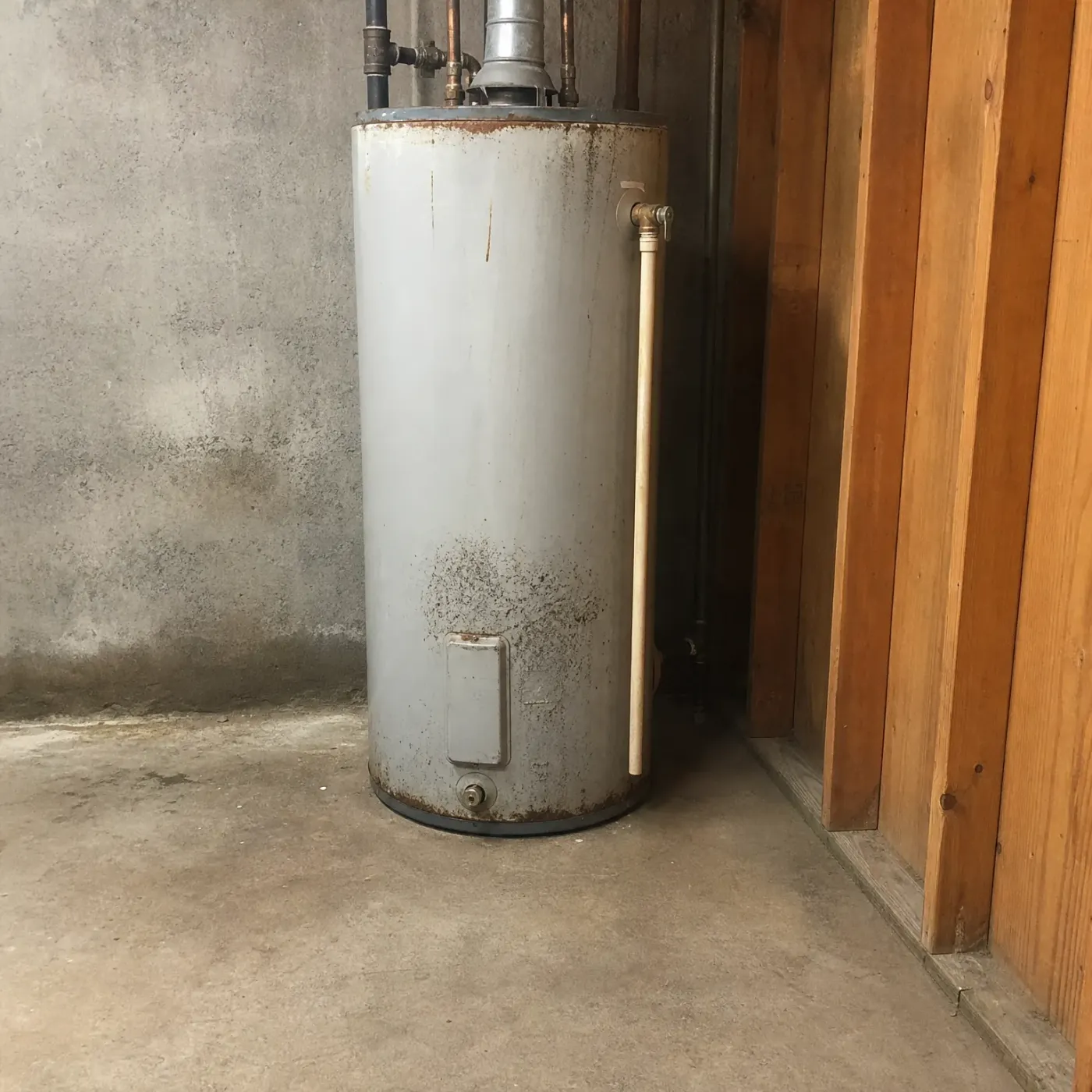
A tank that's gone years without one
Rust has worked its way across the tank, and the soot staining near the bottom is heat scorching through sediment that never got flushed out. A tank in this shape is closer to the end of its life than its owner probably thinks.
49.3% of homes statewide heat with gas
Gas heats more Missouri homes than anything else, and most of those houses have a gas water heater too. That burner sits right under the tank, so when sediment collects on the bottom, it's the burner doing the extra work to get through it.
ACS 2020-2024 5-year B25040
A gas burner fires against the bottom of the tank. Sediment sitting on that same spot acts like a layer of insulation between the flame and the water it's supposed to heat.
The burner keeps firing longer to get the same hot water, and that extra heat has nowhere to go but into the steel. That's how a flush schedule turns into tank life.
Once a year, every year
Flush your water heater once a year and the sediment never gets the chance to build into a problem. Skip a few years running and the tank is working against a layer of grit that was never supposed to be there. That's the whole answer, and Missouri's hard water is why the schedule matters here more than it would somewhere else.
You don't have to track down who does this kind of work or sit on the phone explaining your setup to three different places before you get a quote back. Answer a few questions about your water heater and a contractor who handles this in your area will reach out to you directly, already knowing what you need done.
Water Heater Maintenance
A water heater pro near you
One form instead of hunting for a pro who does water heater tune-ups.