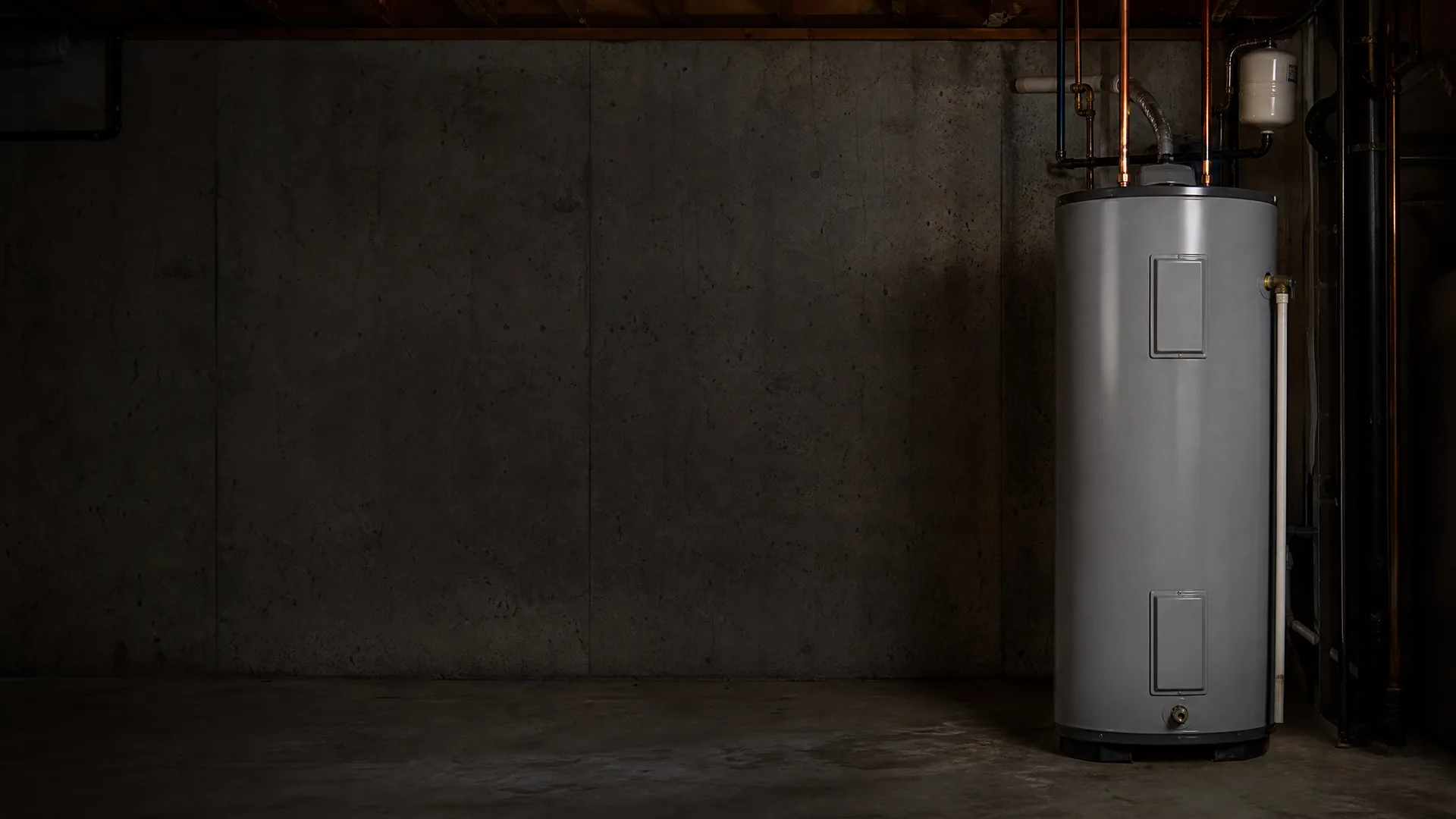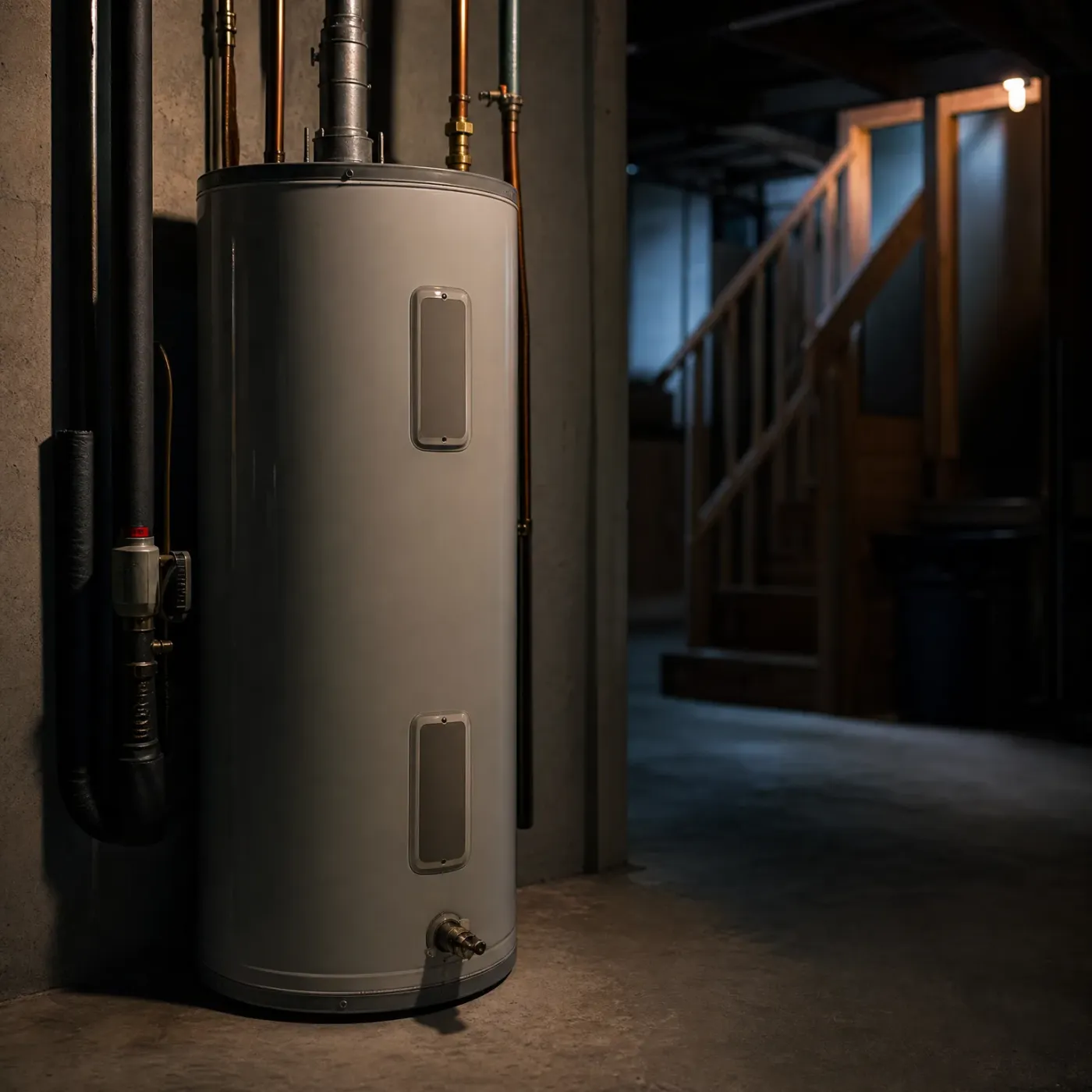



A tall cylindrical water heater with two access panels stands against a concrete wall in a dim basement, with copper and black pipes above it and a wooden staircase in the background.

A pro who works on water heaters

How often to flush a water heater in Kansas City, MO

Kansas City water is hard, and the minerals in it settle to the bottom of your tank over time. That buildup makes the heater work harder and can shorten its life. This page gets into how often to drain and flush your tank and the signs yours is overdue. If you'd rather hand it off, you can get matched with a local contractor who will reach out and take care of it, instead of calling around and explaining your setup to every plumber in Jackson County.

Connect with a pro

Flush your water heater once a year. Kansas City water is hard, and that mineral content is exactly what the hero above was pointing to: the sediment that settles out of it builds up on the bottom of the tank faster than it would with soft water. A gas water heater has to push its burner through that layer to heat the water above it, so the tank works harder than it should and burns more gas doing it. Left alone for several years, that same buildup can eat at the tank lining and shorten the unit's life. An annual flush clears the sediment out before it hardens into a crust that is harder to remove. If you've never had it done, or don't know when it last happened, that's reason enough to get it done now rather than wait for a full year to pass.

  1. Shut off the gas control or breaker before starting

  2. Close the cold water inlet feeding the tank

  3. Connect a hose to the drain valve near the bottom

  4. Run the hose to a floor drain or outside

Is your water heater overdue for a flush?

Run your hand along the tank and listen first. A popping or rumbling sound when the burner kicks on means sediment has built up on the bottom and water is bubbling through it. Hot water that comes out rusty or with a little grit, especially right when you turn the tap on, points the same way. So does hot water that runs out faster than it used to, or a pilot or burner that cycles more than it did a year ago. Left alone, that layer of sediment sits between the burner and the water, and the tank has to burn more gas to do the same job. Over years it can eat into the tank itself.

A white cylindrical water heater with two access panels stands against a concrete block wall with copper pipes and a vent, next to a plain light wall and concrete floor.

What sediment does to a gas tank

The burner sits under the tank and heats the water through the steel floor. A layer of sediment between the flame and the water acts like insulation, so the burner has to run longer to get the same result. That extra runtime is what wears out a burner assembly or cracks a tank early. Flushing clears that layer off the bottom so the burner is heating water again, not heating through scale.

A gray cylindrical water heater stands in a corner against a plain light wall, with copper and black pipes above it and exposed wood framing to the right.

Why electric tanks need it too

An electric water heater has a lower heating element that can end up buried in the same sediment, and the element will scorch and fail faster when it is working under a layer of scale instead of in open water. Jackson County's hard water builds that layer whether the tank runs on gas or electricity. Both the upper and lower elements last longer with a tank that gets flushed on schedule than one that never does.

Does flushing a water heater actually get rid of all the sediment?

A full flush gets most of what settles in a tank, but readers who have gone through the drain and refill process once before often notice the water still runs a little cloudy near the end, or the tank still sounds a bit different than a brand new one would. They want to know if that means the flush didn't work, or if that's just how it goes.

A flush gets most of it out, not every grain

Sediment that has sat on the bottom of the tank for a year or more can harden into a layer that a drain and refill won't fully break up. Opening the valve clears the loose material first, and the water usually runs clearer as the flush continues, but a caked layer can stay stuck to the steel. That's one reason a yearly flush matters more than an occasional one. Flushing every year keeps the buildup soft and loose enough to clear out each time, instead of letting it sit long enough to harden. A tank that's gone several years without one may need more than a single flush to get back to clean.

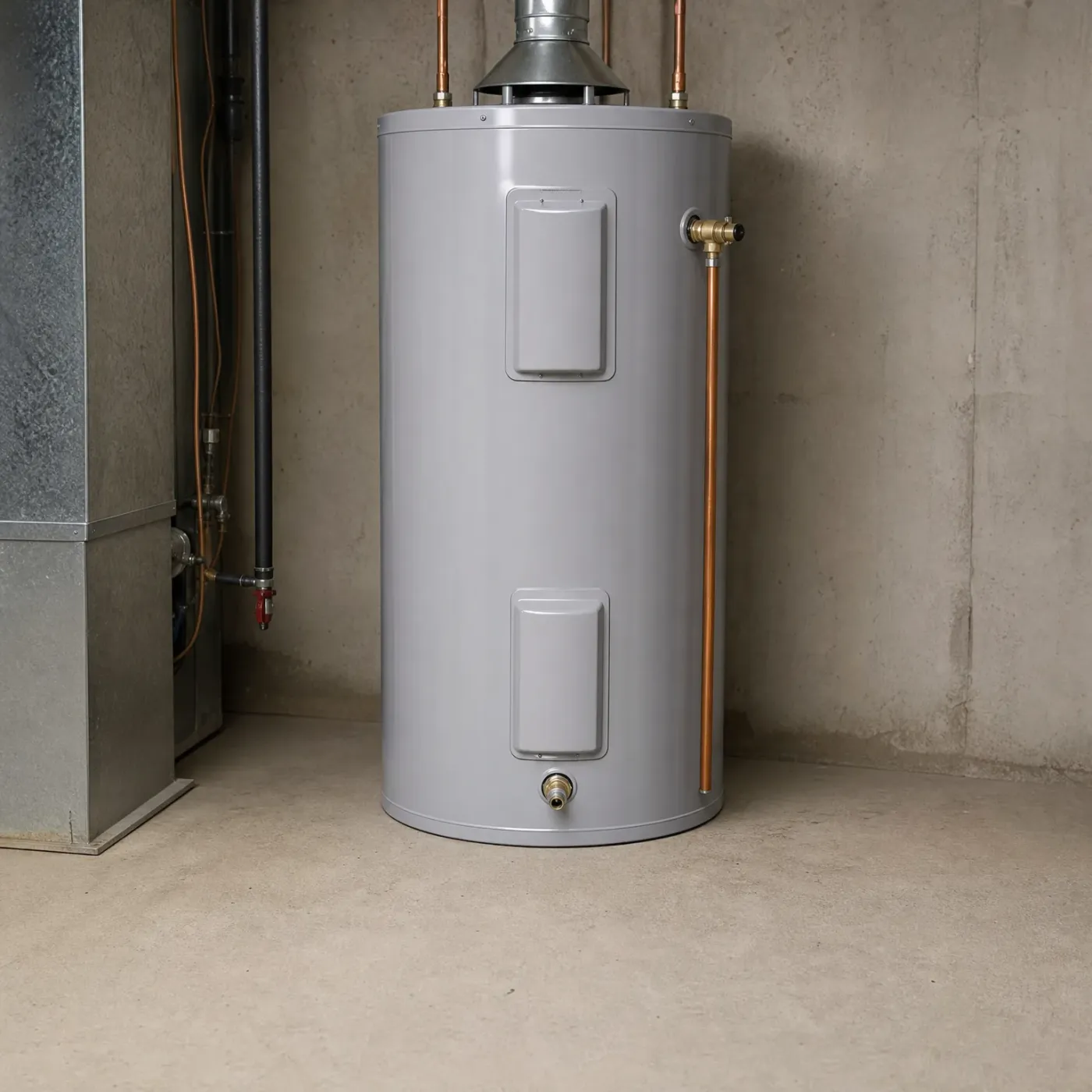
A gray cylindrical water heater with copper piping and a flue stands on a concrete floor in a basement corner beside ductwork and metal equipment.

Flushed on schedule

This is what a tank looks like when the sediment gets drained out once a year. No rust on the body, no staining on the floor, the drain valve and relief valve both clear to get at. The steel underneath stays protected, and the tank keeps heating the way it did the day it went in.
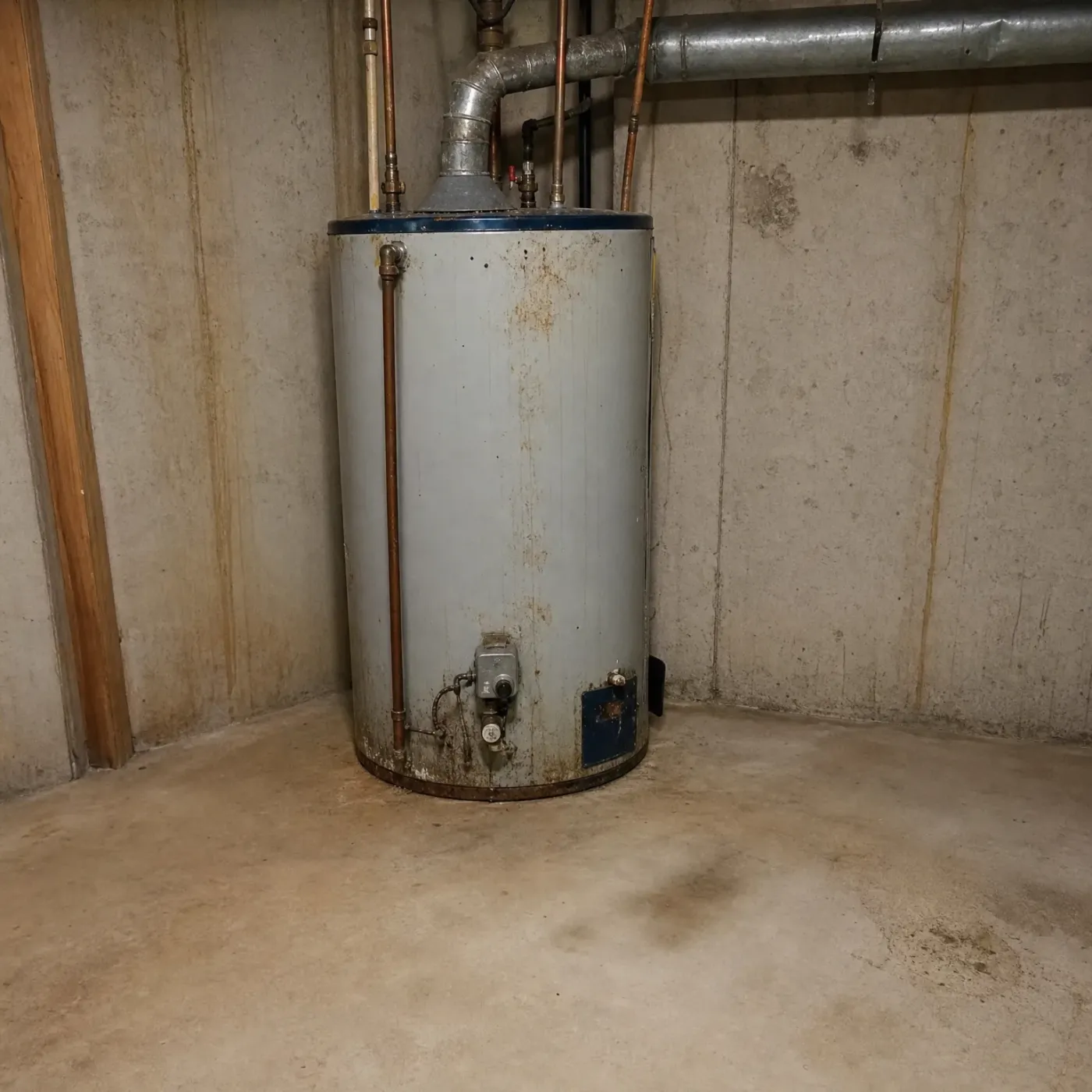

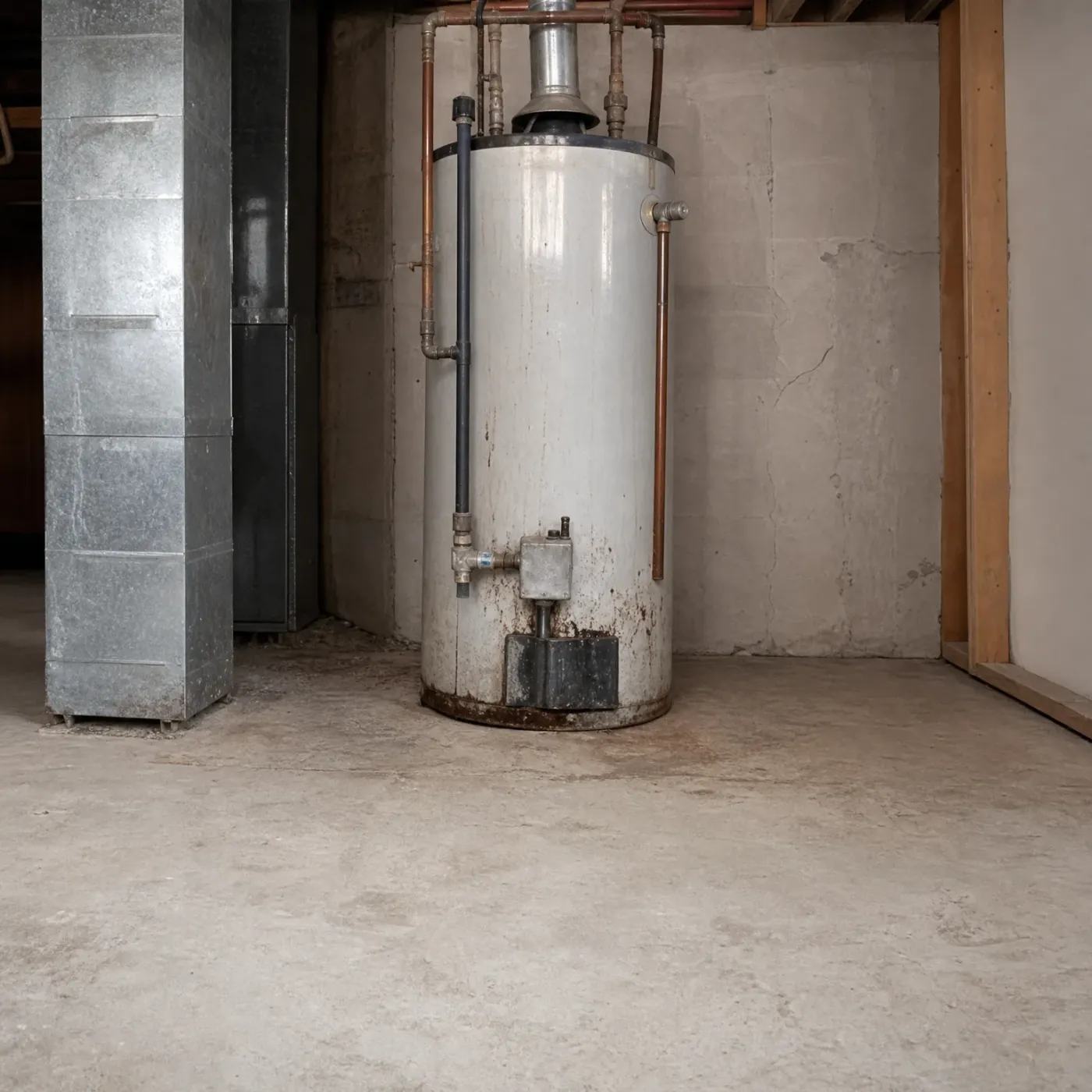
An aging gas water heater with rust streaks stands in the corner of a concrete-walled basement, with copper pipes and a metal flue duct running overhead.

Years without a flush

This tank went years without a drain. Rust has worked through the steel at the bottom and down the side, and it's stained the floor underneath. Once rust shows on the outside like this, sediment has likely been sitting against the tank floor for a long time, and flushing it now won't undo the damage already done.

Flush It Yourself or Get Help

Flush it yourself

  • You control the timing, so it gets done on the week you have an hour free instead of waiting on a schedule.
  • No cost beyond a hose and the time it takes to drain and refill the tank.
  • You see the water as it drains, so you notice right away if it runs heavy with grit or stays clear.
  • Skipping a step, like not closing the cold water inlet first, can mean a mess or a tank that does not drain fully.
  • If the drain valve is already clogged with sediment, a plastic valve can be hard to clear without the right tool on hand.
  • You still have to figure out the gas control or breaker shutoff on your own unit before touching anything.

Have it flushed for you

  • A contractor flushes the tank with the valve and fittings already on hand, including anything to clear a clogged drain valve.
  • You skip calling around, explaining the sediment problem more than once, and sorting through quotes yourself.
  • Matching with a contractor means someone familiar with Jackson County's hard water looks at your specific tank setup.
  • The shutoff, drain and refill happen as one visit instead of something you have to schedule around your own time.
  • You do not have to be the one checking whether the relief valve and drain valve are still working correctly.
  • Once matched, the contractor reaches out to you directly instead of you tracking down someone available.
A gray-haired man in a dark coat dusted with snow stands in a warmly lit home entryway, with a lamp, sofa, window and white staircase banister behind him.
An older man with gray hair and a beard, wearing a dark coat dusted with snow and a blue plaid scarf, stands smiling in a dimly lit entryway with a window, framed picture, table lamp and staircase behind him.
A gray-haired, bearded man in a dark winter coat with snow on the shoulders stands in a doorway of a home interior with a lit lamp, framed pictures, a potted plant and a staircase behind him, and an evergreen wreath at the left edge.
A gray-haired man in a dark coat with snow on the shoulders and collar stands smiling in a dimly lit entryway with a paneled front door, lamps, and a framed picture in an adjoining room.

Get your water heater to the right pro

Fill out one form instead of calling around for a water heater tune-up.

You only hire the pro if you want to.

Keeping up with it yourself

You can flush the tank once a year without ever picking up the phone. It takes a hose, a drain, and an hour on a Saturday. The hard part is remembering to do it, and then doing it right every time so the valve seats back the way it should and the tank refills without an air lock. If you're handy and your water heater sits somewhere easy to reach, this is a chore like changing furnace filters. If it sits behind a finished wall or up in an attic, it's a different job.

Having someone else handle it

A contractor who flushes water heaters for a living has done the job enough times to know when a drain valve is seized or a relief valve needs a look while the tank is already open. You skip the searching around for someone licensed to do gas work, the phone calls to compare who's available and what they charge, and explaining the same thing twice. You also don't have to remember the date yourself. Kansas City's hard water means this is a job worth getting done every year, by whoever ends up doing it.

A woman wrapped in a thick wool blanket sits in an armchair with an open book on her lap, beside a lit lamp and a frost-patterned window.
An older woman with grey-blonde hair in an updo and a beige turtleneck sweater smiles while looking to the side in a warmly lit kitchen, with a round loaf of bread on the counter in front of her and a dark window showing snow outside.
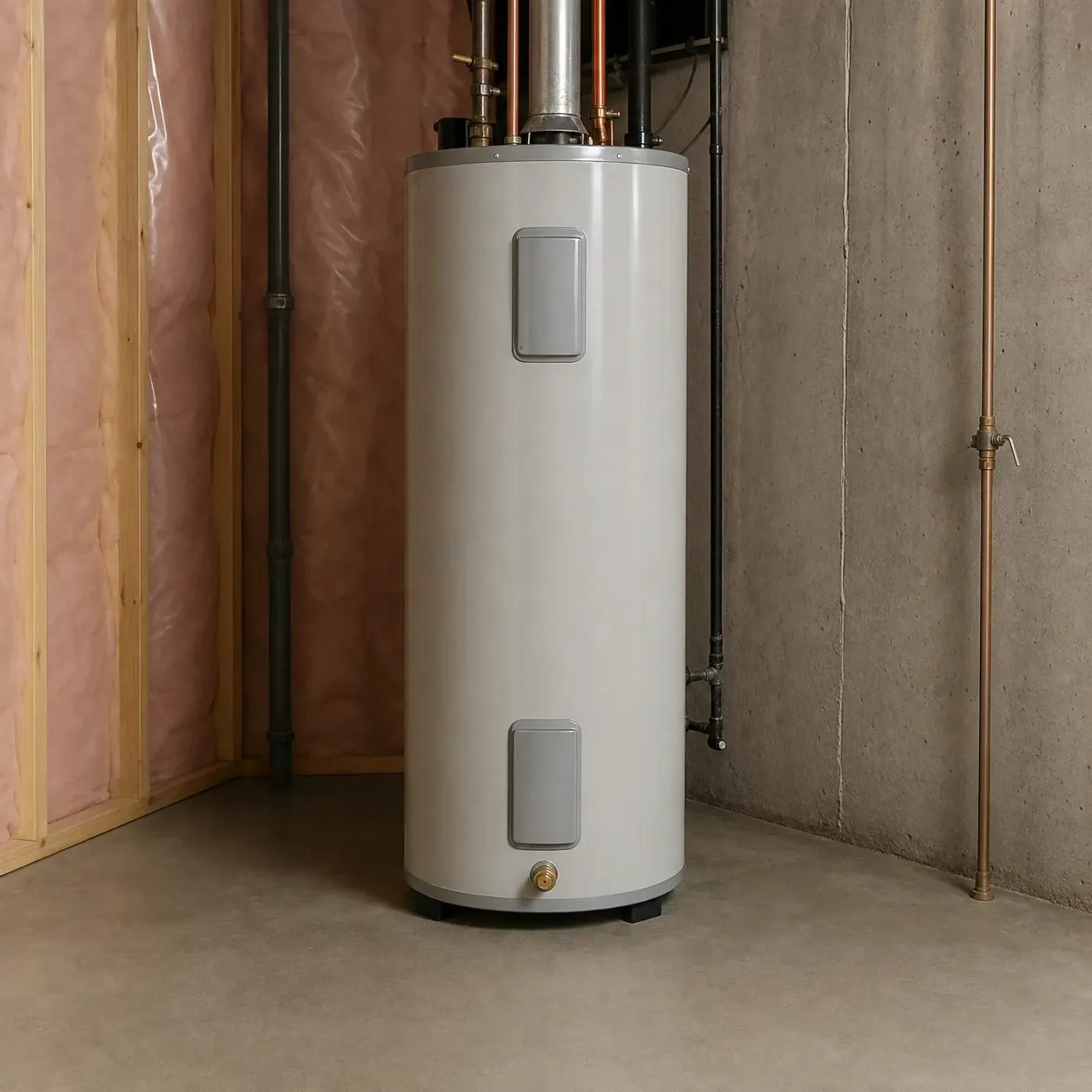
A white cylindrical water heater with two access panels and a brass drain valve stands on a concrete floor in a basement corner, beside a pink-insulated stud wall and a concrete wall with copper and black pipes.
Copper and iron pipes feeding a clean electric tank, the kind of setup a yearly flush keeps looking like this.
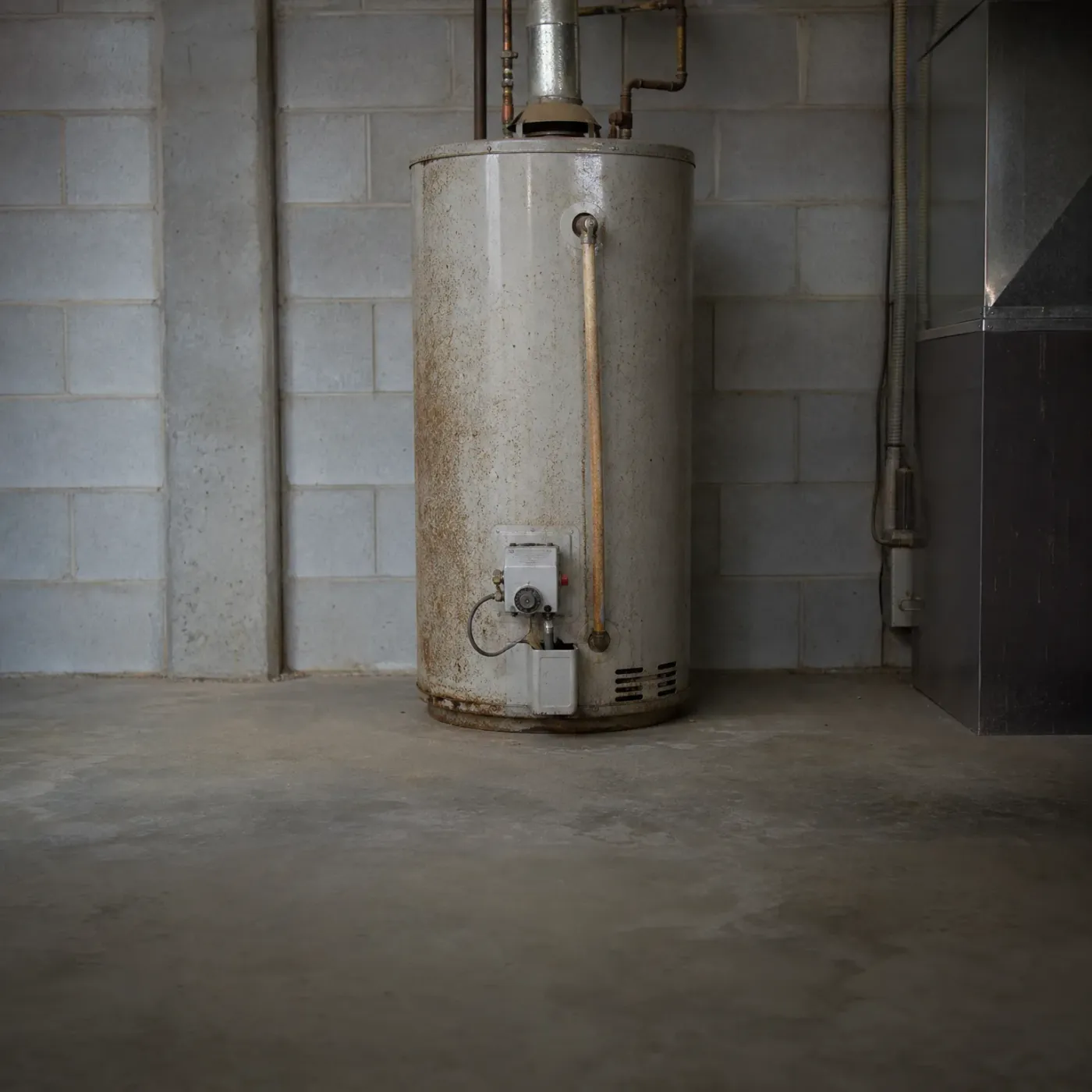
A rusted gas water heater with a flue pipe stands against a concrete block wall on a bare concrete floor, next to a dark metal duct or furnace cabinet at right.
Rust has eaten into this gas tank's shell, the end stage for sediment nobody ever drained out.

Who else is relying on your hot water?

  • 2.31 people per household on average

    Jackson County households average 2.31 people, so your tank is likely working for more than one person's shower, dishes and laundry on the same day.

  • Half the homes here were built by 1970

    Half the homes in Jackson County were built in 1970 or earlier. If yours is one of them, check whether the water heater is original or has been swapped since.

  • 69.5% of homes heat with gas

    Gas heats 69.5% of homes here, more than any other fuel. A gas tank sits right over the burner, so sediment on the bottom makes the burner work through it to heat the water.

ACS 2020-2024

An old rusting cylindrical gas water heater with copper and steel pipes and a flue stands against a concrete basement wall beside metal ductwork on a bare concrete floor.
Before you get your water heater maintenance
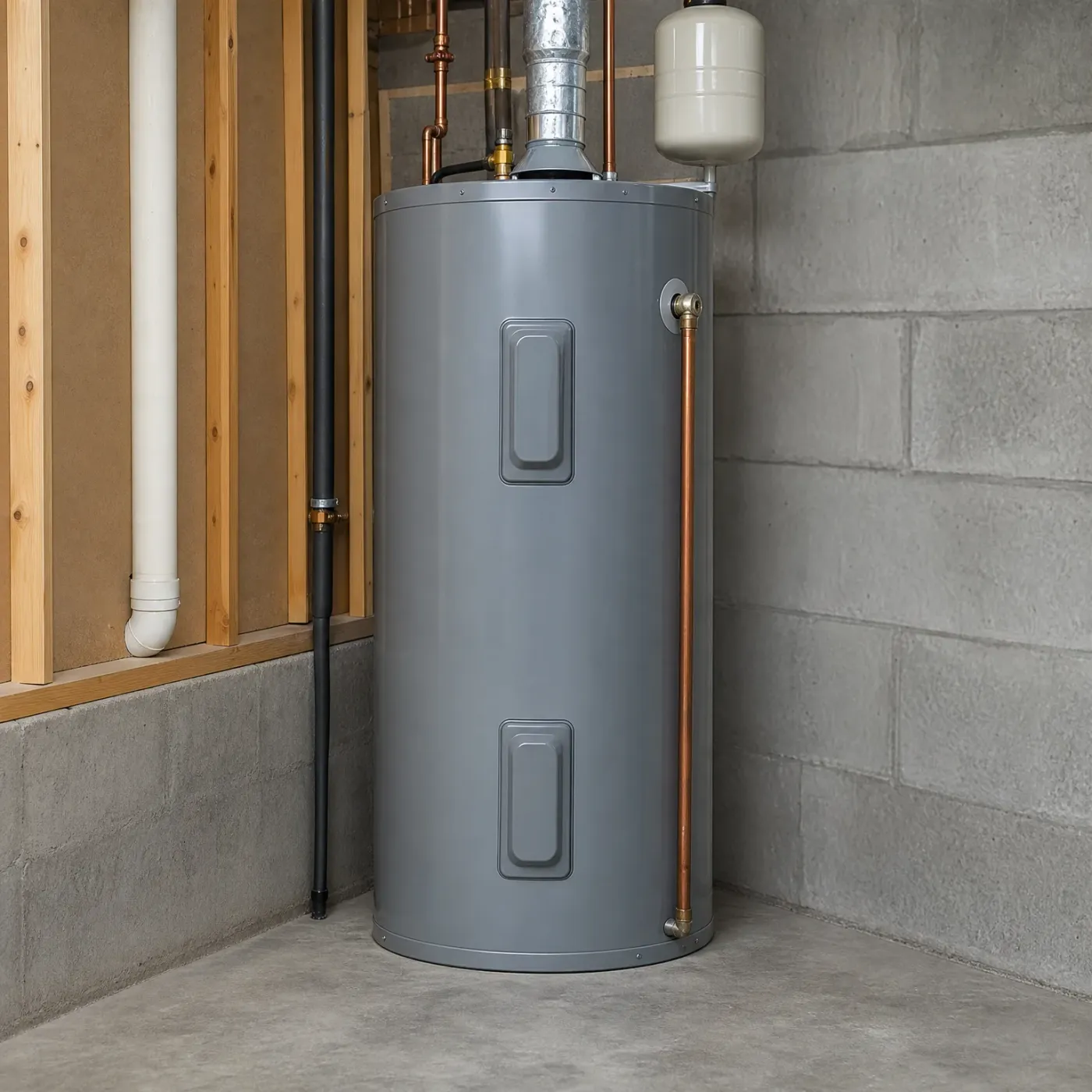
A gray cylindrical water heater with copper piping and an expansion tank stands in a basement corner beside a concrete block wall and exposed wood framing.
After you get your water heater maintenance

Flushing it yourself means an hour with a hose, a drain, and remembering to put it on the calendar every single year without fail.

Getting matched with a contractor means you stop being the one who has to remember. Someone shows up, drains the tank, and the job is done right.

Power here costs 13.55 cents per kilowatt-hour

Power here runs 13.55 cents a kilowatt-hour, cheap next to a lot of the country. If your tank is electric, a flush still matters: the element sits down in the sediment, and burning through buildup costs more than the extra pennies on your rate would suggest.

EIA-861 2025

Where your tank stands now

  • Flush your water heater once a year to keep the sediment that hard Kansas City water leaves behind from building up on the tank floor.
  • A rumbling tank, rusty hot water, or a pilot or burner that struggles are all signs a flush is overdue.
  • Skipping flushes lets sediment insulate the burner or element from the water, so the tank works harder and wears out sooner.
  • Draining and refilling the tank yourself takes a hose, a floor drain or a spot outside, and about an hour.
  • Instead of searching for a plumber, calling around, and comparing quotes, you can get matched with a contractor who handles the flush for you.
  • A tank kept on schedule stays free of rust and staining, with both valves clear and easy to reach.

Once a year, your water heater needs a flush. That's the whole answer, and everything else on this page is just what happens if you let it slide. Kansas City water carries enough mineral content that sediment settles out faster here than it would somewhere with soft water, so the once-a-year mark isn't arbitrary. It's what keeps the burner or element from working through a layer of buildup every time it fires. A tank that's kept up with looks a certain way inside: steel floor still protected, both valves still clear, no rust working its way through the shell. A tank that's been skipped looks like the other photos on this page, and it got there one missed year at a time.

You can keep doing this yourself. A hose, a drain, an hour of your Saturday, and remembering to put it on the calendar again next year. Nothing about that is hard, but it is one more thing you have to track, same as the furnace filter and the gutters. The part that gets tedious isn't the flush itself. It's finding someone to do it when you'd rather not: calling a few plumbers, explaining the same thing three times, waiting on quotes to come back so you can compare them. Getting matched with a contractor skips straight past that. You answer a few questions once, and the follow-up is theirs to handle.

A gray cylindrical water heater with two access panels stands against a concrete basement wall, with copper and metal pipes running overhead.

Find a water heater maintenance pro in Jackson County

One form instead of hunting for a pro who does water heater tune-ups.

Step 1 of 3: Equipment