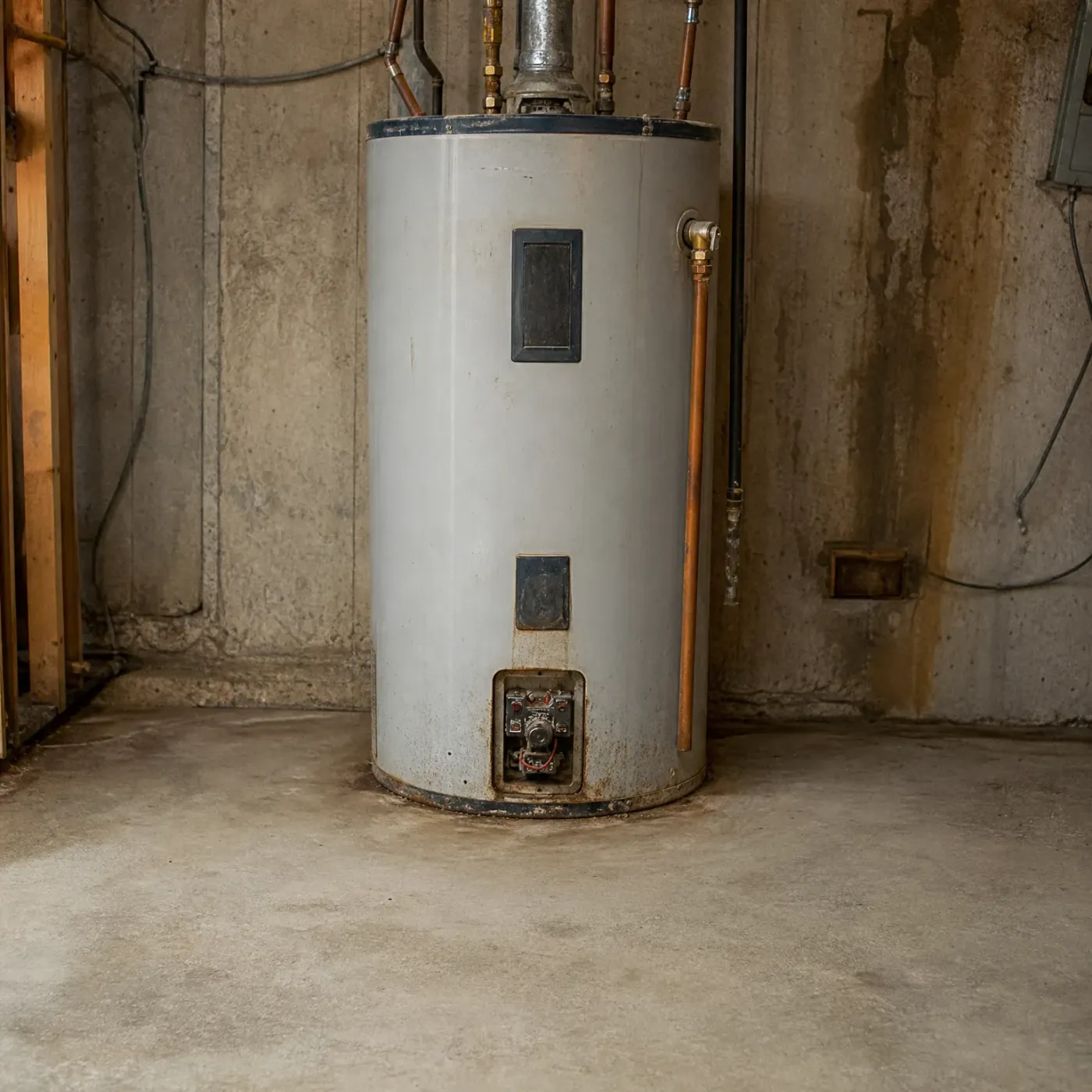
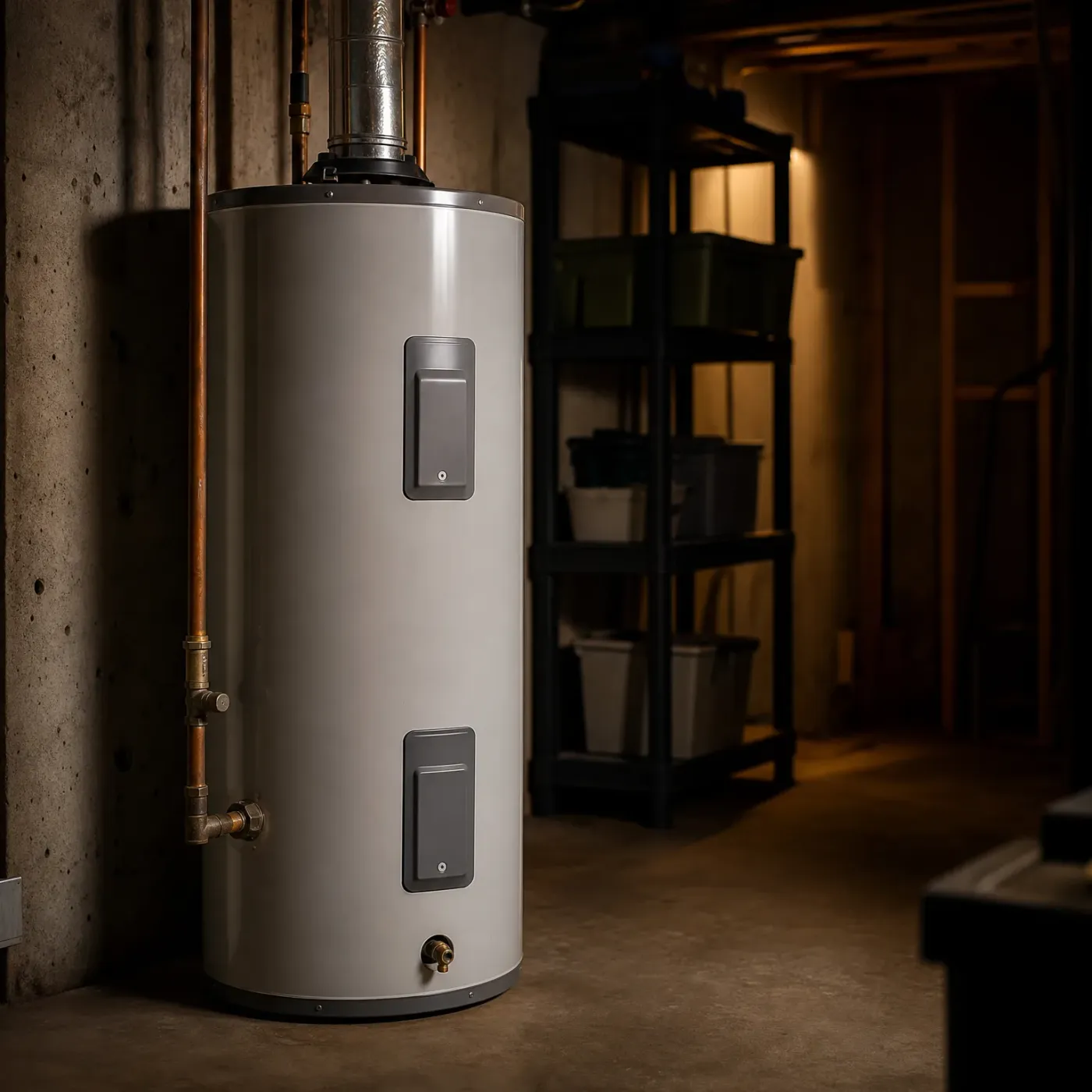
A tall cylindrical water heater with a metal flue pipe and copper plumbing stands against a concrete wall in a dim basement, with a black shelving unit holding plastic storage bins nearby.

Done looking for a water heater pro

How often to flush a water heater in Arnold, MO

Jefferson County water carries enough sediment that tank water heaters need a flush now and then, and the right interval depends on how hard your water runs and what the tank has seen. Below is a straight answer for homes around Arnold, plus what skipping it does to the unit over time. Send the form once and the search for someone qualified is off your plate.

Hand it off

Once a year is the right interval for most homes in Arnold. Jefferson County water isn't the hardest around, but it carries enough sediment that a tank collects a layer on the bottom every year it runs. That layer sits between the burner or element and the water, so the heater has to work harder to get the same hot water, and the tank itself takes the heat it should be passing along. Flushing once a year clears that layer out before it packs down hard enough to resist a garden hose. Go two or three years without one and you're often looking at a drain valve that won't open clean, sediment baked onto the bottom of the tank, or a water heater that's noisy and running hotter than it needs to just to keep up. If your water heater came with the house and nobody's flushed it yet, that's worth checking before you assume it's fine.

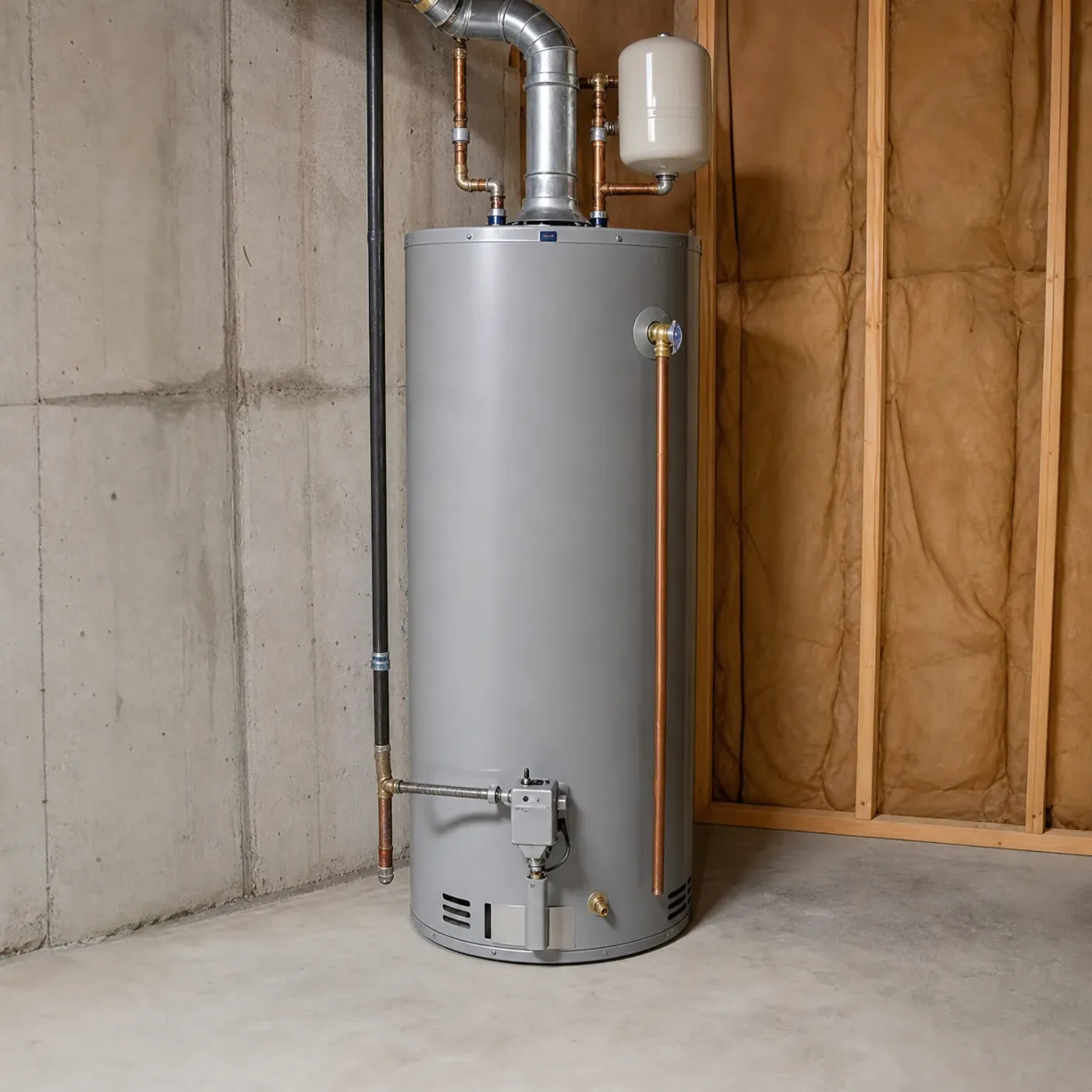
A gray cylindrical gas water heater with copper piping, flue vent, and a small expansion tank stands in a basement corner between a concrete wall and an insulated stud wall.

Flushed on schedule

This is what a tank looks like when it's kept up. The water inside runs clear, the burner heats the bottom of the tank directly, and the pipes and expansion tank around it are doing the job they were installed for. Nothing here is working harder than it should.

An older gas water heater with copper and black pipes stands in the corner of a bare concrete basement next to a wood-framed partition wall.

Years without a flush

Sediment has been building on the bottom of this tank for years. The gas valve at the base still shows a working dial, but the burner underneath is firing through a layer of grit instead of water. That tank is working harder to heat the same amount of water, and it shows in the gas bill.

What does your household mean for your water heater?

  • 2.58 people per household on average

    A household this size in Jefferson County runs the tank through more fill cycles a day, which is more chances for sediment to settle before it cools.

  • Half the homes here were built by 1987

    A tank that old setup has likely never been flushed if it came with the house, and sediment doesn't undo itself once it's built up.

  • 57.5% of homes heat with electricity

    Electric water heaters heat with a lower element sitting inside the tank, and that's exactly where sediment piles up and burns out the element.

ACS 2020-2024

Why sediment builds up here

Jefferson County's water supply carries dissolved minerals that don't stay dissolved once the water sits in a hot tank. Heat pushes those minerals out of the water and they settle as sediment on the bottom. A gas water heater heats the tank from below, so that layer sits right between the burner and the water, and the burner has to push heat through it before the water ever warms. The thicker it gets, the longer the burner runs for the same result. An electric water heater's lower element can end up buried in it, working harder and wearing faster than it should.

What an annual flush checks

Draining the tank once a year clears that layer out before it packs down hard. Sediment that sits for years can cement into a crust that a standard flush won't fully break loose, and at that point it stops being routine maintenance and starts being a harder job. A yearly flush also gives whoever does it a look at the drain valve, the anode rod, and the tank itself while it's open, so a slow leak or a rod that's worn through gets caught early instead of after it's caused damage.

A smiling man in a gray long-sleeved shirt stands in a kitchen looking to the side, with open shelves of dishes, a white mug on the counter, a potted plant, and a view through a doorway into a living room.
A smiling bearded man in a green sweater sits at a white marble kitchen island with a mug, potted plant and bowl of fruit, in a bright white interior with open shelving and an arched doorway.
A smiling man with dark curly hair and a beard, wearing a dark green knit sweater, stands at a white marble kitchen counter with a dark blue mug, with open shelving, pendant lights and a houseplant behind him.
A smiling man in a green ribbed sweater stands behind a wooden table holding a ceramic mug of coffee in a kitchen with white subway tile, shelves of potted plants, and a bowl of fruit.
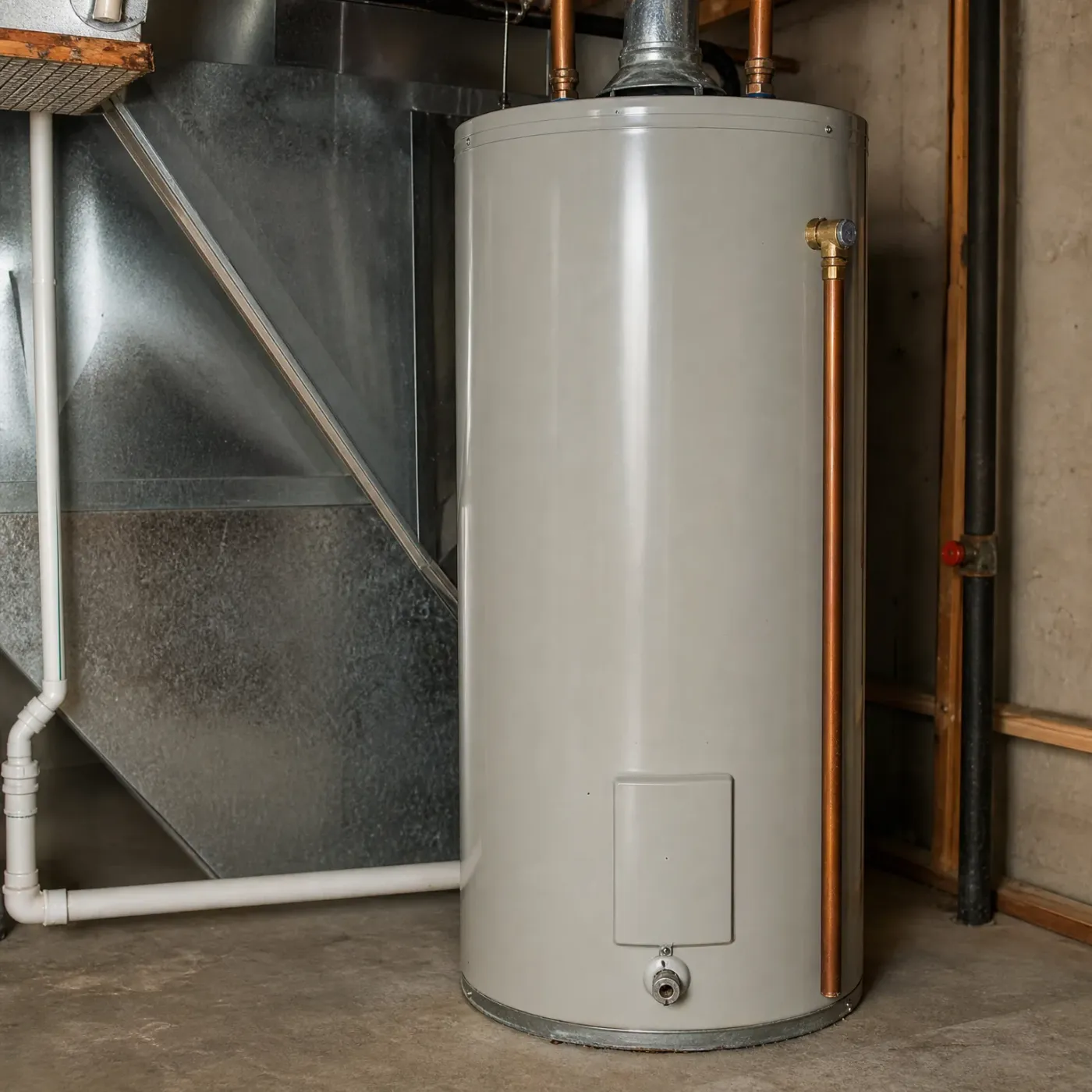
A beige cylindrical water heater with copper pipes and a brass valve stands on a concrete floor in a basement beside galvanized ductwork, white PVC piping, and a black vertical pipe along a concrete wall.

It's off your list after this

Fill out one form instead of calling around for a water heater tune-up.

Send the form and the water heater tune-up stops being something to remember.

Skip the search

Sending the form costs nothing.

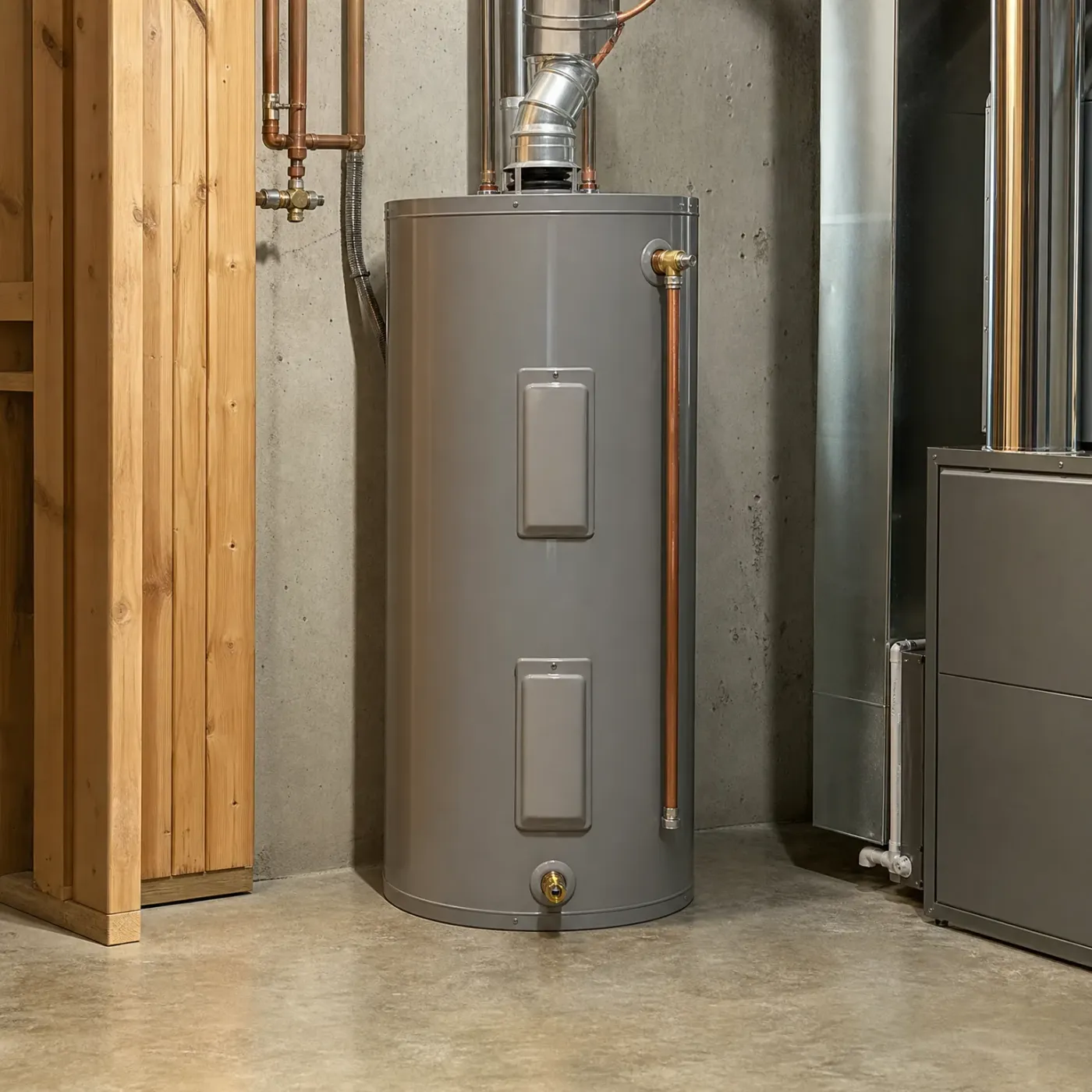
A gray cylindrical water heater with two access panels and copper piping stands against a concrete wall in a basement, beside wood framing and metal ductwork.
The pressure relief valve, copper piping and flue vent are doing their job, and the tank underneath them is still clean enough to let them.
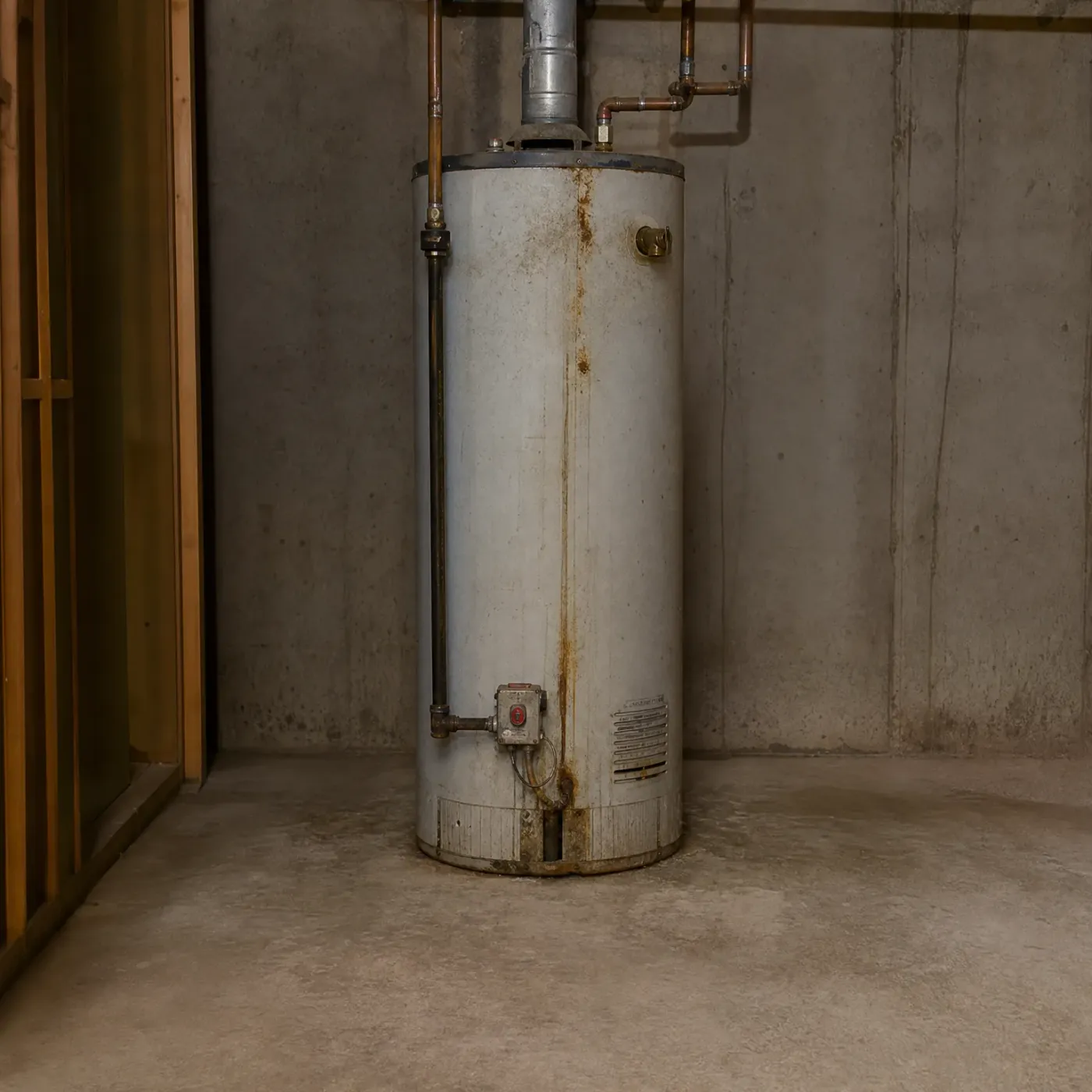
An aging rust-streaked gas water heater with copper and galvanized pipes stands against a bare concrete basement wall beside wooden stud framing.
Rust like this on the tank and valve means sediment has been sitting long enough to eat through metal, not just settle on the bottom.

Flushing the Tank Yourself or Calling It In

Flush it yourself

  • You need a garden hose, a bucket, and about the time it takes to let the tank drain fully, which can run long if sediment clogs the drain valve.
  • The drain valve on most tanks is plastic, and if it's never been opened before, it can seize or crack when you try to turn it.
  • Shutting off power or gas to the tank first matters. Run a gas burner or electric element dry and you risk damaging it.
  • You won't know what the inside of the tank looked like before you flushed it, so you won't know if this was overdue or right on time.
  • If the anode rod needs a look while the tank's drained, most homeowners don't know how to check it or what a worn one looks like.

Have a contractor flush it

  • A contractor checks the anode rod while the tank is open, which tells you something a flush alone doesn't.
  • If the drain valve is clogged or damaged, a contractor has the parts and tools on hand to deal with it without turning the job into a bigger one.
  • A contractor who flushes tanks in Jefferson County regularly knows what buildup looks like at the one year mark versus five years of skipped flushes.
  • You get the tank, the valve, the burner or element and the venting looked over in the same visit, not just the sediment cleared out.
  • Sending one form stands in for calling around, explaining the tank's age and symptoms more than once, and sorting through quotes yourself.
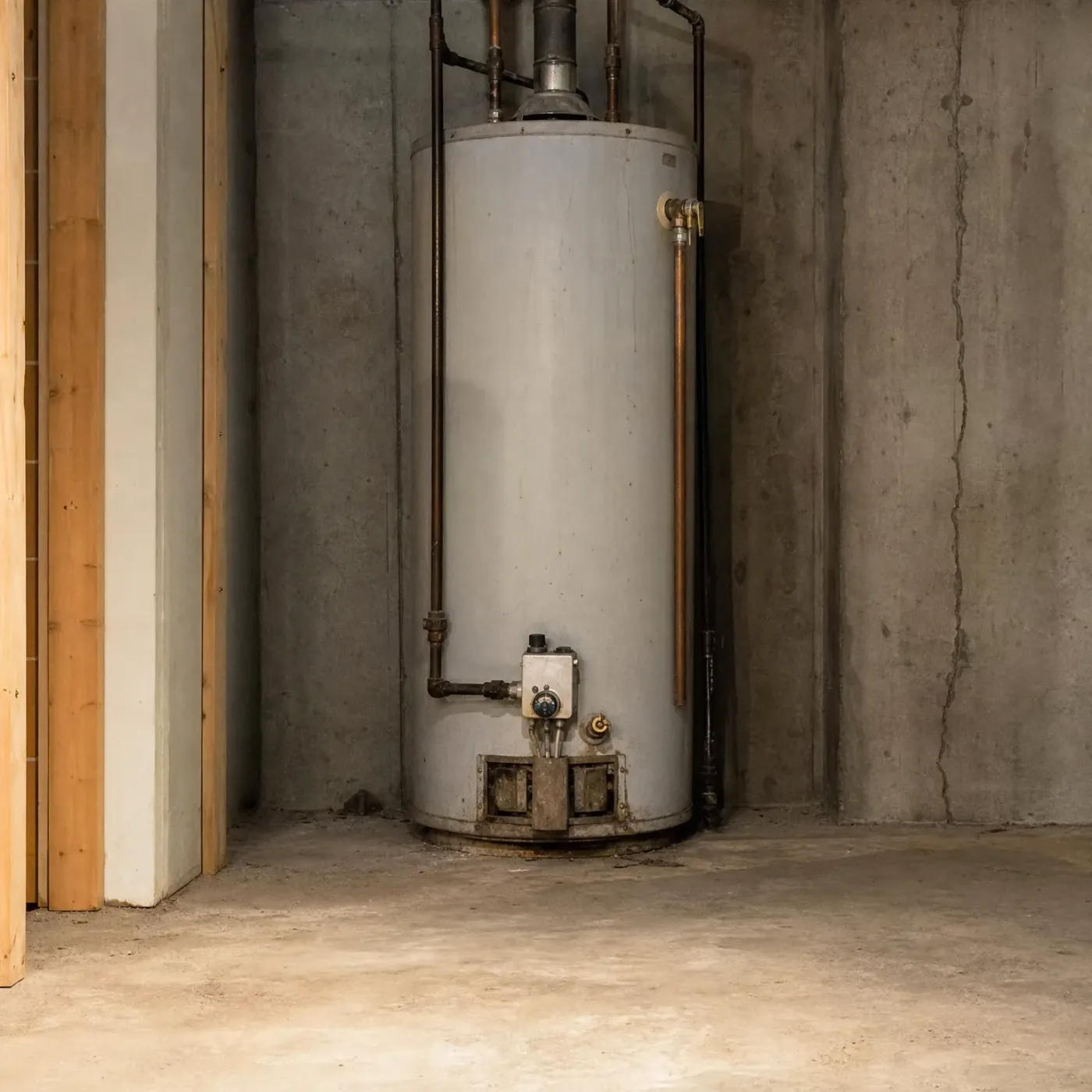
A white cylindrical water heater with copper piping and a gas control valve stands against a stained concrete basement wall on a bare concrete floor.
Before you get your water heater maintenance
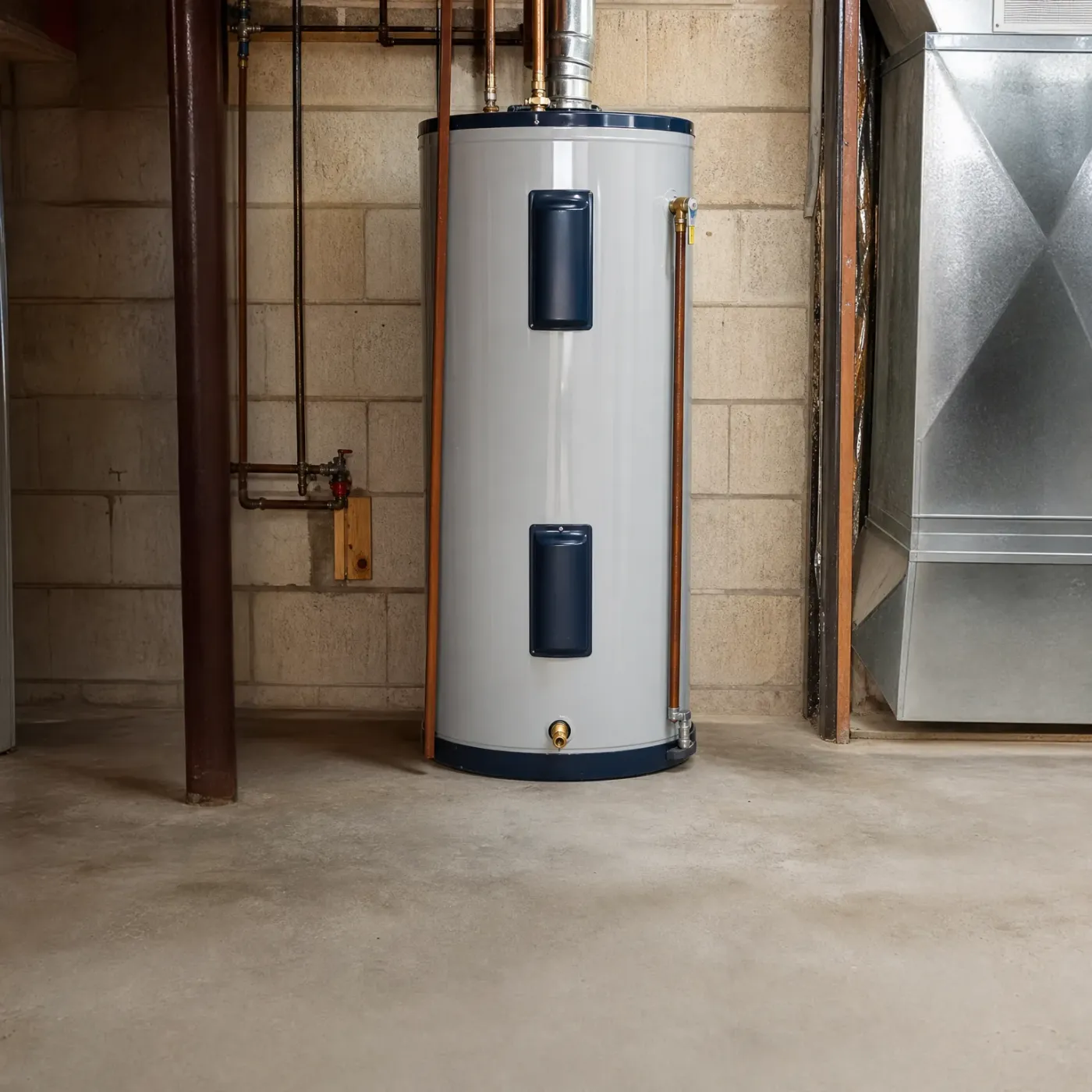
A white cylindrical water heater with two dark access panels stands on a concrete basement floor against a concrete block wall, with copper pipes, a flue duct above, and sheet metal ductwork at right.
After you get your water heater maintenance

Once a year

A yearly flush keeps the sediment layer thin enough that the burner or element still heats water instead of heating through buildup first.

Hand off the search

Skip it and the layer grows

Each year it goes unflushed, the tank works harder to heat the same water, and the drain valve gets that much more likely to clog when you finally try.

Hand off the search
A wooden table in the foreground holds a closed laptop and a ceramic mug of coffee, with a spindle-back wooden chair behind it, a beige wall with paneled wainscoting, a window at left, and a kitchen counter with a cutting board, bowl of fruit and greenery at right.

What a flush actually does inside the tank

A flush starts with the cold water supply shut off and the burner or breaker turned off so the element isn't heating an empty tank. A hose runs from the drain valve near the bottom to a floor drain or outside, and the tank empties out. The water comes out cloudy at first, then runs clear once the sediment is gone. Opening the cold supply partway partway through the drain stirs up anything stuck to the bottom so it washes out instead of resettling.

That's the part a homeowner can picture but rarely wants to take on themselves, especially the first time, when nobody knows if the drain valve will open clean or seize up from years of sitting. Finding someone who does this regularly, who shows up with the right fittings and knows what a stuck valve on an old tank needs, is the harder part. Once that's arranged, the flush itself is routine work for someone who's done it on hundreds of tanks like yours.

A gray upholstered sofa with a beige cushion and knit blanket beside a curtained window, with a white mug and a book on a dark wooden table in the foreground and a lit lamp in the background.

Power here costs 13.42 cents per kilowatt-hour

Most water heaters in Arnold run on electricity, and at 13.42 cents a kilowatt-hour, every gallon the tank heats costs something. Sediment on the bottom makes the element work through buildup before the water ever warms, so that rate shows up on your bill a little higher every month a flush gets put off.

EIA-861 2025

Once a Year, for Most Homes

  • Once a year keeps the sediment layer thin enough that the burner or element heats water, not buildup, in most Arnold homes.
  • A larger household or an older tank that's never been flushed both call for checking sooner rather than waiting the full year.
  • Skipped flushes let the sediment layer thicken year over year, and the tank works harder to heat the same water.
  • Jefferson County water isn't the hardest around, but it carries enough dissolved minerals to settle as sediment once the tank heats it.
  • Rust on the tank or the pressure relief valve means sediment has sat long enough to eat through metal, not just settle.
  • A flush itself takes shutting off the cold water supply and the burner or breaker before draining the tank through the valve.

For a home in or around Arnold, once a year is the answer. That's often enough to keep sediment from building past a thin layer, and close enough to the pace Jefferson County water actually deserves. It isn't the hardest water around, but it carries enough dissolved minerals to settle once the tank heats it, and a year is roughly how long it takes that layer to get thick enough to matter.

Not every home sits in the middle of that answer. A larger household fills and reheats the tank more times a day, which means more chances for sediment to settle before the water cools again, so checking before the year is up makes sense. A tank that's changed hands with the house, or one nobody remembers flushing, may already carry more than a year's worth on the bottom, and that calls for a look now rather than waiting on a schedule that assumes a clean start.

Skip the flush and the layer doesn't stay put. It thickens year over year, and the burner or element spends more of its work heating through buildup before the water itself warms. Left long enough, that's also how rust shows up on the tank or the pressure relief valve, which means sediment sat there long enough to eat through metal, not just settle on it.

The flush itself is straightforward in what it requires: the cold water supply shut off, the burner or breaker off, then the tank drained through the valve near the bottom.
A man in a blue T-shirt sits on a light gray sofa, laughing while looking at an open laptop in the foreground, with a framed picture, lamp and potted plant behind him.
A bearded man in a blue and brown plaid flannel shirt stands indoors looking out a window at snow-covered trees, with a ceramic mug on the windowsill.

Water Heater Maintenance

Send one request and you're done looking

Skip calling around to set up a water heater tune-up.

A black-framed smartphone standing upright against a plain light gray background, its screen filled with solid green.
Step 1 of 3: Equipment