





Profile view of a bearded man wearing a dark baseball cap and a dark gray T-shirt against a plain off-white background.

How long a water heater lasts in Kansas City, MO

Step 1 of 3: Equipment

A water heater in Kansas City lasts about 8 to 12 years, sometimes longer with a tank that's kept up. The tank corrodes from the inside over time, and once it starts leaking, that's the end of it, not something a repair fixes. Hard water here speeds that along, since mineral buildup settles in the tank and works on the lining and the heating element. Jackson County's hard water also means sediment collects faster at the bottom of the tank, which is part of why some water heaters give out closer to 8 years than 12. If yours came with the house, or you don't know its age, check the label on the tank for the manufacture date. Once it's past 10 years, start planning for a new one rather than waiting for it to fail, since a tank that goes can mean a flooded utility closet or basement.

What does your household actually need from a water heater?

  • 2.31 people per household on average

    With 2.31 people in the average Jackson County household, most homes run a tank sized for a small family, and an undersized or aging one falls behind fast once it starts to go.

  • Half the homes here were built by 1970

    Half the homes in Jackson County were built in 1970 or earlier, which means half the water heaters in them have been swapped out at least once already, maybe more.

  • 69.5% of homes heat with gas

    Gas heats 69.5% of homes here, so most readers replacing a water heater are matching it to a gas line already in place, not switching fuels.

ACS 2020-2024

A tank past 10 years can still heat your water fine right up until the day it doesn't, usually with a puddle on the floor to show for it. There's no gauge that tells you how much longer it has.

Waiting for it to fail means a cold shower some morning and a scramble to find someone who can install a new one that day. Replacing it on your schedule, once it's past that 8 to 12 year mark, means you pick the day.

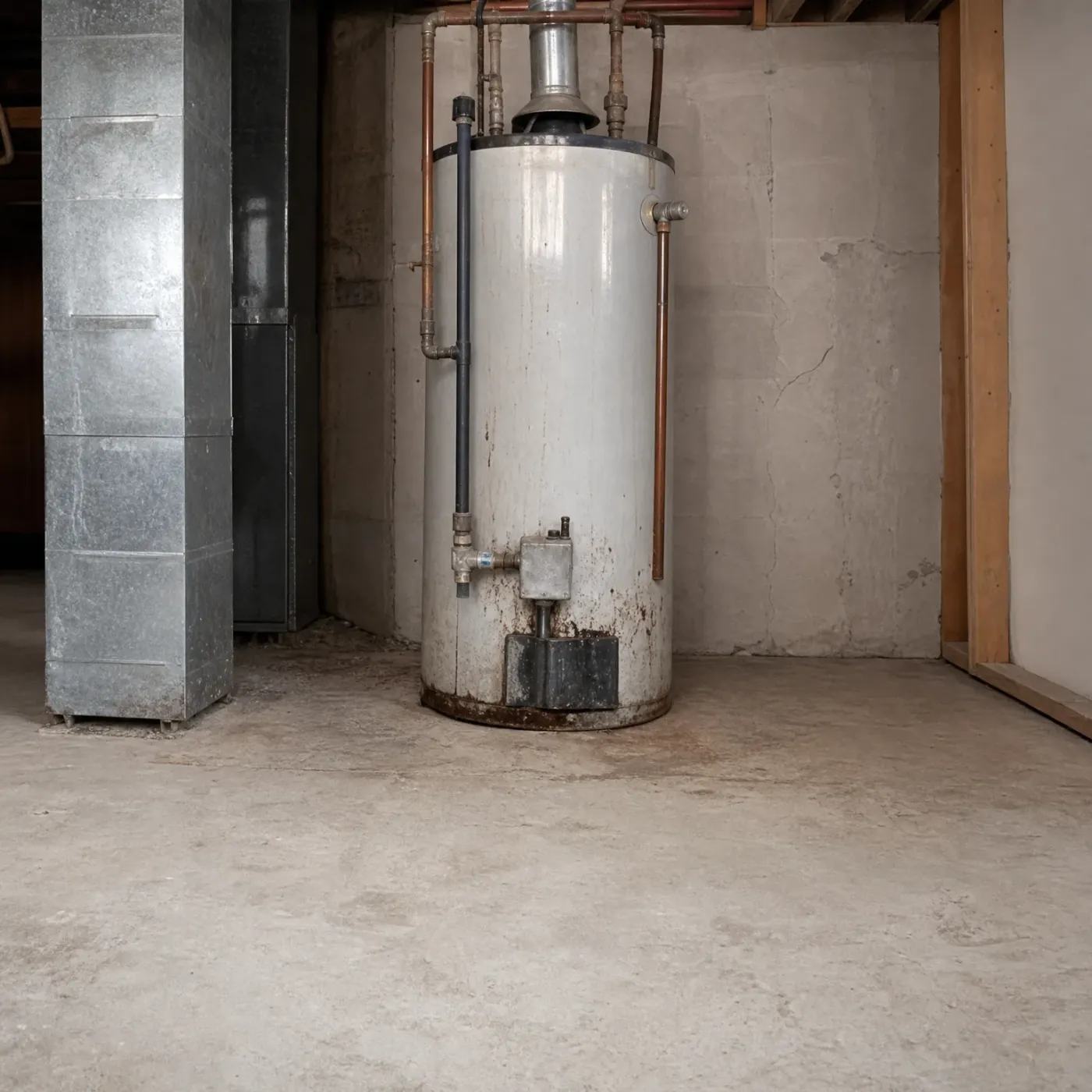
An old rusting cylindrical gas water heater with copper and steel pipes and a flue stands against a concrete basement wall beside metal ductwork on a bare concrete floor.
Before you get your water heater installation
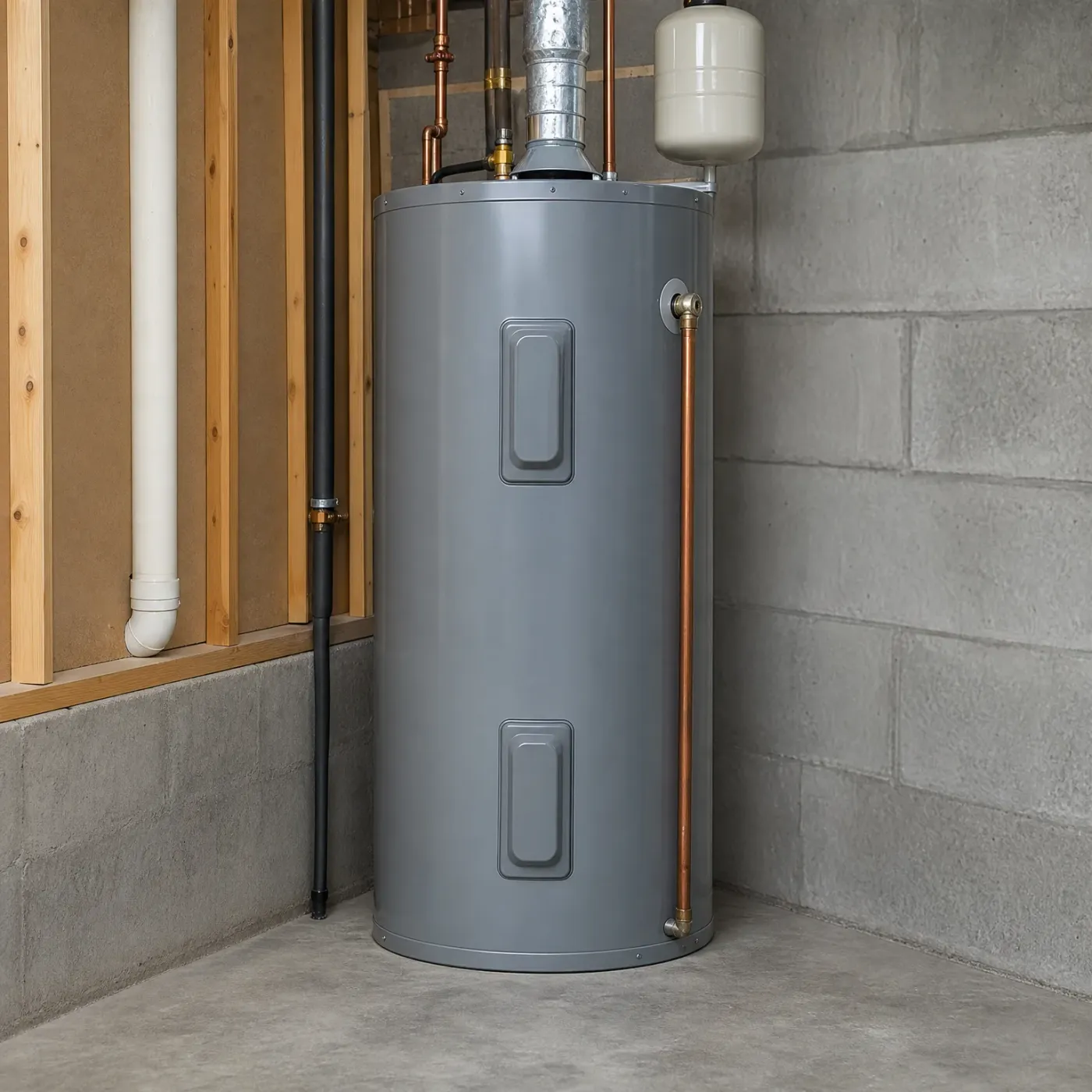
A gray cylindrical water heater with copper piping and an expansion tank stands in a basement corner beside a concrete block wall and exposed wood framing.
After you get your water heater installation

A water heater fails from the inside, and there's a sequence to it. Every tank has an anode rod, a rod of metal that corrodes on purpose so the steel around it doesn't have to. That rod gets used up over time, faster in hard water areas like Jackson County, and once it's gone the tank itself starts rusting. Sediment plays its own part. Minerals settle at the bottom, coat the element or burner, and make it work harder to heat the same water. In a gas tank, that sediment layer can scorch the glass lining above it, which gives corrosion a head start right there. If your tank's been popping or rumbling lately, that's usually sediment trapped under the water, not a tank on its way out. It's also one of the few warning signs a water heater gives you. Flushing the tank once a year clears that sediment out and lets the anode rod do the job it's there for, instead of fighting a layer of scale.

What's Happening Inside the Tank

  • The anode rod inside the tank is a sacrificial piece of metal that corrodes first so the steel tank doesn't have to.
  • Once the anode rod is used up, usually before the tank hits ten years, the tank itself starts rusting from the inside out.
  • Hard water like Jackson County's coats the heating element and the bottom of the tank with scale, making the burner or element work harder to do the same job.
  • Sediment that settles at the bottom of a gas tank can scorch and crack the glass lining, which speeds up corrosion in that spot.
  • A tank making popping or rumbling sounds is usually sediment trapped under the water being forced to boil, not a sign the unit is failing outright.
  • Flushing the tank once a year clears that sediment layer and lets the anode rod keep protecting the steel instead of the sediment blocking it.
A woman with shoulder-length graying brown hair in a cream knit cardigan sits in a dark armchair indoors, looking off to the side with a slight smile, with a shelf, window and houseplant blurred behind her.
A woman with dark hair in a bun sits wrapped in a chunky knit blanket on a couch with a child resting his head on her shoulder, eyes closed, beside a lit lamp and bookshelf indoors.
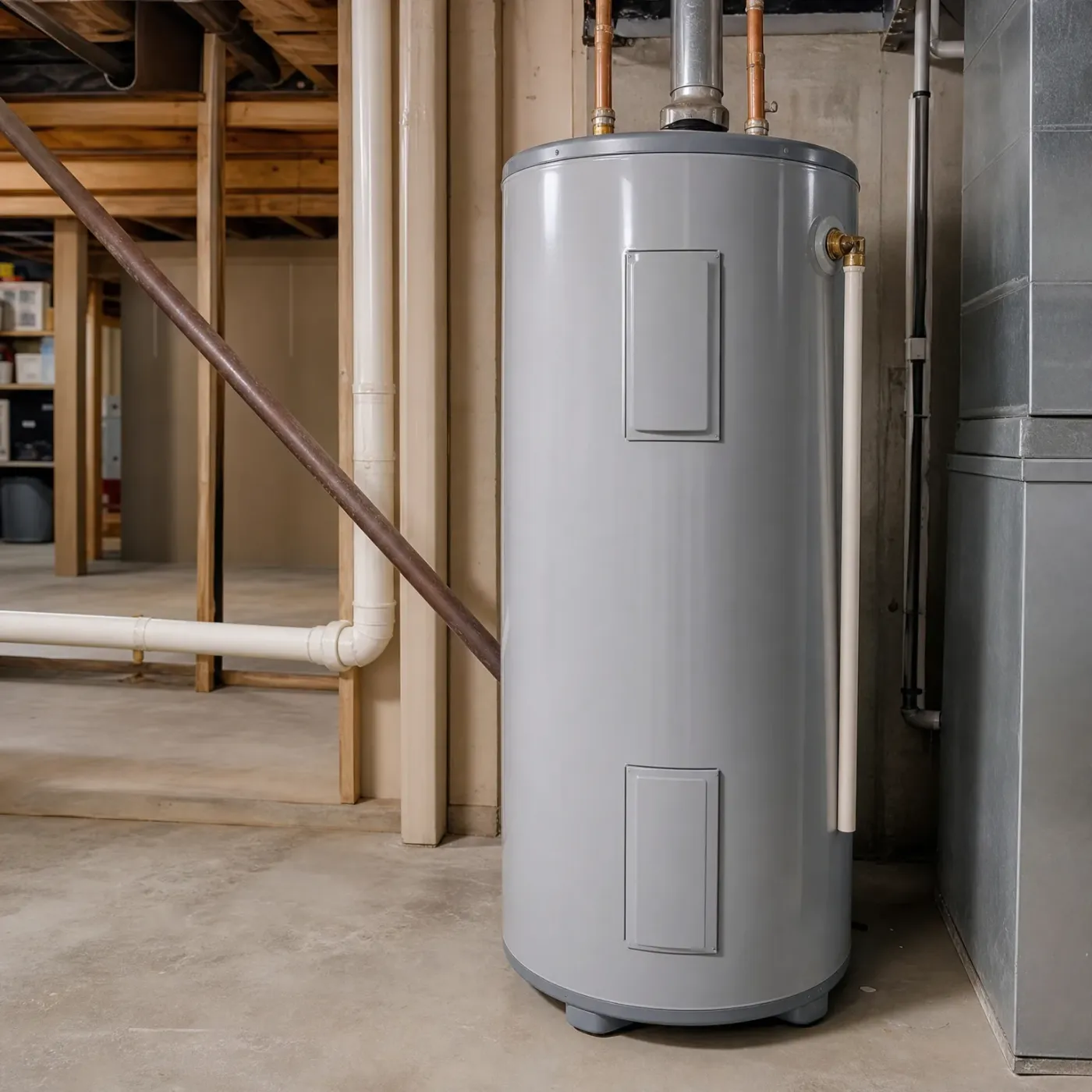
A gray cylindrical water heater with copper and white pipes stands on a concrete basement floor beside a metal duct and wooden framing.

No calling every shop in Jackson County

A licensed installer who works in Jackson County gets your project.

Describe the project once instead of to every installer.

Skip calling around

Asking costs nothing, and the choice to hire stays yours.

Is your water heater trying to tell you something?

Water that takes longer to heat up, or doesn't get as hot as it used to, is one of the first signs. Rumbling or popping from the tank means sediment has built up at the bottom, and that sediment makes the burner or element work harder than it should. Rust-colored water, or rust around the fittings on top of the tank, means the inside is corroding. Any dampness or puddling at the base isn't condensation, that's the tank itself giving out. Left alone, a tank that's starting to go doesn't hold steady. It fails on its own schedule, usually a wet floor and a water heater closet or basement with no hot water that morning.

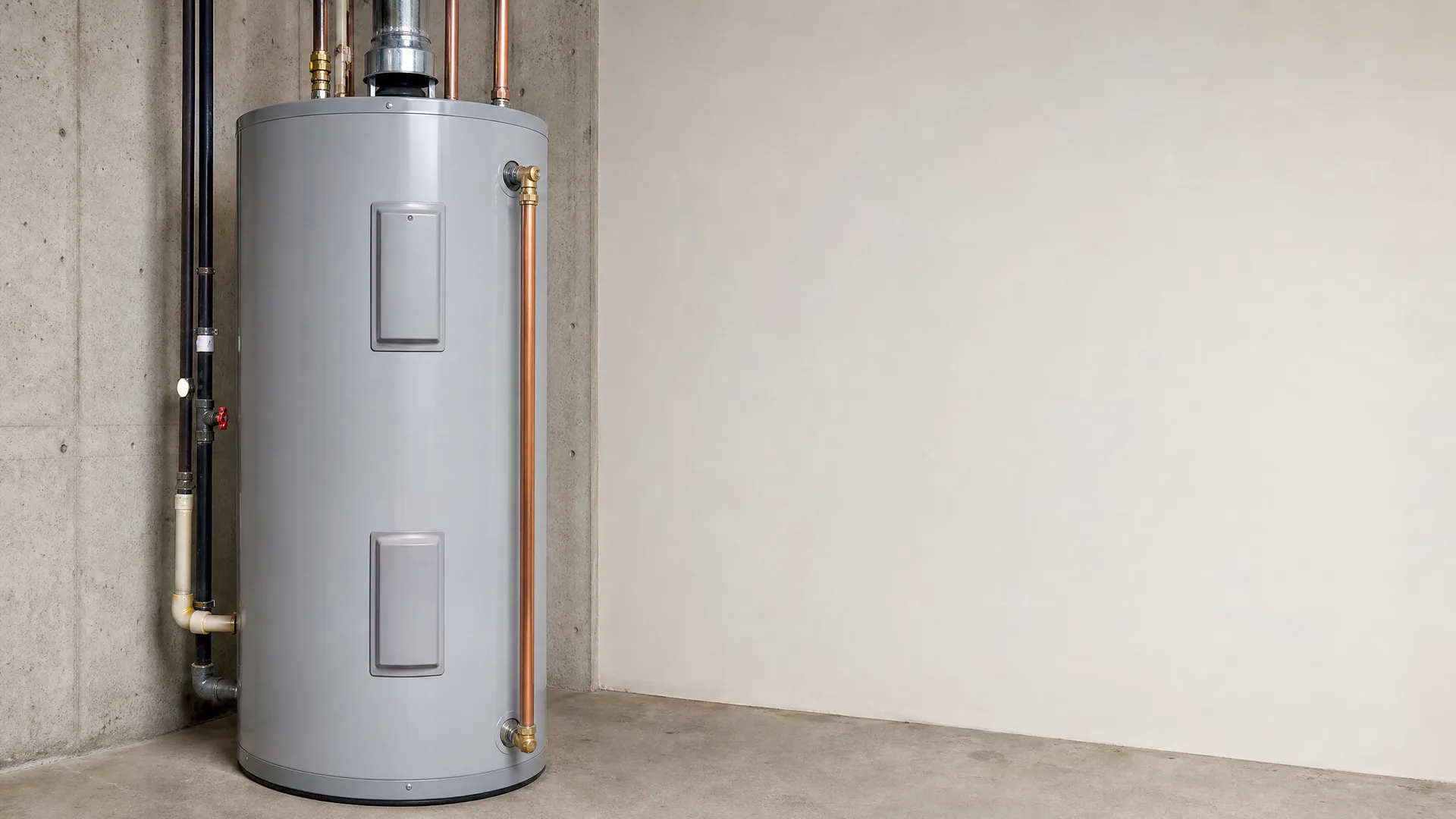
A gray cylindrical water heater with two access panels stands in a corner against a concrete wall, with copper and black pipes running up beside it on a bare concrete floor.

Gas water heaters recover faster

Most homes in Jackson County heat with gas, and gas water heaters earn their keep here. A gas burner heats a full tank quicker than an electric element can, which matters when a family is running through hot water back to back. Gas units also keep working through a power outage, since the pilot or igniter doesn't need electricity to light the burner. That's one less thing to worry about when a winter storm knocks the power out.

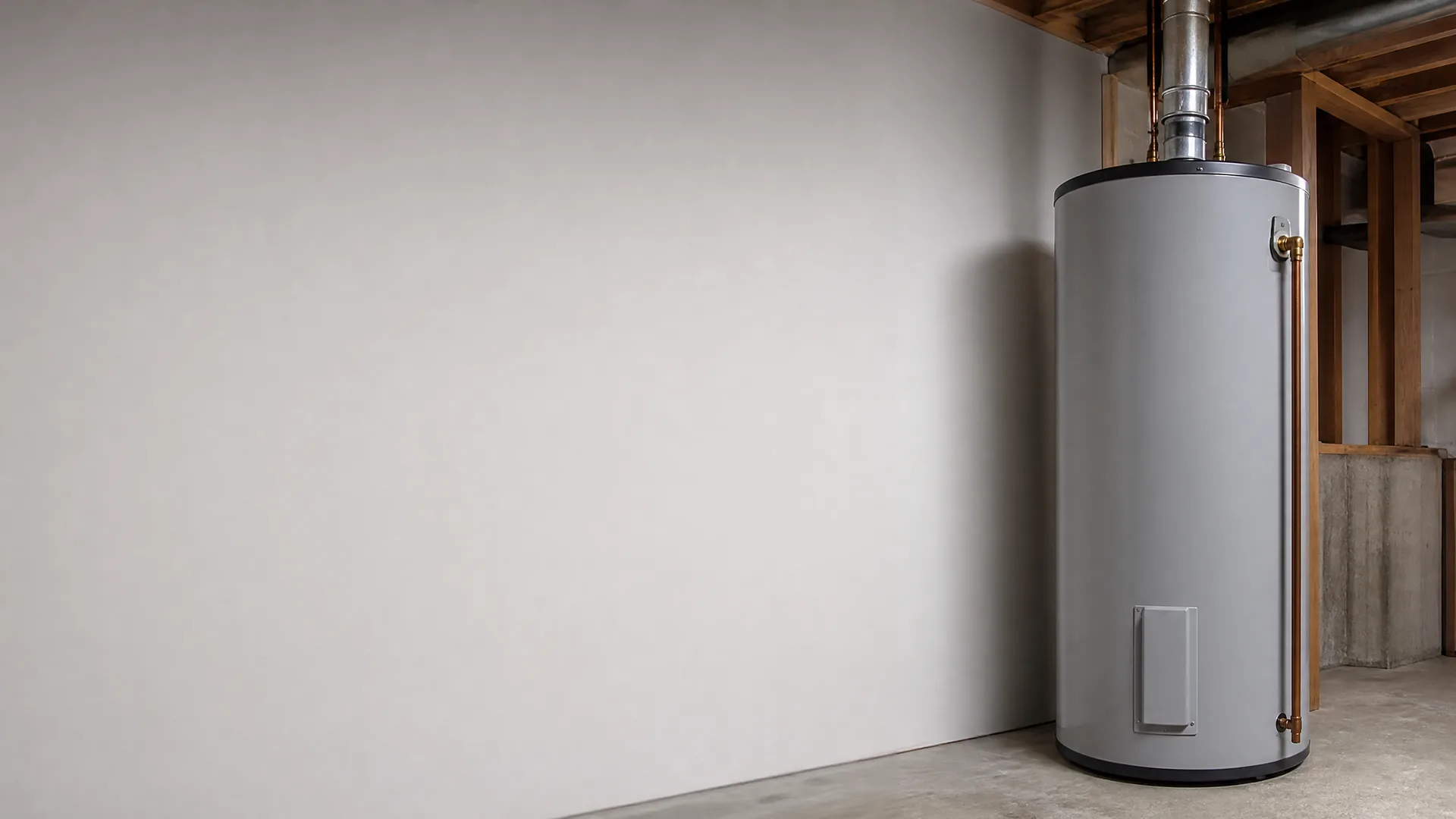
A gray cylindrical water heater with a metal flue pipe and copper piping stands in the corner of a bare room with light walls, a concrete floor, and exposed wood framing.

Tank placement affects how long it lasts

Where a tank sits matters more than people think. A water heater in an unheated garage or basement corner works harder in a Kansas City winter than one in a conditioned space, cycling more often to hold its temperature. That extra cycling adds wear over the years. A tank installed somewhere it stays above freezing, with room to drain and vent properly, has an easier time reaching the far end of its 8 to 12 year range.

Why does the anode rod matter for how long my water heater lasts?

Someone mentioned the anode rod when you asked about your water heater, or you read it in the section above, and it sounds like something you're supposed to check or replace. You want to know why it matters so much, and what happens if nobody ever touches it.

The anode rod is what fails first so the tank doesn't have to

The anode rod is a length of metal, usually magnesium or aluminum, that hangs inside the tank wired to a bolt on top. It corrodes on purpose. The water inside your tank would otherwise eat away at the steel, so the rod gives itself up instead. Once it's worn down to the wire, there's nothing left to protect the tank, and the steel starts rusting from the inside. Hard water, which much of Jackson County has, uses up a rod faster than soft water does. A rod checked every couple of years and swapped out when it's thin can carry a tank well past the point where an ignored one would already be leaking.

  1. The old tank gets drained and disconnected from the gas or power line.

  2. A plumber checks the gas line, vent, or electrical hookup for code issues.

  3. The new water heater gets set, leveled, and connected to the water lines.

  4. The gas or power supply is reconnected and the pilot or element is tested.

Power here costs 13.55 cents per kilowatt-hour

At 13.55 cents per kilowatt-hour, running an electric water heater here doesn't cost much to keep hot, which is one reason electric tanks still get installed even though gas heats the water faster. If yours runs on electricity, a higher-recovery model is worth asking your plumber about, since the power itself isn't the expensive part.

EIA-861 2025

A gray-haired bearded man in a dark knit sweater sits on a light gray sofa in a sunlit living room, looking to his left, with a framed artwork, a potted palm, and a curtained glass door behind him.
A middle-aged man in a dark green sweater sits on a light grey sofa looking toward a sunlit window, with a wooden shelving unit, lamp and potted plants in the background.
A man in a dark green sweater sits on a light grey sofa in a sunlit living room, looking to his left, with a shelving unit, houseplants, framed art and a large window behind him.
A gray-haired bearded man in a dark green sweater sits on a light gray sofa in a sunlit living room with a potted plant, framed picture, and dark shelving in the background.
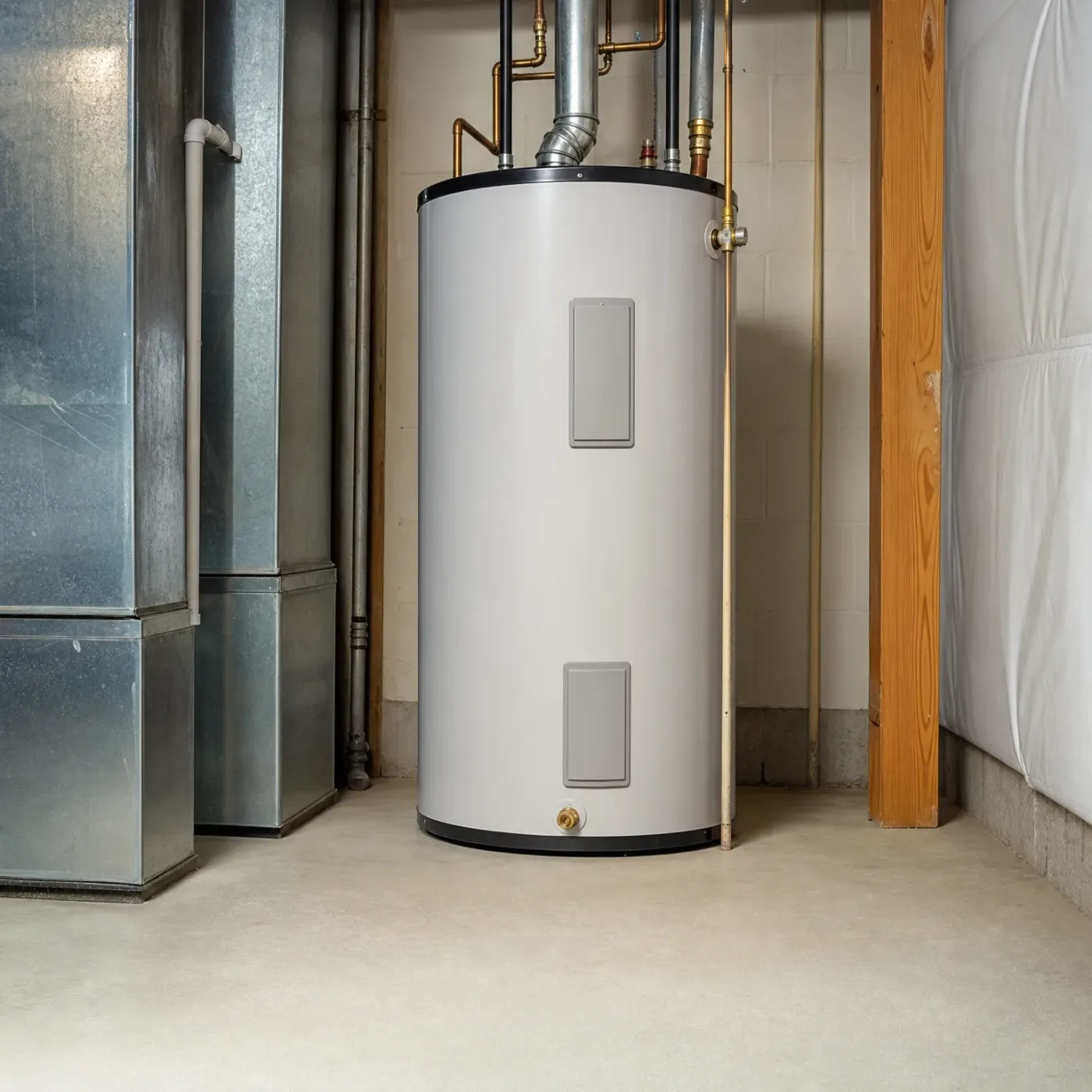
A white cylindrical water heater with two access panels stands on a concrete floor in a basement corner, beside galvanized ductwork, copper and metal pipes, a wooden post, and a concrete block wall.

Still doing its job

This one's set up the way it should be: panels accessible, drain valve clear, the copper and galvanized lines up top connected clean. A tank like this is worth maintaining, not replacing. A plumber can flush it, check the anode rod, and keep it running.
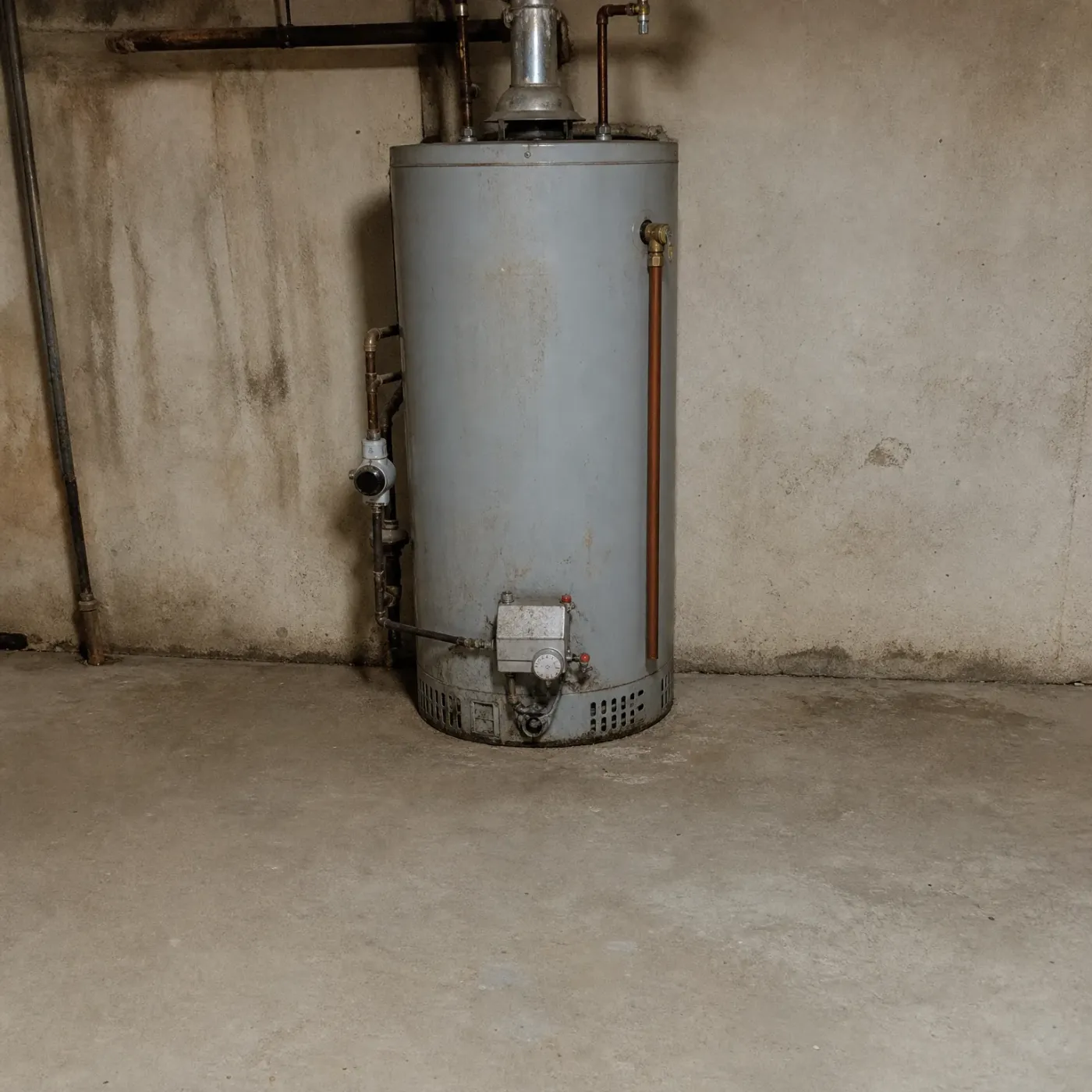

An older gray cylindrical gas water heater with copper and steel piping and a flue, standing on a concrete floor against a stained concrete wall.

On its way out

Bare concrete, an old flue vent, a gas control unit that's seen better days. A tank this age next to a pressure relief valve is one most plumbers would tell you to plan around, not wait on. Once it starts leaking, there's no fixing it, only replacing it.

A closed silver laptop and a glazed ceramic mug on a wooden table, with a blurred kitchen counter, potted plant, cutting board and window in the background.

A water heater that's past its years doesn't wait for a convenient time to go

Eight to twelve years, less if the anode rod went early or the sediment never got flushed out. That's the honest range for a tank in Jackson County. Past that, you're not asking if it fails, just when, and tanks tend to pick a bad morning to do it.

Finding someone qualified usually means asking around, calling a few plumbers, explaining the same thing three times, then sitting with quotes trying to guess which one is fair. You can skip that. A local plumber who installs these tanks all year, who knows what Jackson County's water does to an anode rod and which gas lines need a second look, gets matched to you directly. One call, one plumber, the work handled right.

A wooden table holding a stone vase with a bare branch, two stacked books and a small dark bowl, beside a window with green foliage outside and a sofa in the dim background.
Kitchen corner with cream upper cabinets, oak lower cabinets, white marble-look countertop, beige tile backsplash, a ceramic vase of greenery, a wooden cutting board and bowl, and a black-framed window at right.
Interior corner of a room with a white-framed window and wide sill, beige walls with panel molding, a wooden cabinet holding a ceramic vase with a green leafy plant, and blurred shrubs and trees outside.
A wood-framed armchair with beige cushions and a woven lumbar pillow sits in a corner beside a large window overlooking green trees, with a tall ceramic vase holding leafy branches on the left and plaster walls and wood flooring.
Interior corner with a white-framed window above a sill, beige walls with baseboard molding, a greige shaker-style cabinet with brass knobs and a potted plant on top, light wood flooring and a woven jute rug.
A dark-framed six-pane window with white trim and sill set in gray horizontal lap siding, with hydrangea shrubs below and a white column and shingled roof section at left.

Skip the search

The pro who gets in touch is licensed in Missouri and works in Jackson County.

Fill out one form

No fee to send it, and nothing to sign.