




How long a water heater lasts in Arnold, MO

Describe your water heater job once, to one pro.

Skip the calls

A water heater in Arnold usually lasts 8 to 12 years. Tank units rust from the inside over time, and once that starts, a leak follows and the tank can't be patched. Most homes here run on electric water heaters, and the electric element and thermostat can fail before that, but the tank itself is what decides the unit's real age. Jefferson County's water is one thing worth knowing: harder water speeds up the sediment buildup that sits at the bottom of the tank and makes the heater work harder to heat the same water. If your water heater came with the house, check the date on its label, it's usually near the top. Once a tank passes ten years, a repair might buy a little time, but planning for replacement is the safer bet than waiting for a leak to show up on your floor.

A woman in a cream sweater with her hair in a bun laughs while seated at a stone counter holding a glass of red wine, in a dimly lit interior with a sofa, houseplants and a large window at night.
A woman with long dark hair in a cream knit sweater laughs while looking off to the side, seated in front of a dimly lit kitchen with an island, stools, open shelving and a potted plant, with a glass of red wine in the foreground.
A smiling woman with long dark wavy hair in a light knit sweater sits at a marble counter with a glass of red wine, with a dimly lit living room and kitchen in the background.
A smiling woman with long wavy brown hair in a beige sweater sits at a white marble counter with a glass of red wine, with a living room, dining table and kitchen cabinets behind her.

Is your water heater on its way out

Water that takes longer to heat, or runs out faster than it used to, is usually the first thing you notice. You might hear popping or rumbling from the tank, which is sediment hardening at the bottom and making the element work harder to heat the water above it. Water with a rust tint, or a metallic smell, means the tank itself is starting to corrode. Check around the base for dampness or a drip. Once a tank rusts through, it won't patch or seal, and a slow leak left alone can soak the flooring or drywall around it before you catch it.

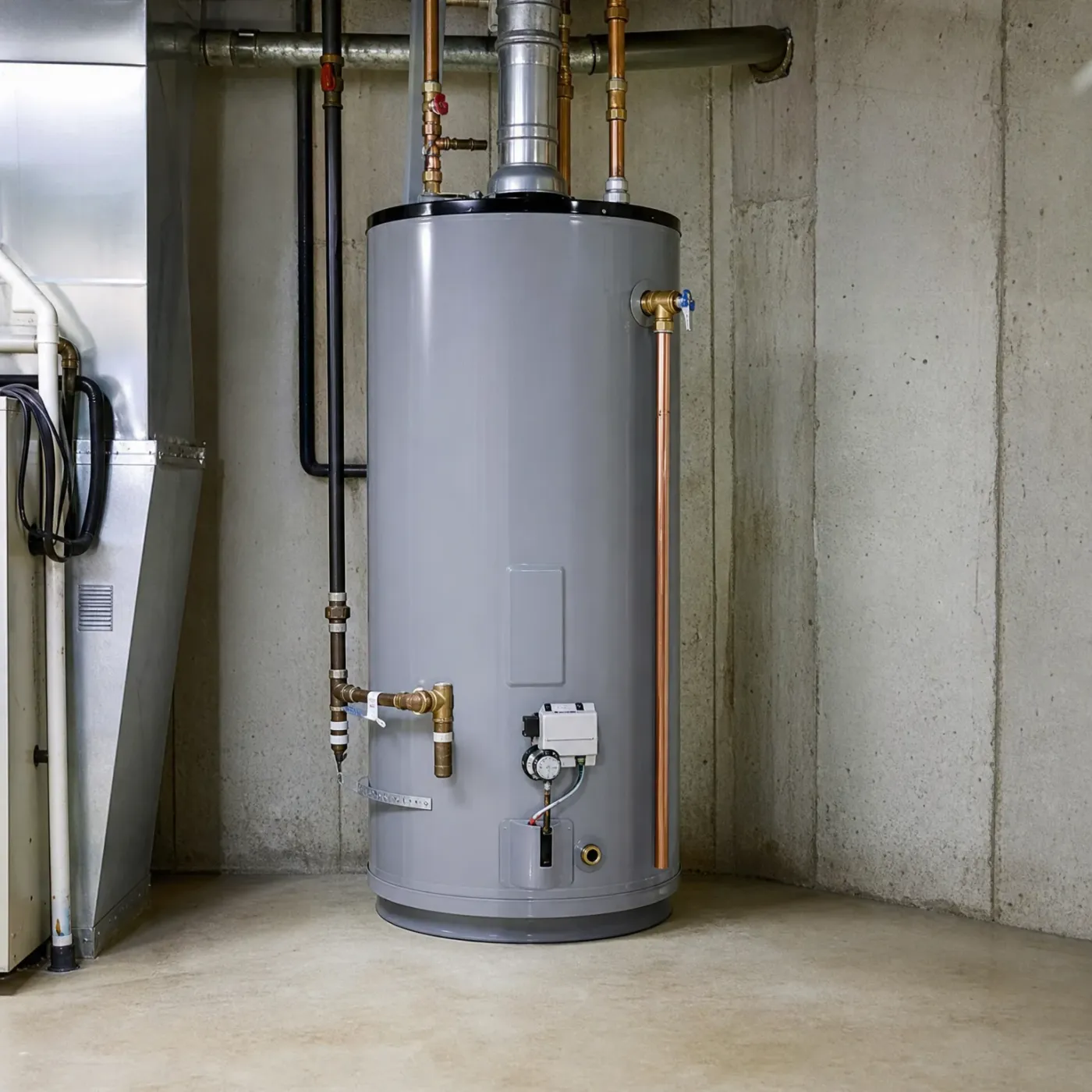
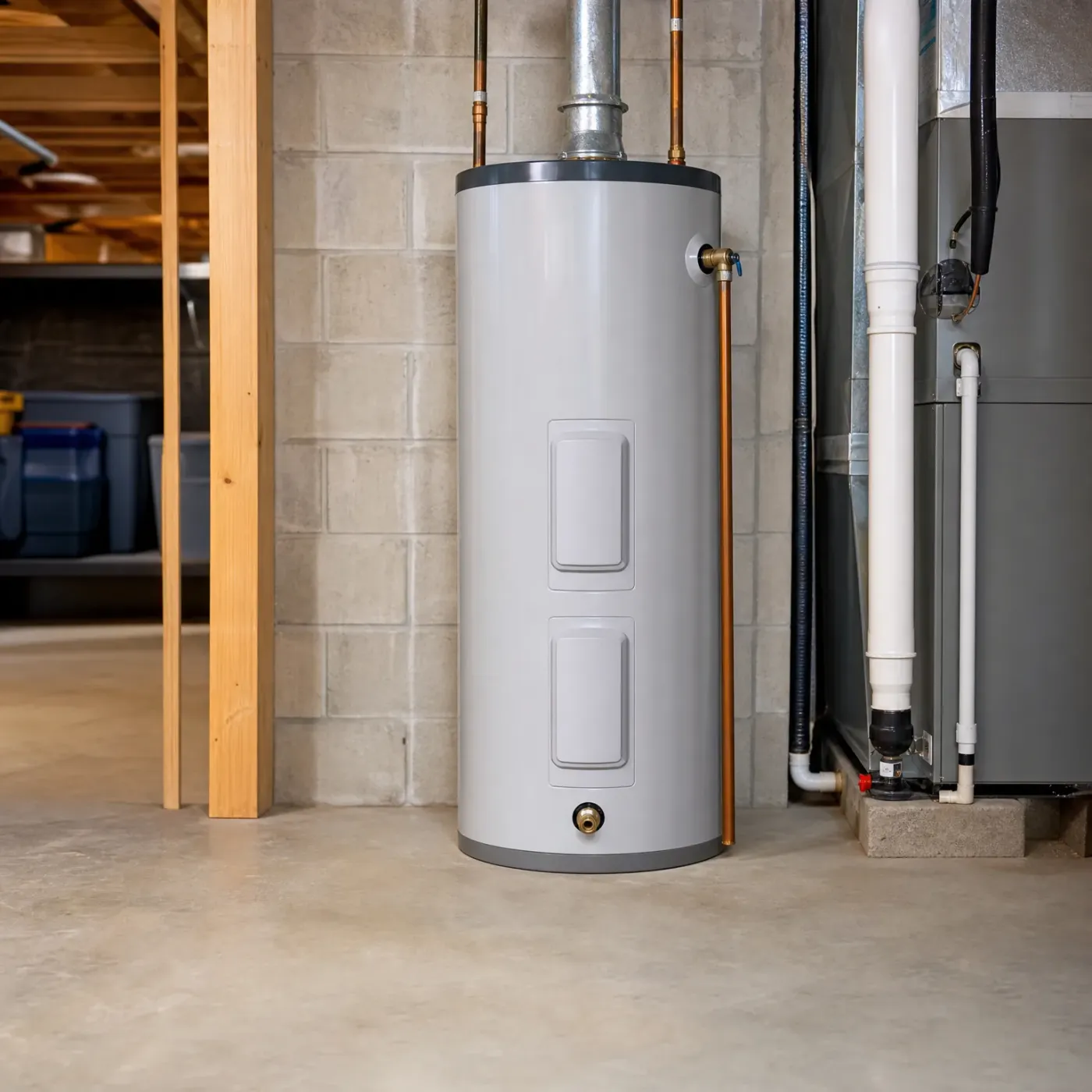
A gray cylindrical water heater with copper pipes stands against a concrete block wall in a basement, next to white PVC piping and a gray furnace, with wood framing and storage bins at left.

Working the way it should

This tank is heating on schedule and holding pressure, with no sign of rust at the fittings or the floor underneath. The panels on front give a tech access to the elements and thermostat without pulling the unit out. Clean copper lines and a clear flue mean nothing is restricting it.
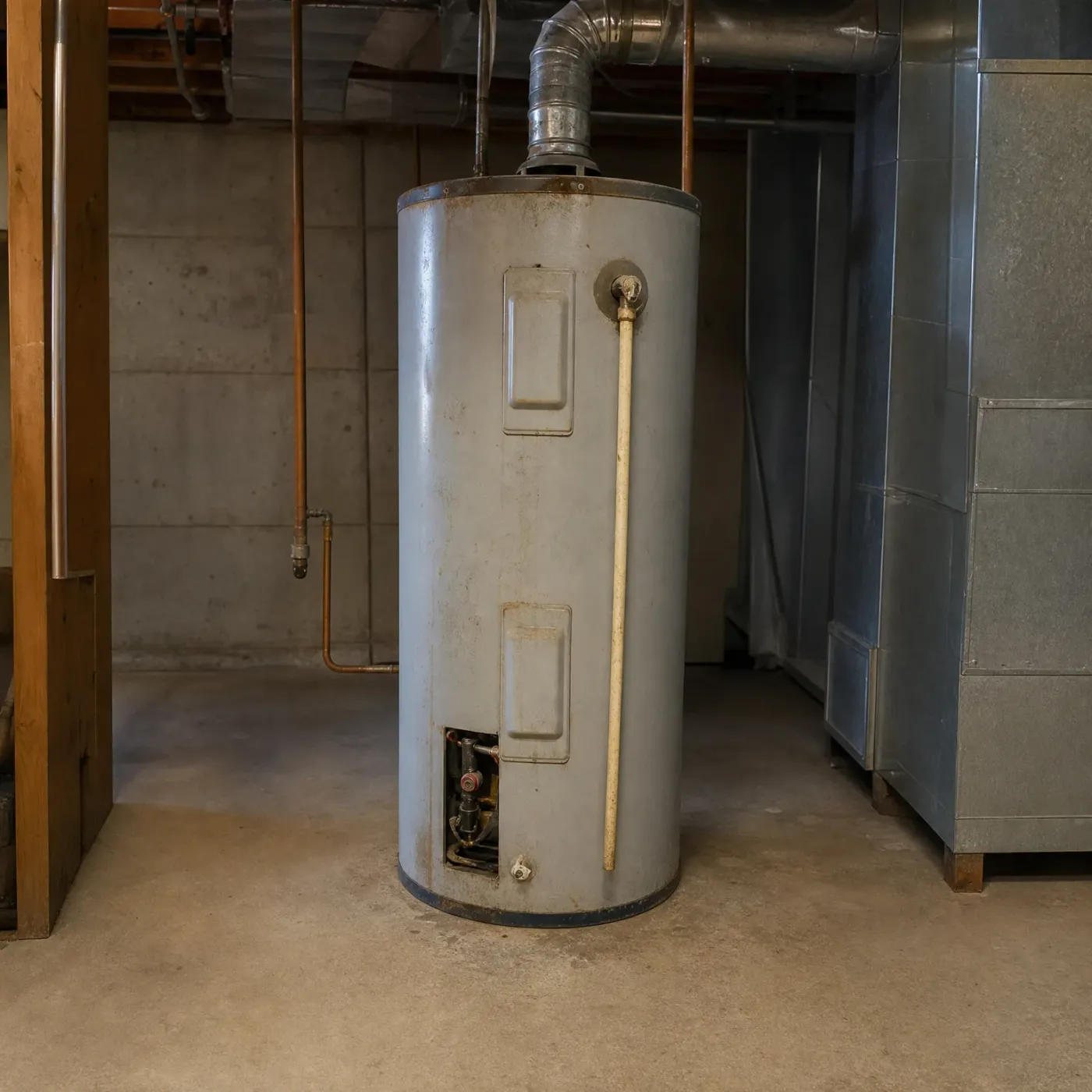
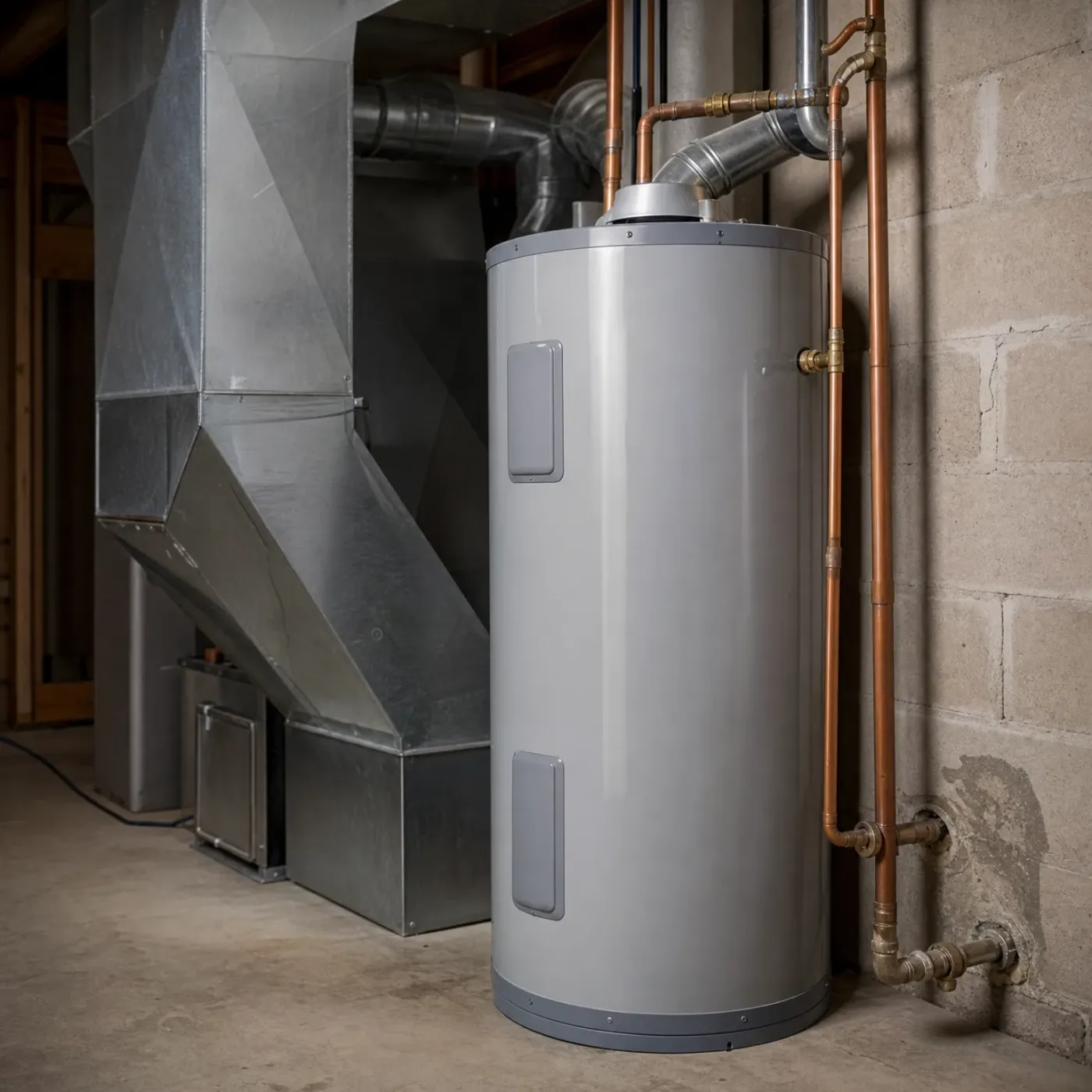
An older gray gas water heater with a metal flue pipe stands on a concrete basement floor beside ductwork and exposed copper piping.

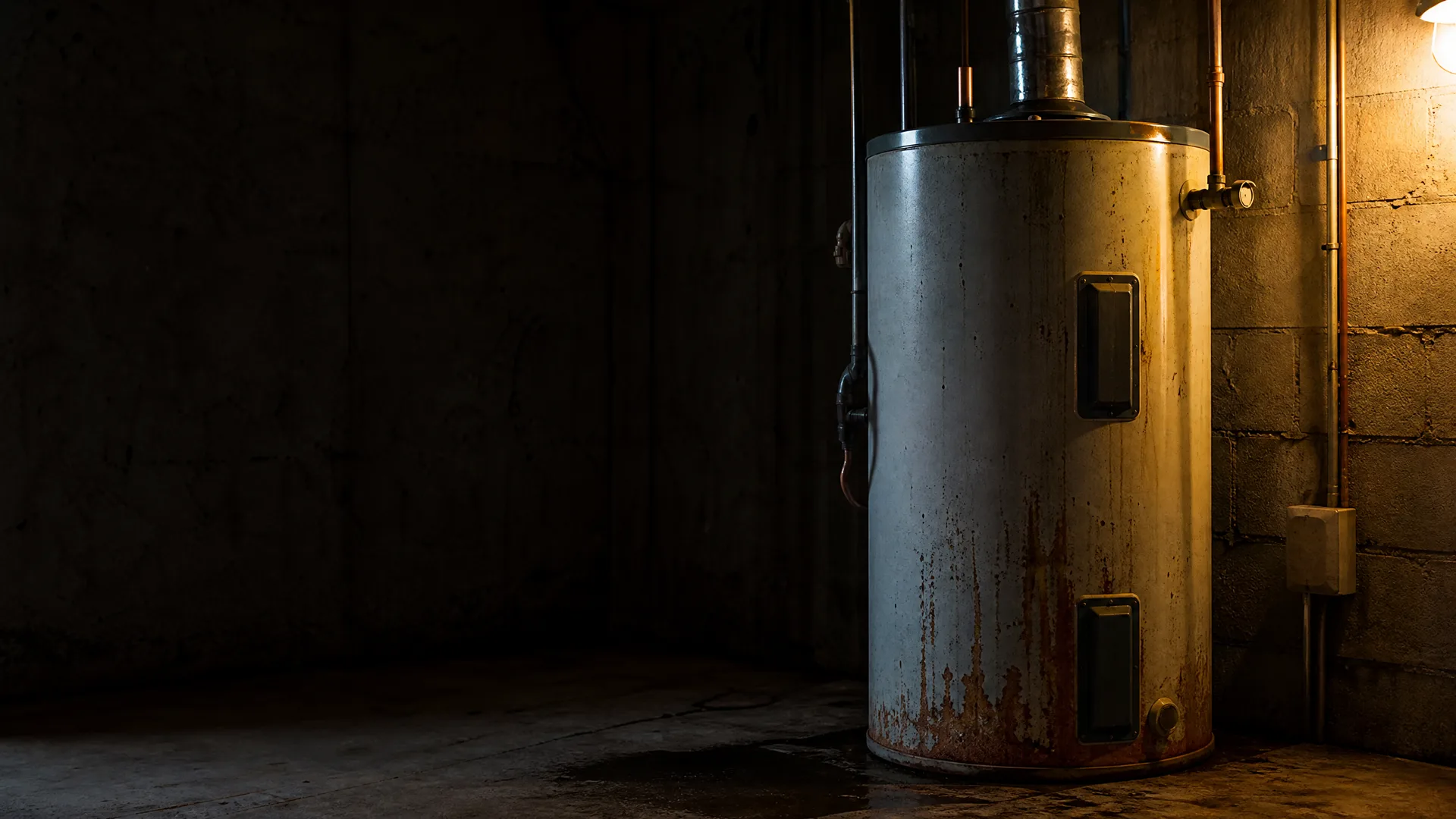
Past its years

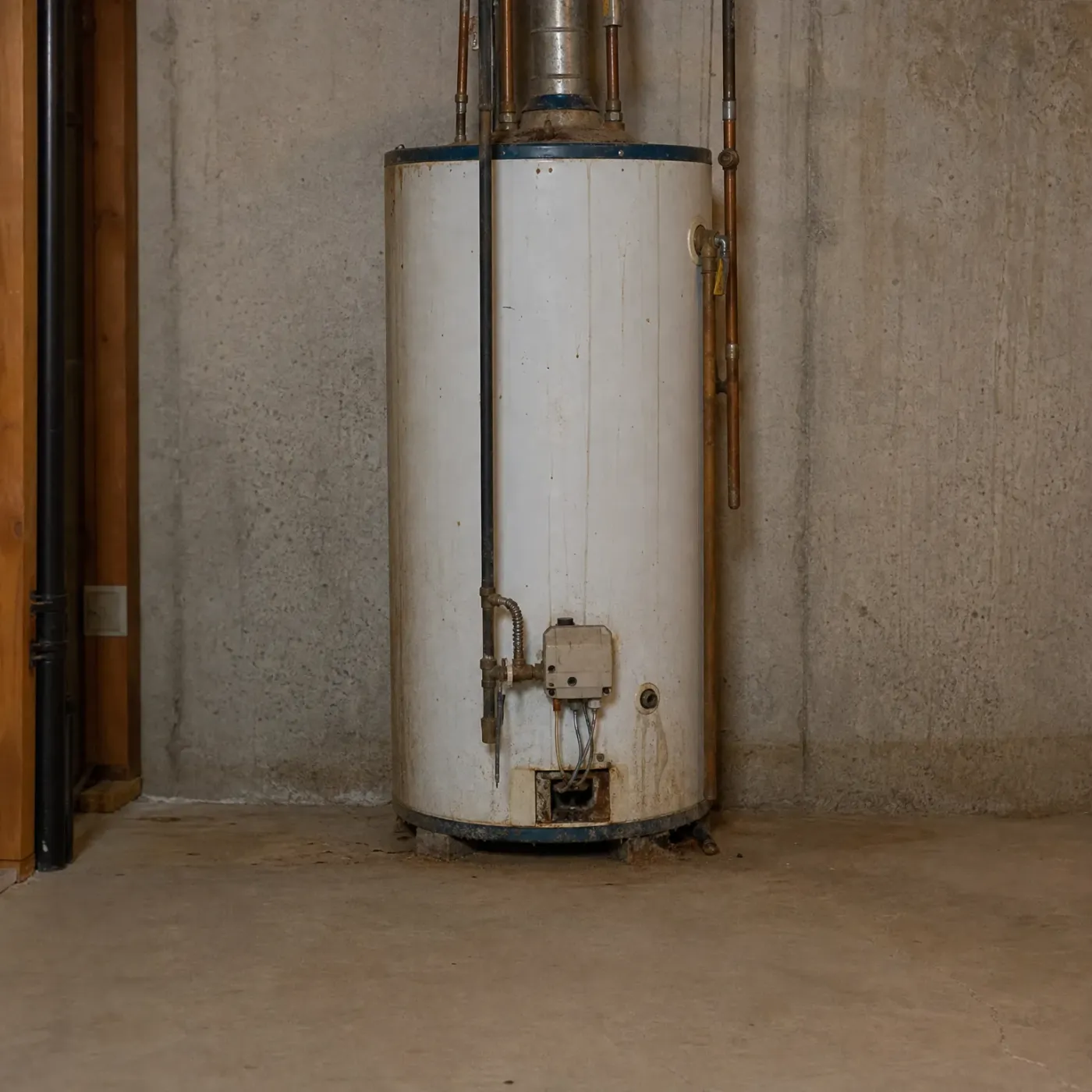
Rust has spread across the tank shell, which means it's working from the inside too. The relief valve discharge pipe is the path water takes if pressure builds past what the tank can hold. Once a tank rusts like this, patching it isn't an option. The fix is a new water heater, not a repair.

Why do electric water heaters in Arnold only last 8 to 12 years?

You've seen the range before, maybe on a sticker inside the panel or from a plumber years back, and it still seems short for something that just sits there holding water. It isn't running a motor or spinning anything. So the question is fair: what's actually wearing out inside that tank to put a ceiling on it at 8 to 12 years instead of twenty or more?

The glass lining cracks, and once it does, the steel tank underneath has no protection left

Every tank water heater has a steel tank coated inside with a thin layer of glass, and a rod of magnesium or aluminum, called the anode rod, that corrodes on purpose so the steel doesn't have to. That rod gets used up over years of heating cycles. Once it's gone, or the glass lining has worn through in spots, the steel is exposed directly to water and starts to rust. Rust doesn't stop once it starts, and it doesn't patch. Jefferson County water runs through that tank daily, heating and cooling it, expanding and contracting the metal each time, which is part of what wears the lining down over those 8 to 12 years.

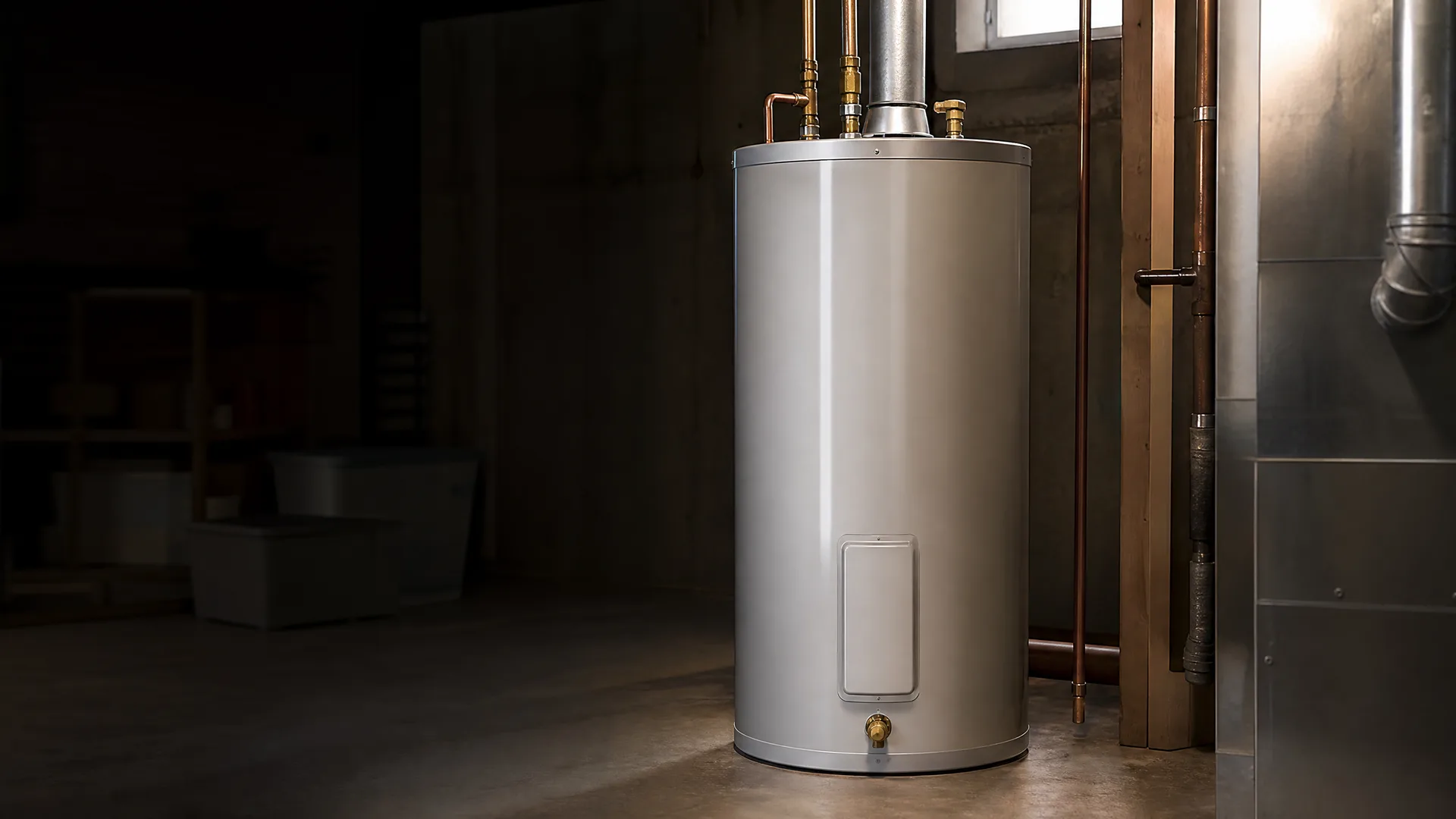
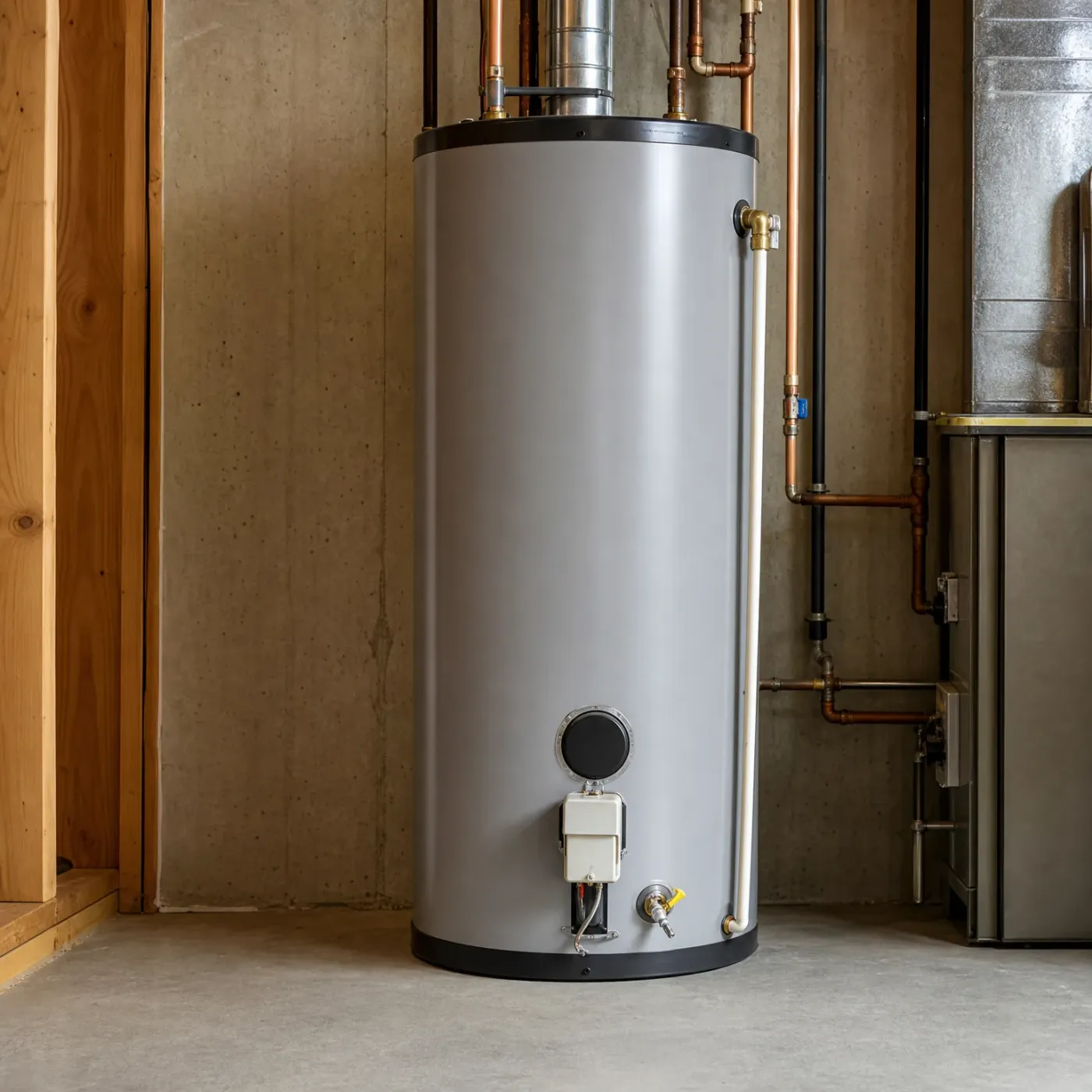
A gray cylindrical water heater stands on a concrete floor against a concrete wall, with copper and black pipes running overhead and a metal duct and dark equipment cabinet to the right.

Still doing its job

Copper lines are clean and the flue sits tight at the top. No rust at the base or the fittings, and the drain valve isn't weeping. A tank like this is heating on schedule and nothing around it needs a second look yet.

An old white gas water heater with rust stains, copper pipes and a flue stands in the corner of a concrete-walled room with a bare concrete floor and a wooden door frame at left.

On borrowed time

Rust has worked its way down the flue pipe and into the paint on the tank itself. That staining means moisture is getting out somewhere it shouldn't. Once a tank looks like this, a leak at the base is usually not far off.

Replace Now or Wait and Watch

Replace now

  • At 8 to 12 years old, a tank can fail without warning, and a burst tank means water across the floor and whatever sits near it.
  • A new unit comes with a warranty, so parts like the element or thermostat are covered if something goes wrong early on.
  • Electric rates in Jefferson County are low, and a new water heater recovers hot water faster than one with years of sediment built up.
  • Scheduling the swap on your own terms beats an emergency call when the old tank finally gives out, often on a weekend.
  • A fresh tank means no rust creeping up the fittings or weeping from the drain valve, so you aren't checking the floor every week.

Wait and watch

  • If the tank is heating on schedule and holding pressure with no rust at the fittings, there's no reason to replace it yet.
  • A unit still under warranty costs nothing extra to keep running if the element or thermostat needs attention.
  • Replacing early means paying for years of service you haven't used up, especially if the tank shows no signs of trouble.
  • Checking the anode rod and flushing sediment once a year can stretch the life of a tank that's otherwise sound.
  • If the water heater came with the house, you don't actually know its age, so a quick check is worth doing before deciding either way.
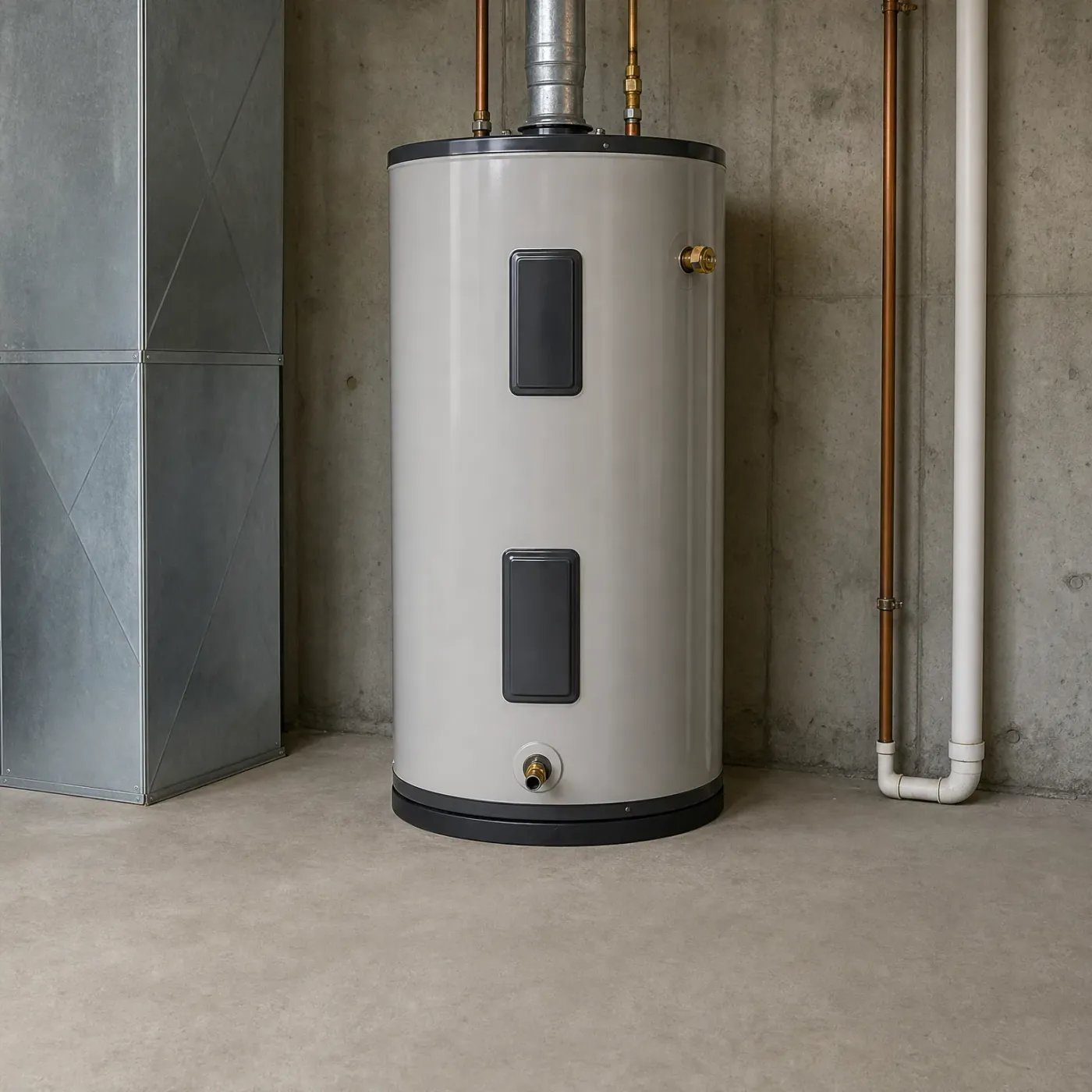
A cylindrical beige water heater with two dark access panels stands on a concrete floor against a concrete wall, with copper and white pipes to the right and sheet-metal ductwork to the left.
No rust at the base, no staining on the floor, and the panels still seal tight over the elements.
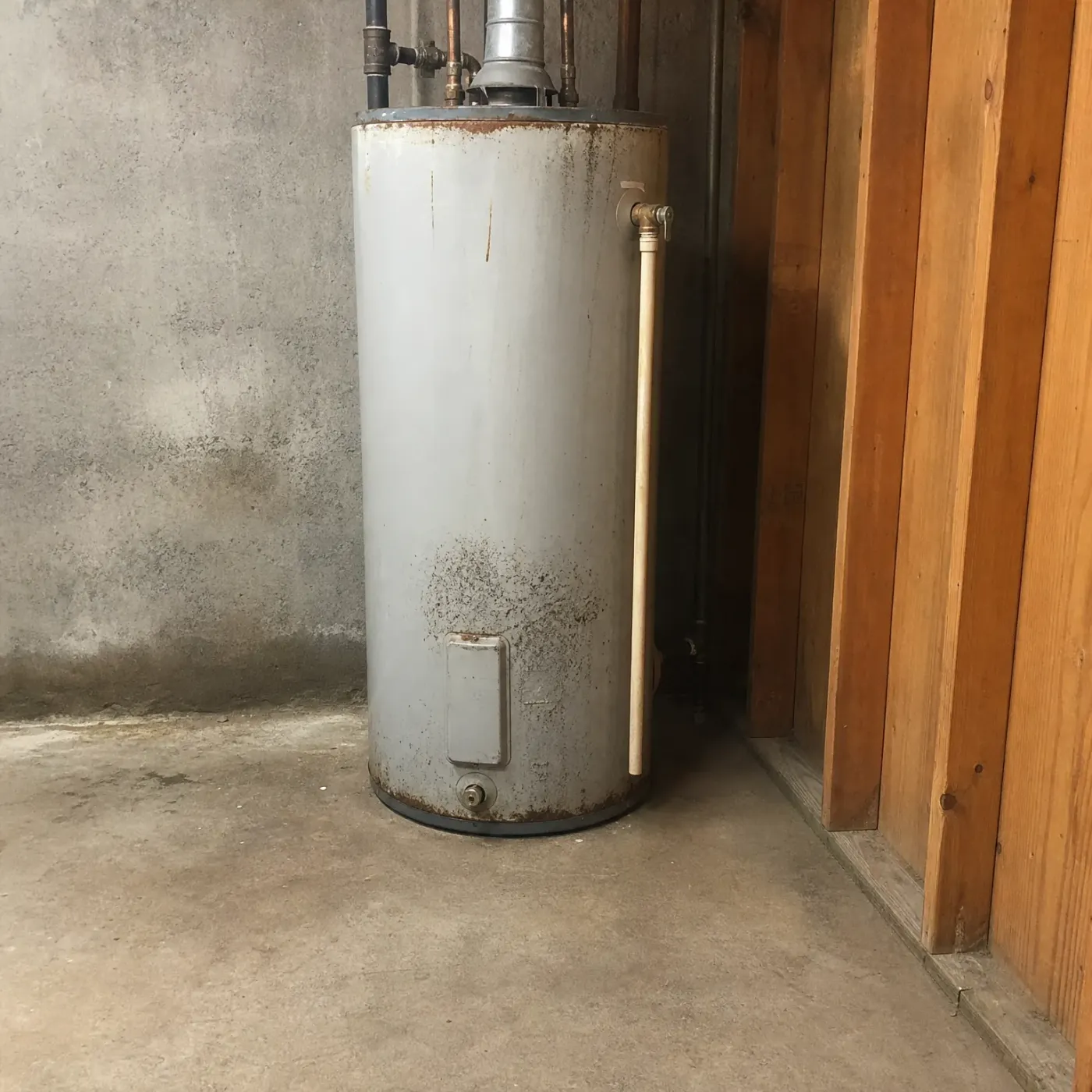
A rusting gray cylindrical water heater with copper pipes and a drain tube stands on a concrete floor against a concrete wall beside vertical wood paneling.
Rust has eaten into the tank wall and scorched the floor underneath, with the relief valve all that stands between this and a flood.
  1. Cold water enters the tank through the dip tube at the bottom.

  2. The lower electric element heats the water closest to it first.

  3. Heated water rises while the thermostat tracks the temperature inside.

  4. The upper element kicks in if that top section runs cold.

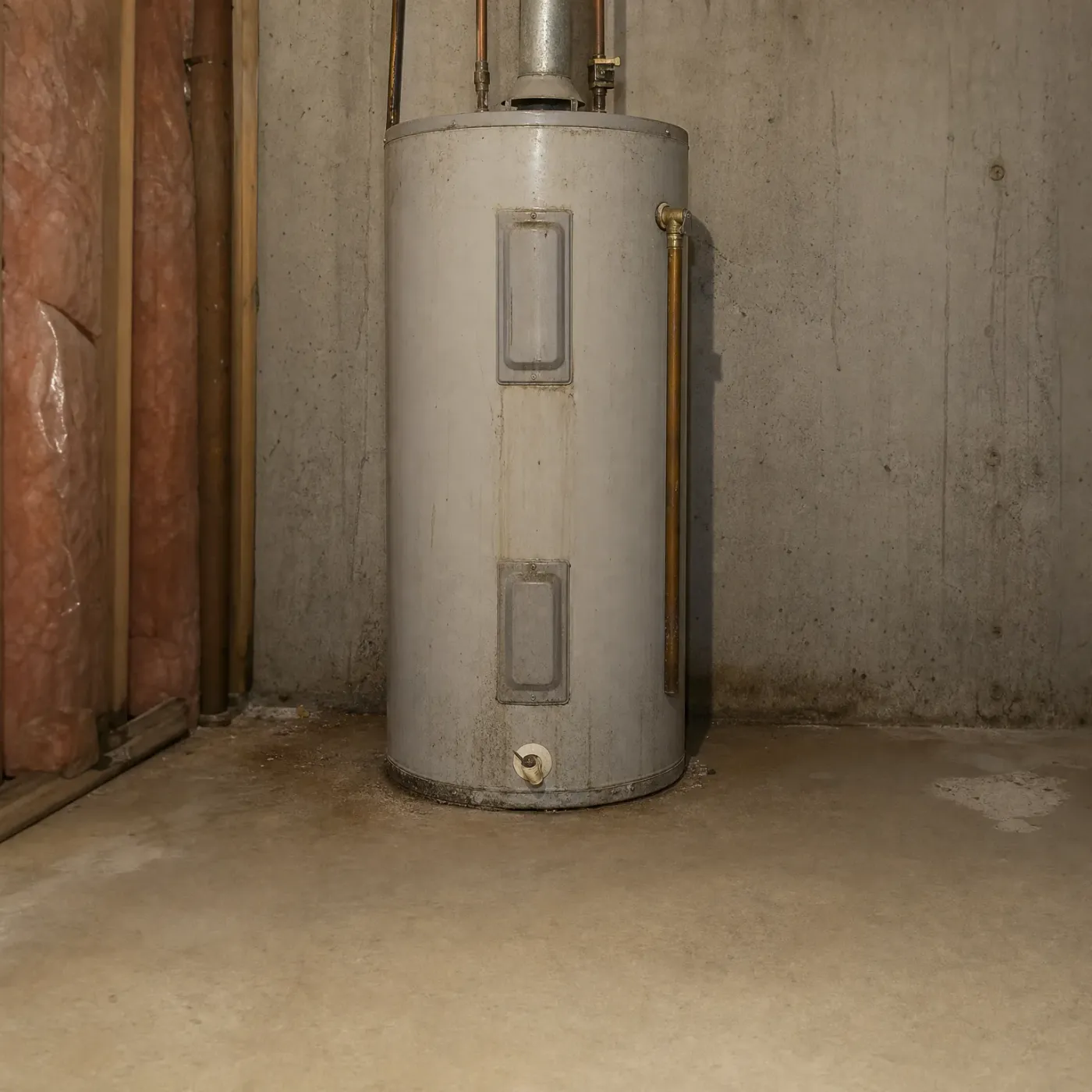
A gray cylindrical water heater with two access panels and copper piping stands in the corner of a concrete-walled basement next to exposed pink insulation.
Before you get your water heater installation
A large gray cylindrical gas water heater stands in a concrete-walled basement corner, connected to copper and black pipes and a metal flue, with ductwork at left.
After you get your water heater installation
A gray cylindrical water heater stands on a concrete floor in a basement beside copper pipes along a concrete block wall, with galvanized sheet-metal ductwork to the left.

Explain it one time

A licensed installer who works in Jefferson County gets your project.

Skip collecting and comparing quotes for the new water heater.

Answer a few questions

Sending the form costs nothing.

A closed silver laptop and a white cup of coffee on a saucer sit on a wooden table in front of a wooden chair, a plain beige wall, a potted leafy plant and a window with greenery outside.

What a tank past its years means for your house

A tank in the 8 to 12 year range doesn't always warn you before it fails. It can hold pressure fine for months, then let go overnight, and an electric water heater that bursts puts water across the floor of whatever room it's in, plus anything stored nearby. If yours sits in a closet or utility room with no drain pan under it, that's water finding the nearest door or the floor below.

Most people don't have a plumber they already trust for this, so when a tank starts failing they're calling around, explaining the same thing to three different companies, and waiting on quotes that don't line up with each other. You can skip that part. A request here goes to one licensed plumber working in Arnold, someone who installs these year-round and knows which brands hold up in this water and which elements tend to burn out early.

A large weathered ceramic vase and a shallow wooden bowl sit on a rustic wooden table beside a window with linen curtains, with a blurred sofa with cushions and a hanging fabric panel in the background.
A rusty cylindrical water heater with copper pipes and a flue stands against a concrete block wall in a dim basement, lit by a single bare bulb at the right.

You're down in the utility room after dinner, flashlight in hand because the bulb back there burned out months ago. You crouch to check the pilot light out of habit, except this one's electric, so you're really just looking at it. That's when you see the rust, streaked down the side of the tank and pooling faint and orange at the base where it meets the concrete floor. The floor there is damp, not wet, just a dark ring spreading slow. Outside it's one of those cold snaps Jefferson County gets in January, and you're doing the math on how many more nights you can leave it running before it lets go.

Power here costs 13.42 cents per kilowatt-hour

At 13.42 cents a kilowatt-hour, running an electric water heater here costs less than it does in a lot of the country. That makes replacing an old one less of a hit to the monthly bill than you might expect, and it's worth factoring in when you're weighing a bigger or more efficient tank against the one you have now.

EIA-861 2025

The anode rod inside the tank is what actually corrodes first. It's there to draw rust away from the steel tank wall, and once it's used up, the tank itself starts rusting instead.

Most tanks aren't built to have that rod replaced on a schedule, so when it's spent, the countdown on the tank starts. That's a big part of why 8 to 12 years is the window, not a guess.

What does a water heater in your house need to handle?

  • 2.58 people per household on average

    With 2.58 people in the average household here, that tank is cycling through showers, laundry and dishes most of the day, which wears on the elements faster than a light-use household would.

  • Half the homes here were built by 1987

    Half the homes in Jefferson County were built in 1987 or earlier. If yours is one of them, the water heater may not be the original, and whatever's in there now has its own clock running.

  • 57.5% of homes heat with electricity

    57.5% of homes here heat water with electricity. That's why the element and thermostat, not a burner or pilot, are usually what fails first on a tank in this area.

ACS 2020-2024

Where your water heater stands

  • Most water heaters in Arnold hold up for 8 to 12 years before rust or a failed element ends the run.
  • Rust at the base, slow recovery or a popping tank are the signs that unit is closer to the end than the start.
  • A licensed local contractor who works on these tanks all year already knows which parts fail first in this area.
  • Routing the job to one contractor means one visit and one quote, not a round of calls to sort through.
  • Once you know where your tank stands, the only decision left is whether to wait it out or replace it now.

Eight to twelve years is the window, and most tanks in Arnold fall somewhere in it before rust or a failed element brings the run to an end. Once you've checked for the signs, rust at the base, slow recovery, a tank that's started popping, you have a good idea whether yours is early, late, or already past due. Nothing about that changes just because the tank is still running today. A unit can hold pressure for months after it starts showing wear, then fail without much warning.

What you do with that is up to you, but you don't have to sort it out alone or hand it to whoever picks up the phone first. A contractor who works on water heaters in this area all year has seen which parts give out first, which tanks make it past twelve years and which don't, and what the rust at your base is actually telling you. That's not guesswork for someone who does this every week here.

Routing the job through one contractor also means one visit, one assessment of the tank, and one quote to weigh, instead of explaining the same rust and the same popping sound to three different companies and lining up their numbers afterward. You get a straight read on where your tank stands from someone local who installs and replaces these for a living, and then you decide whether it's worth waiting out or time to replace.

A gray cylindrical water heater with copper pipes and a flue stands on a concrete floor in a dim basement, with metal ductwork and storage bins nearby.

No quotes to chase

Step 1 of 3: Equipment