





Get Hot Water Missouri

Hot water smells like rotten eggs in Parkville, MO

Skip calling shops to ask who repairs water heaters in Platte County.

Skip the search

That rotten egg smell comes from hydrogen sulfide gas forming inside the tank, usually because the anode rod inside your water heater is reacting with the water. Most tanks have a magnesium anode rod that attracts corrosion so the steel tank itself doesn't rust, and bacteria that live naturally in water can react with that rod and give off the smell. It shows up more with well water, but Parkville homes on city water get it too, especially if the heater has sat unused for a while or the water has more sulfate in it. It is not usually a sign of a gas leak. It is not safe to ignore either, since the water sitting in that tank can carry bacteria along with the odor. A plumber can flush the tank, test the water, and replace the anode rod with one that won't react the same way, which clears the smell for good.

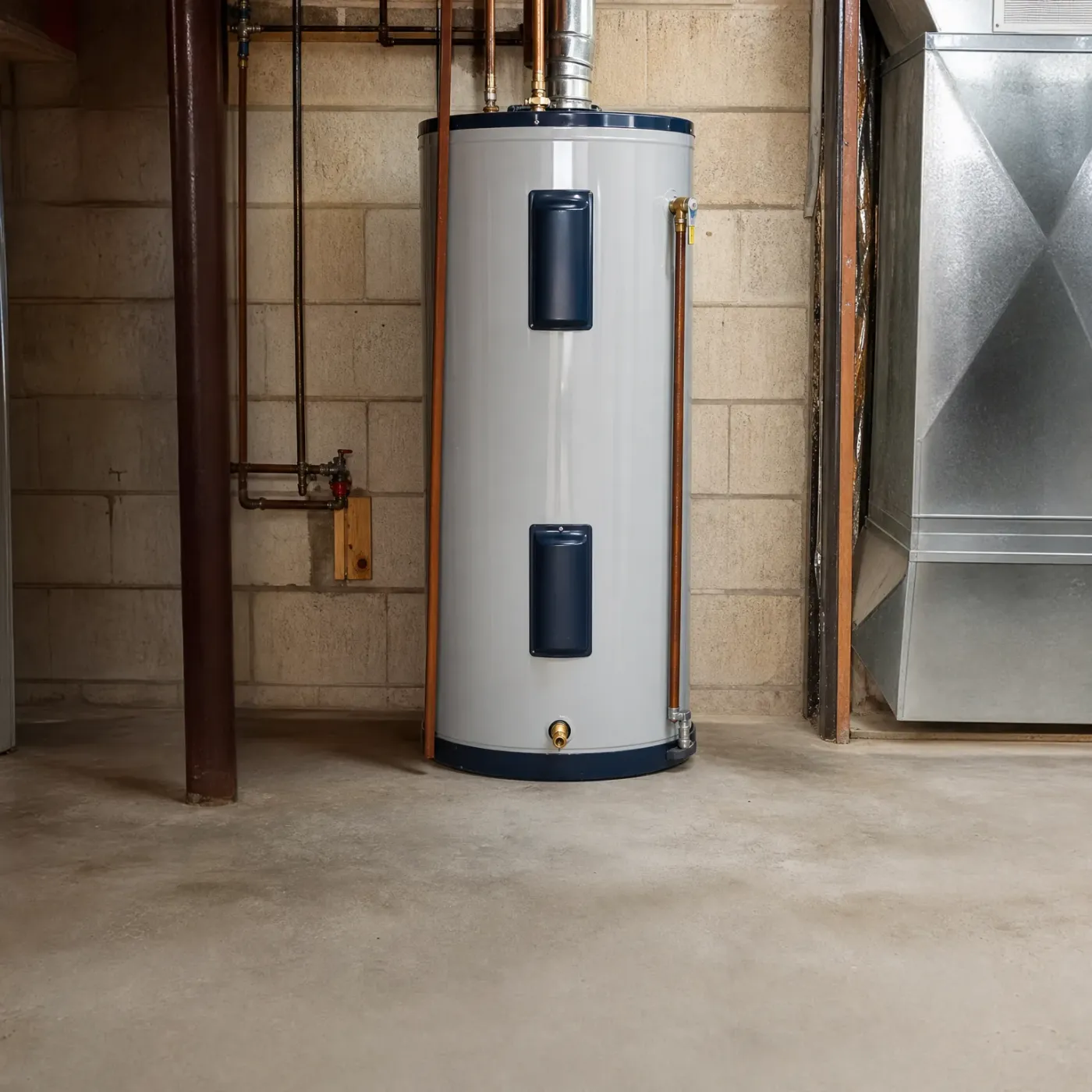
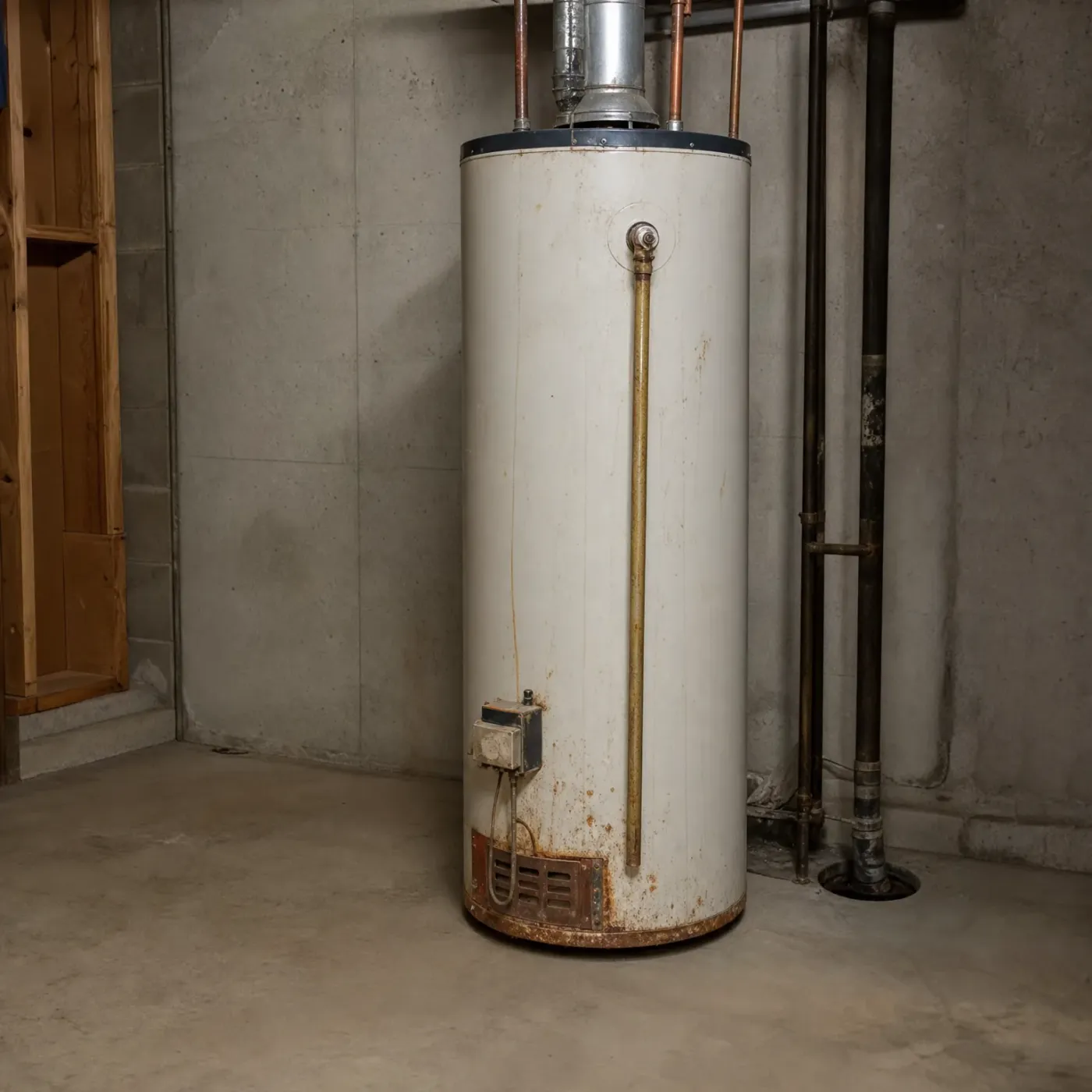
A white cylindrical water heater stands against a plain wall in a room with a concrete floor, connected to copper and metal pipes with a small expansion tank mounted on a block wall at left.

Why the smell comes and goes

If the water heater sits unused for a few days, the smell often gets stronger. A house left empty over a long weekend, or a water heater in a basement that doesn't get much use, gives the sulfur bacteria more time to react with the anode rod. Run the hot water for a minute and the smell may fade, then come back once the tank sits again. That pattern points to the rod, not the water supply.

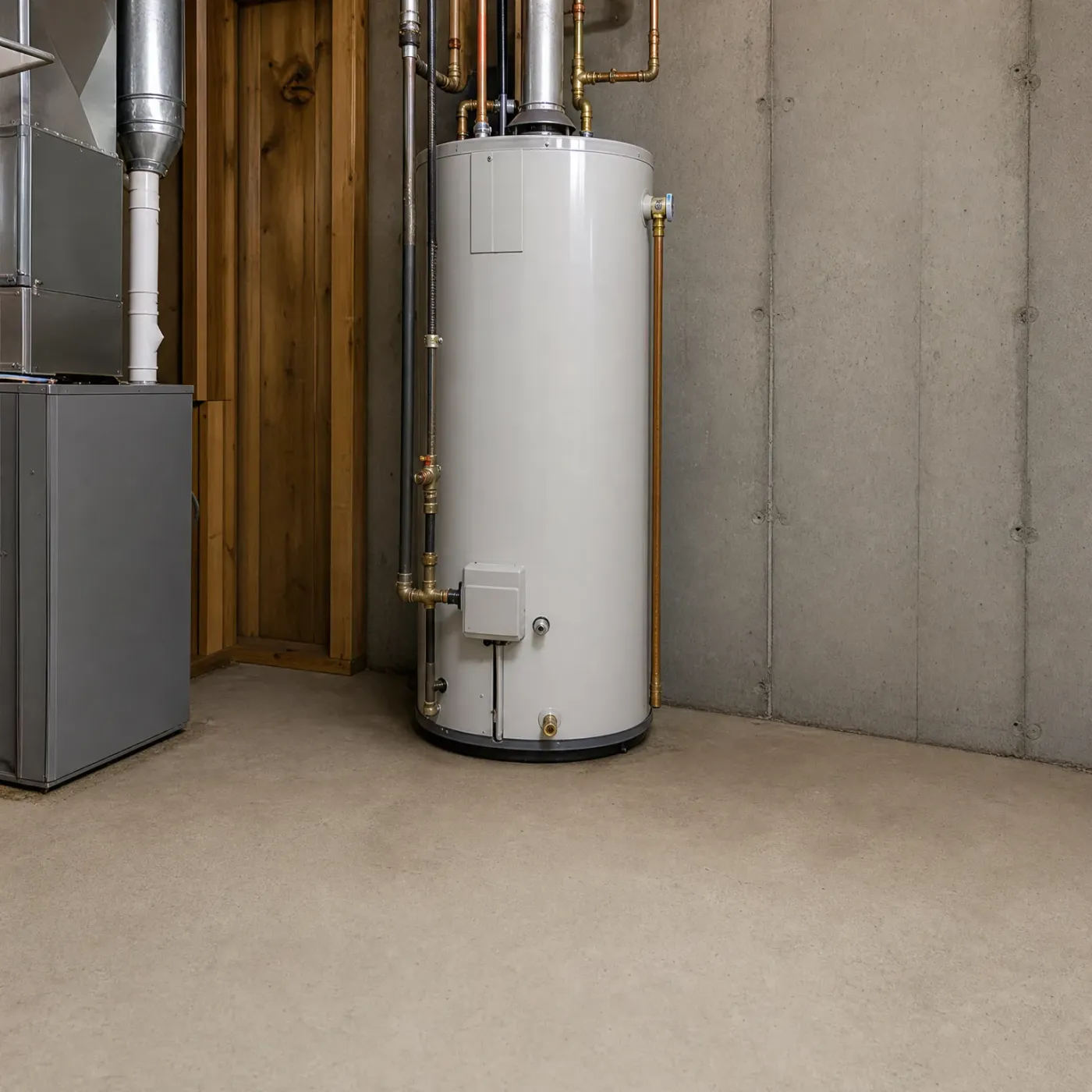
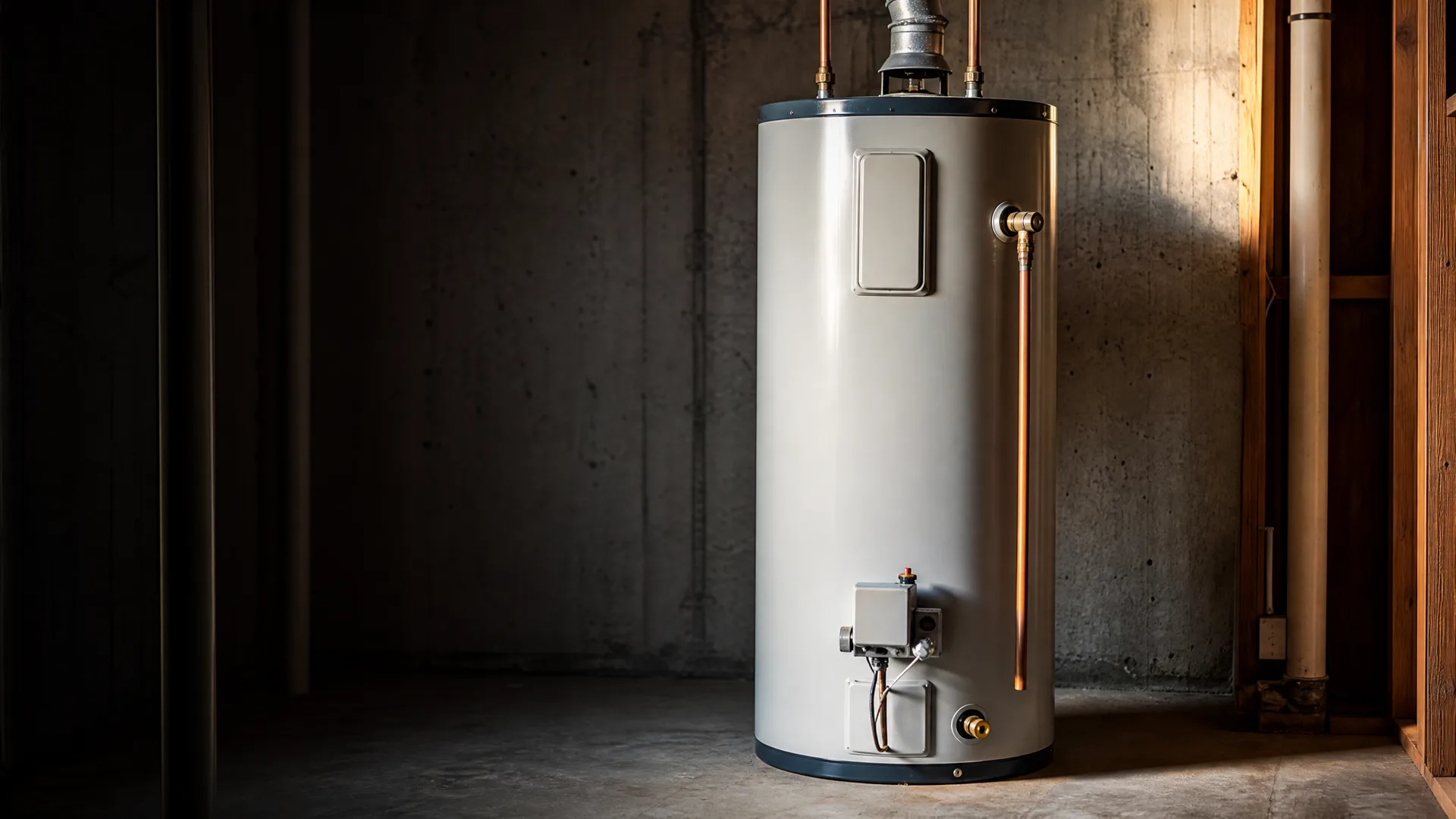
A beige cylindrical water heater on a raised concrete pad in a corner, with copper and metal pipes above it, an exposed wood stud, and a gray metal appliance at right.

Well water makes it worse

Some homes around Parkville and the rest of Platte County are on well water instead of city water. Well water tends to carry more sulfate-reducing bacteria than treated city water, and that bacteria feeds the reaction that produces the smell. A home on a well with this problem may need a different anode rod, usually aluminum or zinc instead of magnesium, since magnesium reacts more strongly with the bacteria that cause the odor.

Anode Rod or Tank Flush

Anode Rod Swap

  • Replacing the magnesium rod with an aluminum or zinc one often stops the reaction that produces the smell.
  • Zinc rods resist sulfur bacteria better and are the usual fix when the smell keeps coming back after a flush.
  • The old rod gets pulled and checked first, since a rod that's worn down to the wire needs replacing anyway.
  • This works on tanks where the water itself, not the tank, is the source of the odor.
  • A contractor can tell during the job whether the rod was the cause or just one part of it.

Tank Disinfection

  • Draining the tank and flushing it with a chlorine or hydrogen peroxide solution kills the bacteria living in the sediment.
  • This is the usual first step when the smell shows up only in hot water, not cold, across every faucet in the house.
  • Sediment at the bottom of the tank gives bacteria a place to live even after a quick drain, so the flush has to sit before rinsing out.
  • Some tanks need this done more than once if the bacteria were established before the first flush.
  • A contractor can check the water heater's thermostat setting at the same time, since water held below 140 degrees lets sulfur bacteria grow back faster.
A middle-aged man with grey hair and a beard, wearing a grey knit sweater, sits on a light sofa in a sunlit living room with a houseplant, wooden cabinet and framed landscape picture behind him.
A man with greying hair and a beard in an olive sweater sits on a sofa in a living room, looking to his left, with an armchair, round side table and large glass doors onto trees behind him.
A gray-haired bearded man in a dark blue shirt over a white t-shirt sits on a leather sofa in a living room with built-in shelves, a floor lamp, an armchair and large windows, looking off to the side.
A man with gray-brown hair and stubble in a dark sweater sits on a light-colored sofa in a living room, looking off to the side, with a houseplant, framed picture, shelving and a sunlit window behind him.

Why does only my hot water smell like rotten eggs?

You've checked the cold tap and it runs clean. Only the hot water carries that rotten egg smell, which makes it feel like a plumbing mystery rather than something obvious. It points to one place: whatever is happening inside the tank itself, not the water coming into your house, since Parkville's water supply isn't the source of a smell that only shows up on one side of the faucet.

Because the reaction only happens inside the water heater tank

Cold water comes straight from the supply line and never touches the anode rod, so it stays odor free. Hot water passes through the tank first, where the rod sits in the standing water and reacts with sulfate-reducing bacteria to form hydrogen sulfide gas. That gas only shows up once the water has sat in the tank and picked up the smell, which is why a shower runs clean cold but turns foul the moment you switch to hot. If the smell were coming from the municipal supply or a well, it would show up at both taps, not just one.

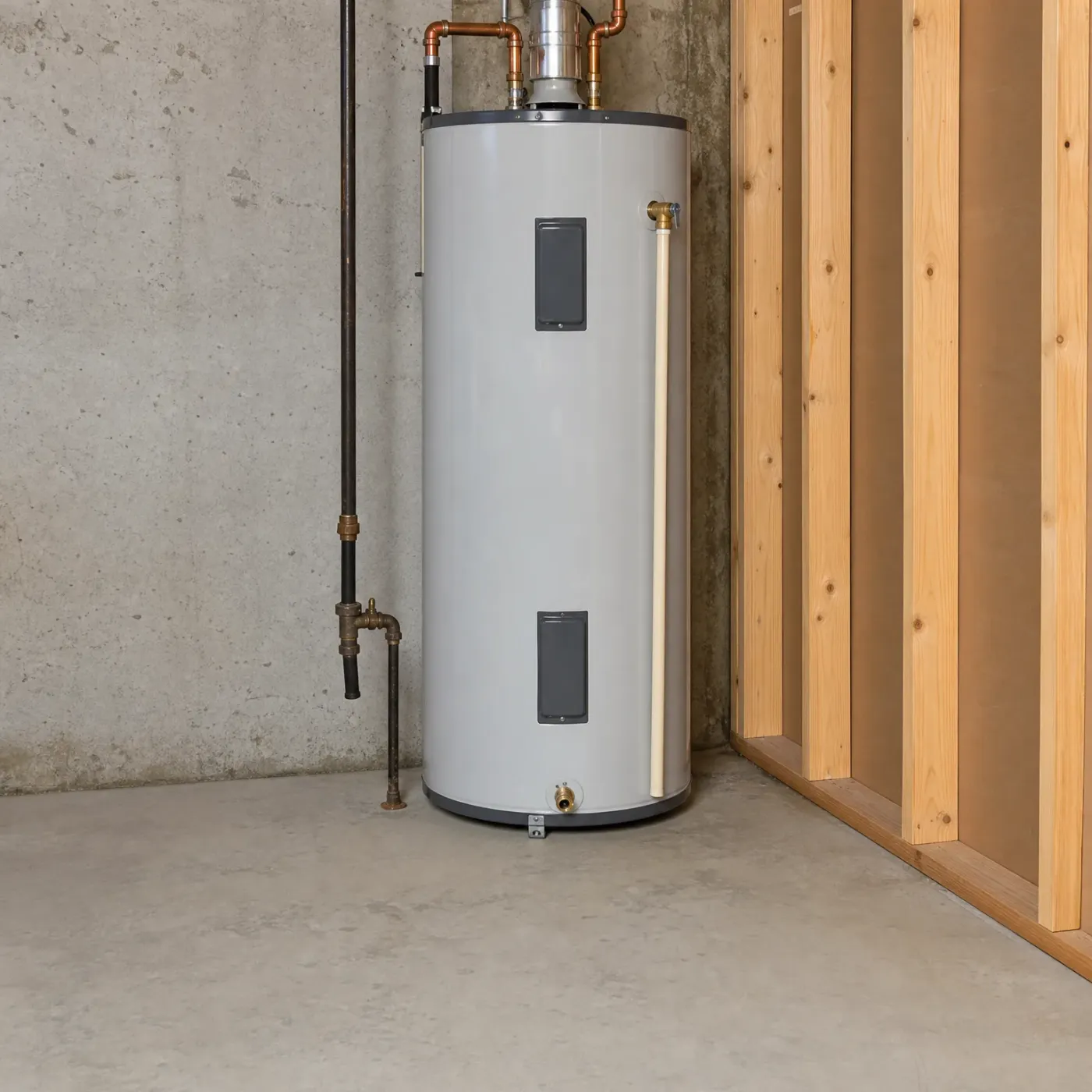
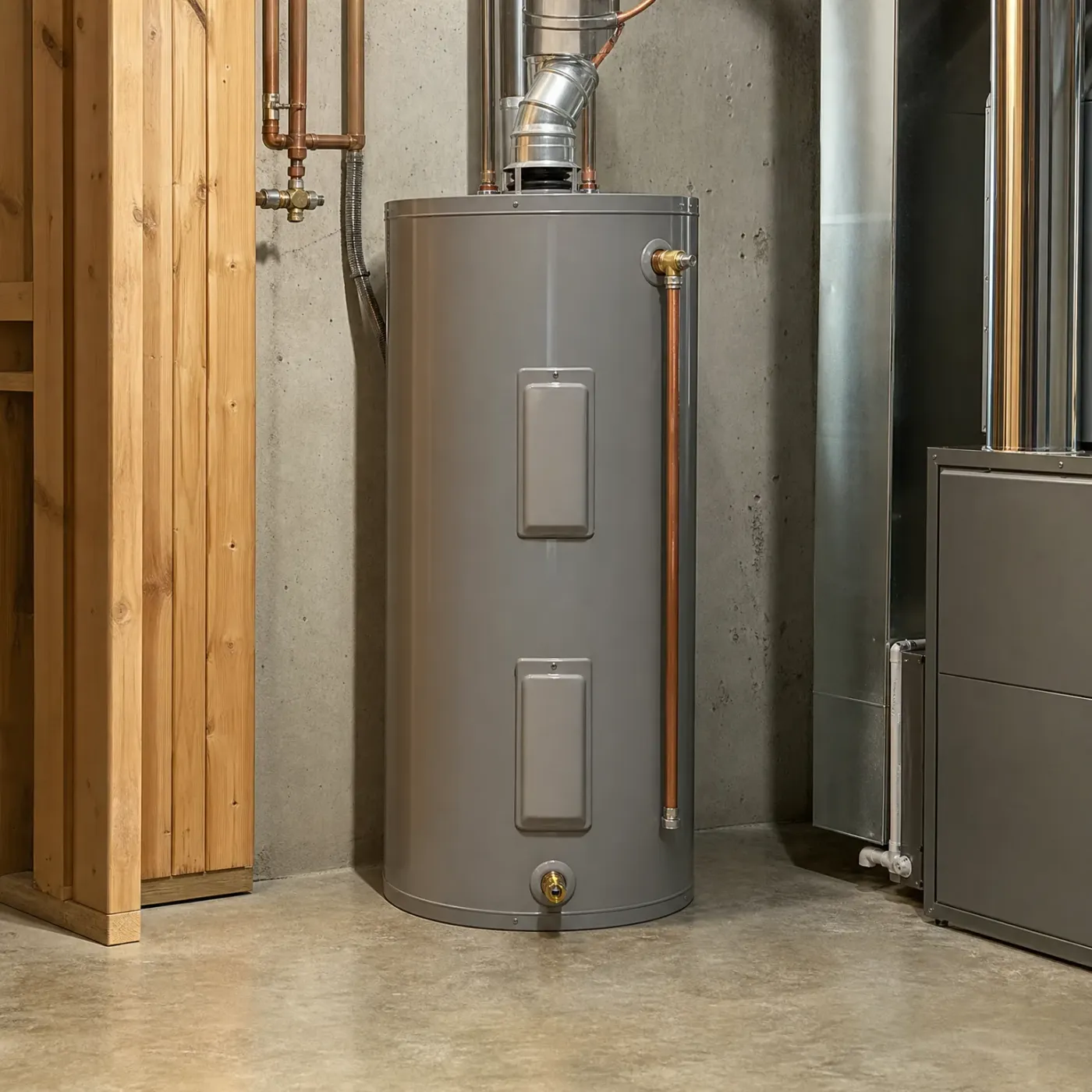
A gray cylindrical water heater with two access panels and copper piping stands against a concrete wall in a basement, beside wood framing and metal ductwork.

Smell gone, tank sound

A water heater like this one, properly grounded and vented, runs without producing that odor. Clean copper lines, a working pressure relief valve, and a tank that isn't heavily corroded inside are signs the anode rod is still doing its job.
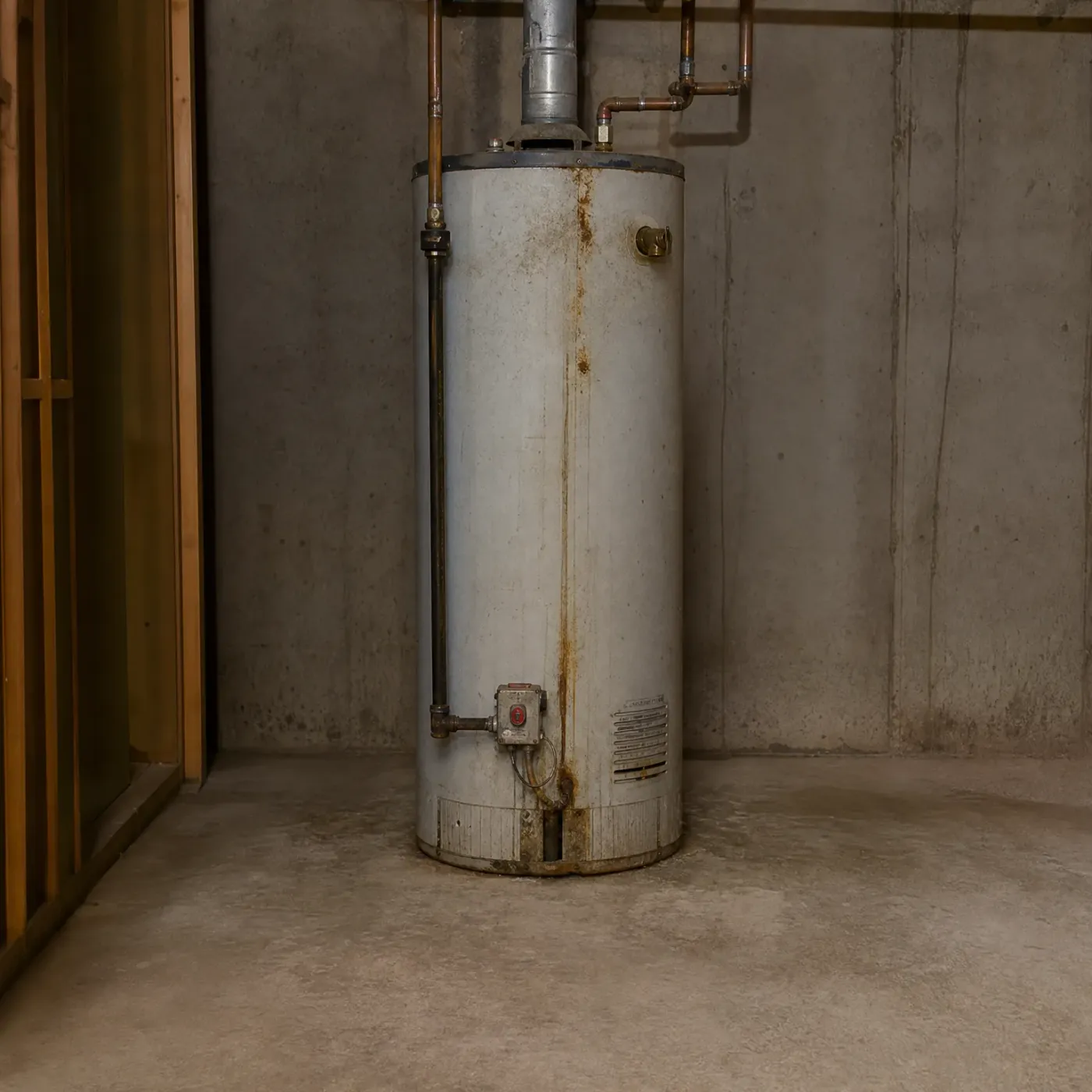
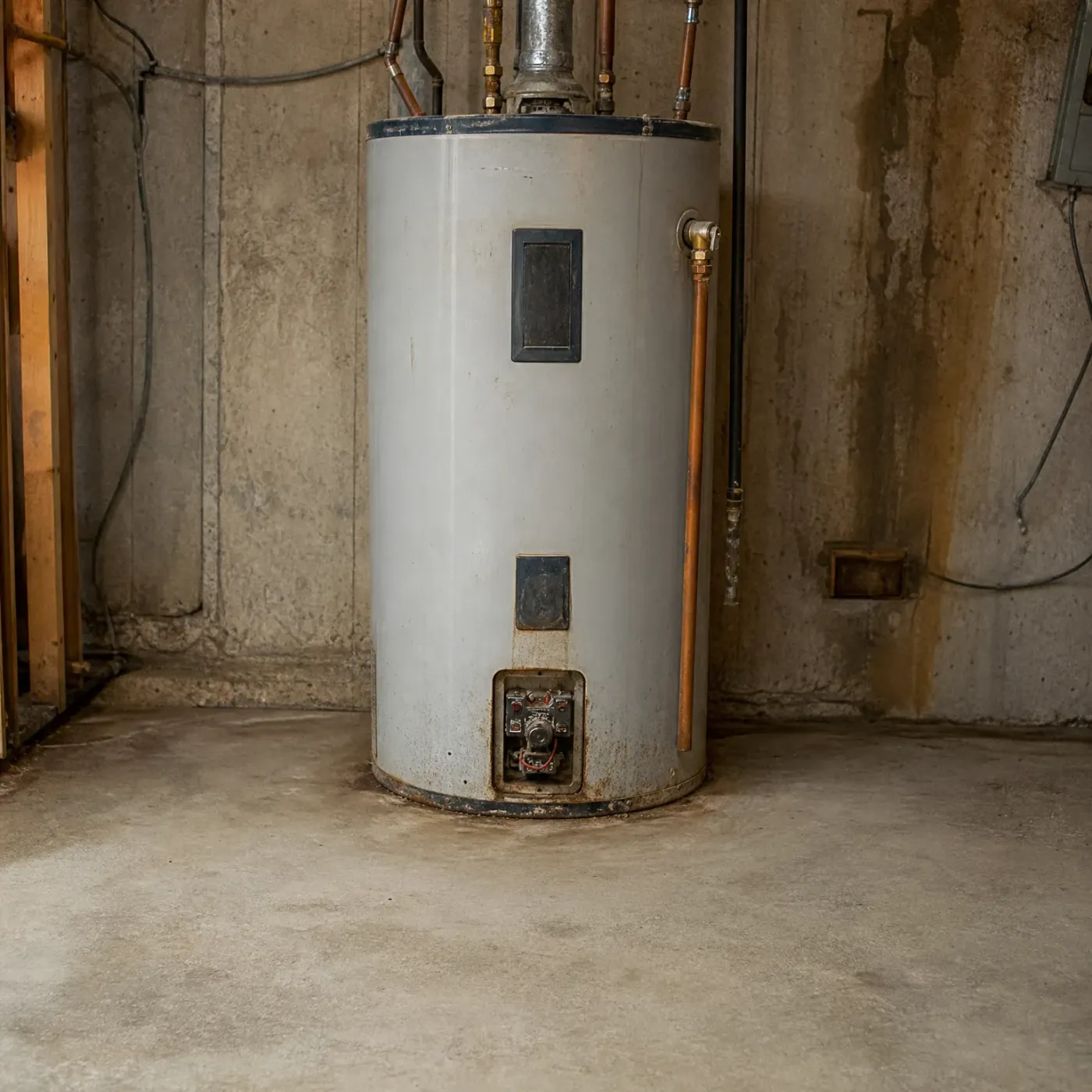
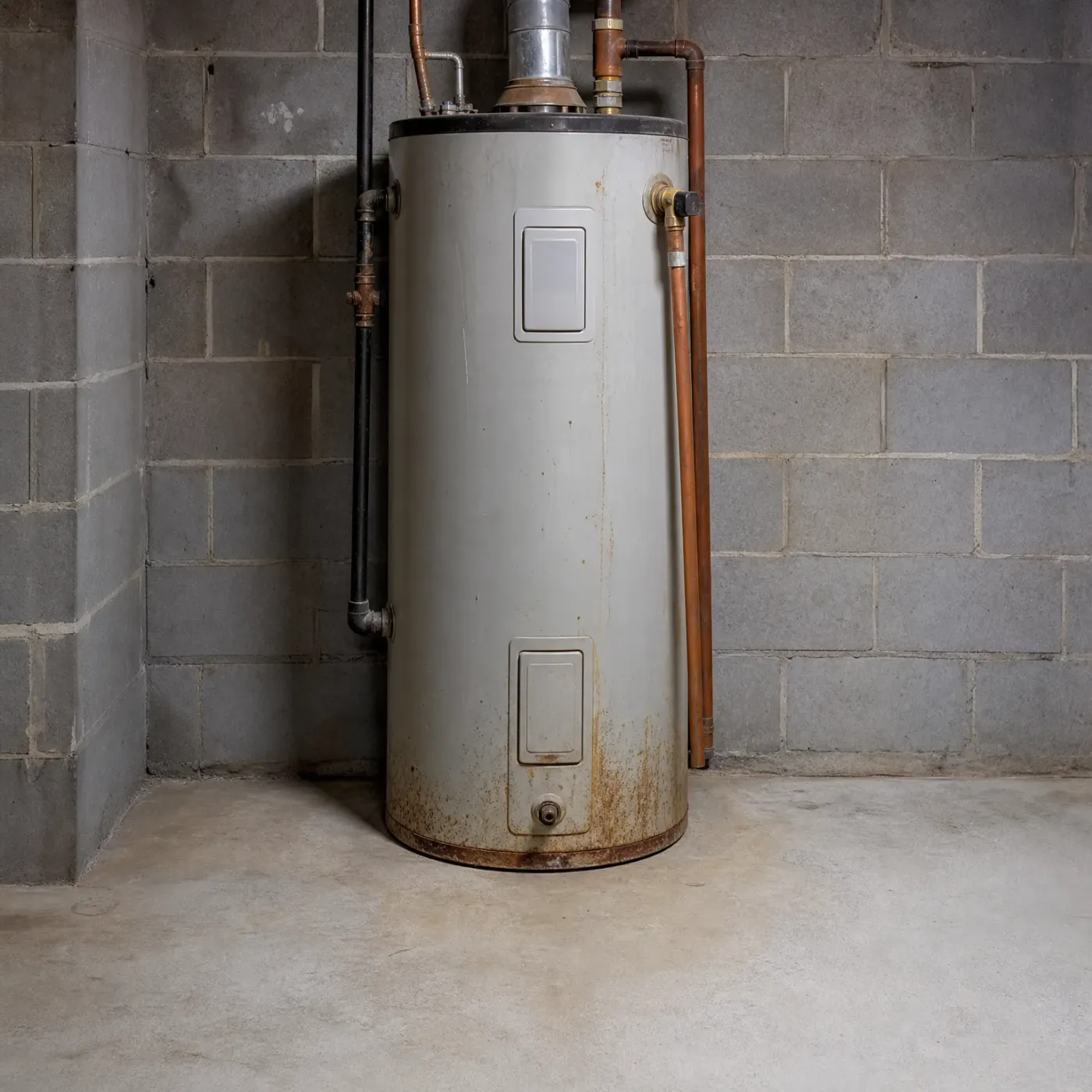
An aging rust-streaked gas water heater with copper and galvanized pipes stands against a bare concrete basement wall beside wooden stud framing.

Rust like this means more than a smell

This gas tank shows heavy rust around the base, near the gas valve and thermostat. Corrosion at that stage often means the tank itself is breaking down, not just the anode rod, and a flush or rod swap may not be enough to fix it.

A white cylindrical water heater with copper piping and a gas control valve stands against a stained concrete basement wall on a bare concrete floor.
Before you get your water heater repair
A white cylindrical water heater with two dark access panels stands on a concrete basement floor against a concrete block wall, with copper pipes, a flue duct above, and sheet metal ductwork at right.
After you get your water heater repair

Skip the calls to every shop

A water heater that smells like rotten eggs isn't something to keep flushing and hoping it clears. Figuring out whether it's the rod reacting with your water or bacteria built up in the tank takes someone who's pulled rods out of enough Platte County water heaters to know what the water here tends to do to magnesium. That's a different call than it would be in a town with different water, and it's worth having someone local make it rather than guessing from a forum thread. Request this and the job goes to one licensed contractor who works on this equipment regularly, not a handful of companies racing to call you back first. You skip the part where you search around, explain the smell to three different people, and sort through quotes that don't tell you much. You still have a water heater that needs attention. But you're not the one tracking down who should look at it.

What This Means For Your House

  • Water sitting in the tank for days picks up more sulfur odor before anyone turns on a tap.
  • A smell that only shows up on hot water points to the tank or the rod, not the city supply.
  • Running the hot water elsewhere in the house, like a basement sink, can carry the same smell to every fixture.
  • Leaving it alone lets the rod keep breaking down, which can let the tank itself start corroding underneath.
  • A water heater that's never flushed holds onto the sediment that feeds the bacteria causing the smell.
  • Guests or family staying over are the first to notice it, since you get used to it faster than they do.

Live with it long enough and you stop smelling it. Everyone who's dealt with a rotten egg smell in their water heater says the same thing: you go nose blind after a week or two, and then a neighbor or a houseguest walks in and asks what that smell is. That's usually the first sign something's actually wrong, not just a one time fluke. The smell itself isn't dangerous to breathe at the levels a water heater produces, but it tells you something is happening inside that tank that isn't going to fix itself. A magnesium rod reacting with your water will keep reacting until it's replaced or swapped for zinc. Sediment sitting at the bottom of a tank that's never been flushed gives the bacteria that cause the smell more to feed on, and that buildup doesn't go away on its own either. Leave it long enough and you're not just dealing with a smell anymore. A rod that's fully broken down stops protecting the tank, and the steel underneath starts taking the corrosion instead. That's a much more expensive problem than a rod swap or a flush. If you've noticed the smell getting worse after the house sits empty for a few days, or if it shows up at the bathroom sink the same as the basement one, that's useful information for whoever ends up diagnosing it. Write it down before you forget which fixtures you checked.

A white cylindrical gas water heater with copper and steel pipes stands against a concrete basement wall beside a gray furnace and wood-paneled wall.
A water heater working the way it should, with no rod reaction and no smell to deal with.
A rust-streaked cylindrical water heater with copper and black metal pipes stands in a concrete-block basement corner on a bare concrete floor.
Rust like this along the base and seams means the tank is failing, not just the water inside it.

Power here costs 13.02 cents per kilowatt-hour

At 13.02 cents per kilowatt-hour, running an electric water heater here costs less than in a lot of places. That makes it tempting to just let a smelly tank run while you decide what to do. But a low power bill doesn't fix a rod that's reacting with your water, and the smell won't wait on your schedule.

EIA-861 2025

A light gray cylindrical water heater with two access panels stands on a concrete floor against a concrete wall, with copper and black pipes beside it and an unfinished wood stud wall to the right.

Working as it should

This tank shows clean copper lines, a working relief valve with its discharge tube, and a drain valve at the base that hasn't needed attention. No rust, no smell. Water sits in a tank like this and comes out the way it went in.

An older white gas water heater with rust staining and an exposed vertical pipe stands against a concrete block basement wall, with a metal flue above and black vertical pipes to the right.

Rod or tank giving out

Rust along the base and up the seams like this means the steel underneath is losing the fight, not just the water inside it. By the time rust reaches the outside of the tank, the anode rod has usually been spent for a while.

A woman with shoulder-length graying hair, wearing a light knit cardigan over a striped shirt, sits in an upholstered armchair and looks off to the side, with a bookshelf and houseplant behind her.
A woman with her hair in a bun holds a sleeping boy against her shoulder, both wrapped in a thick cream knit blanket on a couch in a dim room with a lit lamp, potted plants and a shelf behind them.

Why does my household use hot water the way it does?

  • 2.49 people per household on average

    Platte County households average 2.49 people, so most tanks here cycle through hot water daily instead of sitting unused, which keeps sulfur bacteria from building up as much.

  • Half the homes here were built by 1992

    Half the homes in the county were built in 1992 or earlier, which means half the water heaters in them have had plenty of years for the anode rod to wear down and start reacting.

  • 58.1% of homes heat with gas

    58.1% of homes here heat with gas, and a gas water heater's pilot and burner sit below the tank, which changes where a plumber checks first when that smell shows up.

ACS 2020-2024

A closed laptop and a ceramic mug of coffee on a wooden table, with a blurred kitchen counter, cutting board, utensil jar and plant in the background.

The smell has a cause, and a fix

A rotten egg smell in your hot water comes from the anode rod reacting with the water inside your tank, or from sulfur bacteria that have built up there. Swapping the rod for aluminum or zinc, or flushing the tank, clears it in most Platte County homes. A tank with heavy rust at the base or seams is a different problem, and that one calls for a new water heater rather than a rod swap.

You could spend an afternoon calling around Platte County, explaining the smell to three different companies, and comparing what each one quotes you to fix it. Or you could have a licensed local plumber who pulls rods out of this kind of water every week take a look and tell you straight whether it's the rod, the bacteria, or the tank itself. One call, one answer, and you know which one you're dealing with.

A living room with a cream sofa and knit throw beside a window, with a wooden coffee table in the foreground holding a round woven tray, a small bowl, and a speckled vase of green leafy branches.
A cylindrical gas water heater with copper pipes, a flue connection on top, and a control box near the base, standing on a concrete floor against a concrete wall.

Skip calling around

Step 1 of 3: Equipment