
Hot water runs out fast in St. Louis, MO
Get a water heater proCold showers halfway through aren't normal, and in a St. Louis winter you notice fast. A tank that can't keep up might have a failing heating element, a thermostat that's off, or sediment sitting on the bottom and eating into the space meant for hot water. It could also just be sized wrong for what your house needs now. Figuring out which one takes someone who can actually look at the unit, not another guess. Instead of searching through contractors, calling a few, and explaining the same problem over and over while you compare quotes, you can skip straight to someone who already knows gas water heaters and serves homes around St. Louis. Answer a few questions about what's going on and a contractor who handles this kind of repair will reach out to you directly. No list of names to sort through, no repeating yourself. Just a straight path to someone who can look at your tank and tell you what's actually wrong.
Why does my hot water run out so fast?
A shower that goes cold after ten minutes feels like the tank shrank overnight. It didn't. Something changed in the tank itself, and in a St. Louis winter, where incoming water runs colder than it does in July, that change shows up faster and feels worse.
Sediment or a failing part is cutting your tank's real capacity
A tank that used to last through two showers and now quits during the first one hasn't gotten smaller. Sediment builds up on the bottom of a gas tank or around the lower element of an electric one, and it takes up space that used to hold hot water. It also sits between the burner or element and the water, so heating takes longer and recovery slows down. A bad heating element or a thermostat that's reading wrong does the same thing from a different angle: less of the tank is actually getting hot. In winter, St. Louis tap water comes in colder than it does in summer, so the tank has to do more work to reach the same temperature, and a tank that's already behind falls further behind.




A water heater doesn't just hold hot water, it has to keep making it as you use it, and that's where things go wrong. Gas models heat from a burner underneath the tank. Electric models use two elements, one near the top and one lower down, working in sequence. Either way, sediment settles to the bottom over time, and it sits right where the heat is supposed to go in. On a gas unit that layer blocks the burner from reaching the water above it. On an electric unit, if the lower element fails outright, you lose the bottom of the tank entirely and only get hot water from whatever the top element can manage. There's also a dip tube that pushes incoming cold water down to the bottom, where it belongs. When that tube cracks, cold water never makes it down and mixes in near the top instead, right where your hot water is supposed to be waiting. Any of these cuts into how much hot water you actually get before it turns cold.
What's Actually Happening Inside the Tank
- Most tanks hold the heating element near the bottom third, so sediment buildup there shortens the hot water supply before the thermostat even senses a problem.
- A gas water heater's burner sits under the tank, and heavy sediment acts like insulation between the flame and the water, slowing recovery time.
- Electric water heaters have two elements, an upper and a lower, and if the lower one fails, the tank only heats the top portion.
- The dip tube feeds cold water to the bottom of the tank, and if it's cracked, cold water mixes into the hot layer near the top.
- Recovery rate, how fast a tank reheats a full load, drops as sediment coats the heating surface, whether that's an element or a burner.
- A thermostat set too low means the tank is working from a smaller hot water reserve than it was built to hold.
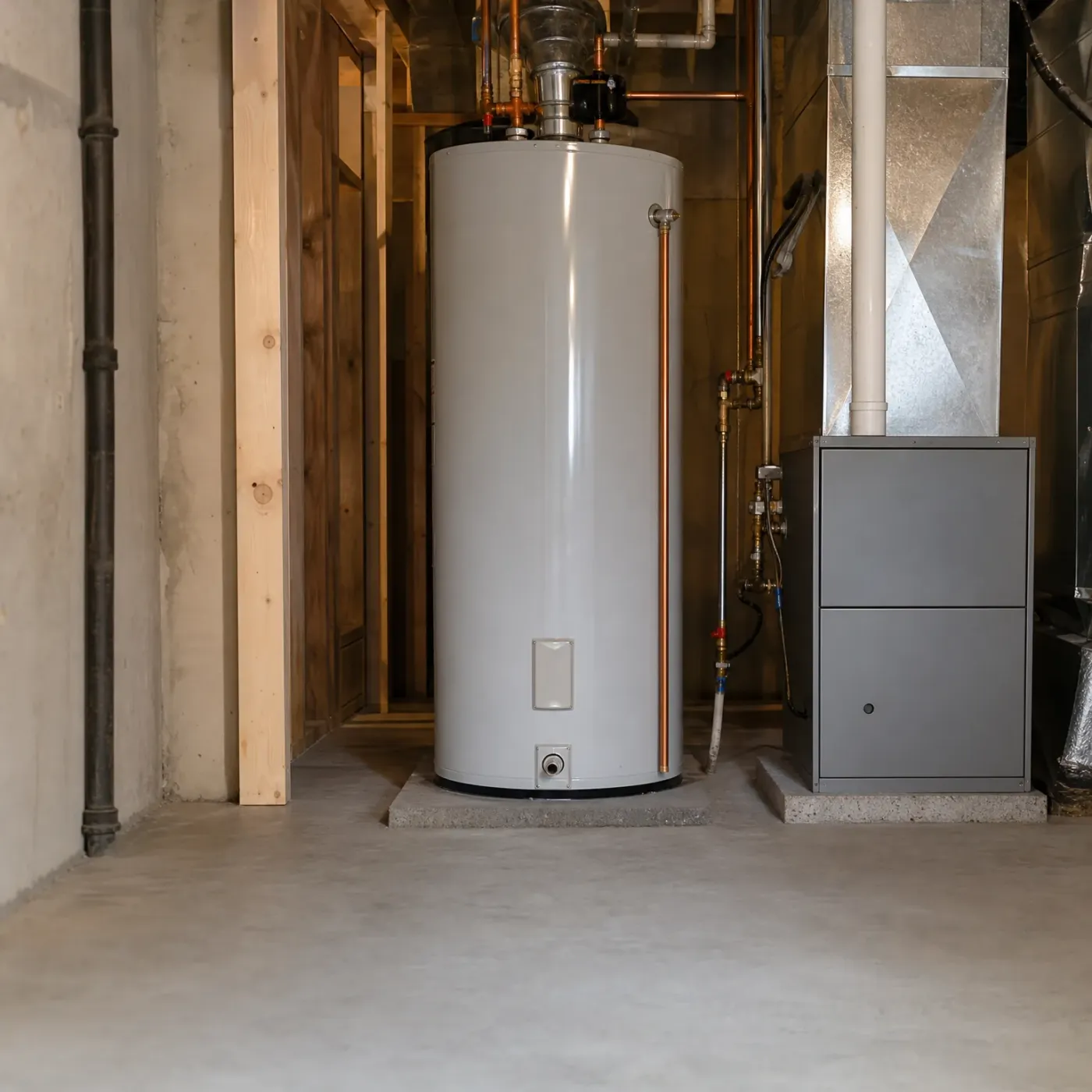
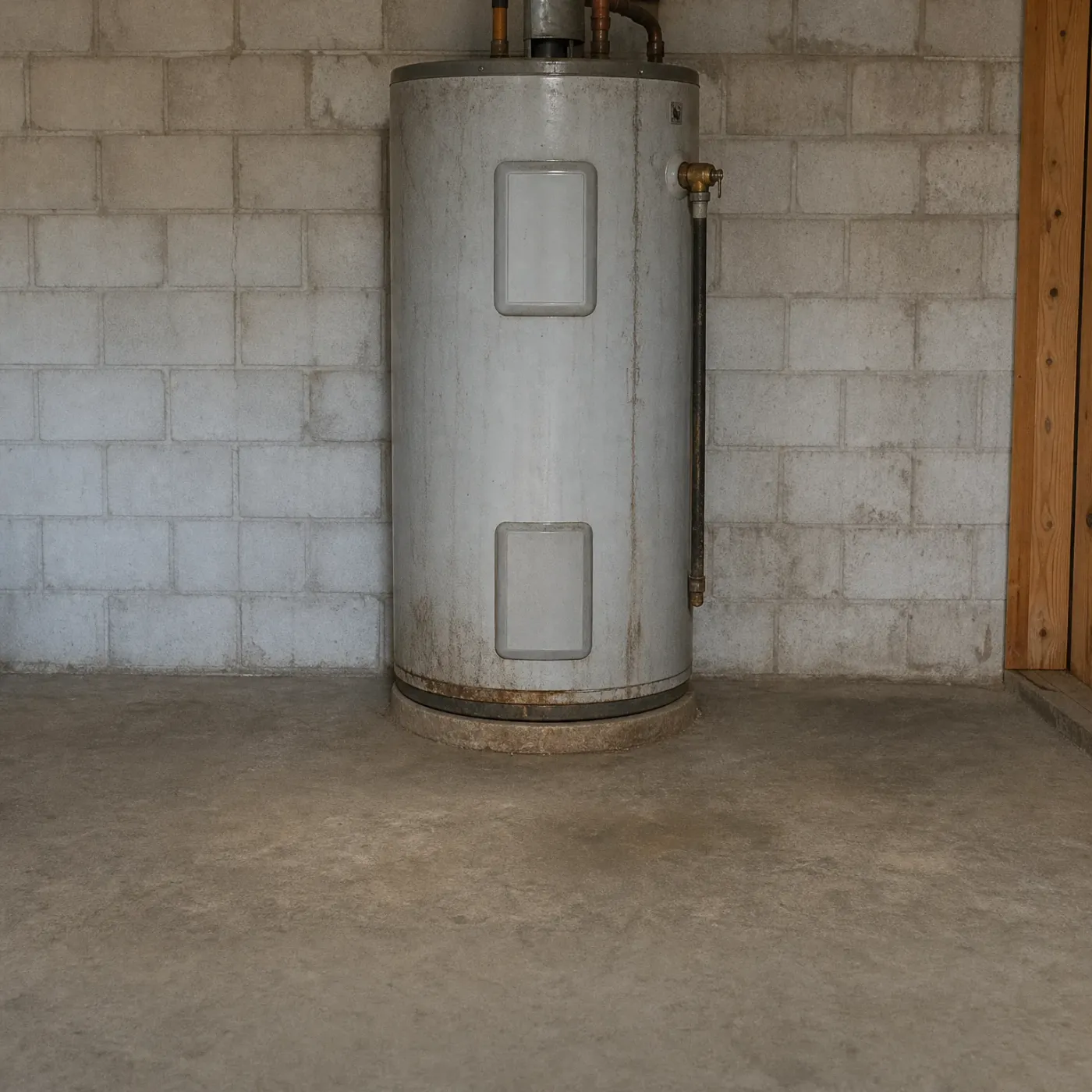
Why would my household run out of hot water so often?
1.92 people per household on average
St. Louis households run about 1.92 people on average, so a tank sized for that many showers and loads is already working with little room to spare.
66.8% of homes heat with gas
66.8% of homes here heat with gas, and a gas tank that's losing recovery speed to a bad burner or sediment will run out faster than it used to, not slower.
Power here costs 13.27 cents per kilowatt-hour
Power runs 13.27 cents per kilowatt-hour here, cheap enough that an electric water heater struggling to keep up usually points to the tank, not the bill.
ACS 2020-2024 · EIA-861 2025

Cold water enters the tank and sinks to the bottom first.
The burner or element heats water from the bottom up.
Hot water rises and draws off the top of the tank.
Sediment on the bottom blocks heat from reaching the water above.
Is this just getting worse, week by week?
You've probably noticed the point where the water turns cold has crept earlier. A shower that used to last through rinsing your hair now cuts out while you're still shampooing. The water heater might take longer to recover between uses, or you hear it running more than it used to. Sometimes there's a rumbling or popping sound from the tank, which is sediment shifting around as it heats. If the water looks slightly rusty or smells off when it's hot, that's worth paying attention to. Left alone, a tank in this state keeps losing capacity, and a failing element or a tank that's corroding from the inside can eventually mean no hot water at all.
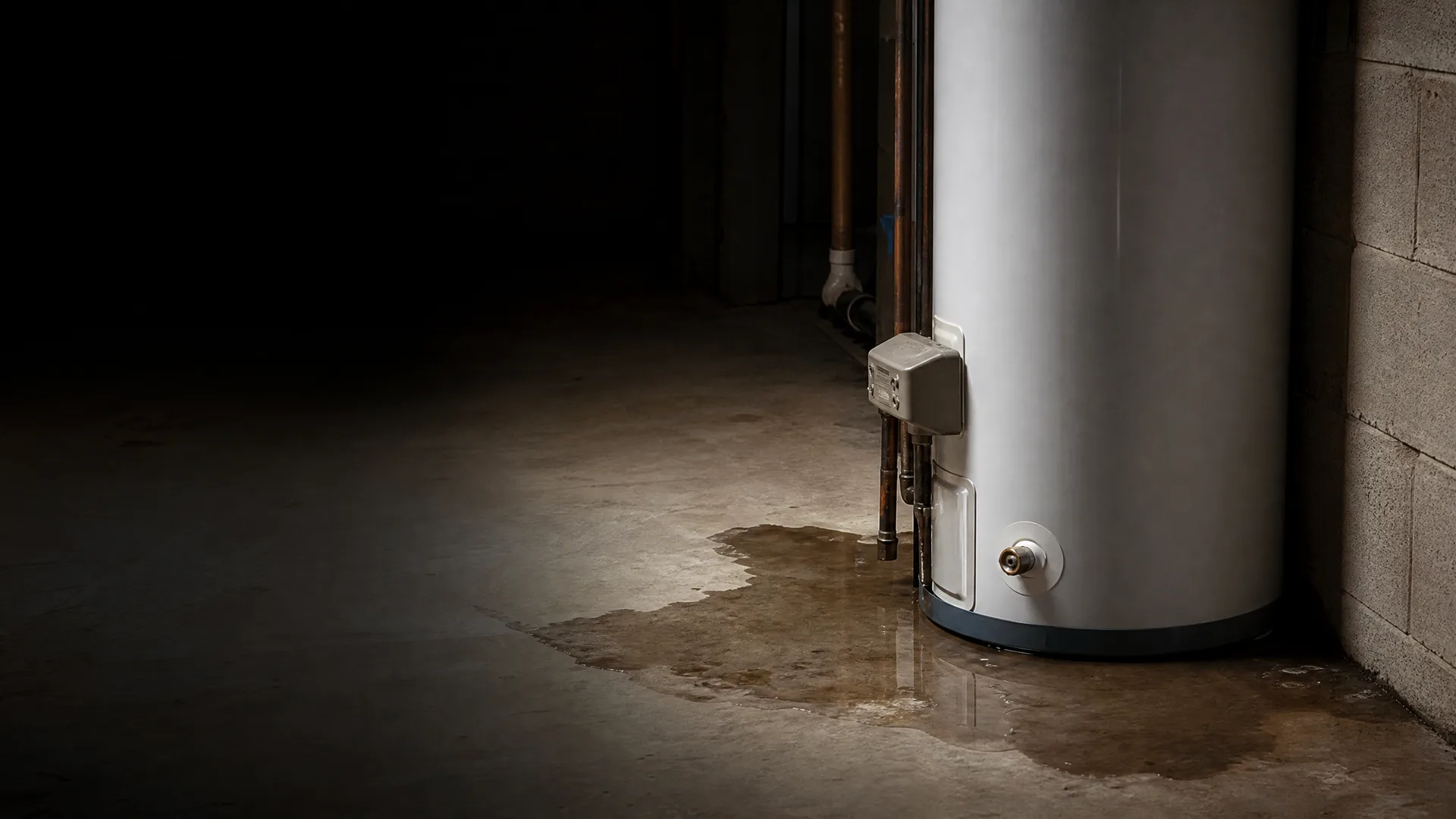
Saturday morning, and you head down to the basement to switch a load of laundry. The concrete floor is wet before you reach the bottom step. Water has spread out from the base of the tank, past the drain pan, soaking into a cardboard box you'd left nearby. The tank itself is quiet, no hiss, no drip you can see, just the puddle already there. You crouch down and touch the metal low on the side and it's damp there too, not just underneath. Upstairs the shower ran fine twenty minutes ago. Down here, on a cold St. Louis morning with the furnace kicking on behind it, the water heater has already made its decision.
Get matched with a water heater pro in St. Louis
You've read enough by now to know this isn't something you wait out. Sediment doesn't clear on its own, a failing element doesn't heal, and another St. Louis winter of cold water partway through a shower isn't something to plan around. What you don't know yet is which of these is happening in your tank, and that takes someone looking at it, not another search. Finding that person is its own chore: checking which contractors work on water heaters, calling a few, describing the same cold-shower problem three times over, then sitting with quotes that are hard to compare because nobody looked at the same tank. Hand that off instead. A contractor who works on water heaters in St. Louis takes it from here, and you get back to showers that last as long as they should.
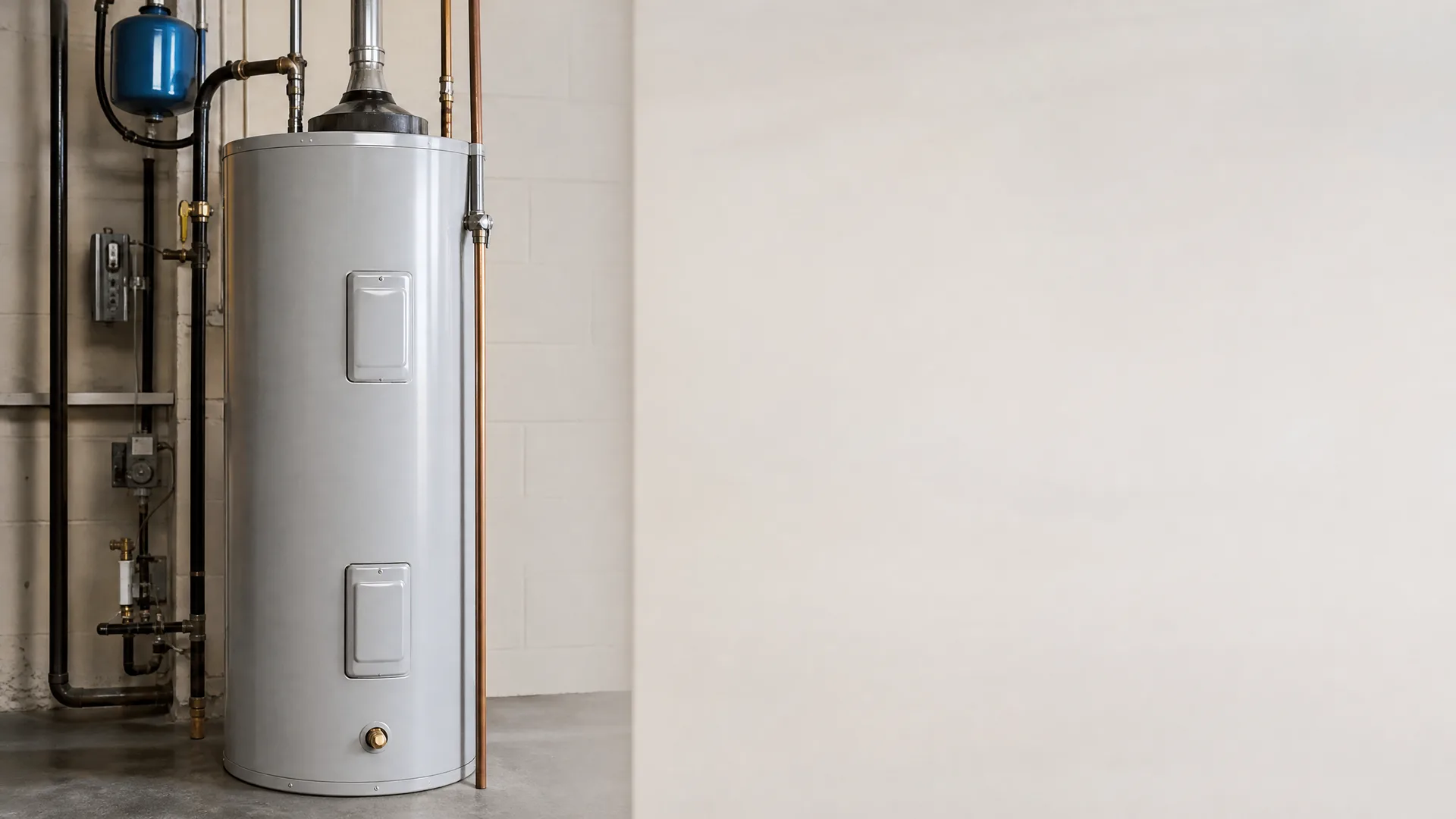
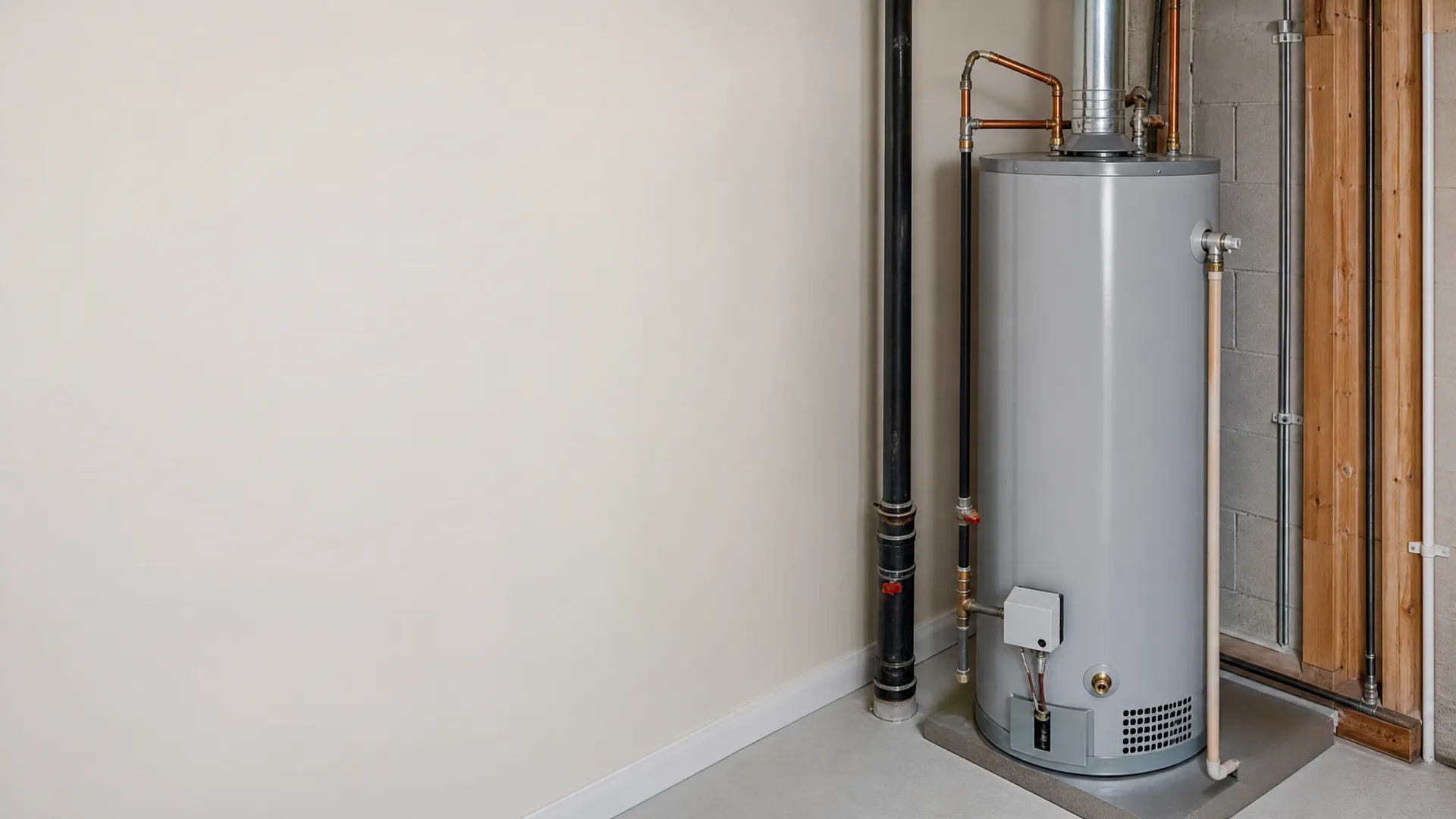
The recovery rate limit
Every water heater has a recovery rate, the number of gallons it can reheat in an hour. That number is fixed by the size of the burner or the element, not by the thermostat setting. Turning the temperature up doesn't raise it. Once the tank's stored hot water is gone, you're waiting on that recovery rate alone, and sediment on the bottom slows it further by sitting between the heat source and the water above it.
Why the fix outlasts a patch
Flushing sediment or swapping a heating element buys back capacity, but it won't change a tank that was undersized for your house to begin with. A contractor checking the tank can tell you which one you're dealing with by looking at how fast it recovers compared to its rated output. That distinction matters because one points to a repair and the other points to a different size tank.

What this means for your household
You already schedule around it without thinking much about it. Whoever showers first gets hot water. Everyone after is checking how fast it fades, maybe running the dishwasher at night instead of during the morning rush. That's not how a water heater is supposed to work, and it's not something you should have to plan a household around for another St. Louis winter.
Letting it ride doesn't just mean more cold showers. A tank that's losing capacity to sediment or a failing element is also working harder than it should, and that strain tends to end in the part giving out rather than easing up. Once you're ready to deal with it instead of working around it, the next step is getting matched with a contractor who can look at your specific tank and tell you what's actually going on with it, rather than you calling around St. Louis trying to find someone with an opening this week.



1.92 people per household on average
At 1.92 people, most St. Louis households aren't a crowd lining up for the shower. If yours still runs out fast with just one or two people using it, the tank isn't being overwhelmed by demand. Something inside it is already losing capacity.
ACS 2020-2024
Where this leaves you
- A tank that runs out of hot water fast almost always has a cause you can name: sediment, a failing element, a bad thermostat, or a recovery rate the tank can't exceed.
- A St. Louis winter makes any of those problems worse, since incoming water starts out colder and the tank has to work harder to keep up.
- None of these causes fix themselves, and a tank losing capacity now will keep losing it until something inside is repaired.
- A household of one or two people running out of hot water points to the tank, not to how many showers are being taken.
- Instead of searching for a plumber, calling a few, and explaining the same cold-shower problem to each one, you answer it once and get matched with a contractor who follows up with you.
- Comparing quotes and sorting through who's available is the part that goes away; the diagnosis and the repair still take a visit.
The cold shower isn't random, and it isn't your household using too much hot water. Sediment on the bottom of the tank, a heating element on its way out, a thermostat reading wrong, or a recovery rate the tank simply can't exceed, one of these is behind it. Winter here makes the gap more obvious, since the water coming into the tank is already colder and the tank has less room to make up the difference. None of this reverses on its own. A tank that's losing capacity in November will be losing more of it in January, and waiting doesn't change what's happening inside the tank, it just changes when you deal with it.
If it's one or two people in the house and the hot water still runs out fast, that's not a demand problem. That's a tank telling you something is already wrong inside it.
Getting this looked at usually means finding a plumber, calling around to see who's free, and walking through the same symptoms with each one before you even get a quote. That part is what goes away here. You describe what's happening once, and a contractor who handles this gets back to you directly. The diagnosis still takes a visit, and the repair still takes the time it takes. What you're skipping is the searching and the repeating, not the work itself.
A local pro for your water heater repair
Skip calling shops to ask who repairs water heaters in St. Louis.