

Profile view of a bearded man wearing a black baseball cap and a dark gray T-shirt against a plain light background.

Gas or electric water heater for a Missouri home

Step 1 of 3: Equipment

Gas is the better fit for most Missouri homes. Power here is cheap, but gas is usually cheaper still, and most homes in the state already have a gas line run to the water heater, so installation stays simple. Gas units also recover faster, which matters more in a house with more than one bathroom running hot water back to back. Electric water heaters make sense where there's no gas line to tap into, or where a tank needs to go somewhere a flue can't reach, like a tight closet or an interior room. Electric units cost less to install since there's no venting to run, and they hold up fine for a household that doesn't demand much hot water at once. Either type will do the job. The right one for your house comes down to what's already feeding it, gas or electric, and how much hot water your home actually pulls at once.

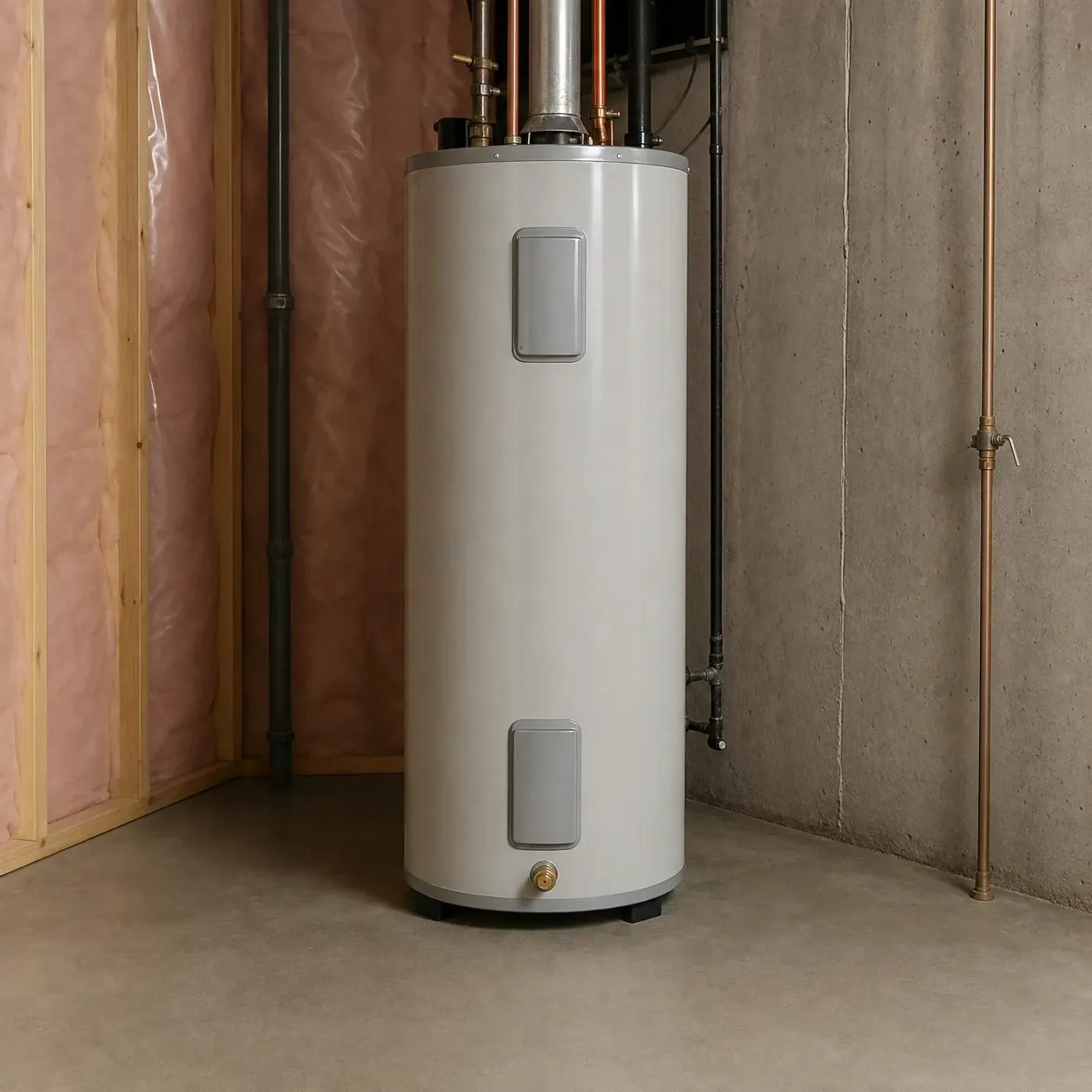
A white cylindrical water heater with two access panels and a brass drain valve stands on a concrete floor in a basement corner, beside a pink-insulated stud wall and a concrete wall with copper and black pipes.
Electric works fine where there's no gas line to tap, and it skips venting a flue through the roof.
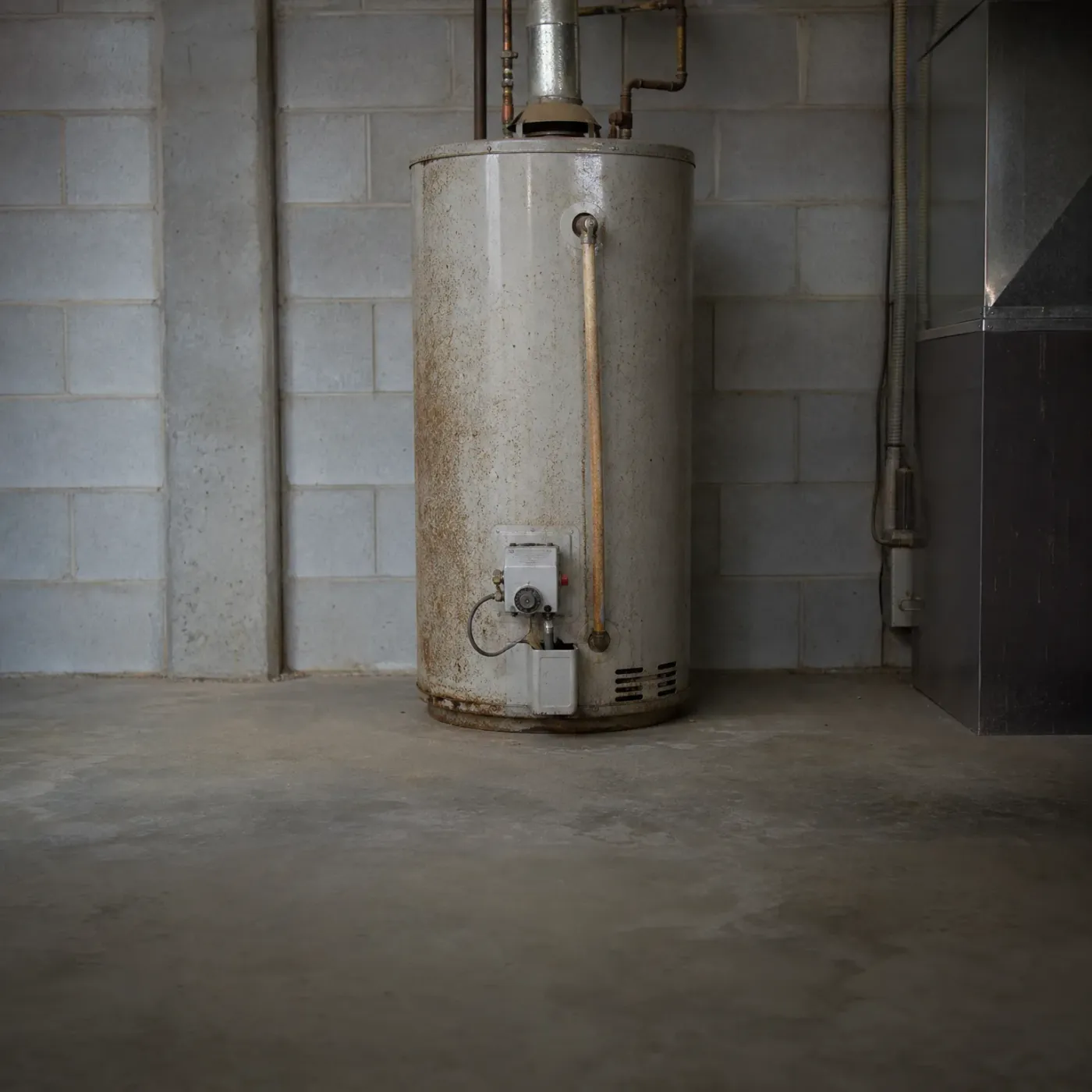
A rusted gas water heater with a flue pipe stands against a concrete block wall on a bare concrete floor, next to a dark metal duct or furnace cabinet at right.
A rusted-out tank like this one means replacing it now, whichever fuel runs the next one.

A gas water heater does its work at a burner under the tank, so how fast it recovers has nothing to do with your home's electrical capacity. That burner needs somewhere for the exhaust to go, either a metal flue run through the roof or a sealed vent through a sidewall, so the venting path matters when you're picking a spot for the new tank. An electric tank works differently. It heats with one or two elements sitting down in the water itself, and tanks with two elements often keep running in some fashion even after one element fails, just slower. Electric needs only a dedicated circuit, which is the whole reason it's the option in homes with no gas line run to the water heater. The split shows up most during a power outage. A gas tank keeps heating because the burner needs little or no electricity to fire. An electric tank stops the moment the power does, since the elements pull straight off household current with nothing to fall back on.

How Each Type Actually Heats Water

  • A gas water heater burns fuel at a burner under the tank, so recovery doesn't depend on the home's electrical capacity at all.
  • An electric tank uses one or two heating elements submerged in the water, and if one fails the other often keeps the tank limping along.
  • Gas units need a vent for exhaust, either a metal flue through the roof or a sealed intake and outtake through a sidewall.
  • Electric tanks need nothing but a dedicated circuit, which is why they work in homes with no gas service at all.
  • A gas tank keeps working in a power outage since the burner only needs a small amount of electricity or none at all for ignition.
  • An electric tank stops heating the moment the power goes out, since the elements draw straight off household current.
An older man with gray hair and a beard leans back on a beige sofa with his eyes closed, in a sunlit room with potted plants, a wicker chair and large windows behind him.
A woman in a cream knit sweater sits in an armchair with her eyes closed and a slight smile, beside an open window showing orange autumn foliage, with a mug, books and a lit candle on a small side table.
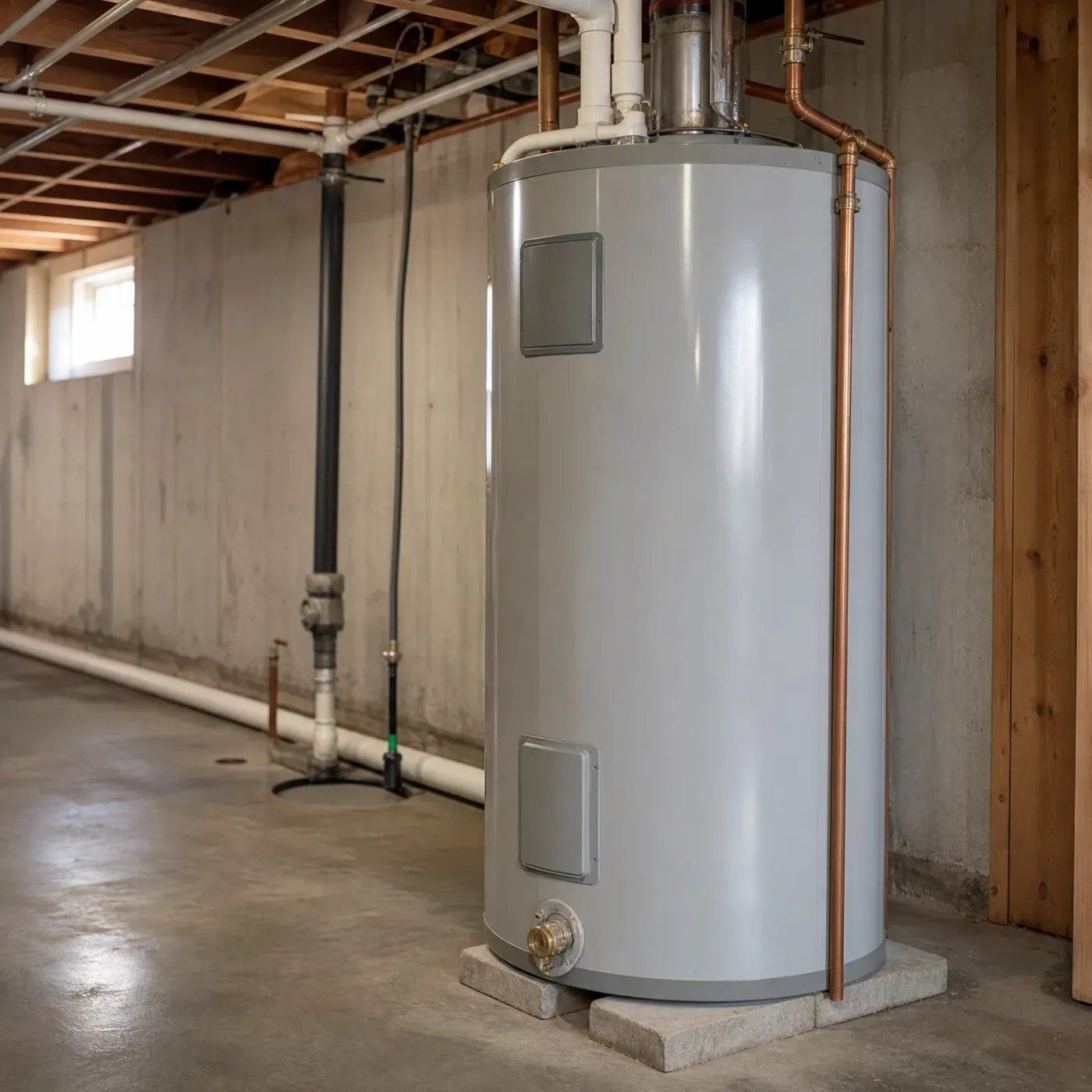
A large white cylindrical water heater on concrete blocks in a basement with poured concrete walls, exposed joists, copper and PVC piping, and a small window.

Let someone else find the pro

Skip collecting and comparing quotes for the new water heater.

One request and the search for a pro is handled.

I'm done searching

You're not committing to anything by asking.

Is your water heater still up to the job?

Water that takes longer to heat up, or runs out partway through a shower, is the first thing most people notice. A tank losing ground might also show rust streaks near the fittings, a popping or rumbling sound as it heats, or a puddle forming on the floor underneath. A gas unit that won't light, or a pilot that keeps going out, points to the burner or thermocouple. An electric tank that gives you lukewarm water instead of none at all is often down to one failed element while the other keeps working. Left alone, a failing tank can leak into the surrounding floor or framing, and a gas unit with a venting problem can let exhaust back up into the house instead of out through the roof.

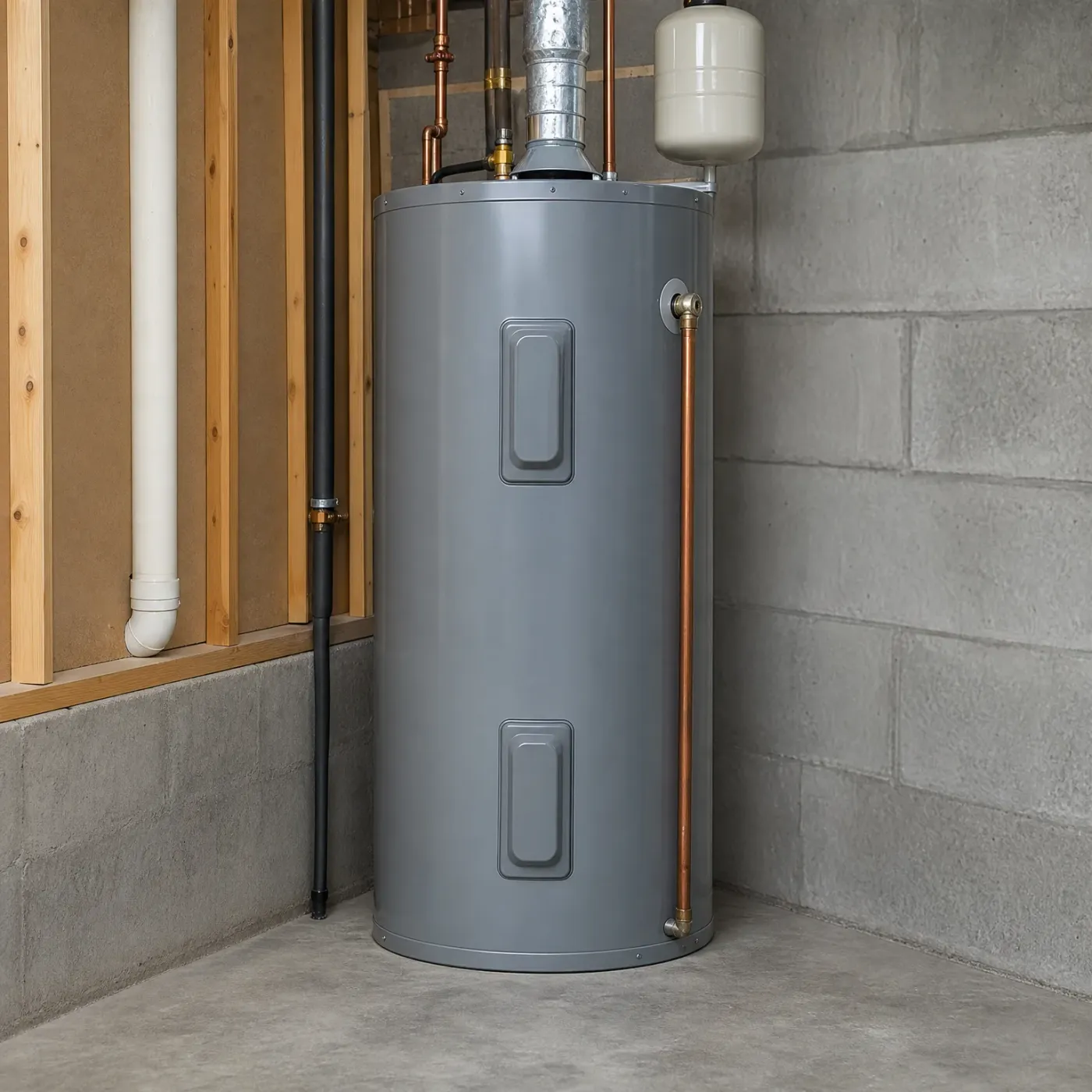
A gray cylindrical water heater with copper piping and an expansion tank stands in a basement corner beside a concrete block wall and exposed wood framing.

Working as it should

This electric water heater sits connected and tidy, with copper lines, a drain pipe, and an expansion tank doing its job overhead. No rust, no corrosion, nothing straining. A unit in this shape just needs the exhaust duct and fittings checked on schedule.
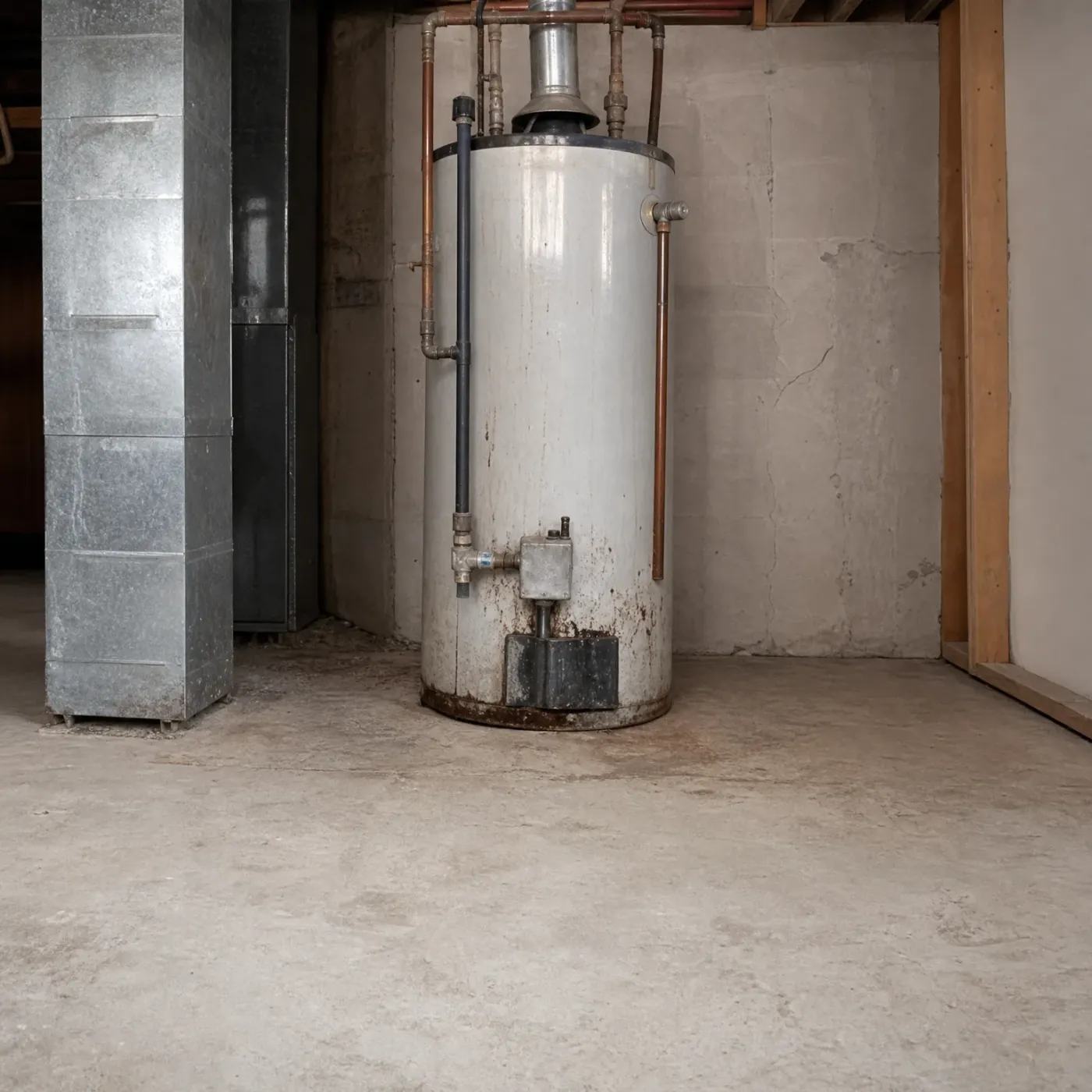

An old rusting cylindrical gas water heater with copper and steel pipes and a flue stands against a concrete basement wall beside metal ductwork on a bare concrete floor.

Past the point of fixing

Rust and mineral buildup cover this gas tank from top to bottom. Corrosion like this means the tank wall is thinning out, and a leak is a matter of when, not if. The furnace next to it still has plenty of life left, but this water heater needs to come out now.

A man in a blue sweatshirt reclines with closed eyes in a brown leather armchair in a living room with a bookshelf, houseplant, sofa, window, and a side table holding newspapers and a dark mug.
A bearded man in a gray pullover reclines with closed eyes on a brown leather sofa in a sunlit room with a window, framed picture, potted plant, and a wooden cabinet holding papers and a dark mug.
A man in a gray sweater leans back with closed eyes in a brown leather armchair beside a wooden side table holding a dark mug and a folded newspaper, with bookshelves and a window seat behind him.
A man in a green sweater reclines in an armchair with his eyes closed and a slight smile, beside a window with plants, a small table holding a mug and folded newspaper, and bookshelves behind him.

A gas tank recovers faster because the burner heats the whole tank at once, so a household running through hot water back to back doesn't have to wait as long between uses.

An electric tank heats the same water through one or two submerged elements, which takes longer to bring a full tank back up after a run of showers or a load of laundry.

49.3% of homes statewide heat with gas

Close to half the homes in Missouri already heat with gas, and odds are a line was run to your water heater when the house was built. That's worth checking before you assume electric is simpler just because it's what's in there now.

ACS 2020-2024 5-year B25040

Gas or electric, the choice is clear

  • Gas wins for most Missouri homes, mainly because the gas line is usually already there.
  • Electric still makes sense if your home has no gas line or you want to skip venting a flue.
  • A tank showing rust streaks, slow recovery, or a rumbling sound is on its way out no matter which fuel it uses.
  • The fuel choice decides how the new tank performs, but it doesn't change the work of finding someone licensed to install it.
  • Whichever way you go, the sizing and venting work is best left to someone who installs these regularly.

Most Missouri homes already have a gas line sitting at the water heater, and that one fact settles it for most people. Gas costs less to run here, recovers faster, and doesn't ask anything of your home's electrical panel. Electric still has its place. If your home never had a gas line run to it, or you'd rather not deal with a flue venting through the roof, electric gets the job done without either problem. Neither fuel saves a tank that's already failing. Rust near the fittings, water that takes longer to heat, a rumbling sound from the bottom of the tank: those mean it's time to replace it, not patch it, whichever fuel runs the next one.

What the fuel choice doesn't decide is how much work it takes to get someone qualified out to size the unit, run the venting if it's gas, and install it correctly. That part looks the same either way: finding a contractor who's licensed for this, calling around to see who can actually come out, explaining what's wrong with the old tank more than once, then weighing quotes against each other without much way to compare them. Send the form on this page and that part is done. You won't need to track down bids or repeat yourself to three different companies. Someone qualified gets the details and takes it from there, and you go back to deciding what temperature you want your showers at.

A curving paver walkway runs alongside a house with beige lap siding and a white-trimmed window, bordered by low shrubs, grassy plants, and trees in sunlight.
A dark-framed casement window with divided upper panes set in a stucco wall beside a stone-clad section, with hydrangeas, hostas and trimmed shrubs in a mulched bed above a lawn.
White horizontal lap siding wall with a single six-pane double-hung window, above a mulched bed of hydrangea shrubs with browning blooms, bordered by mown grass in low sunlight.
Interior corner with tan plaster walls, a potted olive tree in a large terracotta urn beside a floor-to-ceiling window, and a wooden bench with a beige cushion on a herringbone brick floor partly covered by a woven jute rug.
A wooden bench beneath a window holds a green linen cushion and a fringed cream throw, with a woven basket stored underneath on a wood plank floor.

One request and it's handed off

Skip the round of in-home estimates for a new water heater.

Hand it over

It costs nothing to send, and you don't have to hire anyone.